


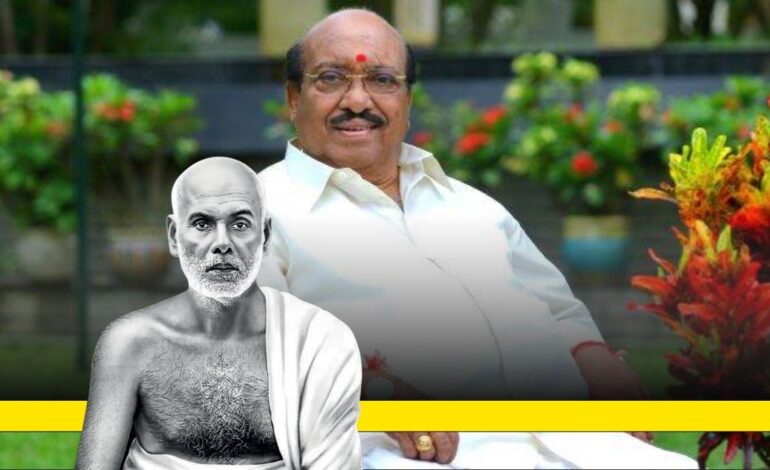
When Kerala Chief Minister Pinarayi Vijayan termed Vellappally Natesan as a modern embodiment of Sree Narayana Guru, it sounded less like praise and more like a distortion of history. For those who know the lives of both men, the statement exposes the contradictions not only in Natesan’s legacy but also in Vijayan’s own ideological drift. At stake here is nothing less than the soul of Kerala’s renaissance tradition.
Guru’s Radical Humanism
Sree Narayana Guru, the 19th–20th century social reformer, was a revolutionary in spirit and deed. Born into the Ezhava community, which was marginalised and oppressed in caste-ridden Kerala, he became the prophet of dignity and equality. By consecrating temples open to all, Guru challenged Brahminical dominance and caste taboos. His call for “one caste, one religion, one God for man” was not an endorsement of identity politics but a demand to transcend divisions.

Equally important was his ethical stance. He warned against the manufacture and consumption of liquor, recognising its devastating impact on families and society. He emphasised on education, self-reliance, and universal brotherhood. His teachings seeded the Kerala renaissance that later nourished the state’s secular, egalitarian, and reformist ethos.
Vellappally’s Contradictory Legacy
Against this backdrop, to say that Vellappally Natesan has absorbed Guru is to stretch credibility. Natesan rose to prominence as General Secretary of the Sree Narayana Dharma Paripalana (SNDP) Yogam, the organisation Guru himself inspired. Yet the trajectory he charted stands in sharp contrast to Guru’s universalism.
Instead of dismantling caste barriers, Natesan strengthened them. Under his leadership, SNDP became less a platform of reform and more a caste pressure group bargaining for political and economic gains. While Guru denounced liquor, Natesan presided over Kerala’s largest liquor network—running bar hotels and retail outlets, thriving in the very trade Guru condemned.

He also aligned himself politically with the Bharatiya Janata Party ( BJP ) and openly admired Prime Minister Narendra Modi, lending legitimacy to Hindutva forces that thrive on division and majoritarian supremacy. At various times, Natesan has indulged in Islamophobic rhetoric and hostility toward Kerala’s Christian community—fanning precisely the sectarianism Guru sought to erase.
Worse, allegations of corruption and financial irregularities have dogged him. Microfinance schemes run under SNDP’s wing allegedly siphoned away the savings of poor women who trusted his leadership. What began as Guru’s vision for emancipation thus mutated under Natesan into a family-controlled network of wealth and power, far removed from reformist ideals.
A Clear Opportunistic Drift
The more troubling part of Vijayan’s statement is what it reveals about the Communist movement in Kerala. The CPI(M) once stood for uncompromising Marxist ideals—opposing casteism, communalism, and capitalist exploitation. Leaders like E.M.S. Namboodiripad saw Sree Narayana Guru’s legacy as complementary to Marxism, a common project of social equality.
But under Vijayan, the party has diluted these ideals in pursuit of survival. To hail Natesan as a modern embodiment of Guru is not merely an error in judgment; it is an act of political appeasement. In cozying up to caste leaders like Natesan, the Left is revealing its willingness to rewrite ideological history to maintain electoral strength.
This opportunism is not new. Vijayan’s tenure has been marked by pragmatic compromises, alliances with caste and religious power centers, and an unmistakable erosion of Marxist conviction. Once the vanguard of Kerala’s renaissance, the Left today risks becoming a custodian of the very forces of caste pride and communal calculation it once sought to dismantle.
Kerala at the Crossroads
The irony is stark. Guru envisioned a society where caste and religion would dissolve into universal brotherhood. Natesan entrenched caste identity and nurtured communal flames. The Communists once carried Guru’s spirit forward. Today, their leader bends it backward for political convenience.
To equate Natesan with Guru is not only a betrayal of historical truth; it is an insult to Kerala’s renaissance legacy. It undermines the memory of a reformer who gave dignity to the oppressed and charted a path toward equality. It also exposes the Left’s crisis of conviction—its willingness to sacrifice ideals for power.

Kerala’s history is not short of examples where opportunism derailed reform. But Guru’s philosophy still endures in the conscience of the people. The question is whether today’s leaders will uphold it or continue to subvert it. If figures like Natesan are celebrated as embodiments of Guru, and if Communist leaders like Vijayan are ready to echo such distortions, then Kerala risks surrendering its proud reformist tradition to the dark forces of casteism, communalism, and opportunism.
The renaissance torch lit by Guru was meant to burn away divisions, not to illuminate the path of liquor barons, communal appeasers, or political opportunists. To safeguard Kerala’s future, it is that torch—not its distorted shadows—that must be carried forward.









താങ്കൾ മുഖ്യമന്ത്രിയുടെ പ്രസംഗം കേൾക്കുകയോ വായിക്കുകയോ ചെയ്തിട്ടില്ല എന്ന്
വ്യക്തമാകുന്നു . വിമർശനം ഗുണകരമാവുന്നത് വിമർശനത്തിന് വിധേയമാവുന്ന വിഷയത്തെക്കുറിച്ച ചെറുതെങ്കിലുമായ ധാരണയുണ്ടാകുമ്പോഴാണ് .
I think you have not heard or read the speech of CM. Just go thru this link https://www.deshabhimani.com/News/kerala/cm-pinarayi-vijayans-remarks-about-vellappally-twisted-by-medias-22424