


September 13 marks the fifth anniversary of Umar Khalid’s arrest. In these five years in jail, Khalid has been waiting for both trial and bail. The cases against him have not witnessed any substantial move from the investigative agencies to make headway with the trial. Even more disconcerting is the fact that his repeated applications for bail have been systematically rejected. The latest of these rejections happened on September 2. Here, Human Rights activist and writer Chittajit Mitra follows the strange goings-on in the judiciary in Khalid’s case.
“When will justice and constitutional morality progress from weekend speeches to judgements pronounced in court?”. This was the question I was impelled to pose about two years ago, when I wrote an article about the Supreme Court’s infamous judgement in October 2023, denying marriage equality in India. Unfortunately, the question keeps coming up in front of our judicial system and society on a regular basis as we see courts at all levels denying people basic humanity and justice.
On September 2, the Delhi High Court denied bail to Gulfisha Fatima, Umar Khalid, Sharjeel Imam and several other individuals languishing in jail for the last about five years. (The hearing was again deferred by a week as the Bench was unable to examine the case related documents.)
They have all been accused in the Delhi riots conspiracy case 2020 under stringent laws including Unlawful Activities Prevention Act (UAPA). With the trial nowhere close to begin, the message of this bail denial is clear: let the process itself be the punishment.

When people started criticising the unfairness of the decision, an evidently inorganic barrage of tweets and messages defending the court order flooded the social media. Curiously, amid this uproar, one also witnessed the revival of former Chief Justice of India (CJI) DY Chandrachud’s interview, originally aired in February, in which he explains that in Umar Khalid’s case, his lawyers sought adjournments at least seven times, and thus, the blame does not entirely rest with the judiciary. This brief video clip was shared by many who passed it off as an extract from a recent longer interview. More importantly, it is critical to verify the accuracy of the retired CJI’s statement.
According to a Boom Fact Check report, Umar’s lawyer asked for an adjournment only twice and not seven times as claimed by the retired CJI. But let’s keep that aside for a moment. A few years ago it was his bench along with Justice Indira Banerjee who while granting bail to a pro-government journalist stated, “Deprivation of liberty for a single day is a day too many”. Naturally, a question arises:What happened to this admirable constitutional stance after he assumed the role of Chief Justice of India? Did the Supreme Court consistently uphold these values, or were sensitive cases involving basic liberty and human rights assigned to benches publicly known to be critical of those values?
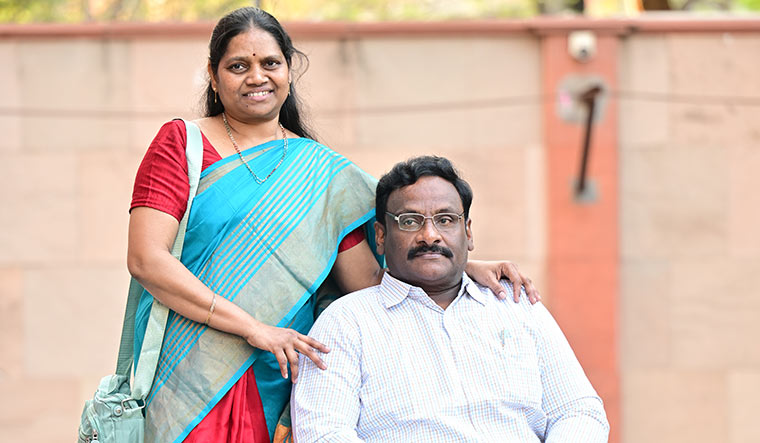
One is reminded of the late Professor G.N. Saibaba, who was acquitted multiple times due to arbitrary Supreme Court orders. After spending a prolonged period in prison as a 90% disabled individual, he developed severe health complications, leading to his death just months after his release.
On September 2, a division bench of Delhi High Court comprising Justices Navin Chawla and Shalinder Kaur decided to ignore the gross delay by the state to initiate the trial. The bench in its 133 page judgement instead relied upon the “graveness” of their supposed acts under UAPA. Therefore, one is forced to ask if the offence is so grave, why have we not convicted them in all these five years? The logic seems to be lost here or are we taking accusations made by the state on its face value and ignoring the legal principle of “bail is the rule and jail is the exception”? A phenomena that has been quoted repetitively by the Supreme Court and even urged high courts to keep this in mind while adjudicating. Coincidentally, Justice Shalinder Kaur retired just days after delivering the judgment, sparking online speculation about whether a post-retirement position awaits her. Only time will tell.
This judgment requires closer scrutiny to understand the court’s rationale for denying bail. For instance, it states, “A hurried trial would also be detrimental to the rights of both the Appellants and the state.” This prompts the question: how long must a person languish in jail before the court empathizes and upholds the appellant’s constitutional rights to liberty and a speedy trial? In the same paragraph, the court goes on to rely on the length of the chargesheet and electronic evidence and takes it on its face value to be of use than mentioning whether it contains credible evidentiary value implicating the appellants. Just claiming that all the concerned people were part of a larger conspiracy shouldn’t be enough to condemn them stay behind bars for years and years. What is more worrying is that the order goes on to question the right of citizens to protest peacefully which is enshrined in Article 19 of the Indian constitution.
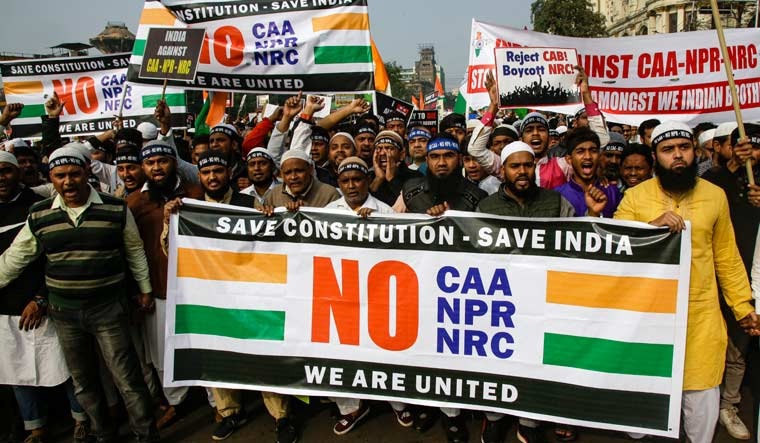
Another critical aspect of this perplexing judicial process is the pattern observed when courts question the role of politicians from the ruling party in inciting riots or order charges to be framed. In such cases, the presiding judge is often swiftly transferred, or the hearing is deferred by the Delhi High Court. These arbitrary and questionable actions raise doubts about the impartiality of the judicial process itself.
As someone who closely followed the CAA-NRC protests, I have found no speeches by these undertrials that directly incite violence, nor have I seen video evidence of them personally committing violent acts. They may have raised questions that made the ruling party uncomfortable, but such actions should not be equated with terrorism. We must also be honest in this discourse and question why some individuals have been granted bail while others, engaged in similar activities, have not. For me, the answer points to one factor: their names and identities.
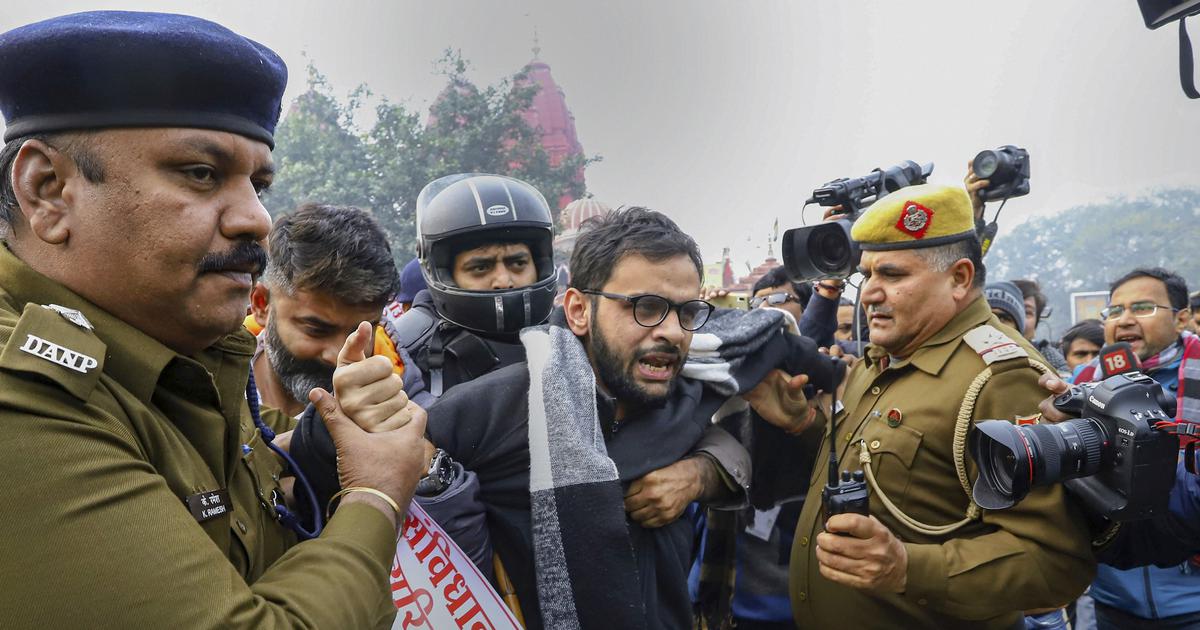
A close examination of these events reveals the barbaric treatment of these activists, with the apparent aim of sending a warning to broader civil rights groups, particularly within the minority Muslim community, to remain silent. Those who dare to speak out risk being targeted by draconian laws, with courts, unfortunately, enabling such extralegal and unconstitutional state actions. The question persists: are basic liberty and human rights merely topics for seminars and symposiums, or are they really upheld through judicial orders in the courts?