Meera Nanda’s question: “What if the knives that gutted the Republic were first sharpened in our universities?” is very provocative, and her new book Postcolonial Theory and the Making of Hindu Nationalism: The Wages of Unreason continues to create a new kind of discomfort in India’s intellectual circles. For a long time, postcolonial theory was the moral grammar of the Indian academic world, breaking down Eurocentrism, questioning power, and rescuing the subaltern. However, in fact, these very ideas are now being taken to the temple, dressed in saffron robes. “Decolonize the mind,” which used to be a rallying cry of the radical left, is now helping the Hindu Right’s campaign to “decolonize the Hindu mind.” It seems that the postcolonial theory is going to be the next chapter for those whom it has never thought of being empowered.
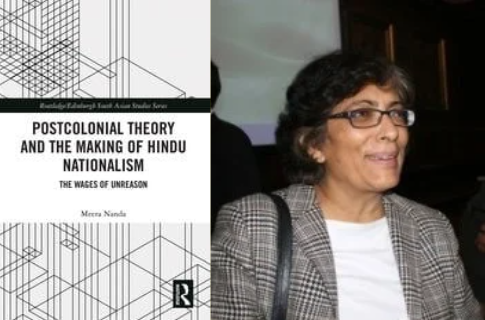
Under Narendra Modi’s leadership, India has made “decolonisation” its new state policy, albeit a somewhat symbolic one. The new National Education Policy vows to expel Western influence from the curricula and to substitute it with “Indian Knowledge Systems.” Different ministries keep talking about the end of “mental slavery” and so on. Various subjects in school textbooks have been changed to reflect the “correct” versions of the past and to help children understand that ancient Hindus had already developed “science” much before modern times. The government is extensively promoting Vedic mathematics and the use of cow urine as a cure. Meera Nanda’s statement about postcolonial relativism and its effect on the authority of reason seems to be coming true. The author claims that it becomes difficult to find a common ground to defend the secular republic if one accepts that there are multiple truths and every religion has its own epistemology.

The postcolonial thinkers, once revered for rejecting Western universals, have found unexpected heirs in the Right’s pseudo-historians and culture warriors. J. Sai Deepak’s bestsellers, dressed in legal precision, claim the Constitution is a colonial imposition, echoing the same suspicion of Enlightenment rationality that animated the postcolonial critique. His India, that is Bharat and its clones, turns “decolonisation” into a battle cry against liberal democracy itself. This is accompanied by television historians and YouTube polemicists who trade in civilisational nostalgia, selling the fantasy of a golden Vedic past betrayed by secular modernity.
This ideological inversion, i.e., the use of the language of liberation by the majoritarian power, has resulted in the blurring of all the differences between Left and Right. The state’s insistence on referring to the nation as ‘Bharat’ instead of ‘India’ is not a matter of language but a metaphysical assertion: that the republic is just the outer shell of an ancient Hindu civilisation. ‘India’ was the result of reason, debate, and law; ‘Bharat’ is the country of emotion, faith, and myth. The demise of the postcolonial dream is very much present in this change.
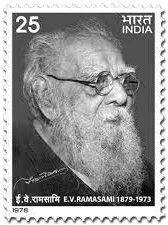
Nanda’s intervention is not so much a cry of mourning for the lost liberalism as it is a call for intellectual clarity. Postcolonialism was the agent that tore down the empire, but it also tore down the Enlightenment without providing a substitute. Its love affair with the indigene has been a cover-up for the reaction. If every attack on tradition is simply called colonial mimicry, then who will be the ones to defend Ambedkar’s rationalism or Periyar’s iconoclasm? India requires a post-Postcolonialism now, a comeback to reason without giving up the cultural self-respect, a politics that sees equality and inquiry not as being imposed by the West, but as shared human achievements.