

The politics behind changing names— and what it really means for India
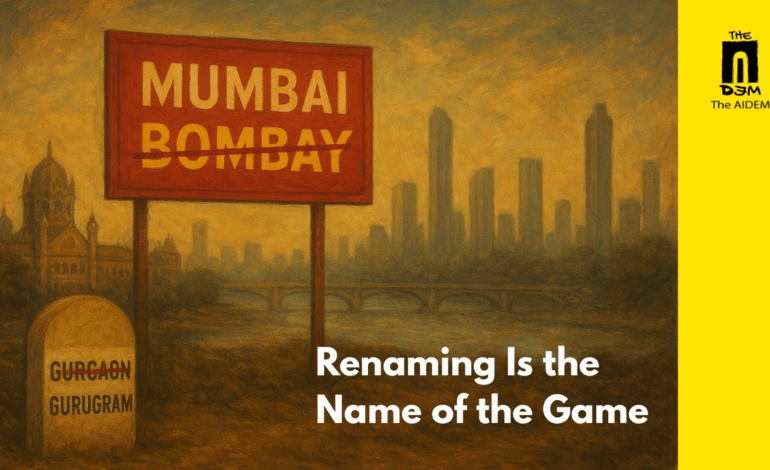
Renaming roads, railway stations, airports, educational institutions, stadiums, and even entire cities has become a defining obsession of India’s current political climate. What is projected as a moral cleansing of colonial or “foreign” influence often functions as a selective re-engineering of memory; an attempt to erase certain histories while elevating others for political mileage.
Over the past decade, the country has witnessed a parade of rechristenings, each wrapped in rhetoric about cultural pride or historical correction. Yet, when viewed together, these changes reveal far less about heritage preservation and far more about the anxieties and ambitions of a political establishment eager to re-script India’s past.
A Nation of New Names
India has always had a layered cultural geography. But today, renaming has become a symbolic tool wielded with striking frequency.
Cities and Towns
- Mumbai (formerly Bombay)
- Chennai (formerly Madras)
- Kolkata (formerly Calcutta)
- Pune (sometimes referred to as Pune Nagaraj in state communications)
- Prayagraj (formerly Allahabad)
- Sambhajinagar (formerly Aurangabad)
- Gaya Ji (formerly Gaya)
Railway Stations
- Mumbai Central (formerly Bombay Central)
- Chhatrapati Shivaji Maharaj Terminus (formerly Victoria Terminus)
- Vande Bharat Upadhyaya Junction (formerly Mughalsarai)
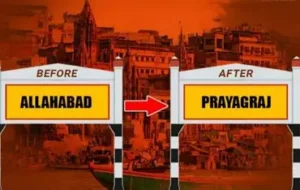
These changes go beyond symbolism; several major metros and public institutions have been renamed—often replacing Mughal or colonial-era names with those of political leaders or cultural icons.
While these decisions may appear patriotic, the underlying logic is often partisan: foregrounding selective histories while burying others. More importantly, such gestures divert public attention from measurable governance outcomes. What, for instance, is accomplished by renaming Gurgaon to Gurugram, Aurangzeb Road to A.P.J. Abdul Kalam Road, or Dalhousie Road to Dara Shikoh Road?
None of these decisions improve infrastructure, strengthen public services, or reduce unemployment—but they do trigger emotional responses, providing moments of symbolic triumph that cost little and distract conveniently.
Mumbai or Bombay? The Old Debate Resurfaces
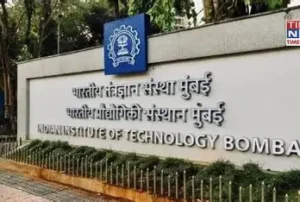
The latest round of political theatre erupted when Union Minister Jitendra Singh suggested renaming IIT Bombay after Shivaji. Maharashtra Chief Minister Devendra Fadnavis quickly responded that he would seek to rename it IIT Mumbai, prompting Raj Thackeray’s MNS to enter the fray.
This debate exposes a deeper absurdity: if renaming Bombay to Mumbai reinforces cultural pride, should the Bombay High Court also be renamed? Should IIT Madras become IIT Chennai? Should the Calcutta High Court become the Kolkata High Court?
Such inconsistencies highlight the performative nature of renaming. Institutions do not become more efficient, inclusive, or prestigious by repainting a nameplate.
A City Built by Many Hands
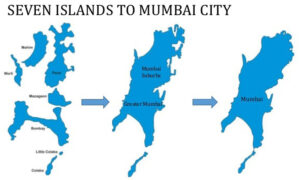
Understanding why simplistic renaming distorts history requires tracing Mumbai’s evolution, which long predates contemporary identity politics.
The seven islands—Colaba, Mazagaon, Old Woman’s Island, Wadala, Mahim, Parel, and Matunga–Sion—were part of Ashoka’s Mauryan Empire. Over the centuries, the region passed through the hands of the Mauryas, Satavahanas, Sultanates, Portuguese, and British, each leaving architectural, cultural, and religious imprints:
- Mauryan legacy: Kanheri, Mahakali, and Jogeshwari caves
- Sultanate influences: Dargahs at Mahim and Haji Ali
- Portuguese contributions: Churches at Bandra and Prabhadevi, forts at Sion, Mahim, and Bassein
Born of Empire, Built by Enterprise
In 1662, the seven islands were handed to England’s Charles II as part of a royal dowry. The British Crown then leased them to the East India Company for £10 a year in gold. The islands quickly transformed into a commercial hub.
Key figures played a role in shaping Bombay’s early history: industrialist Dorabji Patel helped repel the Siddi siege of 1689–90 with the support of locals, while Governor Gerald Aungier laid the foundations for civic institutions, attracting traders from Gujarat, artisans from across India, and Parsi shipbuilders who transformed the city into a major port.
The Infrastructure That Built Modern Mumbai
- Hornby Vellard (1784): Closed the Mahalakshmi breach
- Sion Causeway (1803): Connected Bombay to Salsette
- Colaba Causeway (1838): Further united the islands
- Mahim–Bandra Causeway (1845): Built by Lady Jeejeebhoy, who insisted it remain toll-free
Decades of industrial expansion shaped Bombay’s iconic identity—dockyards, textile mills, hospitality, cinema, manufacturing, and art deco architecture.
Who Owns Mumbai?
Beyond labels, Mumba or Bombay is a city of migrants. Its identity has been shaped by generations of arrivals: traders, labourers, refugees, entrepreneurs, and dreamers. The city belongs to all of them; its character emerges not from one community or ideology but from layered histories, hybrid cultures, and collective aspirations.
Renaming cannot erase this pluralism. At best, it glosses over complexity; at worst, it weaponises identity for electoral gain.
The politics of nomenclature offers an easy performance of cultural pride while masking the harder, necessary work of governance.
Whether one calls it Bombay or Mumbai, the city’s essence is unchanged: a metropolis built by India—and belonging to all Indians.