


What did former Army Chief General Manoj Mukund Naravane write that the government was unwilling to let be read aloud in Parliament? The answer lies in a chilling account of a night in August 2020—one that exposes not just a military crisis on the Line of Actual Control, but a vacuum of political decision-making at its very peak.
On the night of August 31, 2020, at 8:15 pm, Lieutenant General Yogesh Joshi, then commander of the Indian Army’s Northern Command, received an urgent call. Four Chinese tanks, supported by infantry, were advancing toward Rechin La in eastern Ladakh along a steep mountain route. The movement was immediately relayed to the Army Chief, General Naravane, who understood at once what was at stake.

The Chinese tanks were only a few hundred metres away from Indian positions on the Kailash Range—strategic high ground that Indian troops had secured just hours earlier. In this contested stretch of the Line of Actual Control, altitude is power. Every metre gained or lost alters the balance of military advantage.
Indian troops fired an illuminating round—an unmistakable warning signal. It failed. The Chinese armour continued to advance.
What followed, as Naravane recounts in his memoir Four Stars of Destiny, was a frantic search for political clarity. The Army Chief reached out repeatedly to the highest levels of the Indian state: the Defence Minister, the National Security Adviser, the Chief of Defence Staff, and the External Affairs Minister. His question was simple and urgent: What are my orders?
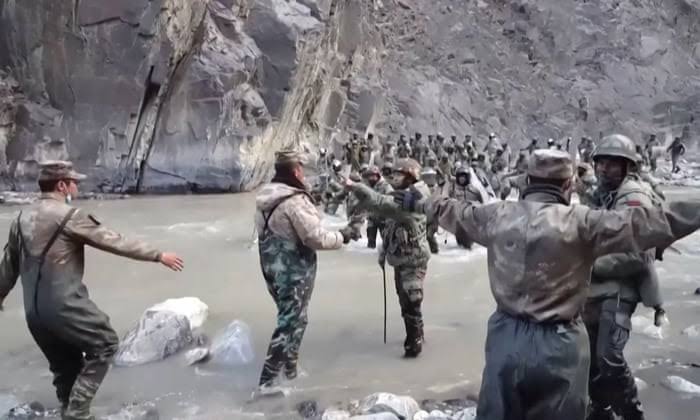
The situation was deteriorating by the minute. Yet the only standing instruction Naravane had was procedural and restrictive—no firing without explicit clearance from the political leadership. That clearance never came.
By 9:10 pm, the tanks were less than a kilometre from the pass. At 9:25 pm, Naravane again sought “clear instructions” from the Defence Minister. None were forthcoming.
In the midst of this uncertainty, a message arrived from the PLA commander proposing de-escalation: both sides would halt their advance and meet the following morning with local commanders and representatives. It appeared to offer a narrow exit from a rapidly closing trap.
Naravane relayed this proposal to the political leadership at 10 pm. Ten minutes later, the Northern Command called again. The tanks had not stopped. They were now just 500 metres from the summit.
Lieutenant General Joshi made the military reality clear: the only viable way to stop the advance was to open fire with medium artillery, which was ready and awaiting orders.
Along the Line of Control with Pakistan, such decisions are routinely taken by field commanders. But this was China. Any artillery exchange risked escalation on an entirely different scale. Naravane found himself trapped between a military command pressing to act and a political leadership unwilling to decide.

Inside the Army Headquarters operations room, options were debated and discarded as the clock ticked relentlessly. The entire Northern Front was on high alert. Yet the decisive moment rested at Rechin La—and with it, on the Army Chief’s shoulders.
At 10:30 pm, the Defence Minister finally called back. He had spoken to the Prime Minister. The instruction conveyed was stark in its brevity: “Do what you think is appropriate.”
It was, in effect, a refusal to decide.
As Naravane later reflected, the Prime Minister had been briefed and consulted—but chose to step away from responsibility. “A hot potato,” the Army Chief wrote, “was handed to me. The entire burden was now mine.”
This is the account that the government did not want read out in Parliament. Not because it compromises operational secrecy, but because it lays bare something far more unsettling: a moment of grave national peril in which political authority retreated, leaving the military to carry not just the tactical risk, but the moral and political weight of decision-making.
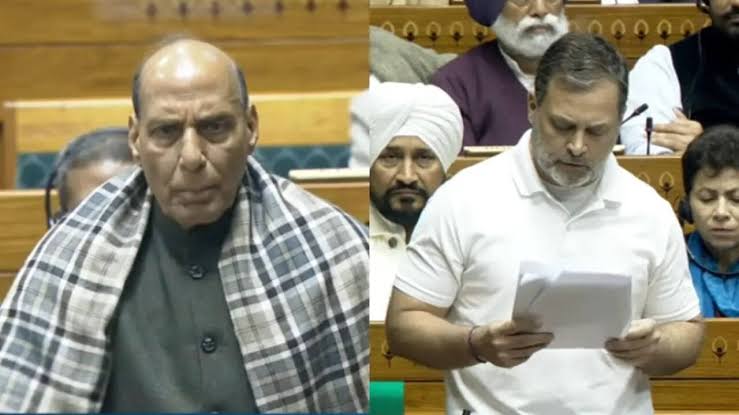
The subsequent uproar in Parliament—the shouting, the disruptions, and the adjournment of proceedings—appears, in this light, less like disorder and more like deflection. Noise replacing answers. Paralysis masked by protest.
The question, then, is not why the government objected to the reading of this passage—but why it fears its implications being heard at all.





This episode underlines how General M.M. Naravane’s memoir raises uncomfortable questions about political decision-making during the India-China standoff. Preventing its discussion in Parliament only deepens concerns about transparency, accountability, and the uneasy gap between military realities and official narratives.