


On March 29, as Prime Minister Narendra Modi descended on Kerala’s electoral landscape with a high-decibel, spectacle-driven roadshow in Thrissur and campaign speeches in Palakkad and Manalur for NDA candidates, the ideological subtext was unmistakable—an emphatic reiteration of centralised authority and the Sangh Parivar’s Hindutva politics.
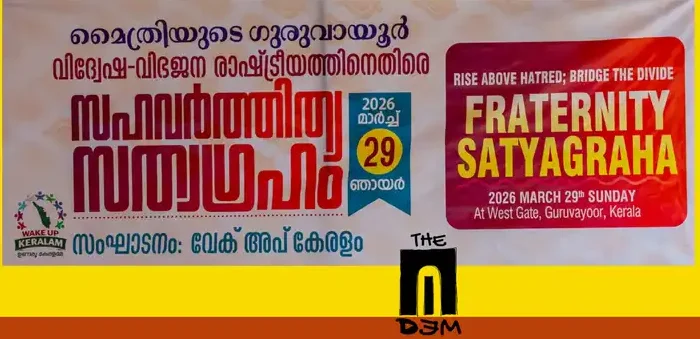
Yet, even as the optics of power rolled through Thrissur, just a few kilometres away in the temple town of Guruvayur, a very different politics was unfolding. At P. Krishnapillai Square, a cultural-social gathering raised the banner of a “Sahavarthithva Satyagraha”—a satyagraha for coexistence—mounting a direct ideological challenge to the worldview and methods embodied by Modi and his associates in the Rashtriya Swayamsevak Sangh (RSS) led Sangh Parivar.
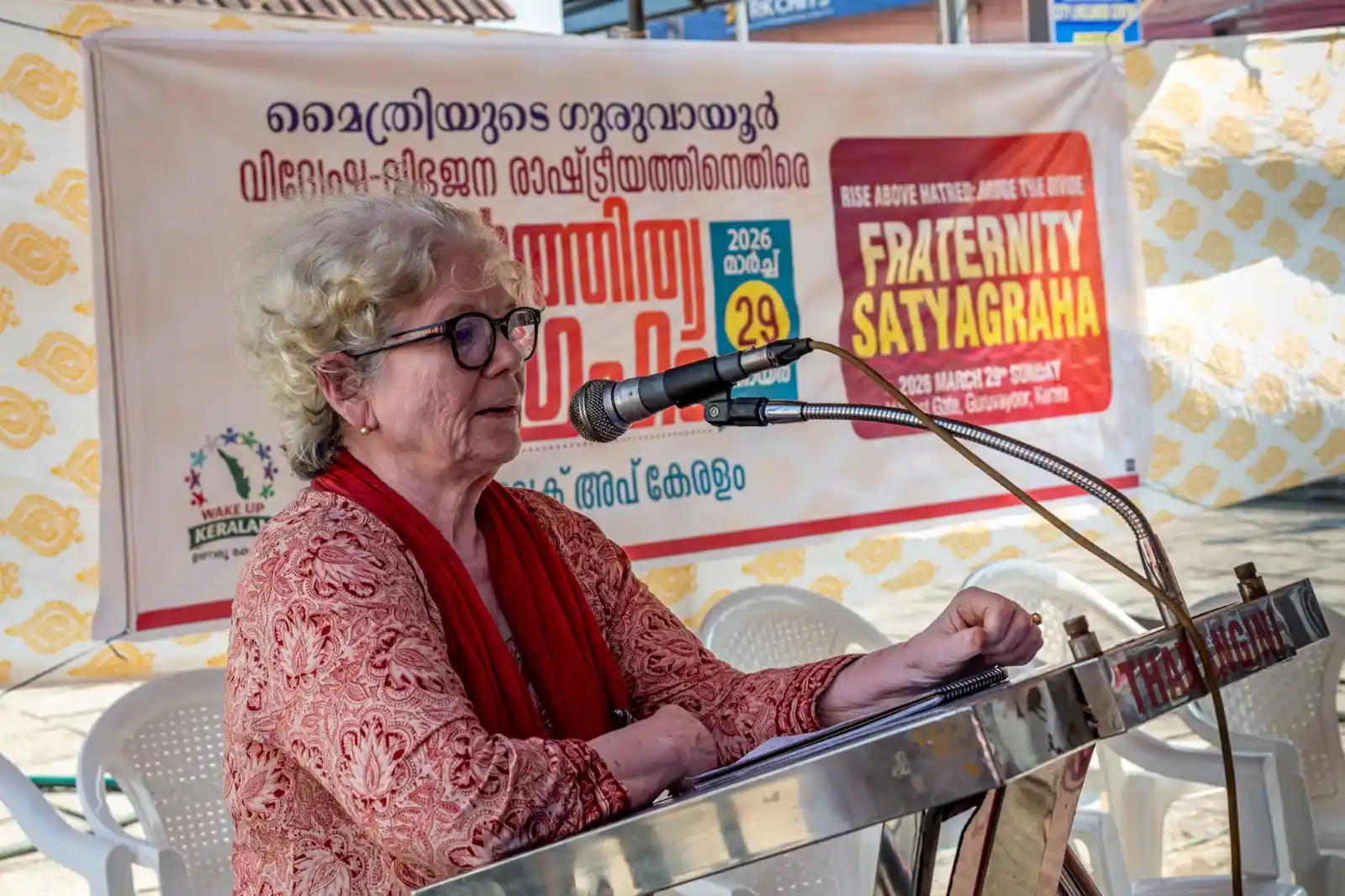
This was no routine protest. The satyagraha held in Guruvayur on March 29 was a political-cultural declaration—an assertion of democratic resistance by a people’s collective against the divisive, communal politics of the Sangh Parivar. It emerged in the backdrop of openly communal remarks made during the campaign by BJP leaders, including Guruvayur candidate B. Gopalakrishnan and state party president Rajeev Chandrasekhar.
What took shape here was a powerful public affirmation of religious harmony, led not just by activists but by ordinary citizens who chose to speak back to the politics of division. Organised by the collective “Wake Up Keralam,” the gathering insisted that this was no accidental convergence of dissent, but the distilled expression of a long, ongoing ideological struggle embedded in Kerala’s soil.
Writers and public intellectuals like K. Satchidanandan, Sarah Joseph, Khadeeja Mumtaz, K. Sahadevan, and N. Madhavan Kutty—who form part of this initiative—made it clear that their compass is set by the pluralist, reformist values of Kerala’s renaissance tradition. Nearly a century ago, the historic Guruvayur Satyagraha stood as a foundational moment in that legacy, challenging caste discrimination and untouchability.
Standing in the shadow of that history, the emergence of a new satyagraha against contemporary Hindutva forces is not an aberration—it is continuity. As Sarah Joseph pointed out with clarity and urgency: the words of BJP leaders in Guruvayur are not stray lapses but part of a long-standing politics of division perfected by the Sangh Parivar. “This is the moment Kerala must remain vigilant,” she warned.
The gathering drew emotional depth from Satchidanandan’s message and the evocative presentation of his poem “Muslim.” Chaired by Dr. Khadeeja Mumtaz, the meeting brought together a wide spectrum of cultural and social voices, all converging on a single, insistent refrain: Kerala’s hard-won renaissance values must be defended—firmly, collectively, without compromise.
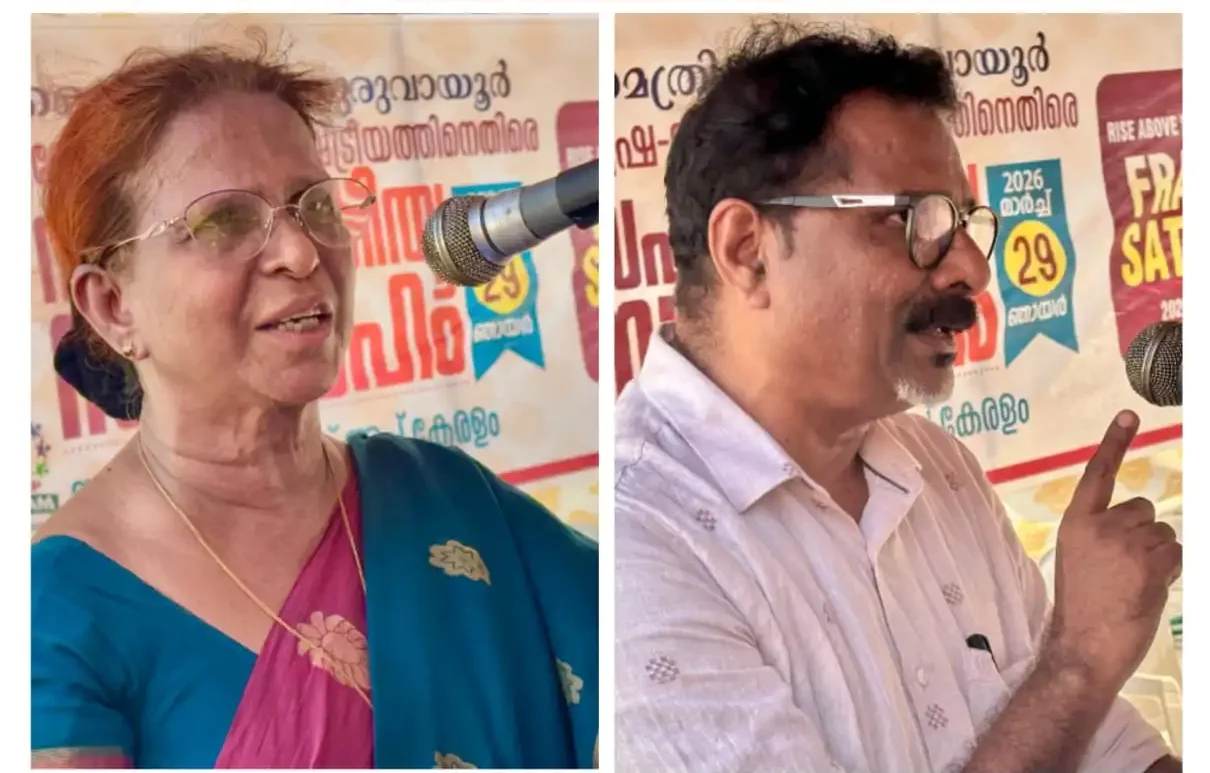
A message from CPI(ML) Liberation General Secretary Dipankar Bhattacharya, read out by senior journalist N. Madhavan Kutty, underlined that secular movements across India are watching this initiative closely. Guruvayur, in other words, is not an isolated site of dissent—it is part of a wider, national resistance.
The satyagraha itself unfolded as a cultural assertion—where Sufi music, folk songs, and poetry fused seamlessly with political expression. Much like Kerala’s renaissance era, art and politics spoke in one voice here. This was pluralism in practice, set against the monochrome insistence of majoritarian politics.
The “Guruvayur Declaration” issued at the event carried a sharp, unequivocal warning: communal forces seeking to roll back the gains of the renaissance will not be allowed to take root in Kerala. It called for the consolidation of progressive movements into a decisive resistance. The declaration noted that Kerala’s legacy—built on coexistence and social reform—is under sustained pressure from an aggressive right-wing politics deploying “multiple manipulative strategies.”
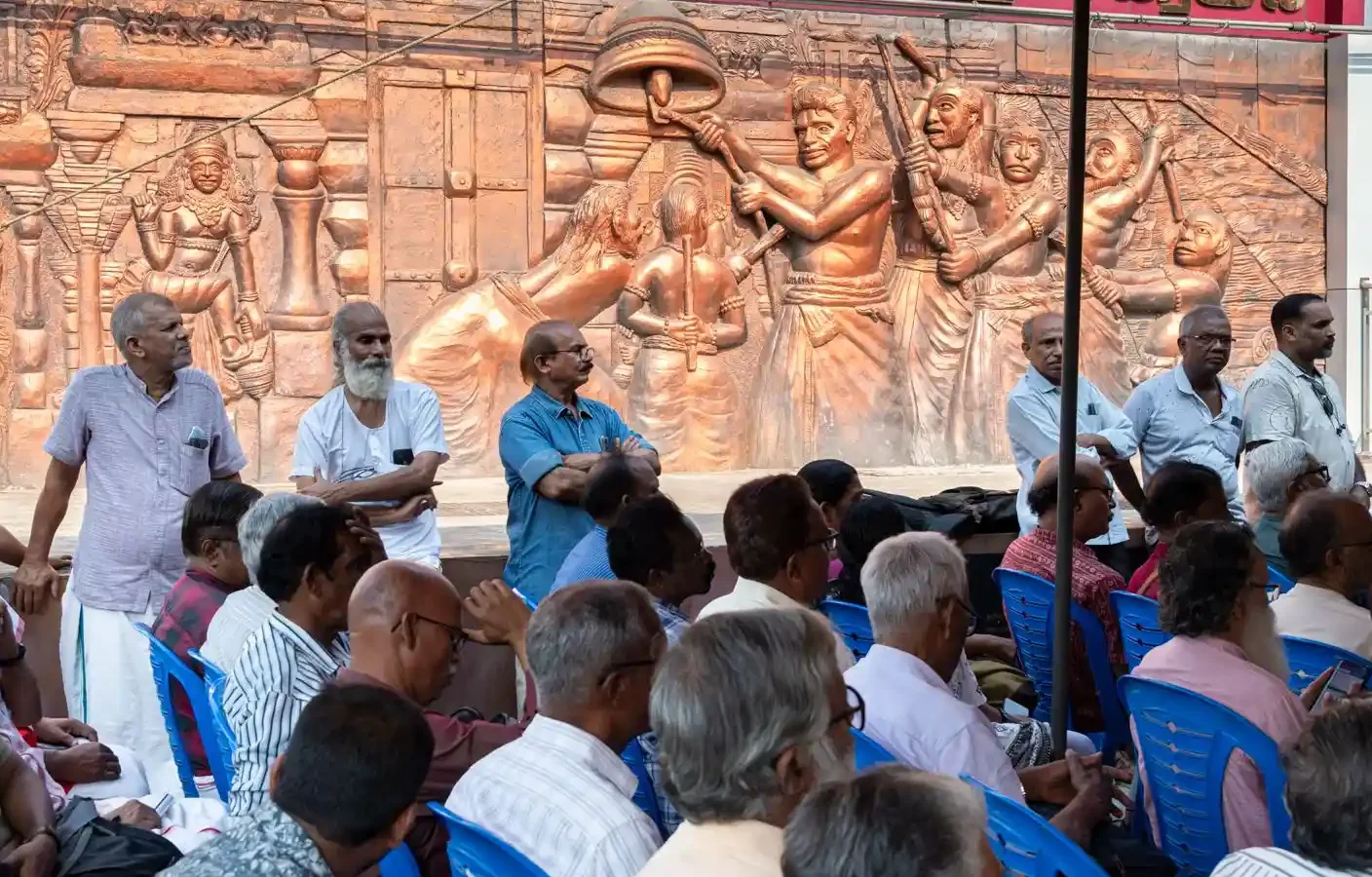
What emerges from this assessment is not despair, but a call to vigilance. This is a crucial moment. The declaration urged society to resist any attempt to reimpose divisions of caste and religion on a social fabric historically shaped by shared humanism. Satchidanandan’s warning sharpened this further: He pointed out that the advance of fascistic tendencies is no longer hypothetical—and silence in the face of it is nothing short of complicity.
There is, unmistakably, an undercurrent of indictment directed at mainstream secular political forces as well. The sense that parliamentary politics has failed to effectively confront Hindutva fascism runs through the initiative like a quiet but persistent charge.
Thus, on March 29, two starkly different spectacles played out in Kerala. In Thrissur, the orchestrated roar of power, amplified by the Prime Minister and his political machinery. In Guruvayur, the quiet but resolute assertion of people’s conscience.
Together, they pose a defining question for Kerala’s future: what is the way forward ? the politics of division—or the culture of coexistence? Guruvayur has already answered. What remains to be seen is whether that answer will gather the force of a larger people’s movement.








What a brilliant capture of a people’s movement for peace and harmony . Salute Wake Up Keralam and Salute AIDEM
“A sharp contrast between two visions and ideologies.
Shows how politics and principles take different paths.
Thought-provoking and insightful piece.”