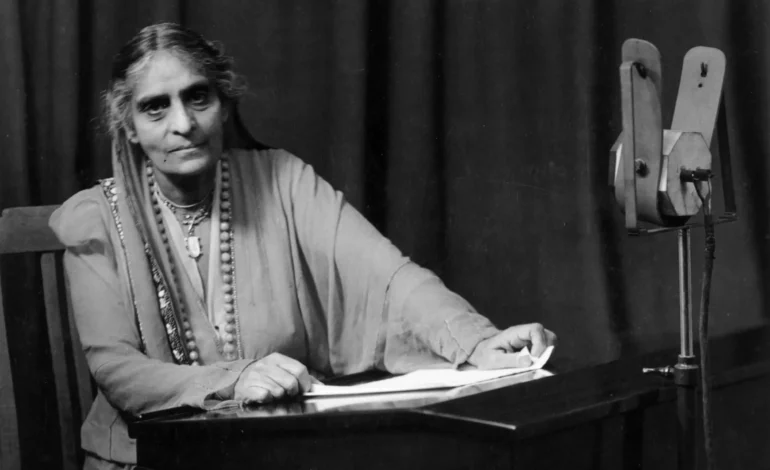
The following article is part of the Trailblazing Women of India series. A series presented by The AIDEM, exploring the lives and ideas of women who played a decisive role in shaping India’s social, political, and intellectual history.
The AIDEM underscores the enduring contemporary relevance of revisiting the lives of these women leaders and the ideas they championed. Click here to watch the video.
Picture this: It’s the late 1880s in Poona. A young woman, the daughter of a pioneering educator, walks into the Deccan College lecture hall. She is the only woman among three hundred male students. Doors are slammed in her face, jokes are played at her expense, and stares follow her everywhere. Yet she persists. Her name? Cornelia Sorabji.
And she was about to change the way India thought about women, law, and justice.
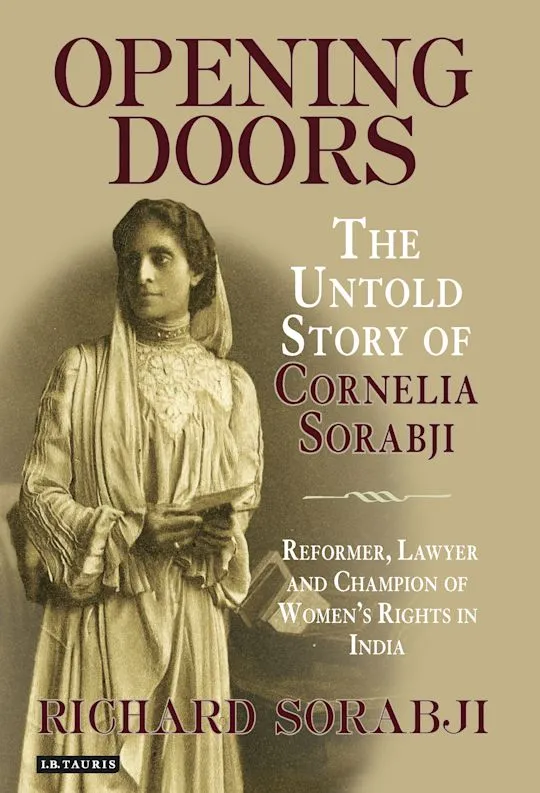
Cornelia was born in 1866 in Nashik, into a pioneering family. Her father, the Reverend Sorabji Kharsedji, was a Parsi convert to Christianity and a missionary. Her mother, Francina Ford, was an educational reformer who founded schools for girls in Poona. Cornelia grew up in a household where learning was not just encouraged but demanded. Her mother’s vision of education for women shaped Cornelia’s own outlook: that knowledge was the key to honor/respect/empowerment/identity/authority/standing/dignity.
She excelled early. At sixteen, she matriculated at Bombay University, and by 1888, she had earned her B.A. with honors in English Literature—the first woman to do so. But her ambitions stretched further. She wanted to study law. During those times, it was unimaginable for women to study law. Yet Cornelia fought for admission, and with support from sympathetic English patrons, she traveled to Oxford in 1889, becoming the first Indian woman to study law there.
Her return to India was bittersweet. Colonial courts refused to recognize her as a lawyer. She could advise, but not plead. Yet she found her mission: defending the rights of the purdahnashins—women across religions secluded by custom, their voice and power curtailed, and forbidden to speak to men outside their families. Many of these women owned property but had no way to protect it. Cornelia became their voice, drafting petitions, advising on inheritance, and ensuring their rights were not erased. Over her career, she handled hundreds of cases, proving that law was not just about statutes—it was about justice reaching those most silenced.
Her work was immense, but she was also a writer and legal reformer. She published books like India Calling and Between the Twilights, blending memoir and social commentary. Through her writings, she revealed the hidden lives of women behind the purdah, insisting that their struggles were central to India’s story.
Her career was marked by contradictions. She worked within the colonial system, sometimes criticized for caution. Yet her achievements were undeniable. In 1924, after decades of struggle, she was finally recognized as India’s first female advocate. She practiced in both India and Britain, opening doors for generations of women lawyers to follow.
Cornelia Sorabji died in 1954. But her pursuits remain urgent. What does justice mean when half the population is barred from speaking in court? What barriers still exist today for women in law, legal autonomy, education, or public life?
For young thinkers, her life is a challenge. A life that demands more than admiration. A life to be read, debated, and carried forward. Because as Cornelia Sorabji showed, freedom is never given—it is argued, defended, and lived.