

L C Jain – Gandhian Organiser

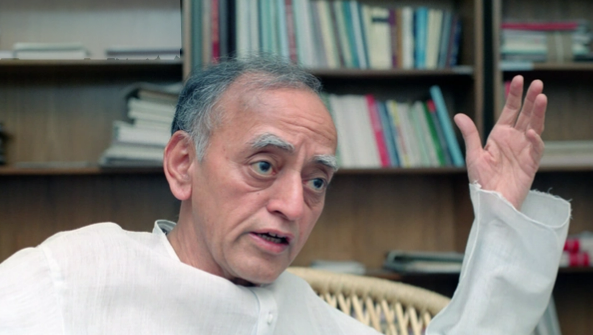
Part of our Gandhian Economics Series, Balasubramaniam Muthusamy traces the remarkable life of L. C. Jain—from rebuilding Partition refugee camps to creating India’s first supermarket and shaping grassroots democracy. His work stands on a simple Gandhian truth: when people are trusted with responsibility, they rise to it.
L. C. Jain survived the Partition riots, rebuilt refugees into citizens, opened India’s first supermarket in fifteen days, and drafted the blueprint for rural self-governance—all without once seeking credit. He is among the least known of the people who made independent India.
On the evening of January 30, 1948, Jawaharlal Nehru visited the Hudson Lines refugee camp in Old Delhi and was received, for the first time in weeks, without abuse. Everywhere else he had gone—every transit camp swollen with refugees who had fled West Punjab (Pakistan) with nothing—the crowds had cursed him, blamed him, pressed against the barriers with the specific fury of the newly dispossessed. At Hudson Lines, which housed ten thousand refugees, he was met instead with something he had not expected: composure, and then gratitude, and then a collective appeal. “Nehruji,” the people said, “the burden of saving this nation rests on your shoulders. Tell us what we should do.” He embraced them and wept. He told them that Gandhi should come—that Bapu was carrying such heavy sorrow. Seven days later, Gandhi was assassinated.
The man responsible for the condition of that camp—for the orderliness, the elected committee, the radio station broadcasting from a repurposed loudspeaker, the women who had improvised a kitchen out of broken utensils after rioters destroyed the official one—was a twenty-two-year-old named Lakshmi Chand Jain. He had been a college student when the call came. He had never administered anything. He had no official authority and no salary. What he had was a set of principles absorbed from Gandhi, a capacity for rapid improvisation, and an instinct, already fully formed, for the proposition that people given responsibility tend to exercise it.
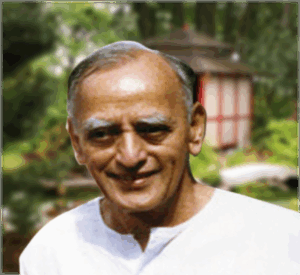
L.C. Jain spent the next five decades applying that instinct to problems of considerable magnitude: refugee resettlement, cooperative economics, the revival of India’s craft traditions, consumer rights, rural governance, and, finally, diplomacy in post-apartheid South Africa. He won the Ramon Magsaysay Award in 1989. He died in 2010. His son Srinivasan Jain is one of India’s most prominent television journalists. L. C. Jain himself is almost entirely unknown outside a small circle of Gandhian scholars and old Delhi hands who remember, with a precision that suggests the memory has been hoarded carefully, exactly what he did and when.
“I asked myself: what would Gandhi do in this situation? Gandhi would not call the police. So I did not call the police.” —L. C. Jain, on his first night administering the Hudson Lines refugee camp
The Family
Lakshmi Chand Jain was born in 1925 in Bahadurpur, a town in the princely state of Alwar, to parents who had already chosen a side. His father, Phul Chand Jain, came from a family of jewellers but had been drawn into the Congress movement; his mother, Chameli Devi, would be arrested in 1932 for participating in the foreign-cloth-boycott campaign and imprisoned in Lahore. In a community—the Jains—that tended toward social conservatism and had limited presence in public life, the fact that a Jain woman had gone to jail for the freedom movement was remarkable enough to make young Lakshmi Chand briefly famous at school.
Phul Chand Jain’s political evolution was dramatic. Arrested at a 1929 Congress meeting where Gandhi was present, he encountered in jail the members of the Hindustan Socialist Republican Association—the revolutionary cell that counted Bhagat Singh and Chandrashekhar Azad among its members. He is said to have purchased the first pistol that Azad ever owned. After his release, he became editor of a revolutionary journal, abandoned the jeweller’s trade entirely, and eventually rose to become secretary of the Delhi Congress, a position that placed him in regular proximity to both Gandhi and Nehru. His son grew up watching them at close range.
In 1942, when Gandhi launched the Quit India movement with his “Do or Die” ultimatum, Lakshmi Chand was seventeen. He and his friends at Hindu College cut the telephone wires of St. Stephen’s College, which had declined to participate in the agitation. He worked under Aruna Asaf Ali, one of the movement’s most celebrated organizers, who deployed the children of independence activists as couriers, fundraisers, and occasionally as participants in more dramatic operations, including the placement of small bombs in public spaces. For this work, Jain adopted the alias Santosh.
One of his assignments came from Devadas Gandhi—the Mahatma’s son, and editor of the Hindustan Times. Gandhi was then on an indefinite fast at the Aga Khan Palace in Pune. Jain was sent to carry a message to Multan, asking the Congress leader there to organize a one-day solidarity fast among prisoners in Multan Jail. At the railway station, by a coincidence that seems almost too convenient for biography, Jain found his own father on the train—a prisoner in transit—and managed to convey the message in a brief clandestine encounter before disappearing into the crowd.
Partition
By 1947, Jain had completed his undergraduate degree and enrolled for postgraduate study. In September, a phone call from Sucheta Kripalani—freedom fighter and wife of the Congress leader Acharya Kripalani—changed his plans for several years. A Muslim man had been dragged into the grounds of a Congress meeting near the Kingsway refugee camp and beaten to death by a group that included both refugees and Congress workers. The police had arrested everyone involved, leaving the camp—the largest in Delhi—without administration.
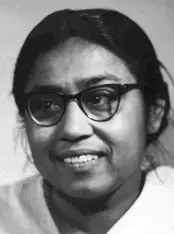
“Go to Kingsway at once and take charge,” Kripalani said.
“But Didi, I’ve just enrolled for my M.A.—”
“Your studies are finished,” she said. “Go.”
The Kingsway camp comprised three sections: Edward Lines, Outram Lines, and Hudson Lines, the last of which held ten thousand people. Jain took charge of Hudson Lines on a September evening when the camp was in open revolt—rioters had smashed the camp kitchen, destroying cooking vessels and looting grain stores—and his first decision was not to call the police.
“I asked myself what Gandhiji would do,” he recalled decades later. “Gandhiji would not call the police. So I did not call the police.” He spent the night among the people, listening. The women of the camp, in the meantime, had improvised: gathering the unbroken vessels and started cooking again. The rioters withdrew.
The next day, Jain organized the camp through its residents. He divided it into sections, each with its own elected committee, each responsible for its own sanitation, food distribution, and internal order. He accepted into Hudson Lines four hundred young men whom every other camp in Delhi had refused to house, gave them administrative responsibilities, and watched them become, within days, among his most reliable organizers. He set up a camp radio station. He instructed the committees to resolve their own disputes.
When the young men who had caused the initial riot came to his door that night and asked his forgiveness—“You called us your children, even after what we did,” they said—Jain understood something that would shape everything he subsequently attempted: that the willingness to treat people as capable of responsibility is, under almost all circumstances, a self-fulfilling act.
Lady Mountbatten, who was overseeing refugee rehabilitation efforts across Delhi, visited Hudson Lines on the strength of its reputation and was sufficiently impressed to mention it to Nehru. His visit, and the reception he received, produced the scene with which this account began. Seven days later, Gandhi died. What remained was the work of building a country.
Faridabad
In February 1948, Kamaladevi Chattopadhyaya—the great activist, art historian, and social entrepreneur who had founded the Indian Cooperative Union—came to Hudson Lines and asked Jain a question he had not previously thought to ask: “What is the future of these people?” He had been so entirely occupied with the logistics of keeping ten thousand refugees fed and sheltered that the question of their long-term rehabilitation had simply not arisen.
Kamaladevi’s answer was cooperative self-sufficiency. The refugees should build their own future; the role of organizers was to provide the structure within which they could do so. A committee was formed. Six thousand acres of land in Chattarpur, a village near Delhi, were identified—Muslim-owned land abandoned in the chaos of Partition, portions of which were already being quietly appropriated by government officials. Nehru helped recover it. Agricultural cooperatives were established; seed loans were disbursed through village cooperative societies rather than through any official channel; repayment rates reached ninety-eight per cent. Then the cooperative department moved in, dissolved the village societies, replaced them with district cooperative banks, and brought, as Jain observed without surprise, their traditional companions: hierarchy and corruption.
The next project was larger. Fifty thousand refugees had arrived from the North-West Frontier Province—the Hindu Pathans who had followed the Frontier Gandhi, Khan Abdul Ghaffar Khan, in his non-violent resistance to British rule. Their rehabilitation was a matter of national prestige; Nehru attended twenty of the twenty-one planning meetings. The refugees chose Faridabad, then a small town in what was Punjab, as their resettlement site, and the Faridabad Development Board was established with Sudhir Ghosh, one of Gandhi’s most trusted associates, as its secretary. Jain was seconded from the Indian Cooperative Union to assist.
Before anything else was built, an election was held. Representatives were chosen from each area of origin in the North-West Frontier, seventeen in total, each with specific portfolio responsibilities, none of whose decisions Jain or Ghosh could override. This election—held in 1949, in a refugee settlement in what was technically still Punjab—was the first election in independent India conducted on the basis of universal adult suffrage. The Indian Constitution would not be adopted for another year.
The refugees built their own houses. Five thousand units were planned; the deadline was met ahead of schedule. The Punjab government’s preference—to award the construction contract to a private firm—was overridden by Kamaladevi and, ultimately, by Nehru. Every attempt to impose external contractors, external curricula, external authority was resisted and, with sufficient effort and the right political connections, defeated. Schools based on Gandhi’s Nai Talim—“new education,” which integrated agricultural and craft training with conventional academics—were established and running within two years, with nearly five thousand students enrolled. Then the Punjab government filed unfavorable reports with the central government, declared that Gandhian education was incompatible with modern scientific civilization, and eventually took over the Faridabad Development Board entirely. Kamaladevi handed over the keys and withdrew.
The first election in independent India conducted on universal adult suffrage was held in 1949, in a refugee camp in Punjab. The Constitution had not yet been adopted.
The Craft Emporium
In 1953, the central government established five boards—for handicrafts, khadi, handlooms, coir, and silk—to support cottage industry and rural employment. Kamaladevi was asked to chair the All India Handicrafts Board. She brought Jain with her from Faridabad.
He and Professor Raj Krishna spent two years travelling to every corner of India, documenting the craft traditions that had survived British industrialization—weaving, pottery, metalwork, woodcarving, embroidery—and assessing their commercial condition. The picture was not encouraging. The artisans were talented, the traditions were deep, and the products were largely unsellable under existing arrangements, because the existing arrangements were organized around the convenience of bureaucrats rather than the preferences of buyers.

The All India Handicrafts Emporium in Janpath, Delhi, was reorganized from the ground up. The previous arrangement grouped products by state; Jain reorganized them by category, so that a customer who wanted a sari could compare every state’s saris in one place rather than walking through a series of regional pavilions. Sales increased dramatically. Cash payment on delivery replaced the practice of consignment; producers received immediate payment for their work, rather than waiting months for goods to sell, and received twenty-five per cent of year-end profits in addition. Overseas markets were opened: exhibitions and stores in the United States, Europe, and Japan introduced Indian handicrafts to audiences that had not previously encountered them. State governments, observing the results, established their own craft corporations and emporiums. The export market, valued at six million dollars in the nineteen-fifties, exceeded two billion dollars by 2000.
The government eventually moved to take over the operation. The Indian Cooperative Union’s staff resisted, were defeated, and handed over the keys. They were good at handing over keys. The competence to build a thing and the desire to possess it are, Jain had learned, almost never present in the same institution simultaneously.
The Supermarket
In 1966, Indira Gandhi’s government devalued the rupee to boost exports. Inflation followed, as it reliably does, and the prices of essential goods in Delhi rose faster than the city’s residents could absorb. The government, which had watched Jain solve problems before, came looking for him. He had been burned enough times by the experience of building something useful and then watching the state dismantle it that he required, before agreeing to help, a specific set of conditions: no government interference in operations, no government role in hiring, and all necessary regulatory approvals to be delivered directly rather than requiring him to queue at ministries. The Agriculture Minister, C. Subramaniam, accepted. He also appointed S. Venkitaraman—later to become Governor of the Reserve Bank of India—as the government’s single point of contact, with instructions to run interference against anyone who tried to interfere.
Jain’s plan was a large cooperative supermarket: one enormous store where essential goods could be sold at transparent, fixed prices, undercutting the informal price-fixing arrangements that had developed among Delhi’s wholesale traders. He needed between eighty thousand and a hundred thousand square feet of space. A building of that size was available in Shankar Market, near Connaught Place, which had been constructed as three hundred and fifty small shops. Jain brought in an architect—Cyrus Jhabvala—and told him to knock down the walls.
The rubble from the demolished partitions filled six hundred trucks. More than five hundred carpenters worked simultaneously to build the forty thousand linear feet of shelving the store required. The working capital—one crore rupees, roughly a million dollars at the exchange rate of the day—was provided by the Syndicate Bank of Manipal, whose chairman flew to Delhi personally, opened a branch office in the store, and handed the store manager a chequebook. The bank stayed open through the night to receive the day’s deposits.
Jain had promised the store would open fifteen days after the agreement was signed. It did, on the fifteenth of June, 1966. Subramaniam had arranged for Indira Gandhi to perform the inauguration. Jain declined: this was a store for ordinary people, and the first customer should open it. When the doors were unlocked—an hour ahead of schedule, to relieve the pressure of the crowd that had assembled outside—the windows were broken by the press of bodies. The store’s designer climbed onto a counter to announce that the Delhi Super Bazaar was open for business.
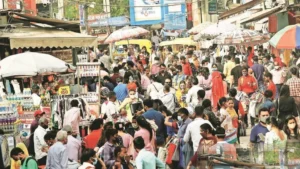
All India Radio broadcast price comparisons between the Super Bazaar and the open market twice daily, morning and evening. Delhi’s open-market prices collapsed within weeks. In its first year, the Super Bazaar recorded sales of forty-eight million rupees. By any reasonable measure, it was India’s first modern supermarket—and, at its opening, one of the largest retail establishments in Asia.
Its most durable institutional consequence was a confrontation with Hindustan Lever, the dominant consumer-goods company in India and a practitioner of what was then called “retail price maintenance”—the practice by which a manufacturer dictates the price at which its products may be sold, regardless of what the retailer might prefer. The Super Bazaar refused to stock Hindustan Lever’s products at the company’s prescribed prices, substituted a competitor’s vanaspati in the cooking-oil section, and watched Hindustan Lever’s sales decline fast enough that the company returned within weeks to negotiate. Retail price maintenance in India effectively ended there.
C. Subramaniam wanted more stores. Jain helped open additional Super Bazaars in Delhi and, eventually, in Madurai. Once the model was established and running, he left. He was forty-one years old and had been working as an unpaid volunteer, drawing only an honorarium, for the better part of two decades.
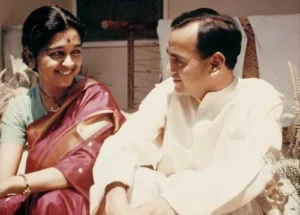
He got married. His wife, Devaki, was an Oxford-educated economist and the daughter of the Diwan of Gwalior; their courtship, interrupted repeatedly by the demands of public work, had lasted longer than most diplomatic negotiations. She became a distinguished professor of economics who did a lot of work on Gandhian philosophy and was later awarded the Padma Vibhushan.
Panchayati Raj
In 1977, Jain was assigned to the Uttar Pradesh planning committee, where he spent time studying seven hundred villages and thirty-five hundred poor families. The finding was not complicated: no government welfare program, regardless of its design or funding, was reaching the people at the bottom of the economic pyramid. The money was being captured, systematically, by the officials and contractors responsible for disbursing it. The solution, as Jain had concluded through his experience in Faridabad and the cooperative movement, was the transfer of real political power to elected local bodies.
In 1989, when V. P. Singh’s government took office, Jain joined the Planning Commission under Ramakrishna Hegde. His first act was to reprint J. C. Kumarappa’s 1929 economic survey of Matar Taluka in Gujarat—a study commissioned by Gandhi and Sardar Patel that argued for the economic efficiency of keeping production and consumption geographically proximate—and distribute five hundred copies to every member and researcher on the Commission. He wanted to establish, at the outset, what frame of reference they were working within.
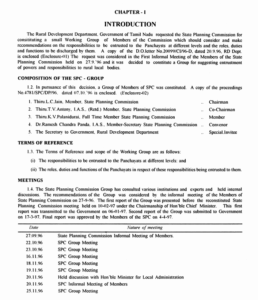
After the Panchayati Raj Act was passed in 1993, Jain was asked by the Tamil Nadu government to prepare a report on its implementation in the state. The resulting document—known, in Tamil Nadu’s official records, as the L. C. Jain Report—proposed transferring administrative authority at the district level from the Collector, a figure inherited from the colonial structure, to elected bodies. The proposal was debated in cabinet and introduced as legislation in the assembly. It was defeated by the combined resistance of government officials and established local politicians, neither of whom had any interest in the redistribution of authority it implied.
This outcome did not surprise Jain, who had been watching variations of it for decades. The problem, he argued, went back to the Constituent Assembly, where the decision was made to preserve the British administrative framework—with the district collector at its center—rather than build democratic self-governance from the village up. Until that choice was revisited, he believed, Panchayati Raj would remain a formal structure without real power, and the money intended for rural development would continue to flow, largely, to people other than the rural poor.
South Africa
In 1997, Jain was sent to South Africa as India’s High Commissioner—the first person to hold that post after Gopal Gandhi, the Mahatma’s grandson. The choice was deliberate: the new South Africa, still assembling its post-apartheid institutions, had a specific historical relationship with Gandhi, who had developed his theory of nonviolent resistance in Natal and the Transvaal between 1893 and 1915. The Indian government wanted someone who understood that history not as a piece of heritage to be displayed but as a set of practical principles to be applied.
Jain focussed his tenure on employment training for Black South Africans and on partnerships between Indian private-sector companies and South African counterparts. Then, in May 1998, India conducted nuclear tests at Pokhran, and Nelson Mandela and Archbishop Desmond Tutu condemned them publicly and forcefully. Jain was invited onto South African television to respond.
“As a Gandhian, how can you possibly defend this?” the interviewer asked.
“Any Gandhian—indeed, any person of conscience—would feel discomfort at this,” Jain said. “But India’s neighbour is a major nuclear power, and the security of a billion people requires that this reality be acknowledged. I ask you to understand the government’s position, even if you do not accept it.”
The first sentence of that answer was not what the government’s political establishment wanted to hear. Brajesh Mishra, the powerful Principal Secretary to the Prime Minister, was displeased. Jain was recalled. At his farewell ceremony, South Africa’s Foreign Minister offered a parting observation: that if Jain were ever interested, South Africa would be pleased to appoint him as its own High Commissioner to India. The letter from the Foreign Secretary in Delhi, meanwhile, recorded that the Indian mission in Pretoria had handled the nuclear tests more satisfactorily than any other Indian mission in Africa.
He was recalled for telling the truth about his own discomfort. He was praised, in writing, for handling an impossible situation with skill. Both things were true.
At his farewell in Pretoria, South Africa’s Foreign Minister offered to appoint him as South Africa’s own High Commissioner to India. India had just recalled him for candor.
What he Left
L. C. Jain won the Ramon Magsaysay Award—Asia’s equivalent of the Nobel Peace Prize—in 1989. The citation described him as “a tireless activist for the poor.” This is accurate but incomplete. He was also, in sequence and often simultaneously, a logistician, an institutional designer, a retail innovator, a cooperative economist, and a diplomat. What unified these activities was not a particular doctrine but a particular method: find the people who are supposed to be served by an institution, give them genuine authority over it, and get out of the way.

He applied this method in contexts as different as a Partition refugee camp and a supermarket procurement chain. It worked, with variations, in all of them—until the government arrived, recognized a successful institution, and absorbed it, after which it generally worked less well. This pattern repeated often enough in Jain’s career that it constitutes, by itself, a finding about the relationship between the Indian state and the civil society organizations that do its work more effectively than it can do itself.
The Super Bazaar eventually became a creature of the state it was designed to bypass, accumulated the inefficiencies that state institutions tend to accumulate, and declined. The Faridabad schools were shut down. The cooperative structures in Chattarpur were replaced by district banks. The handicrafts emporium was taken over. In each case, the thing that Jain and his collaborators had built—quickly, with local materials and local people, without hierarchy and without corruption—outlasted the enthusiasm of the state for its original purpose.
What could not be taken over were the ideas. The proposition that refugees, given authority, could govern themselves. That artisans, paid immediately and given a transparent market, could sustain their traditions. That consumers, given a store that treated them as adults rather than supplicants, would come in numbers large enough to break price-fixing arrangements that had survived for decades. That grandmothers, given real responsibility, would prove more reliable stewards of their communities’ interests than the young men with credentials who customarily received the attention.
These are Gandhian propositions. They do not require Gandhi’s name to be invoked. They require only that someone be willing to act on them, and to keep acting on them when the state moves in and the keys have to be handed over and it is time, once again, to find the next problem and start from the beginning.








“A thoughtful tribute to L.C. Jain and his Gandhian vision. His commitment to grassroots empowerment and ethical public life still feels deeply relevant today. Truly inspiring to revisit such legacy.”