


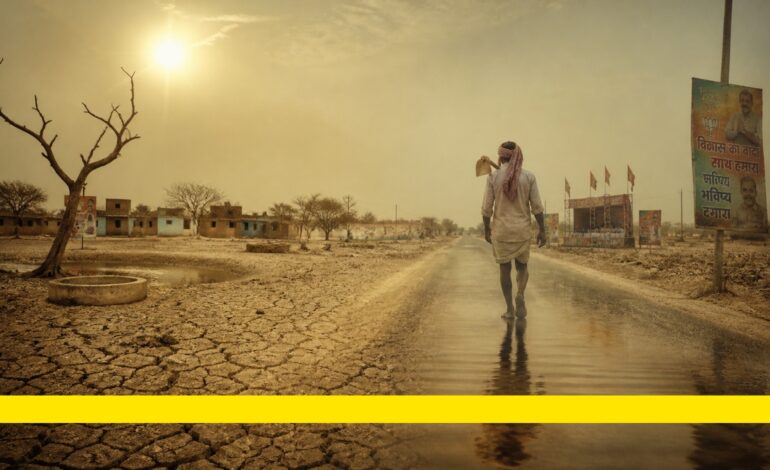
In this sharply observed edition of his “Everything Under the Sun” column, Nalin Verma turns to Purvanchal at a moment when elections in different and an unforgiving heatwave collide, exposing the fault lines of contemporary India. What unfolds is not merely a seasonal crisis, but a layered political reality – where the State’s priorities appear increasingly detached from the lived experiences of those battling extreme heat, precarity, and neglect.
Verma situates the heatwave within a wider canvas of inequality and governance, drawing connections between climate vulnerability, electoral compulsions, and a deepening disconnect between power and people. In AIDEM’s tradition of grounded, critical storytelling, this piece moves beyond headlines to capture how survival itself has become political in the hinterlands—where memory, loss, and resilience continue to shape everyday life.
Every summer, as temperatures rise across the northern plains of India, the heatwave returns not merely as a seasonal phenomenon but as a stark reminder of inequality, governance failures, and a changing way of life. Nowhere is this more visible than in Purvanchal, where climate, politics, and memory intersect to tell a deeper story about survival, neglect, and transformation.
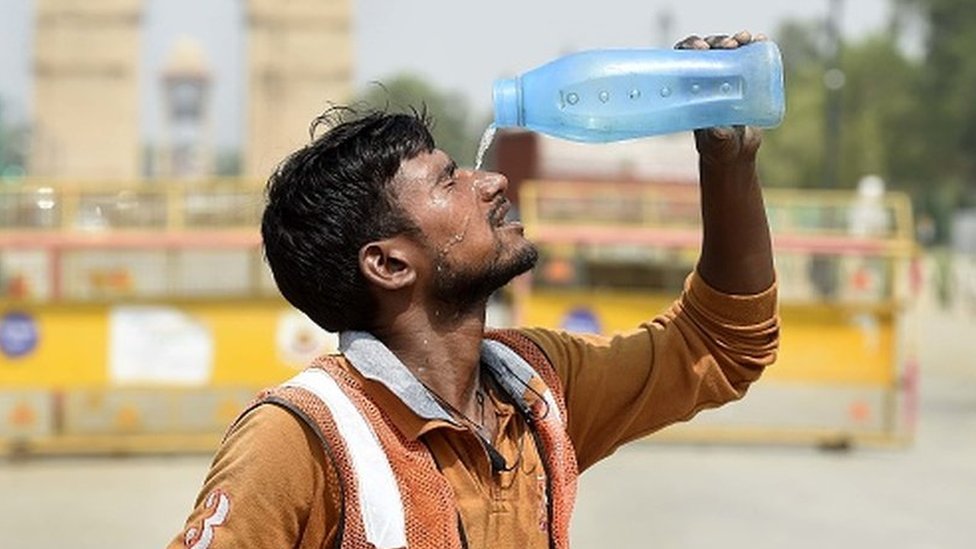
Purvanchal, which comprises the western part of undivided Bihar and eastern Uttar Pradesh, lies in the “core heatwave zone” of India. Hundreds of people die every year due to heatstroke and other heat-related diseases, and thousands fall ill. As many as 23 states in India are affected by heatwaves.
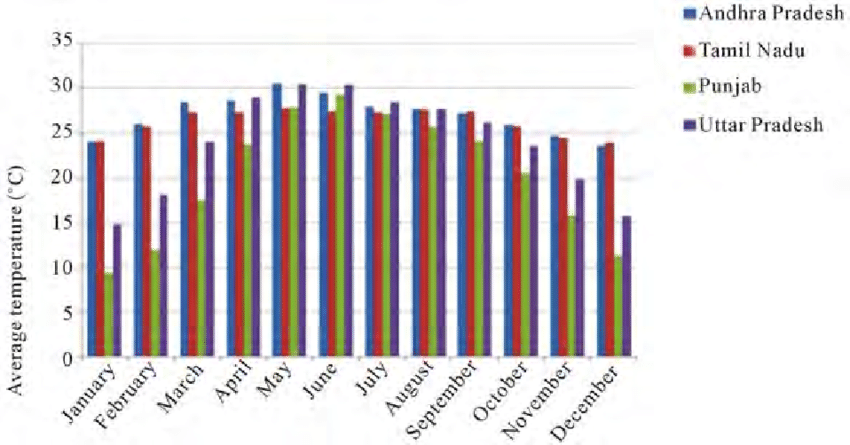
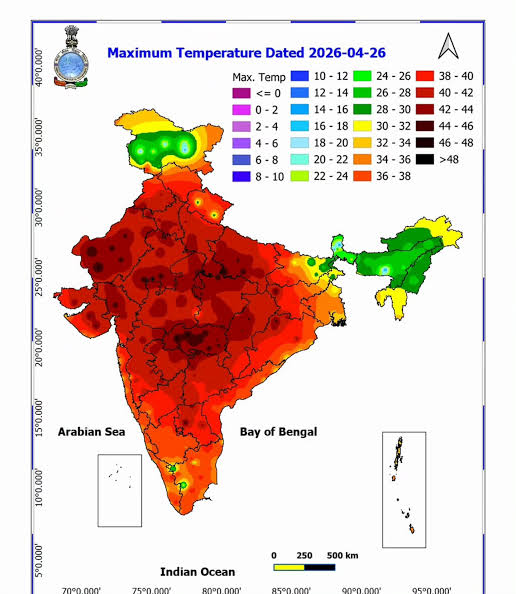
As May begins, most of India—the north-western and central parts, and the eastern coast comprising Andhra Pradesh and Odisha—are set to reel under the havoc of a heatwave. The poor, who constitute about 70% to 85% of the population in these “core heatwave zones,” will be easy prey to the impending catastrophe that has already begun hitting settlements.
The rich – politicians, bureaucrats, and corporate operators who enjoy clout over the system that is supposed to ensure food, clothing, shelter, and safety—will be largely unaffected. They will remain in their air-conditioned establishments, travel in air-conditioned cars, fly in planes above the clouds, and retreat to hill stations to chill out.
Those for whom the system has been put in place will die of heatstroke. But those who control the system will wallow in luxury irrespective of cold waves or heatwaves—it is the undisputed reality of India.
While the rich-poor divide continues to widen, some draw a parallel with India’s situation in 1975–77, when the then Prime Minister, Indira Gandhi, displaying her dictatorial streak, imposed the Emergency. They argue that India is under an “undeclared emergency” under the current Prime Minister, Narendra Modi.
The situation beyond India, in the wider world of the 1970s, was also similar—at least anecdotally, if not empirically. The mighty United States had suffered a military humiliation at the hands of a weaker Vietnam after 20 years of war (1955–75). The U.S. appears to face a comparable predicament in its tensions involving Iran. Though the contexts and timelines of the U.S.–Vietnam and U.S.–Israel–Iran conflicts differ, requiring distinct analytical yardsticks, amateurs—who populate gossip circles and dominate social media—have found fodder for entertainment in the tragedy of war.
Back to heatwave:
Paradoxically, heatwaves are still not considered a “notified disaster” under the Disaster Management Act in India, despite the 16th Finance Commission recommending that both heatwaves and lightning be included. If notified, it would enable state governments to use funds from their State Disaster Response Fund to provide relief to people affected by heatwaves and lightning.
Theoretically, the Indian state should coordinate with state governments to assist citizens during calamities within a federal system of governance. But it has instead turned into the Indian state versus regional parties in West Bengal, Kerala, Tamil Nadu, Assam, and the Union Territory of Puducherry.
Given the constitutional framework, it ought to have been the Bharatiya Janata Party (the ruling party at the Centre) versus regional parties in the respective states. However, numerous reports from the ground—particularly in West Bengal—suggest that the Indian state, comprising the Election Commission, central investigating agencies, central paramilitary forces, the judiciary, and officials from the state to panchayat levels, “colluded” to disenfranchise over 2,700,000 voters from the electoral rolls and to work for the BJP against the All India Trinamool Congress.
Readers may wonder what connection the people of Purvanchal, battling heatwaves, have with elections in other states or the U.S.-Israel tensions involving Iran. They do have a connection: the ruling establishment at the Centre is least bothered about heatwaves claiming lives, while bureaucrats, who are supposed to serve disaster-struck citizens in Uttar Pradesh and Bihar, are deployed elsewhere to oversee elections.
The war in West Asia, meanwhile, hits their stomachs and livelihoods through a steep rise in petroleum prices. The heatwave in Purvanchal thus coincides with governments that appear less concerned with people’s real issues and more invested in using—or misusing—their strength and resources to win elections and tighten their grip over the system.
Purvanchal Story:
Analysts may discover common dictatorial streaks between Indira Gandhi in the 1970s and Narendra Modi today. Geopolitical experts may find merit in India’s ruling establishment maintaining silence over civilian deaths in Iran and Gaza. But life in the hinterlands of Purvanchal today is entirely different from what it was in the 1970s.
Heatwaves are not new. Yet people once had enough means and resources, embedded in their lifestyle, to withstand the heat irrespective of the governments of the day. Let this writer—born and brought up in Purvanchal, and still narrating its story—recall how villagers once beat the heat on their own.
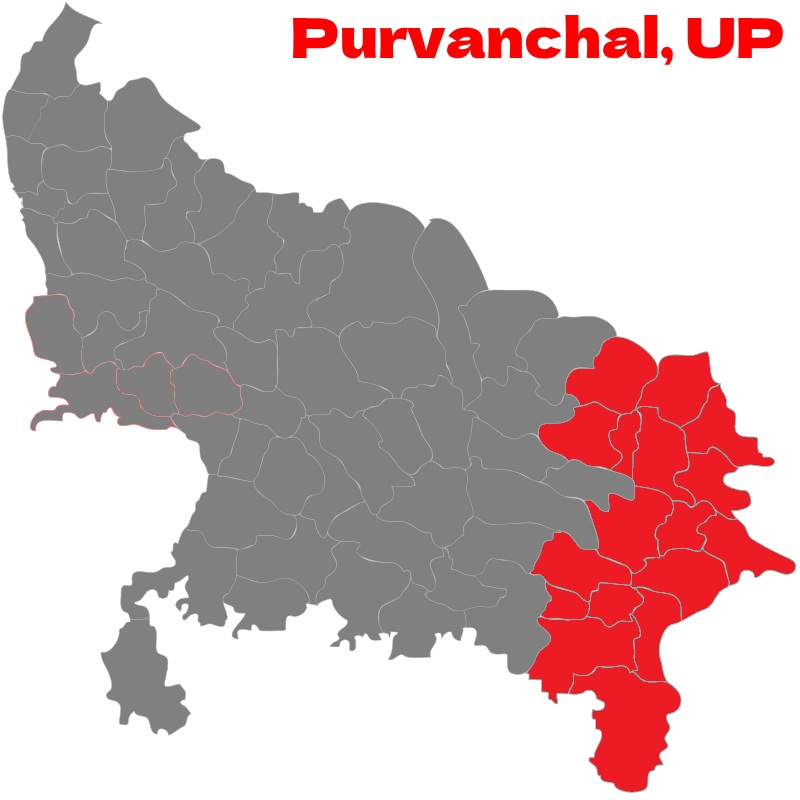
Purvanchal in the 1970s was largely bereft of electricity, not to speak of air-conditioners, vehicles, or metalled roads. But every village had four or five ponds surrounded by jamun, peepal, mango, and banyan trees. Wells were ubiquitous, usually shaded by peepal, neem, or banyan trees. Children and adults swam in the ponds, while storks dived from the branches to catch fish, adding to the rhythm of village life.
People, with a gamchha wrapped around their heads, travelled on foot along gravel paths from one village to another. They paused at wells, where an elderly villager would offer jaggery, a bucket of water, and a few kind words under the shade of a tree. There were no water purifiers or bottled water, yet bathing with freshly drawn well water felt like a gift of coolness under the blazing May-June sun.
Only a handful of relatively affluent farmers had hand pumps. Others depended on wells. Water was drawn in iron tubs attached to bamboo rods, poured into small tanks, and channelled through narrow lanes to irrigate crops—ridge gourd, bottle gourd, bitter gourd, ladyfinger, onion, pumpkin, and more.
Food habits, too, were adapted to the climate. People ate bhuja and drank sugarcane juice mixed with curd or milk in the morning, and sattu dissolved in plenty of water, often with ripe mangoes and simple condiments. Most lived in mud houses, yet gathered in khalihans—threshing grounds filled with harvested crops and cattle—to sing ballads of Alha-Udal and Saranga-Sadabrij. The nautch dance, common at summer weddings, was both entertainment and livelihood. They endured the May-June heat in a shared, almost musical rhythm.
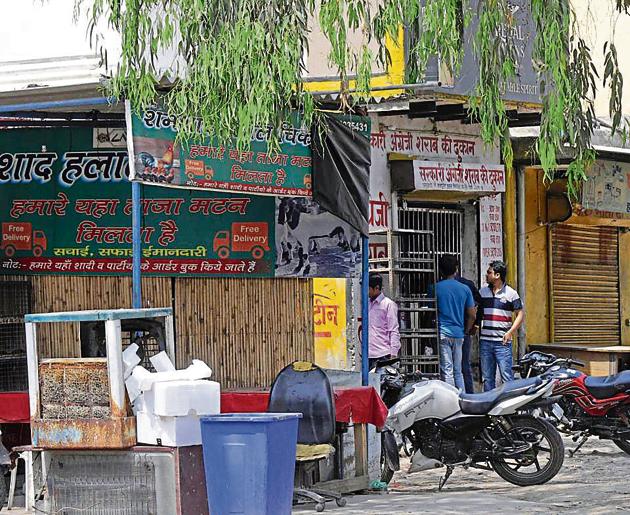
The lifestyle has changed completely over five decades. Many who lived through that era are still alive, but they have lost everything that sustained their early lives—ponds, wells, trees, foods, and shared cultural practices. They are forlorn and adrift today.
Though poor, they were once masters of their own lives. They collectively defeated Indira Gandhi in 1977 and brought her back in 1980 when they felt she had changed course. They were local, yet capable of acting with a broader sense of judgment.
Their progeny in the 21st century possess what earlier generations could not imagine—roads, vehicles, electricity, and smartphones connecting them to the world. Yet millets, ponds, wells, trees, khalihans, oxen, singers, and storytellers have disappeared. In their place are screens that stream fragments of the very culture that has faded away.
They rely on smartphones to form opinions about rulers, often dismissing their elders as outdated. They overlook the disappearance of trees, ponds, and crops from their own surroundings, yet engage in discussions on “global warming” online, admire images of leaders planting trees, and listen to Nitish Kumar speak of greenery missions.
Their forefathers found heroes in Alha-Udal, Ali Baba, Birbal, and freedom fighters like Chittu Pandey and Kunwar Singh. They created and shared their own stories. Today’s generation, by contrast, knows leaders like Narendra Modi and Yogi Adityanath largely through isolated consumption on smartphones. The sense of community has weakened.
Yet there is hope. Perhaps this generation will rediscover the value of collectivism, community life, and harmony with both people and nature. That rediscovery may not only help them endure the heat but also loosen the grip of those who profit while presenting themselves as the people’s leaders.








This brutally exposes the hollow narrative of “wave elections” while people are literally battling extreme heat just to participate. Ignoring the ground reality of heatwaves in Purvanchal isn’t just negligence—it’s a failure of accountability. Hard-hitting and necessary.