

Decoding the Tsunami Or Tamil Spring

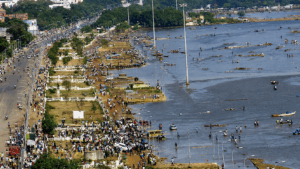
On the morning of December 26, 2004, the fishermen of the Tamil Nadu coast were on the water at their usual hour, doing their usual work. The earthquake that had triggered the Indian Ocean tsunami occurred deep beneath the sea floor off the coast of Sumatra; at the surface, where the boats were, there was no perceptible disturbance. The wave that would kill more than two hundred thousand people across fourteen countries was already moving at five hundred miles per hour through the water column below them. They felt nothing. Some of them were still at sea when the wave struck the coast and learned what had happened only when they returned to find their villages gone.
The 2026 Tamil Nadu assembly election has the quality of a political tsunami: the displacement was happening underwater, invisibly, for months or years before anyone on the surface registered its force. Between 2021 and 2026, the DMK government had navigated the pandemic, restored economic momentum, and built a record of welfare programs that its leadership—and most of the journalists and analysts who covered it—assessed as the foundation for a comfortable return to power. The assessment was not unreasonable. It was simply wrong about what was happening in the water.
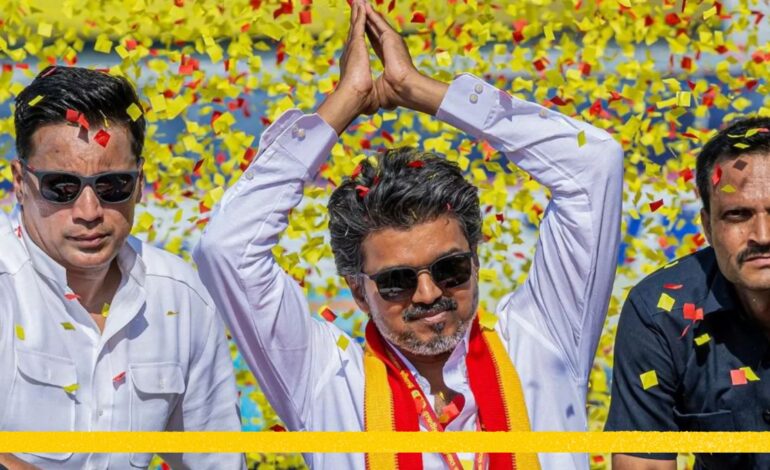
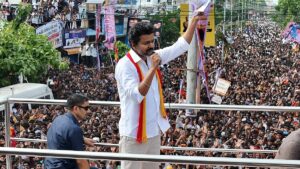
The Tamilaga Vettri Kazhagam (TVK) was founded in 2024 by Vijay, one of Tamil cinema’s most successful actors. Its founding was greeted, in the established political class, with the mixture of condescension and anxiety that the established always extend to the new: it was simultaneously dismissed as a vanity project and feared as a spoiler. What it turned out to be was the most significant electoral debut in Tamil Nadu in a generation. In its first election, against parties with decades of organisational infrastructure and access to resources it could not match, the TVK took thirty-four per cent of the vote and emerged as the single largest opposition force in the state.

This result requires explanation, and the explanation that is least flattering to the established parties is also the most accurate one.
The wave was moving at five hundred miles per hour. The fishermen felt nothing. Some of them learned what had happened only when they returned to find their villages gone.
The Arab Spring Problem
In late 2010 and early 2011, a series of popular uprisings swept across the Arab world with a speed and force that took every established power—domestic governments, foreign intelligence services, academic experts—entirely by surprise. What came to be called the Arab Spring had been building for years in the form of accumulated grievances: economic stagnation, corruption, the closure of legitimate channels for political expression, and the sense, shared across generations and classes, that the rulers of these countries had stopped bothering to earn their authority. Tunisia went first. Egypt followed. The wave moved through Libya, Yemen, Bahrain, and Syria.

The pattern has since repeated itself, in varying forms, in Sri Lanka, Nepal, and Bangladesh—each country different in its specifics, each sharing the same structural dynamic: a government that had grown comfortable with its own permanence, opposition institutions too weakened to channel discontent through normal political routes, and a population that eventually found an alternative outlet for its frustration. In Sri Lanka, that outlet was the streets. In Bangladesh, it was the students. In Tamil Nadu, in 2026, it was Vijay.
One of the mechanisms that makes this dynamic possible—and that has become more powerful with the spread of social media—is the failure of the press.
Democracy depends on the press to do something specific and unglamorous: to document abuses of power with sufficient persistence that citizens can form accurate judgments about the people who govern them.
When the press instead becomes an auxiliary of the governing party, the information that citizens would need to hold government accountable disappears from the public conversation. It does not disappear from people’s experience—they still live with the consequences of misgovernance—but it loses the institutional amplification that would allow it to become political pressure. The pressure does not dissolve. It migrates. It finds new channels: WhatsApp groups, YouTube channels, and the informal networks through which people who have lost faith in official information share what they actually know or feel.
The thirty-four per cent who voted for the TVK are not, in the main, people who were deceived by a celebrity’s charisma into betraying their real interests. They are people who had accumulated grievances—about price rises, about the gap between the government’s self-presentation and their daily experience, about the arrogance that accretes around any party that has held power long enough to believe it is indistinguishable from the state—and who found, in a new face with new promises, a plausible vehicle for expressing those grievances. That this vehicle was a film star rather than a conventional politician is not an accident. It is precisely the novelty—the distance from everything that the established parties represent—that made it attractive.
There is nothing surprising about any of this, if one is willing to look at it honestly. What is remarkable is how thoroughly the political class, the media, and the commentariat failed to see it coming. The wave was already moving.
What Not to Do
The temptation, for the parties that lost ground, is to respond to the TVK’s surge with the instruments that political parties have traditionally used against new entrants: mockery, allegations, and the suggestion that the people who voted for the newcomer were naive or misled. This temptation should be resisted, not on grounds of civility alone but on grounds of elementary strategic calculation.
Tamil Nadu’s political history contains an instructive precedent. The DMK’s most consequential opponent was not a rival ideological movement; it was M. G. Ramachandran, a film actor whose political career the DMK itself had helped flourish before it became the vehicle for everything the DMK’s core supporters resented about the party’s conduct in power. The AIADMK that MGR built was not primarily an ideological organization. It was a phenomenon—a cult of personality so durable that, decades after his death in 1987, rumors still circulate that a clock at his memorial ticks to this day. The DMK’s initial response to MGR—dismissal, then contempt, then increasingly bitter opposition—did not dissolve the phenomenon. It consolidated it. Every attack on MGR was received, by his supporters, as confirmation that the establishment feared him, and their attachment deepened accordingly.
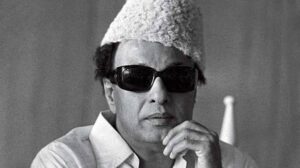
A political cult, once formed, is not dismantled by ridicule. It is, if anything, hardened by it. The thirty-four per cent who voted for the TVK in 2026 include a range of people with a range of motives, most of which are perfectly rational. Treating them as a monolithic mass of the credulous, or their chosen party as a joke, is both factually wrong and politically self-defeating. It is, as the Tamil phrase has it, political suicide.
The productive question is not ‘How do we attack them?’ but ‘What did they want that we failed to provide?’ The answers to that question require the kind of patient, honest self-examination that parties do not typically undertake when they are accustomed to winning. They require, above all, the willingness to have genuine conversations with people who have chosen differently—to go to them with respect rather than with lectures, and to listen more than to speak. This is not a natural disposition for any organisation that has spent years in power.
A political cult, once formed, is not dismantled by ridicule. It is hardened by it. Every attack becomes confirmation that the establishment feared him.
A Lesson from Dar Es Salaam
On my first day working in Tanzania, I had an introductory meeting with my Chairman, a man of Indian descent who had been born in the country. He outlined what he called the organization’s fixed values.
The first was this: the poorest woman in the most remote village in Tanzania is our most important customer. The twenty grams of toothpaste she buys, the twenty-five-gram sachet of face cream—these are what pay all our salaries. Our products must therefore be of genuine quality, produced at the lowest possible price. Not the quality of something made for export to Europe, and not the price of something reserved for the wealthy. Both, simultaneously.
The second concerned dignity. In Tanzania’s climate, the air is dry, skin cracks, and hair loses its natural texture. Women use moisturizing creams and wear hair extensions not as luxuries but as necessities—matters of daily comfort and self-presentation. Indians who come here sometimes look at these practices through the lens of Indian norms about simplicity and vanity. That lens is wrong here. What looks like an indulgence in one context is basic maintenance in another. Understand the context before you judge the behavior.
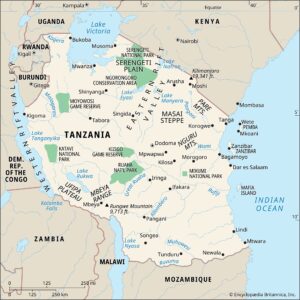
The third was non-negotiable: I am of Indian origin, but I was born here, and Tanzania is my country. You will not treat any Tanzanian as lesser, or as different, or as someone to be managed rather than respected. If I see that happen, our working relationship ends immediately.
The company’s toothpaste is, I can report, genuinely popular in Tanzania. So are its beauty products.
I think of this conversation when I consider what political parties in Tamil Nadu—or anywhere—need in order to remain relevant to the people they claim to represent. If a commercial organization serving a market of eighty million people needs fixed values that it will not compromise—about quality, about dignity, about the equal worth of every customer—then a political party asking to govern those same eighty million people needs them at least as urgently. The market does not forgive organizations that forget who their customer is. Neither does the electorate.
What Kamban Knew
The eleventh-century Tamil poet Kamban, adapting the Ramayana, has a scene in which Sugriva, the exiled monkey king, receives advice about how to deal with his enemies. The counsel he receives is remarkable for its psychological sophistication:
If there is smoke, know that there is fire blazing within. So too the world seethes with hidden excess. The counsel of the wise is also necessary. Even to those whose minds are filled with enmity, present a face of endless smiling and speak words of sweetness.
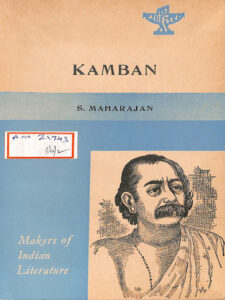
This is not advice to be dishonest or to conceal one’s positions. It is advice about the difference between conviction and expression—about the understanding that a face of ‘endless smiling’ and words of ‘sweetness’ are not weakness but a form of strategic wisdom, the recognition that you catch more with honey than with vinegar, and that people who feel respected are more persuadable than people who feel attacked.
In the five years before the 2026 election, M. K. Stalin largely practised this discipline. His response to the Karur incident, in which tensions threatened to escalate, was measured, mature, and markedly different from the reactive style that often characterizes politicians confronting challenges to their authority. He behaved, in those moments, less like a party leader protecting his turf than like a statesman thinking about the state. That reputation, carefully built, is one of the few assets that survives an electoral reversal intact. His conduct since losing power has, by most accounts, maintained the same register. He has not raged. He has not blamed. He has kept his character.
That is not nothing. It may, in the end, be the thing that matters most.
The New Electorate
Tamil Nadu has approximately one crore registered voters under the age of thirty. This is not a small constituency. It is, in most competitive elections, a decisive one.
This generation does not share the cultural references of the politicians who address them. They did not grow up with the Dravidian movement’s rhetoric, its cadences, its conceptual framework. They did not form their political consciousness in the shadow of the Emergency or the 1967 election or the debate over Hindi imposition. They formed it in the age of YouTube, Instagram, and the parasocial relationships that digital platforms make possible. The idiom in which Tamil politics has historically been conducted—the elaborate honorifics, the classical allusions, the formal platform oratory, what might be called the Pure Tamil political discourse—might register to many of them as a foreign language.
This is not a new problem. When the Dravidian movement first emerged, it succeeded in part by doing something that the then cultural establishment had not done: it spoke to people in the Tamil they actually used. It brought politics out of the Sanskrit-influenced register of the elite and into the vernacular. The generation that entered politics with that movement did so because the movement spoke their language—literally and metaphorically. The Dravidian parties now find themselves in the position that the establishment was in then: their natural idiom has become the formal one, and a new generation is waiting for someone to speak to them in theirs.

The TVK, perhaps because it emerged from the world of popular cinema rather than the world of party politics, has been more fluent in that new idiom. Whether it can translate fluency into governance is an entirely different question—one that will require answering problems for which cinematic charisma provides no preparation. The TVK has no experience of administration at any level. Its leader has made promises that even the most experienced fiscal planners would struggle to fund. The thirty-four per cent who voted for it will eventually want answers, and the answers will not come from the kinds of speeches that win elections.







“An intense and thought-provoking reflection on resistance, identity, and the political awakening shaping Tamil society today. ‘Tamil Spring’ is not just a moment of protest, but a deeper assertion of dignity, memory, culture, and democratic voice. Powerful writing by Balasubramaniam Muthusamy that compels readers to look beyond headlines and understand the emotions, history, and aspirations driving this social churn.