


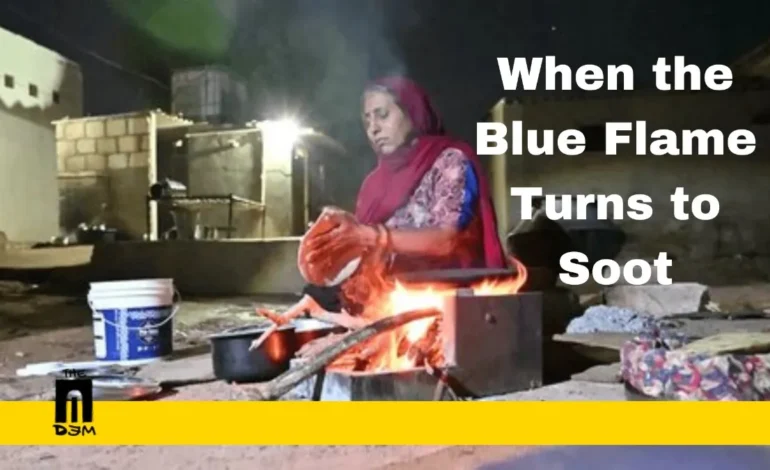
What we are witnessing in urban India is a broken ladder. Policy assumes that once a household moves up to LPG, they stay there. However, without price caps or diversified energy options, the poor today are in a state of energy precariousness. The moment a global crisis hits, they don’t just pause their progress, they fall all the way back to the bottom, often into conditions worse than the ones they left behind in the village.
In the rural context, the state views the citizen as a resident with rights. In the urban context, the migrant is viewed as ‘labour’ with a function. This functional view of the poor creates a paradox where a woman can spend eight hours a day cleaning a modern kitchen with an induction stove, only to return to a room filled with toxic smoke. The state’s failure to create a portable, urban-centric identification system means that the ‘Social Safety Net’ has holes large enough for millions to fall through.
When a national welfare scheme like Pradhan Mantri Ujjawala Yojana (PMUY) is almost entirely dependant on imported fossil fuels, a conflict thousands of miles away becomes a domestic health crisis. Resilient policy requires ‘Energy Sovereignty.’ By not integrating local solar solutions or community-based electric grids into the PMUY framework, the state essentially outsourced its citizens’ respiratory health to the stability of the Middle East, a gamble that, in 2026, the poor have clearly lost
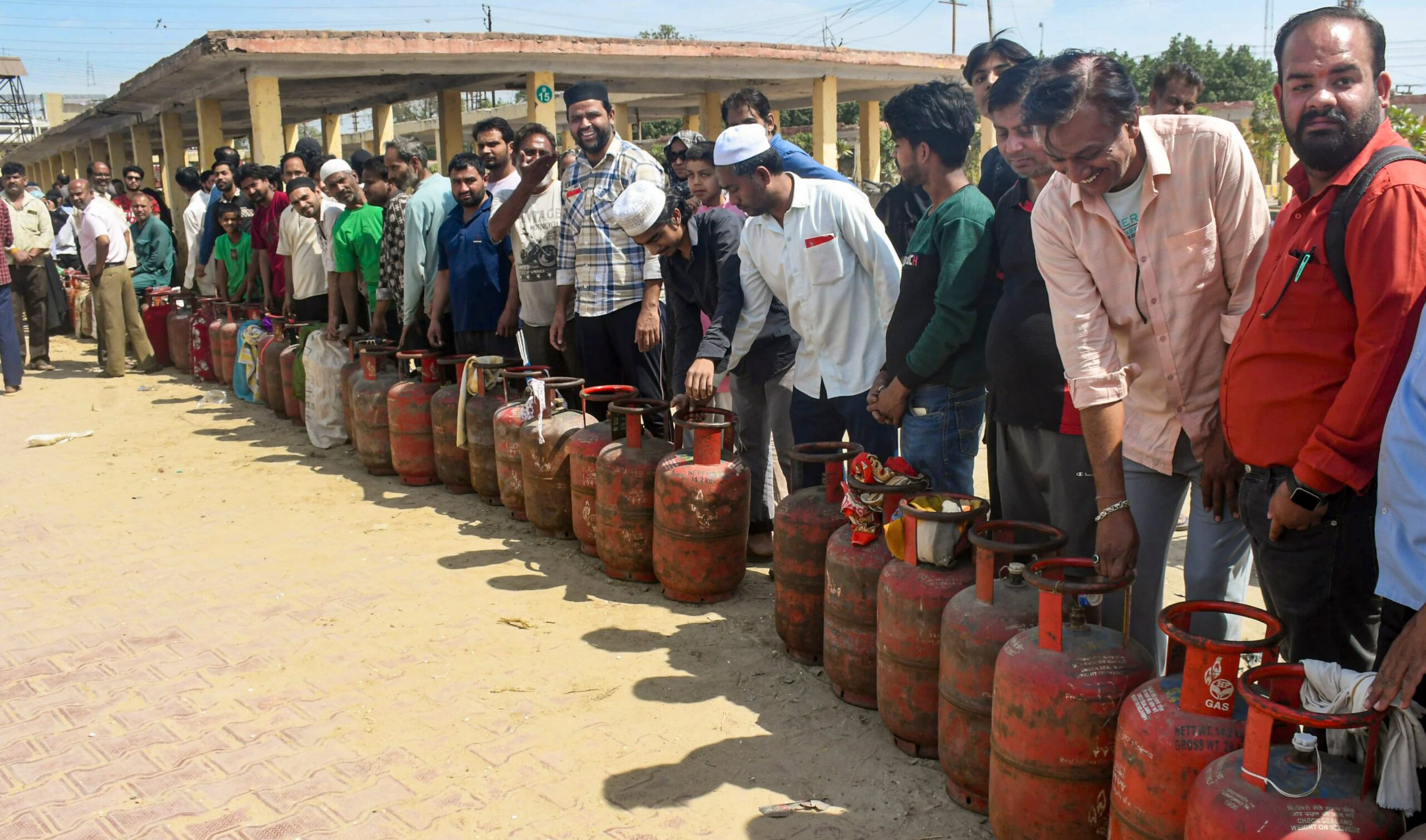
This writer did a purposive sampling of poor and their energy dependency and it was a revealing study. In the upscale corridors of Delhi NCR’s gated “colonies,” the air is usually scented with expensive room diffusers and the sterile hum of air conditioners. But lately, a different, more ancient smell has begun to drift through the manicured hedges. The acrid, biting scent of burning cardboard and scrap wood. It is a smell that shouldn’t exist here. It is the signal fire of a policy promise turning to ash.
The PMUY was envisioned as a transformative intervention to ensure clean cooking energy for India’s poorest. By the early 2020s, it had successfully expanded LPG access across the nation, symbolising a triumphant shift from smoky chulhas to the “blue flame” of modern energy. However, the geopolitical tremors of 2025–2026 have shattered the glass house of India’s LPG dependence.
This is not a storey of a distant village. It is a grounded case study from within middle-class apartment complexes, where rising fuel costs have pushed the “beneficiaries” of progress back into a dark age of domestic labour.
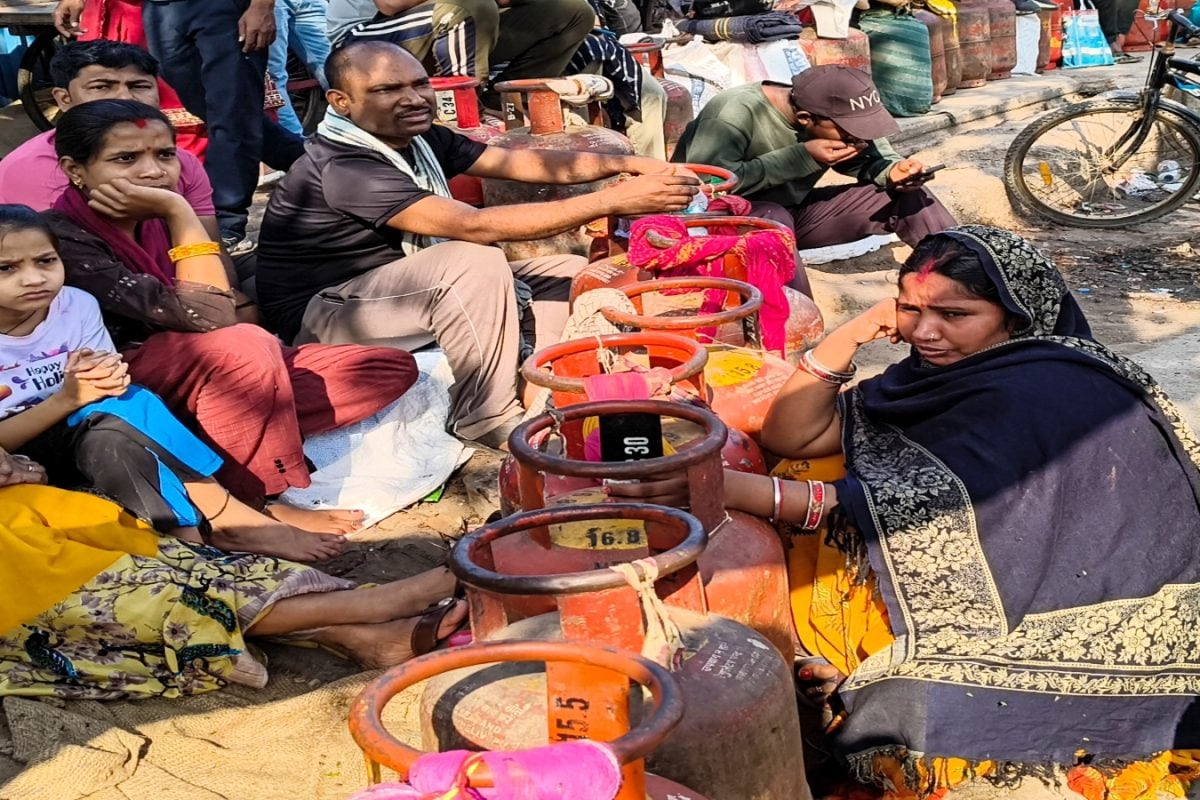
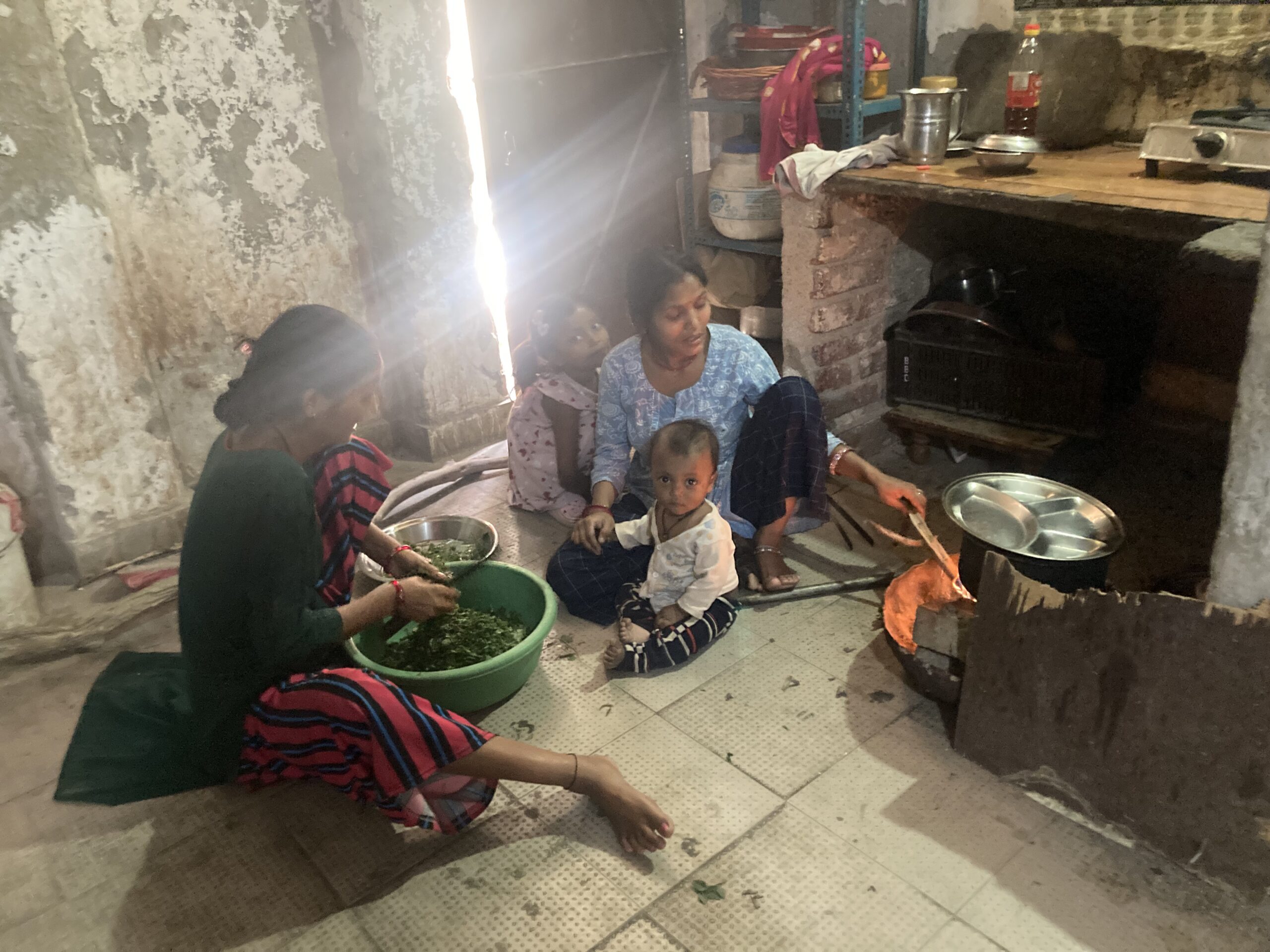
The crisis is embedded within urban modernity itself. In the single-room guard quarters which serve simultaneously as kitchen, bedroom, and nursery, the family of migrant gatekeepers live in the shadow of the towers they protect. Until recently, a red LPG cylinder sat in the corner, a badge of their inclusion in the New India. Today, that cylinder is a hollow monument. As refill costs climbed beyond their monthly wages, the flame died out.
In its place sits the earthen chulha. In the city, there is no forest for firewood. Instead, the family hunts for fuel in the trash, cardboard boxes, discarded plywood, and toxic plastic scraps. The resulting smoke is a dense, grey ghost that refuses to leave the unventilated room.
The women of the house describe their life with a devastating, quiet clarity. Her eyes never stop burning. Her children, particularly the young, live with a persistent, hacking cough, the “soot-lung” of the urban poor. Their proximity to the floor means they breathe the heaviest, most toxic particulate matter, their respiratory systems failing before they have even entered school.
Why has the state failed to catch this fall? The answer lies in a fundamental divergence in how we identify the poor. In rural India, poverty is a social fact mapped through scientific surveys and panchayat studies and later validated by the Gram Sabha. In a village, the “poor” are a known entity; their exclusion is a matter of public record. There is a communal eye that monitors who gets a cylinder. However, once that family migrates to a gated urban complex, they undergo a “documentary death.”
In the city, the poor are often invisible to municipal governance. While the rural poor are identified by their deprivation, the urban poor are identified only by their utility to the middle class. The gatekeepers’ wife may have a PMUY connection registered in her home village, but in the city, she lacks the local residency proof required to access localised subsidies or emergency refills. She is a “ghost beneficiary,” holding the paper but lacking the power.
This is the aestheticisation of poverty. The urban middle class often reacts to the symptoms of poverty, the smell of smoke, the sight of slums, as aesthetic affronts to their lifestyle rather than as indicators of systemic failure. This indifference is a policy barrier in itself, as it prevents the local collective action that usually drives municipal reform.”
The storey of the gatekeepers’ families illustrates an uncomfortable truth. Access is not the same as security. While PMUY succeeded in the logistics of distribution, the “last mile” of hardware failed, lacking economic resilience. By tethering the lungs of India’s poorest women to the volatile geopolitics of the Persian Gulf, the policy created a fragile dignity that shattered at the first sign of global tension.
The “blue flame” was a loan, not a gift, and the interest is now being paid in the respiratory health of children. To solve this, policy must move beyond the “one-size-fits-all” LPG model. We need a diversified energy safety net consisting of community solar kitchens, urban electrical subsidies for the poor, and a fundamental shift in how we identify and count the urban vulnerable.
As we look at the gleaming skylines of our cities, we must ask, what is the value of a “Smart City” if its residents are forced to burn trash to feed their children? The smoke rising from the gatekeeper’s quarter is a warning. Without affordability and portability, the march of progress is just a circle leading back to the soot.







Hope someone in the government reads it!
“When The Blue Flame Turns To Shoot” by Anu Jain appears to explore a deeply disturbing transformation of violence and fear into everyday reality. The title itself is powerful and symbolic — suggesting how something ordinary and controlled can suddenly become destructive. A thought-provoking piece that likely challenges readers to reflect on the social and political conditions that normalize brutality, silence, and insecurity. Strong writing can force society to confront truths it often tries to ignore.
Can we have more stories like this which relates to people and their lives. Media in India should stop doing political stories and commentaries on the speeches of politicians. They do not mean what they say, they do not act what they preach. They do not follow, what they want common men to follow. Look at our Prime Minister. Pathetic. Sharing sweets and having fun with a foreign leader after asking his own countrymen to work from home.
This story relates so closely with our own apartment. Thank you. But we are helpless.