

A New Kerala Built on an Old Contradiction


Kerala’s Revised Budget 2026-27 has been celebrated and condemned in equal measure. This piece attempts something different: to reflect on what the ecological dilemma identified before the elections actually means for anyone holding power in Kerala now, and what the budget, as an early signal from a government that is one month old, reveals about the deeper conditions within which that dilemma will have to be resolved.
Kerala’s ecological crisis is no longer a conservation question. Floods, landslides in Wayanad, coastal erosion, and recurring disasters of increasing scale have made this plain. Climate change has made Kerala one of India’s most disaster-prone states, and each disaster is now also a fiscal event, consuming resources that could otherwise fund welfare, education, or health. Business as usual, in this context, is a high-risk strategy, against which the civil society environmental charter ‘From Forest to Sea’ was released before the Kerala elections. The charter’s significance was not that it argued for conservation. Kerala has had that argument before, most famously in the dispute between the Gadgil and Kasturirangan reports on the Western Ghats, where ecological protection was pitted against the livelihoods of hill communities. The charter moved past that binary.
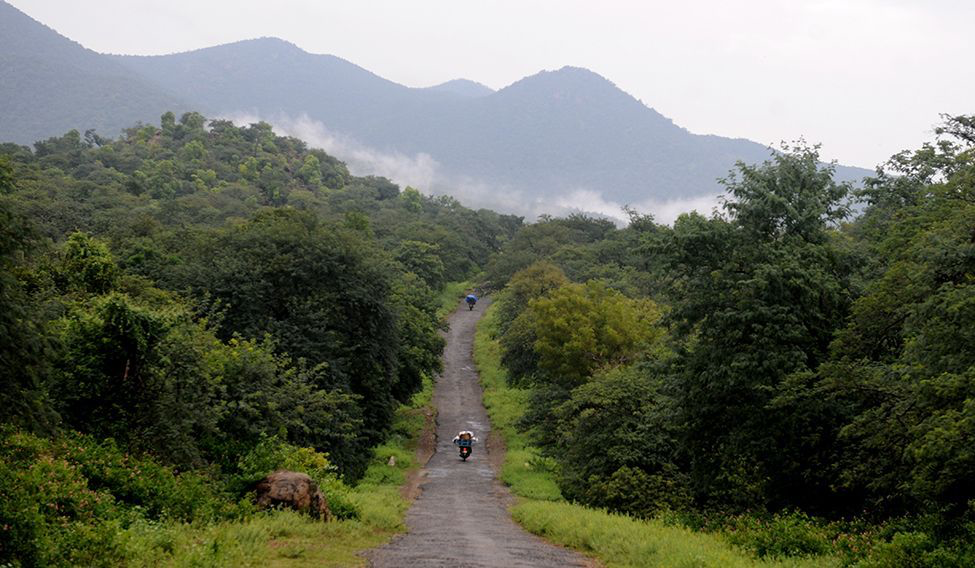
Writing here and in EPW, I described it as walking a razor’s edge: reframing ecological protection not as a brake on development but as a condition of the state’s fiscal and governance stability. Ecological breakdown, the charter argued, has direct and growing fiscal costs.
Protecting Kerala’s ecology is not an alternative to development. It is what makes development sustainable over the long run. This was a new framing, and a more difficult one to dismiss than older conservation arguments, because it could not be waved away as anti-development sentiment.
The deeper difficulty the budget exposes is not particular to this government. It is a structural feature of how growth models have been imagined and pursued, in Kerala and far beyond it, for the better part of a century. The mainstream development model that dominated mid-twentieth-century thinking treated investment and infrastructure as the engine of growth, with benefits assumed to trickle down to the poor over time. India, like much of the postcolonial world, did not simply accept this model. The Nehruvian state proposed a middle path of import-substituting industrialisation, a strong public sector, and a degree of insulation from global capital, influenced by dependency theory’s argument that integration into the world economy on unequal terms would entrench underdevelopment rather than resolve it. That settlement did not survive the end of the bipolar world. From the 1990s, with the collapse of the Soviet alternative and the deepening of a unipolar, neoliberal global order, the space for a genuine middle path narrowed sharply.
Liberalisation became less a policy choice than a condition for participating in the global economy.
This is the deeper context for what might otherwise look like a UDF problem. The Left in Kerala has faced its own version of this dilemma for decades: how to reconcile a redistributive, public-investment-led model with a state government’s limited fiscal autonomy within a liberalising national economy. Both fronts have, at different times, reached for large infrastructure and investment projects as the way out of fiscal constraint, because the available alternatives within the current global economic order are genuinely narrow. This is the TINA trap, meaning there is no alternative, not a failure of imagination by any one politician, but a pattern that governments across the ideological spectrum find themselves inside. Capitalism’s continuing transformation in India and globally sets the terms within which state governments, regardless of their politics, make their choices. Politicians do not swim against that tide so much as navigate within it.
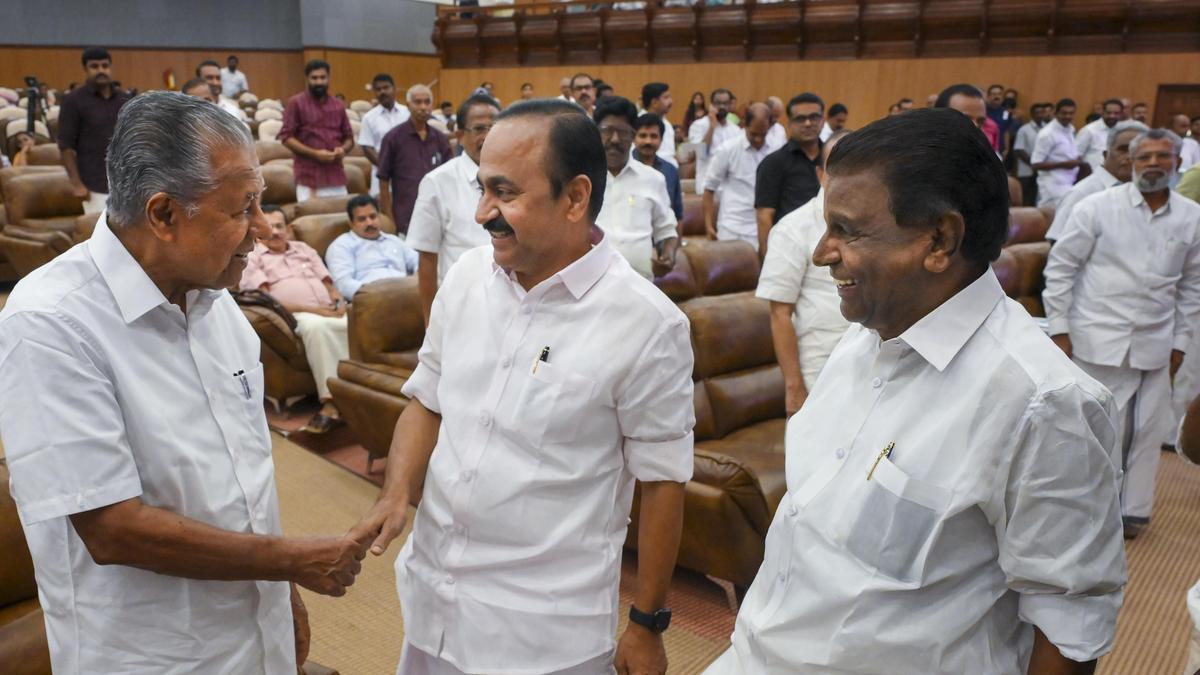
It is in this context that V.D. Satheesan took charge as Chief Minister, carrying with him a long public record of environmental engagement and a self-described commitment to Nehruvian socialism.
The question his budget poses is sharp and specific: is he walking the razor’s edge the charter and the EPW commentary identified, holding ecological governance and developmental pressure in genuine tension, or has the TINA logic already pulled him decisively to one side?
The rare earth corridor offers an unusually precise test, because Satheesan’s own position on it can be tracked across three moments. As reported in The Print on 1 February 2026, Satheesan, then leader of the opposition, responded to the Union Budget’s mineral corridor proposal with open scepticism.
The corridor, he said, should not become “an opportunity for corporates to steal Kerala’s rare earth resources,” and no action should be taken without consulting the state government.
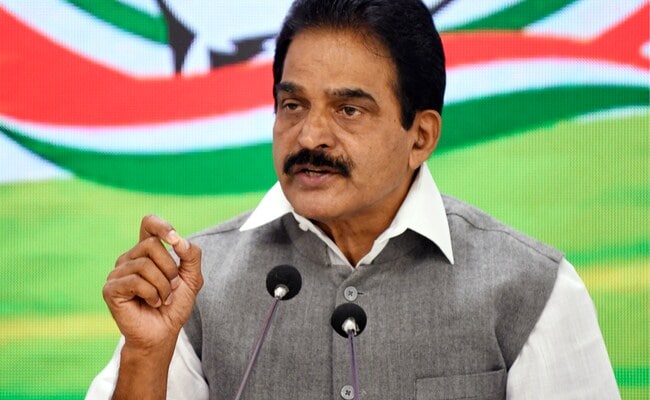
He pointed to Kollam specifically, the district with the state’s highest marine resources and rare earth deposits, recalling an earlier dredging proposal in the same waters as a precedent for exactly this kind of resource capture. Congress MP K.C. Venugopal went further, insisting that mining rights should rest with the public sector and that any hidden agenda behind the corridor needed scrutiny.
Four months later, his own Revised Budget allocated Rs 100 crore to a Rare Earth and Critical Minerals Corridor that follows the same Union strategy, designating Kollam as its processing centre, with no mention in the budget text of the safeguards he had himself demanded. Read in isolation, this looked like the TINA trap closing in real time.
His reply to budget critics in the assembly complicates that reading. He categorically denied that the corridor would lead to privatised mining, and stated that a consortium of central and state public sector enterprises would handle value-added processing rather than extraction itself. This is, in substance, an attempt to operationalise the position he held in opposition: keep the strategic resource under public control, while still participating in a national mineral strategy that no single state can simply opt out of.
Whether that design can actually deliver is a separate matter. Rare earth value addition, the conversion of mineral concentrate into separated oxides, refined metals, and finished products such as the permanent magnets used in electric vehicles, wind turbines, and defence and aerospace systems, is widely regarded as the most technically demanding stage of the entire chain. India’s participation in this chain has historically been confined largely to the earlier stages, with the vast majority of value addition occurring offshore, predominantly in China. As an Observer Research Foundation analysis published on 12 November 2025 put it, China commands over 69 percent of global rare earth mining and an overwhelming 90 to 92 percent of refining capacity, an imbalance that has long cast a shadow over the world’s clean-energy transition and supply-chain resilience.
Kerala’s Chavara deposit in Kollam, alongside Tamil Nadu’s Manavalakurichi deposit, accounts for the bulk of India’s monazite reserves, which makes the processing gap especially consequential here.
A public sector consortium is the right institutional instinct for a sector this capital- and technology-intensive, since no state-level enterprise could build this capability alone. But it does not resolve the underlying uncertainty: whether Kerala’s corridor will, in practice, achieve genuine downstream value addition, or whether the technological and financial gap will instead generate pressure, over time, for upstream extraction to expand to make the venture commercially viable. What remains unresolved is not the intention but the implementation.

That same test, intention against implementation, applies across the rest of the budget. The allocations make the pattern visible at a glance. The environment sector receives Rs 22.02 crore. Mission Samudra receives Rs 400 crore, the aviation hub Rs 200 crore, and the Kerala Urban Growth Mission Rs 100 crore. The fiscal crisis is real. Accumulated liabilities stand at Rs 87,012 crore, and the revenue shortfall inherited from the previous government is Rs 20,500 crore. But the direction of cuts is not random. Environmental governance loses first.
The Kerala Disaster Resilience Centre, the budget’s most visible environmental initiative, focuses mainly on responding to disasters rather than preventing them through wider climate planning across sectors.
Ecology-tagged budgeting is absent. River basin governance is absent. The carbon-neutral-by-2050 commitment is stated in one sentence without an institutional anchor. The charter’s proposals on coastal protection, mandatory ecological buffers, and land governance reform have been dropped without acknowledgement.
The budget’s approach to land and investment signals the direction clearly. Government-owned land is described in the budget speech as “unutilized or entangled in red tape,” to be converted into a Land Bank for private investors. Regulatory protections and labour costs are identified as the historic barriers to investment, framed as obstacles to be cleared rather than social achievements to be protected. A new single-window cell called Invest Keralam will provide investors with fast access to land and all necessary clearances. A Special Investment Zone promises streamlined approvals and rapid project execution.
The budget’s treatment of the public sector follows the same logic. The previous government is criticised for having “surreptitiously conflated KIIFB and select Public Sector Undertaking (PSU) metrics into actual Plan figures,” a charge that frames public sector accounting as a form of fiscal deception. In his post-budget press interactions, the CM went further, characterising public sector enterprises as a drain on the exchequer. Losses are mounting, he said, and new employment is limited to contract-based vacancy-filling rather than substantive job creation. The argument is coherent as a fiscal diagnosis. Public sector losses as well as the pattern of contractualisation in Kerala are real. But the diagnosis leans toward a single policy direction: private investment must do what public enterprise cannot. One is left wondering what a reformed, adequately capitalised, and ecologically oriented public sector might have offered instead, and whether that path received the same consideration.
It is also worth noting that the public sector’s own ecological record in Kerala is not unblemished. Polluting industries, large irrigation projects, and public infrastructure schemes have at various points contributed to the very ecological pressures the charter documents.
The real question is therefore not who owns the investment, but whether investment of any kind is held to credible ecological standards.
The Left has called this a right-wing economic shift. There is evidence in the document for that charge, even if it does not tell the whole story.
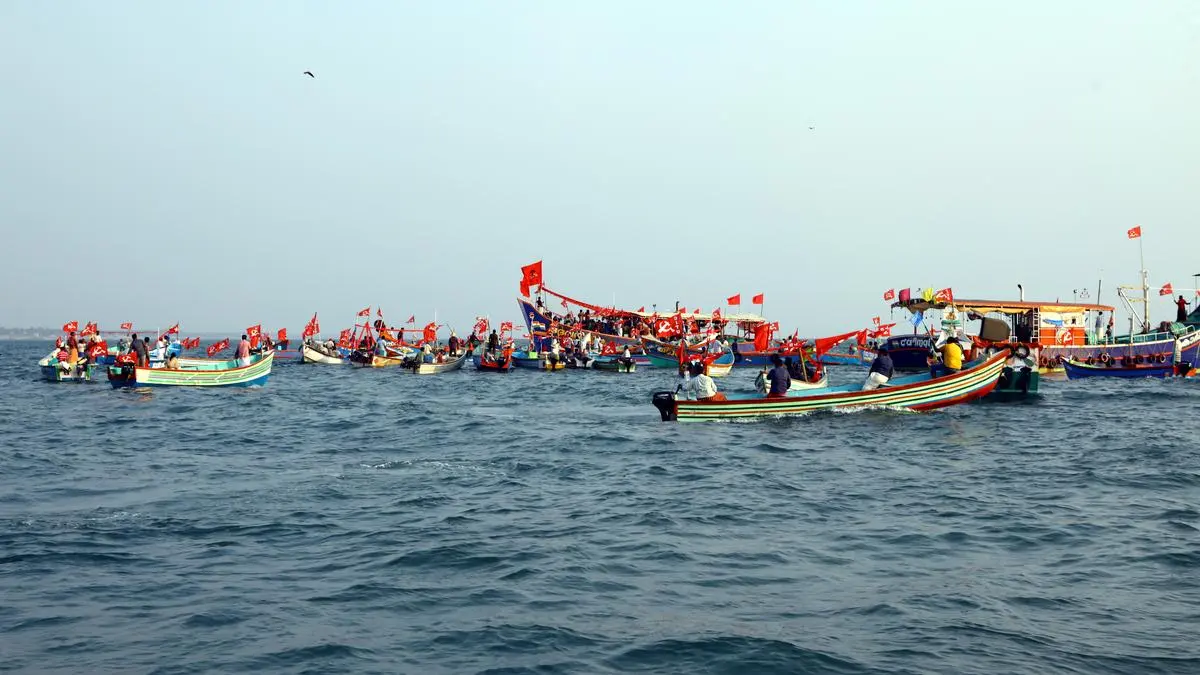
The fishing communities offer the sharpest illustration of the wider dilemma. As fisheries economist John Kurien has argued, the budget’s Fisheries Sub-Plan must be read against a longer history. Collective mobilisation in the 1980s forced a structural shift that culminated in India’s first State Fisheries Policy in 1994, which established that access to the sea belonged to those who fish it. That principle is what the current budget puts at risk, even if unintentionally.
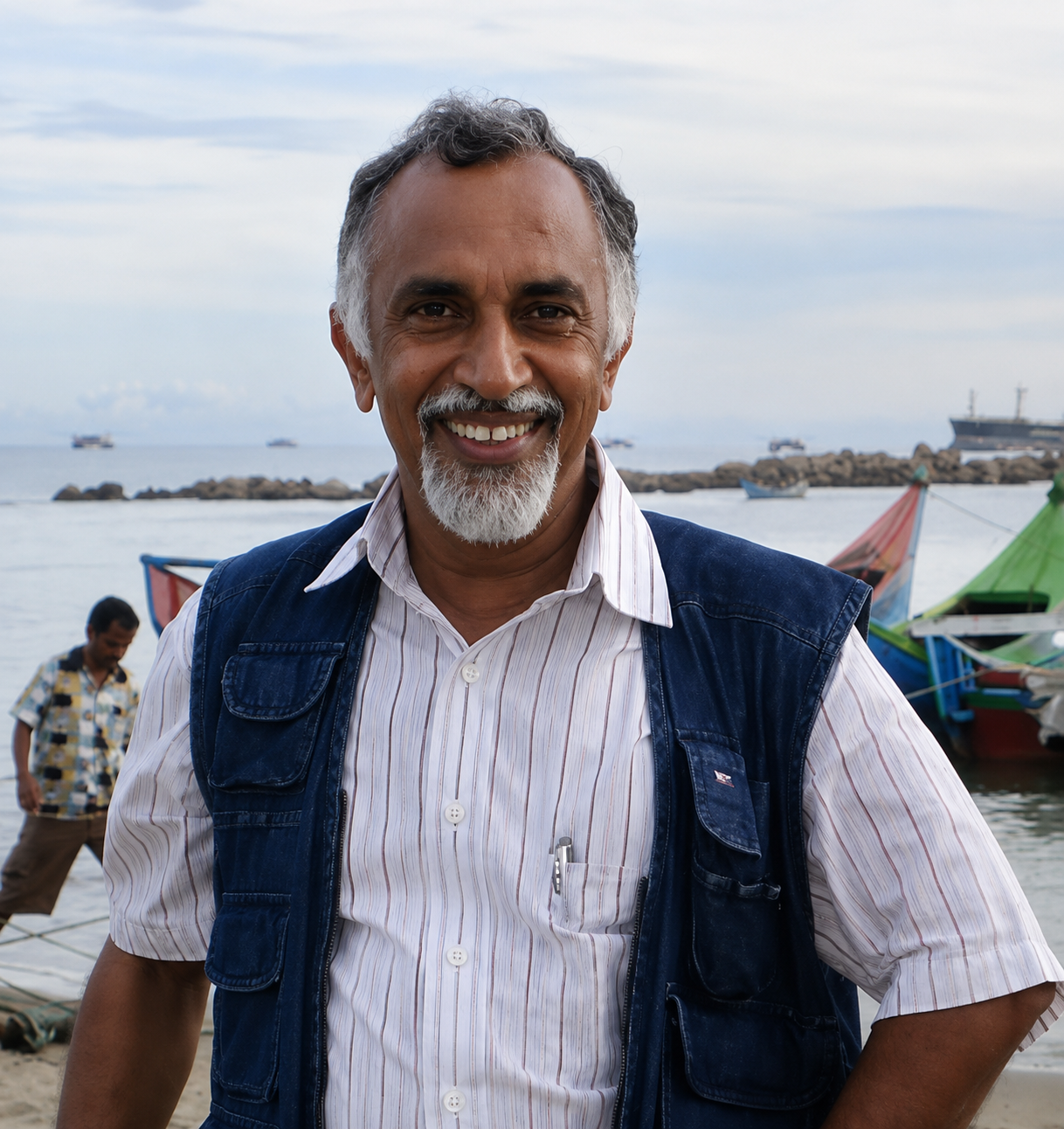
Fish stocks in Kerala’s near-shore waters have declined steadily over the decades since, under pressure from mechanisation, habitat loss, and wider changes in the ocean.
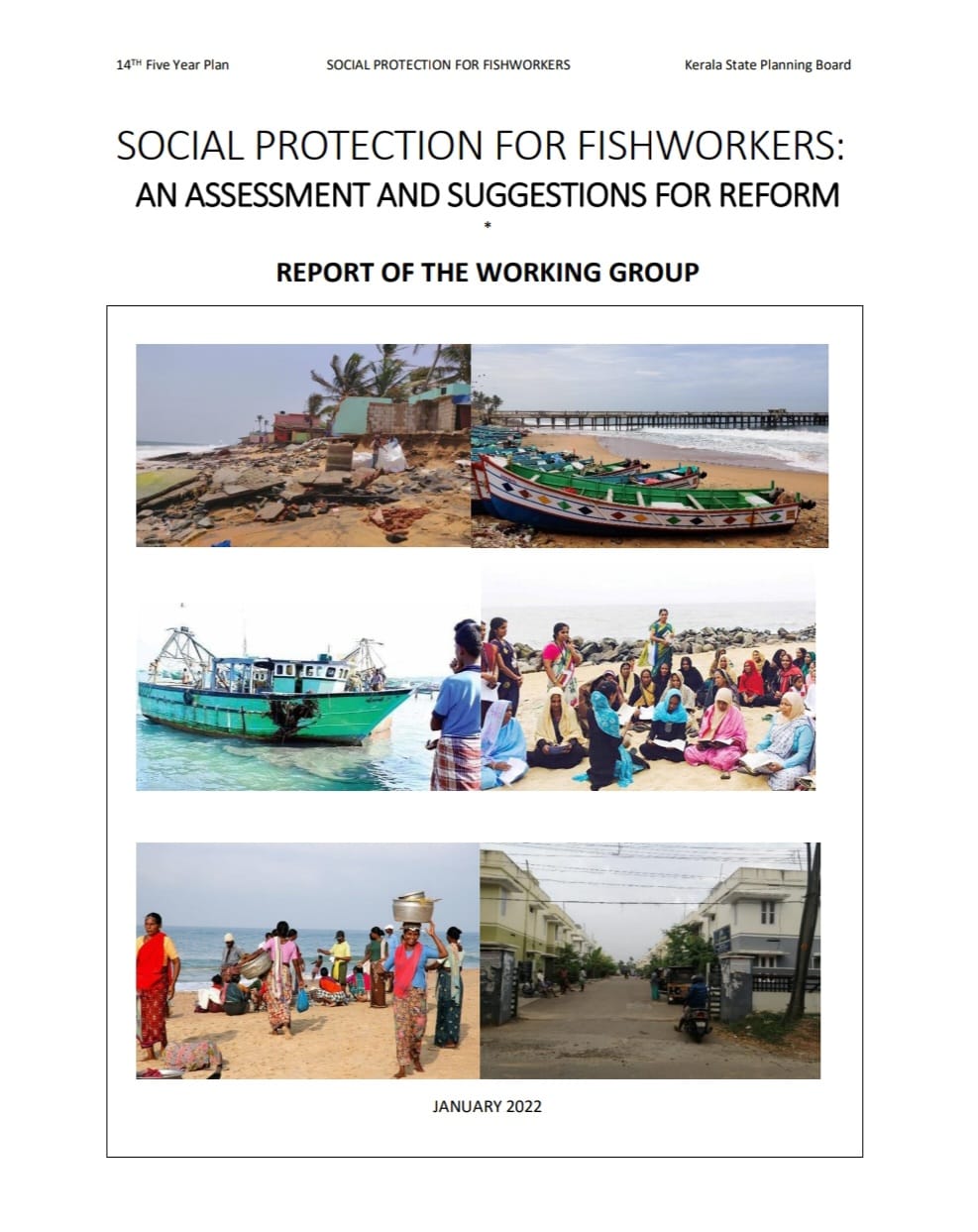
Even the protections of the 1994 framework could not reverse that trend. The Sub-Plan’s response is welfare: she-scooters for women fish vendors, kerosene subsidies, and education grants. These are not without value. But sitting alongside them is Mission Samudra, which proposes to bring Kerala’s entire 600-kilometre coastline into a port-city framework, with manufacturing zones, shipping corridors, and private partnerships across 13 non-major ports. Port expansion has historically accelerated exactly the pressures that are depleting fish stocks. A further issue the Sub-Plan does not acknowledge is that migrant workers now make up a large and largely invisible part of the workforce in the big mechanised fishing boats, raising serious questions about labour conditions and social protection. The 2022 State Planning Board Working Group on Social Protection for Fisherworkers had thought carefully about all of these challenges and proposed practical responses.
Behind the fisheries story lies a harder general question.
When large infrastructure projects displace existing livelihoods, can the new jobs created actually make up for what is lost? The history of such transformations, in India and elsewhere, offers little reassurance.
People who lose traditional livelihoods rarely move smoothly into the new economy on equal terms. The budget does not engage this question. It assumes that growth will resolve displacement. That assumption is precisely what the ecological and equity record of comparable transformations most consistently fails to support.
This brings us to the deepest institutional question the budget raises, one the fisheries case already hints at. It is not clear whether the 2022 Working Group’s recommendations were acted upon by the LDF government in the three years that followed its submission, and they do not appear in the current budget either. The Planning Board is to be reconstituted on the Niti Aayog model. The question worth asking is not whether the Board has performed well. It is how many working group reports prepared for recent Five Year Plans were formally responded to or discussed at any public forum. The problem was not lack of expertise. It was that expert knowledge had no consequential link to budget decisions or policy outcomes.
What Kerala needs is a planning institution that can do three things.
- It should bring ecological and fiscal analysis together, so that infrastructure decisions are weighed against their long-term public costs, including disaster risk and livelihood displacement.
- It should make sectoral expertise count in decisions rather than filing it away.
- It should retain the authority to produce answers that organised economic interests find inconvenient.
Neither the current Board nor the Niti Aayog model is built to do any of this. The Niti Aayog model, explicitly aligned with executive priorities and without binding planning authority, moves in the opposite direction on all three counts.
What would walking the razor’s edge actually require? Not a rejection of growth, since the fiscal case against that is real. Not a return to the older conservation-versus-development binary, since the charter’s own contribution was to move past it. The honest answer is that this question does not have a ready solution waiting to be applied. It is a genuine dilemma, not a policy gap. Kerala’s experience over the past decade – the floods, the landslides, the recurring disasters – has made the cost of getting this wrong unusually visible. That visibility is itself an opening, not a guarantee.
Kerala can no longer afford to treat ecology as an afterthought to growth. The costs are already written into its disasters, debts, and displaced livelihoods. Whether this government can govern within that truth is the real test the budget has now set for itself.
Notes: Source for rare earth processing data: Observer Research Foundation, ‘Rare Earths Armistice: India’s Shift from Mining to Processing’, 12 November 2025. https://www.orfonline.org/expert-speak/rare-earths-armistice-india-s-shift-from-mining-to-processing








**A compelling analysis of Kerala’s enduring paradoxes. True progress cannot be measured by social indicators alone if structural inequalities and historical contradictions continue to shape people’s lives. Sustainable development demands not only economic growth but also deeper social justice, democratic accountability, and the courage to confront uncomfortable realities. An insightful and timely piece.**