Bala by Unny; A Review (Part 01)


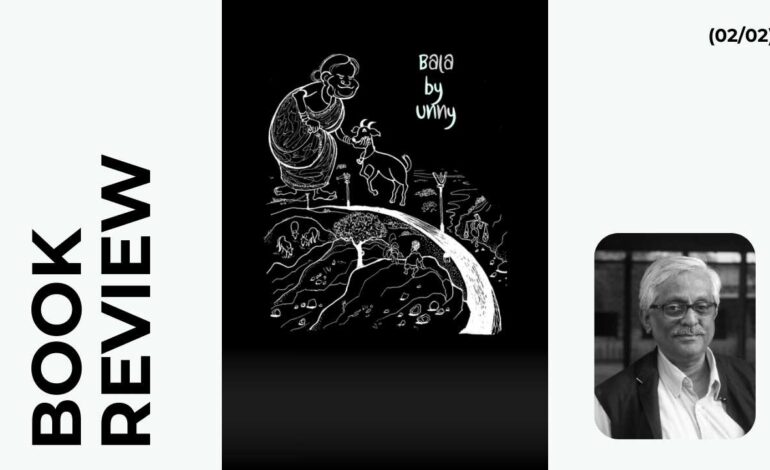
Balakistamma dominates the cover of Bala, a graphic narrative that blends humour, grit and visual ingenuity from its very first frame. In this two-part review by veteran editor and journalist, R. Rajagopal guides readers through the book’s striking storytelling choices, from its textured landscapes to its sharp, dialogue-driven frames, revealing how Bala turns everyday lives into high art without ever losing its bite. Read Part One here.
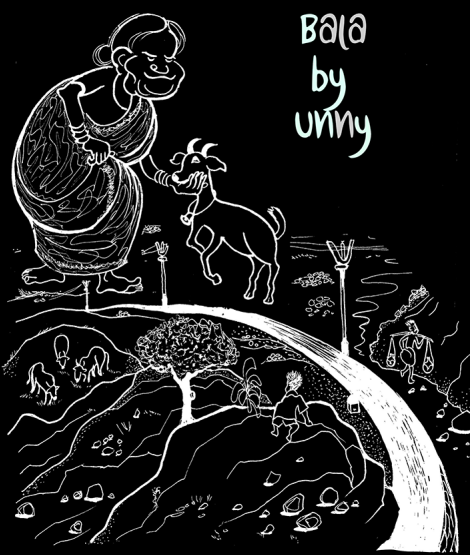
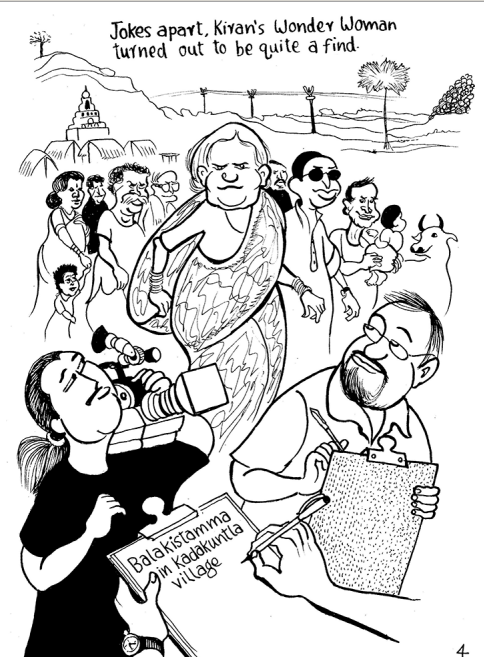
Rich in texture, the cover sets the tone with Balakistamma towering over even the power lines. She is in absolute control but the hand that cups the kid goat’s chin shows that she cares. The rocky terrain, the cattle grazing on what looks like sparse grass, the water carriers and the child prepares you for the rough ride ahead. This is no picture postcard picnic but we are entering Bala country where only the tough survive.
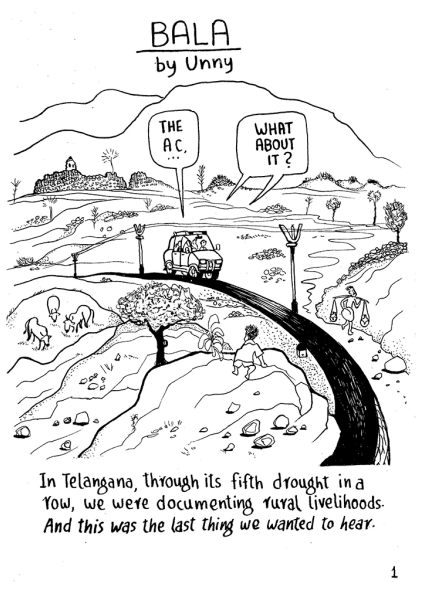
Long live the cover. The three heads of cattle are there, so are. the curious child, the water carrier and the power lines. Bala is yet to make a grand entrance but the fort in ruins reminds you of power. The road is smooth and does not sport potholes, thanks, perhaps, to New India. Fine detailing.
Did O.V. Vijayan just pass by or am I reading too much? Am I looking too hard? I thought I spied Vijayan flash past because of the reference to AC (air conditioner) reminded me of Vijayan’s lament against the soulless capital machine that is disarmingly oblivious to everything else except the business of making money. Vijayan’s gimlet eyes had noticed the irony in a cola ad during the one of the worst droughts in India when the cola maker splashed out on hoardings across the country that said: “It is fun to be thirsty.” A fellow Palakkadan (a native of Palakkad district in Kerala), forged in the sweltering heat of the terrain, understands the import of AC conking out. The Ponytail discharges his historical responsibility of supplying an ill-timed one liner.
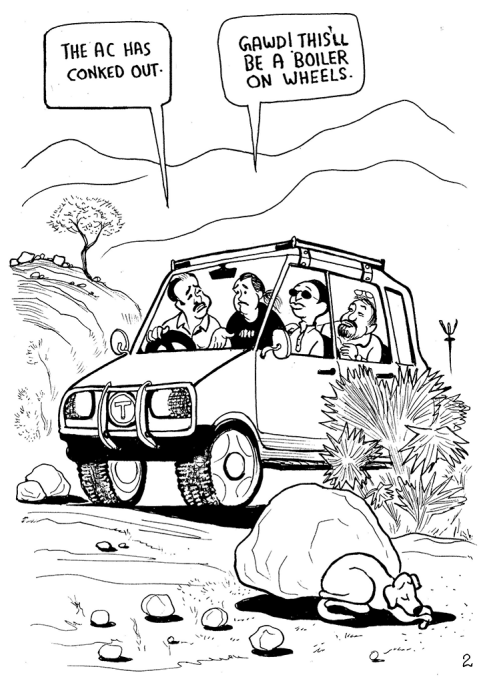
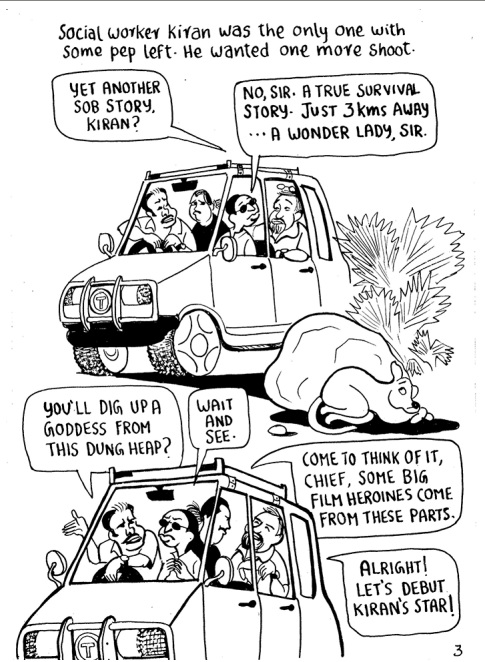
The narrative skills of the cartoonist are kicking in. A lot is packed into the conversation bubbles. Crisp and easy to understand. How did the cartoonist manage to squeeze in poetry into a bubble: “You’ll dig up a goddess from this dung heap?” I like the pup’s expression the best. Having woken up from the drought-induced slumber, the pup radiates the wise smugness of someone
who has “been there and heard all that”. Proof query: Should it have been all right? Or was alright deliberately chosen to underscore the disinterest of an imprecise generation that craves creature comforts and commands at its fingertips the power of text-based liberation from the decadent rules of language?
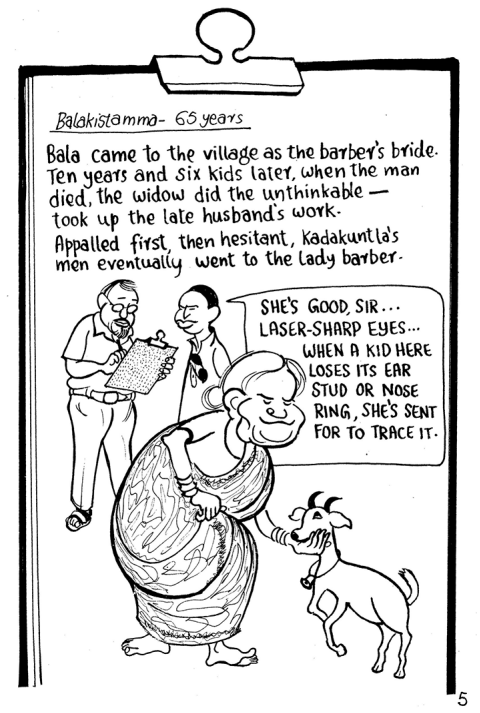
Enter, Bala. The movie camera is out. Also unsheathed are pens and the clipboards. Showtime, folks. The dream bio, packing all the essential information in so brief a manner — Calvin must be chuckling and claiming credit from the cartoonist for making him stick to the tiniest sliver of real estate in the newspaper every day. The power-packed bio chronicles the transformation of the barber’s bride into the lady barber.
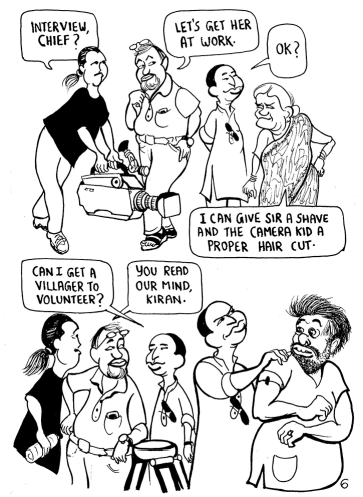
Plot thickens. Creative juices are flowing. Kiran reads the mind but Bala steals the thunder: “I can give sir a shave and the camera kid a proper hair cut.” This is high humour. The barber shows no respect for the groomed goatee and the preened ponytail.
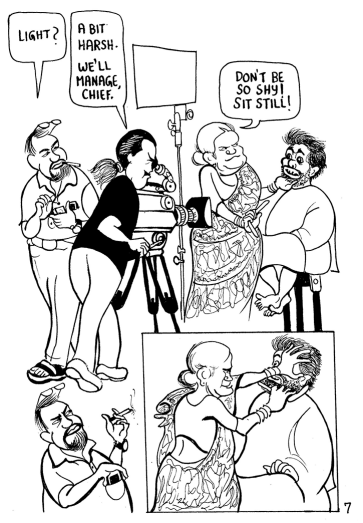
Action! Bala is in charge, affectionately admonishing the guinea shaver who will be star to sit still. The inset close-up is a nice tool.
Two worlds collide. I am awestruck by the phrasing. So much has been squeezed into one frame but, astoundingly, without any clutter. Headline writers know how hard it is to write a simple sentence. A sharp brain is ticking in the frames, as evidenced by the tea boy’s succinct but comprehensive tip: “Full range up there.”
The four words are almost universal, known to every traveller who ventures into the interiors of most countries. I am struck by the brilliance of the phrasing because like a perfect headline, it is devoid of all newspaper grammar lessons. No verb, no active voice, the usage of “there” (an absolute no-no for some chief subs but how can we forget the immortal cry “There she blows! There she blows! A hump like a snow-hill! It is Moby Dick!”?)
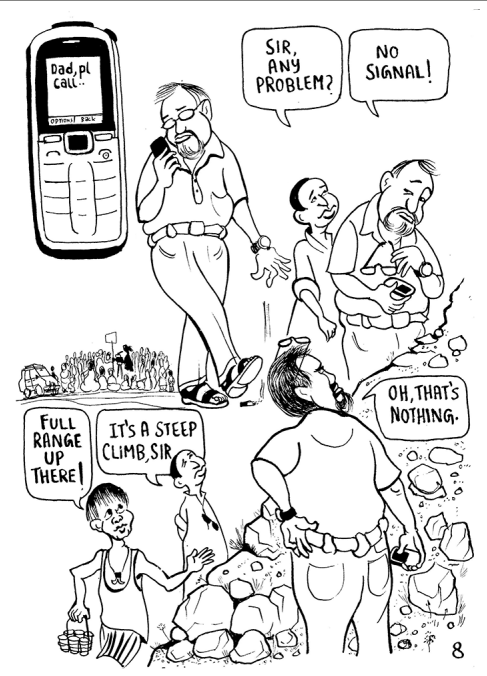
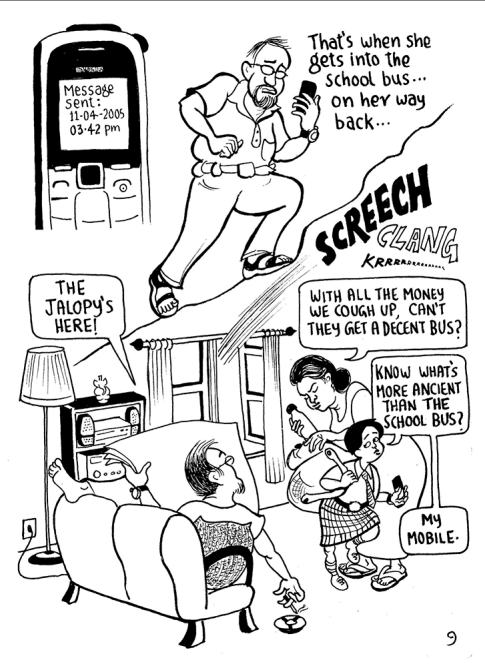
Wow! Wow! Wow! This is high art with a split screen. Like, a Tarantino movie showing not just different locations but also different timeframes. Again, the detailing is amazing. Mom packing water bottle, dad slouching with a newspaper (that is aptly blank), a lit cigarette dangling from his fingertips with the ash tray strategically placed on the floor. Visually, it is a stunning frame. The dad scrambling up the hillock but his mind already making landfall back home.
But the scene stealer is the kid who slips in a devastating repartee on the real meaning of the word, “ancient”. Don’t throw stones at my school bus from your glasshouse, dad!
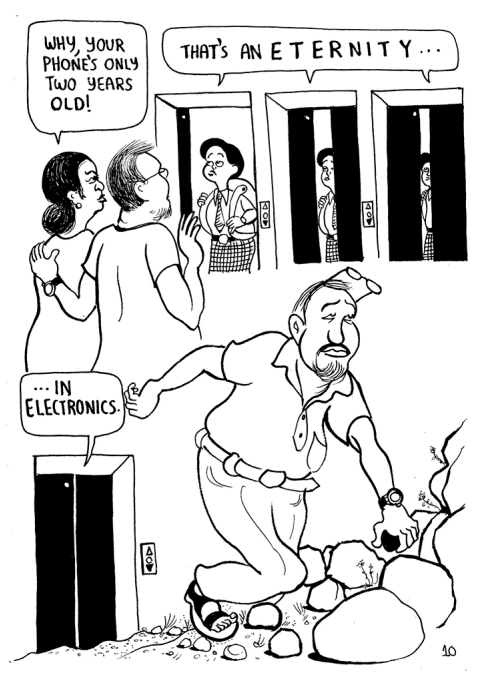
The generation gap shows, between a lift and a rock. The kid rocks when she says “that’s an E T E R N I T Y”. The space between the letters does wonders to the overall frame. She is making a point, letter by letter. No mercy, dad!
It gets better and better….
[To be continued. The second and final part of this review will be published tomorrow.]