

A Year On, Would Deepayan, A Master Of The Craft, Have Glowed Or Glowered?


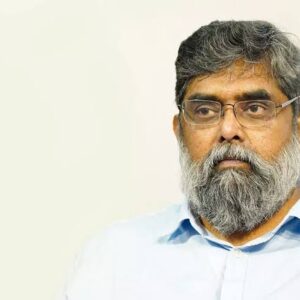
Serendipity and SIR (Special Intensive Revision) have lodged me in Calcutta since the last week of February. Which means I am spending March 3, the first anniversary of the passing of Deepayan Chatterjee, the former deputy editor who transformed The Telegraph newspaper through the decade beginning 1997, in the eastern city.
The original Dream Team to which Deepayan belonged (by the time I joined newspapers, the golden age of the desk had entered its last lap and the rules of the game were being rewritten, so to speak, which forecloses the awkward question whether I would have made the cut or probably gone to Embassy on Princep Street to split a few beers and several stories).
As that is not an option, I thought of browsing a few recent and not-so-recent newspapers and portals at random to guess how Deepayan would have felt had he been clearing the pages. In deference to the occasion and the elegance that made Deepayan stand out, I will try to say only nice things about newspapers.
Stories
Several good stories are still being filed. Some stories that caught my eye in recent days:
■ The News Minute story by Haritha John on “who is converting to which religion in Kerala?” The question assumes significance against the backdrop of The Kerala Story: 2 movie controversy. The portal has sifted through more than 10,000 pages of official statistics to nail some lies. Deepayan would have been impressed with the emphasis on data and research. The story also has a chart that is remarkably free of clutter — another factor that Deepayan put a premium on. Reflecting a trend that is gathering steam on portals more than in legacy media, the portal has also spoken to the “other side” in detail.
click here to read

■ Decade after the JNU sedition case: An outstanding series by Anant Gupta in Scroll. The portal has an engaging video episode on how the series was done. I was expecting every newspaper to splash their own stories on the issue that had roiled Indian campuses and posed the first collective challenge to the Narendra Modi government. I missed the series in the legacy media. Gupta, who was just leaving school when JNU erupted, has produced excellent journalism. Deepayan liked conceiving and executing milestone stories. He would have been proud of this series.

■ Asad Rehman’s excellent story in The Indian Express on the PMO telling the Lok Sabha Secretariat that questions on PM Cares and relief and defence funds are not admissible. For some reason, the paper did not lead with that story but opted for the Prime Minister’s Malaysia visit. I thought other newspapers would pick the story up and extend its life. The Wire and some YouTubers did so.

■ Ashis Ray writes in The Wire about French prosecutors continuing with the probe into the earlier Rafale deal. Tenacity is something every journalist would admire.

■ Talking about tenacity, The Reporters’ Collective has been producing spectacular stories on the way the Election Commission is operating. The latest blockbuster is by Ayushi Kar, headlined “How ECI Tailored the Voter Registration in West Bengal ‘As it Deemed Fit’”. The story and the way it has been handled offer classic examples on how to write with clarity and how to break down seemingly complex issues. The story has a delightful visual by Pradeep Saha that amplifies the headline. Deepayan always admired the synergy between the headline and the visual.

■ In PARI, Parth M.N., whose journalism has made me envious and proved to me how inadequate my work was, has filed multiple reports on farmers’ marches. Admirably edited by P. Sainath, Parth’s copy on Maharashtra Adivasi farmers begins:
“Namdev Bhangre started the protest march on January 25 with uncertainty and bitterness. Three days later, he returned home with hope — along with tens of thousands of other Adivasi farmers mainly from Nashik and Ahilyanagar (formerly Ahmednagar).”
The intro makes you want to read more and know more.
■ In Panthi.in, A.K. Shiburaj reported on a Maharashtra village that declared itself caste-free. The article stood out for its understated style and deep insight.
■ Sabrangindia.in has become a reliable archive of events that often stay under the radar of mainstream media.
■ AIDEM has a comprehensive report on Hardeep Puri’s email messages to Epstein, titled “The Epstein Emails and Hardeep Singh Puri: The Damning Paper Trail”. Shama Rebecca Sarin’s painstaking work flags “every email, every meeting”. The article does not merely reproduce the messages but annotates them with relevant observations. The information in the article is available elsewhere too but the treatment, the deep focus and the value addition lend it exclusivity. The way the article has been displayed offers an insight into the enormous possibilities that lie ahead of online media.

■ Countless YouTubers who are relentless in covering the Epstein India angle even when the legacy media has tried its best to sweep the issue under the carpet.
The point to note is that most — not all — of the reporters mentioned here are young. “Hope in our hearts, and wings on our heels” — as it was said in Chariots of Fire.
The Merry Min-igma Code
Houston, we have a problem. Even the Enigma crackers would not have faced such a riddle. How do you decipher a code that looks, spells and sounds the same but need not mean the same?
Here goes the cipher: min, min, min, min.
No names today. Otherwise, I would have included the screenshots of four headlines with “min” to ensure that you did not think I made it up. If you are mean enough to Google and find out or your newspaper reading habit has already let you identify the code-setters, that’s your problem.
For the sake of convenience, let us give a dog tag to each min in the headlines in a newspaper: min1, min2, min3, min4.
Alas! The full headlines (real headlines printed in ink and blood, I did not make them up) will give away the separate meanings.
Min1 headline: Citizens get last-min call from BLOs for SIR docu re-submission.
Solved: Min1 means “minute”. Let it be recorded in the docu.
Min2 headline: First rain in four months pulls down max by 4.4 notches, min below 20°C.
Solved: Min2 means minimum.
Min3 headline: Students break JNU gate in bid to march to min.
Solved: Min3 means ministry.
Min4 headline: TMC’s RS picks: Ex-DGP Rajeev, min Babul, actor Koel, SC lawyer.
Solved: Min4 means minister.
The four mins are from just two editions of the same newspaper: which means the shape-shifting “min” means different things on different days for the same edition.
I can imagine Deepayan admonishing me for making light of the tip of the iceberg: do not play this as a generational rift. This is not GenX vs GenZ. The Babel betrays a disease afflicting newsrooms: just get the page released. It also shows how understaffed and overworked desks are.
The desk was originally intended to play the last line of defence — rewriting, recasting, sharpening, shortening, bringing out hidden news points and conceiving complementary visuals. Such requirements have now been relegated to the background and the single-minded focus is on “making” pages. The task of personally making pages was not part of the responsibilities of a desk hand until the 1990s, when newsrooms were computerised. Before that, sub-editors were expected only to assist the page-makers in art rooms.
The current round of relentless page-making, in which the scope of editing is vastly limited, gives desk editors the false impression of accomplishment, and the soul-killing rigmarole leaves them too exhausted to think. “When in doubt, cut” — once a life-saving mantra on a desk — has now been reduced to “when in doubt, cut the word wherever it ends”. Headline shortcuts like “min”, “gen” (it can mean generation as well as general), “fgn” (foreign) and “def” (defence and defamation, I suppose) are not clever coinages that reflect the generation gap but an undeclared cry for help that falls on the deaf ears of senior editors.
Of course, my part in the rot cannot be glossed over. Deepayan hated shortcuts, but I have messed around with proper nouns, making Nandigram “Nandi” (originally for the justifiable headline “Operation Nandigrab”, but it is a slippery slope on which laziness ensured that “Nandi” truncated Nandigram even in routine headlines). The same with Kejri. I plead guilty. But I remember Deepayan telling me frequently that “there is always a headline, you just need to think”.
Intro
Puns and laboured cleverness are going out of fashion. The idea and the theme matter more than wordplay. I was thrilled to find recently an agreeable intro in a copy linked to city transport — a subject close to Deepayan’s heart. This one is from The New York Times. The story is about a roving reporter who lives up to his prefix.
Intro:
“Stefanos Chen has transit in his blood: His father drove a black Lincoln Town Car for most of his life, serving as a chauffeur for Manhattan’s elite. Mr. Chen, who grew up in the Corona neighborhood in Queens, took the Q88 bus to high school. The No. 7 subway line was his gateway to the bright lights of Manhattan, an elevated ride over Queens’s various neighborhoods and cultural enclaves.”
I quite enjoyed reading the intro because it is shorn of hype and wordplay. But it is packed with detail that explains the main theme: “transit in his blood”. Macro to micro in less than a “min”.
I was not joking about the need to avoid hype. A story on the NYT weather team proves my point. (Have to digress. That story also has a slow-paced, thought-provoking intro: Reporters are generally in the business of telling you what they know. Members of The New York Times Weather team like to emphasise what they don’t know.) This is a good lesson for all reporters in this age.
John Keefe, the leader of the weather coverage team, says: “We try to be as useful, measured and grounded as possible. Headlines about possible weather disasters get attention, but they’re often overblown. We hope that The Times is where people seek out the real story, without hype. On occasions when we do publish an alarming forecast, you can trust that we’ve thought hard about it and decided that a story is warranted.” Deepayan would have liked that.
A Delectable Headline
I think Deepayan would have relished a recent headline that I almost missed: “In Kashmir, VP backs non-veg.” The choice of the verb (“backs”) shows how careful you have to be these days. In the good old days, a sub would have been tempted to write “bites” instead of “backs”. Actually, the VP, who was in Kashmir, was backing not non-veg but the right to eat non-veg food, as the copy rightly pointed out.
Perhaps a sub would have given a political headline: “VP gulps food pride”. But that is biased. So, perhaps, “Burp! When in Kashmir, be…” Too racy and biased to be associated with the august post? Besides, you may be arrested for making it sound — erroneously, of course — as if a vegetarian committed the sacrilege of biting into a non-vegetarian dish.
Then, perhaps, “In Kashmir, VP diet diplomacy”?
I tried to picture the sight of someone “backing” non-veg: did they make direct contact with their hands or did they use a non-conducting utensil to do the backing?
“Veg VP backs non-veg” would have added a dash of irony. But irony indeed was the elephant in the room: what can be more ironic than the fact that the Vice-President felt it sagacious to make such a statement in the 21st century in the “mother of all democracies”?
A headline that dished out so much food for thought is a winner by any yardstick. Not to forget: quibbling is the lifeblood of headline writing.

Dear Editor…
From the library at the newspaper house, foreign publications used to be handed down in accordance with rank. Deepayan used to get copies of The Times, London, The Daily Telegraph, London, and Financial Times early on, and he used to call me into his room to show delightful nuggets.
One dependable source of mirth was the Letters to the Editor column in British newspapers, in which quirky letters or letters by blockbuster names used to figure occasionally. Sadly, the only anecdote I remember now relates to a guest column, not a letter, in Financial Times by one John Major. The newspaper deadpanned at the end of the column in small typeface: (Mr Major is Prime Minister, the UK.) Nowadays, such a tagline is common in several Indian newspapers, which happily publish unreadable and ghost-written articles attributed to the movers and shakers in power.
I am familiar with the names of some professional letter writers who soldier on. Otherwise, I have not been paying too much attention to the letters to the editor after my career ended. However, here I must name the newspaper. I have come across a few letters in The Telegraph, Calcutta, that made the rest of the day sunnier. One was about Sashticharan, a fictional wrestler created by Sukumar Ray.
But a letter that stopped me dead in my tracks appeared in The Telegraph on January 24. It must be reproduced here in full because my descriptive skills are not adequate to capture the full impact. The letter and its headline follow:
Poor Karl
Sir — In a cruel twist of irony, visiting Karl Marx’s grave requires a mandatory entry fee. The man who dedicated his life to dismantling the spectre of capitalism has been put behind a literal paywall. Marx’s work critiqued the commercialisation of human life; his grave has now been turned into a commodity. There is something extremely absurd about having to shell out cash just to pay respects to the father of the proletariat. It proves that capitalism does not just seep into every aspect of life; it holds the keys to the afterlife too. In the end, the only thing that does not wither away, apparently, is the profit margin.
Arna Dey,
Howrah
It may be tempting to assume that only from Bengal can such a letter originate. I won’t bet on that. I can think of many Malayalis who share the opinion, but I am not certain if they would write to a newspaper that stands for free market principles to vent their angst.
When I drew the attention of a scholar to the letter, he pointed out: “Charming. And misleading. It is the Highgate Cemetery, where Marx and a thousand others (mostly non-communists) are buried, that charges a general entry fee, not a Marx-specific one!”
The scholar is right. Later, I read on the travel site Wander Wisdom that “if you can prove and/or insist that you have relatives buried in the cemetery, then there is no fee”. Again, I can think of several Malayalis who would try to prove and/or insist that they fall in the said category that makes them eligible for free entry.
Thanks to Dey’s letter, I also read that John and Elizabeth, parents of Charles Dickens, are among the other notable “residents” at Highgate.
Deepayan, whose family was closely associated with the Left movement in India, would have been delighted to read that letter. Deepayan had worked for the BBC in London, and the first thing he did once he paused for semi-retirement after working non-stop for decades was to tour Europe with his family. This letter would have brought back a lot of memories.
Cohen
Deepayan loved the fine arts. While preparing to step aside, Deepayan had started listening to music in his room after the city edition went to bed, which was around 1.15 am in those days. I think most of the songs he listened to — at least in the newspaper office — were those of Bob Dylan and Leonard Cohen.
My familiarity with music and poetry is rudimentary. A random search threw up an early, four-line poem titled Summer-Haiku, by Cohen from his 1961 collection The Spice-Box of Earth. I think serendipity worked here too, offering an apt valedictory poem for the occasion.
Summer-Haiku
For Frank and Marian Scott
Silence
and a deeper silence
when the crickets
hesitate






R. Raja Gopala’s piece is not merely an act of remembrance but an exercise in introspection. By describing Deepayan as a “master of the craft,” the writer highlights not only his technical brilliance but also his intellectual courage and moral clarity. The central question — whether Deepayan would glow with pride or glower in disappointment today — becomes a powerful reflection on the state of our cultural and professional landscape.
The article moves beyond tribute and gently compels readers to examine the pressures on integrity and expression in our times. That reflective depth is what gives the piece its true strength.
A pensive, yet beautiful way of remembering Deepayan Da on his first death anniversary and it rounds off with an aesthetics of silence, in the hope it stimulates us to feel more deeply of the Journalistic rigour that Deepayan stood for.
Regards and Pranams,