Beyond the Microscope: AI’s Rise in Drug Discovery


Beneath the sterile glow of laboratories, a silent revolution is reshaping modern medicine. Artificial Intelligence is no longer a backstage tool—it’s stepping into the spotlight as the lead innovator, designer, and disruptor in drug discovery. As the pharmaceutical industry grapples with soaring costs, long timelines, and complex diseases, AI is rewriting the rules with speed, precision, and scale once thought impossible.
In this article, Devesh meditates on machines that aren’t just assisting in healing, but inventing the cures themselves.

Science and medicine are changing in a big way. Artificial intelligence has leapt from concept to creation, designing real, testable drugs. This past year has been a turning point: AI is no longer just helping researchers but is now creating real drugs, understanding how the human body works, and running clinical trials. At the forefront of this change is Isomorphic Labs, born out of Google DeepMind. The company recently announced its first AI-designed drugs are entering human clinical trials. The company is getting ready to test these AI-designed drugs in humans, and founder, Sir Demis Hassabis says the first trials could start by the end of this year. For the drug industry, this is a huge milestone that many thought was still decades away.

The company is built on AlphaFold, DeepMind’s groundbreaking AI system that figured out the structure of over 200 million proteins. Now, Isomorphic is leveraging AI to design medicines that could soon treat cancer and immune disorders. Since its inception, the company has developed several next-generation AI models that work together to form a unified drug design system. This system works across different types of treatments and drug types, including AlphaFold 3, which was developed and released in May. The company raised $600 million in funding in March 2025 and has forged partnerships with big drug companies like Novartis and Eli Lilly. In January 2024, Isomorphic signed two deals with Eli Lilly and Novartis worth almost $3 billion combined. The Novartis partnership was expanded in February 2025 to include three additional research programs. This is not just a technological leap, but a historic moment. Soon, a machine-learning system might create a medicine that patients around the world will take.

Isomorphic Labs is not alone in this revolution. Hong Kong-based Insilico Medicine has advanced the first AI-discovered drug for idiopathic pulmonary fibrosis to Phase 2 trials in both China and the U.S. A global first. Their drug INS018_055 is in two Phase 2a clinical trials for treating this lung disease in the United States and China. It’s the first AI-designed drug for an AI-discovered target to reach this important stage. Between 2021 and 2024, the company developed 22 potential drug candidates. Now, it’s targeting obesity, muscle wasting, and non-addictive pain therapies. Recent results are promising—Phase 2A trials in China for rentosertib suggest both safety and efficacy.

Other players are making significant strides too. Exscientia and Absci are harnessing AI to accelerate and enhance cancer therapies and biologics. Exscientia has already achieved several important milestones, with three of its AI-designed drugs moving to human trials: DSP-1181 for obsessive-compulsive disorder, which completed early research in less than 12 months (instead of the usual 4.5 years), EXS21546, the first AI-designed molecule for cancer immunotherapy to enter human clinical trials (discovered in just eight months), and DSP-0038, a drug for Alzheimer’s disease psychosis that entered Phase 1 trials in 2021. The company has also moved GTAEXS617, a cancer drug, into Phase I clinical trials this year.
Recursion Pharmaceuticals is another major player in this space, with at least seven programs slated for human trials or clinical readouts in 2025. It recently achieved a milestone with FDA approval to begin Phase 1 trials for an AI-discovered cancer drug. The journey from target identification to regulatory approval took under 18 months, powered entirely by AI. Recursion’s pipeline includes REC-4881 (a drug for a genetic condition called Familial Adenomatous Polyposis) with safety and early effectiveness data expected in the first half of 2025, and REC-2282 (a drug for Neurofibromatosis Type 2).

The numbers highlight the field’s explosive growth. According to a BiopharmaTrend report, 31 drugs are in human clinical trials: 17 in Phase I, five in Phase I/II, and nine in Phase II/III. More broadly, as of January 2024, at least 75 drugs or vaccines from “AI-first” biotech companies had entered clinical trials, with over $18 billion invested in about 200 such companies as of June 2023. In 2024 alone, more than 20 AI-created drug candidates completed Phase 1 trials, with a success rate of 80–90%. This is much better than the traditional average of 40–65%.
These breakthroughs are no accident. AI is transforming every stage of drug development, from target discovery to molecular refinement. AI systems now create molecules from scratch, testing them for effectiveness, safety, and how easy they are to make. Once requiring years and hundreds of millions, these steps are now compressed into weeks or months. Studies show that AI can now reduce early development time by up to 40% and cut costs by as much as 30%. A recent GlobalData survey found that 82% of people in the industry believe drug development timelines can be shortened significantly with digital technology. Experts estimate that 30% of all new drugs will be discovered using AI by 2025.
But the revolution doesn’t stop at discovery. AI is also changing clinical trials, which are usually slow, expensive, and hard to recruit patients for. Tools like TrialGPT are already matching patients to appropriate trials with 87% accuracy, cutting screening time by over 40%. This makes trials faster and helps include more diverse participants.
Even more exciting, AI is now creating digital twins which are virtual copies of real patients that let researchers simulate how drugs will work before testing them on actual humans. Companies like Unlearn.AI are leading this field, making it possible to design better trials that need fewer participants while still getting reliable results. Regulators, including the U.S. FDA, are starting to formally accept digital twin data as part of their review process. This could completely change how we think about clinical evidence.
AI also helps with trial simulation and making protocols better. Companies like QuantHealth report 85% accuracy in predicting trial outcomes, helping drug developers improve their studies and avoid expensive failures. Others, like Certara, use AI to model how drugs move through the body, figure out the right doses, and predict toxicity risks. This ensures that only the most promising candidates move forward.
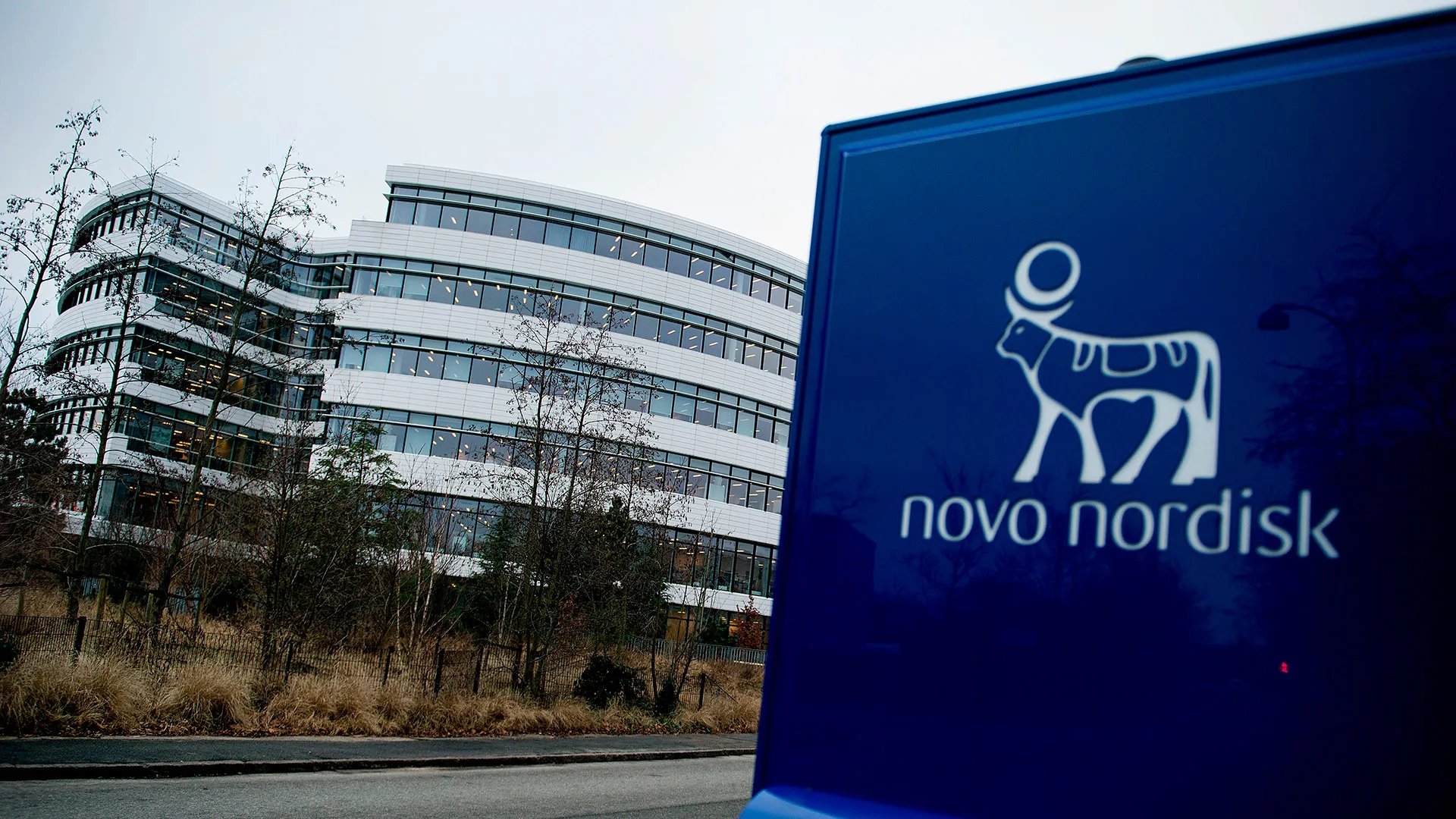
This combination of science and computing is more than just a moment but a movement. The global market for AI in clinical trials alone is expected to reach $2.74 billion by 2030, and investment in drug discovery platforms has grown accordingly. The pharmaceutical industry’s embrace of AI partnerships has reached unprecedented levels, with deals like Novo Nordisk’s $2.76bn partnership with Valo Health showing the scale of commitment to AI-driven drug development. The momentum is further accelerated by strategic combinations, such as the recent merger between Recursion and Exscientia, creating a powerhouse that combines two leaders in the AI drug discovery space.
Governments and regulators are adapting too. The FDA has begun to phase out mandatory animal testing for many drug types, replacing them with AI-enabled prediction models and computer testing tools. This signals a big shift in how drugs are approved and trusted.
There are still challenges like combining data from different sources, making AI algorithms more transparent, getting regulators in different countries to agree, and protecting privacy. These are all important issues being actively discussed. But the direction is clear and it’s moving fast. The Nobel Prize-winning innovation of AlphaFold was just the beginning. With digital twins being tested, virtual labs running 24/7, and AI designing treatments at a scale and speed that was unimaginable just years ago, the pharmaceutical industry is being completely transformed.

The evidence of this transformation is growing every day. What makes this particularly newsworthy is that the drug INS018_055 is the first AI-developed drug to reach phase 2 clinical trials. This makes it a real-world test of AI’s potential to dramatically lower the cost and time it takes to develop new drugs. What once took decades may now take months. The lab bench and the computer are becoming one and the same. AI is no longer just a tool but a partner, co-author, and in many cases, the scientist itself.
As we stand at this crucial rupture, the pharmaceutical industry faces not just technological advancement but fundamental change. The promise of AI in drug discovery is no longer just theory but clinical reality, with patients already benefiting from AI-designed treatments and many more coming soon. Welcome to the age of smart molecules and smarter science.