


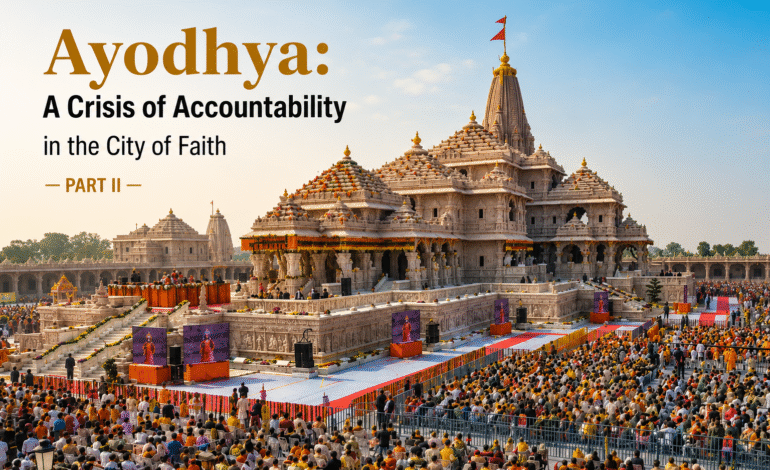
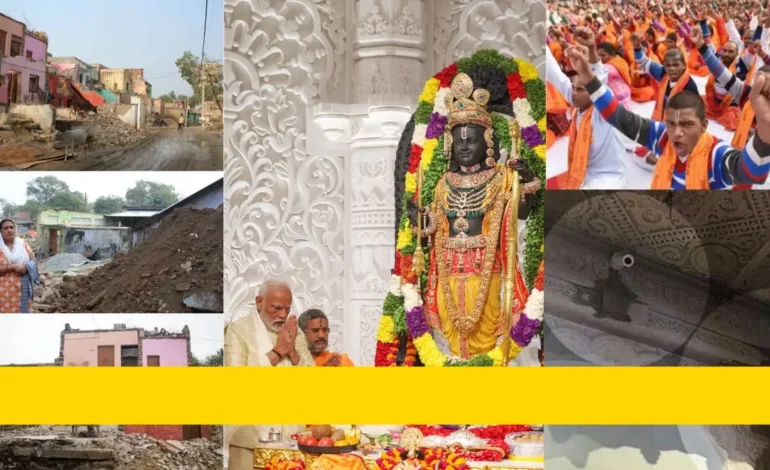
In Part I of this story , we have seen how land around the temple changed hands at extraordinary margins in the years before the consecration, and an accounts manager who caught donation theft in 2022 was sacked within a day. From the January 2024 Pran Pratishtha , officiated by none other than Prime Minister Narendra Modi , onward the story only aggravates and widens.
After Consecration: The Guards, the SIT and the ₹20,000–30,000 Crore Question
An October 2025 Local Fund Audit Department report put irregularities during the January 2024 Pran Pratishtha ceremony at roughly ₹200 crore in Municipal Corporation payments that were made without work verification, without specifying quantity or rate, including one payment to a blacklisted firm, and ₹2.18 crore lost through unadjusted advances despite repeated objections.
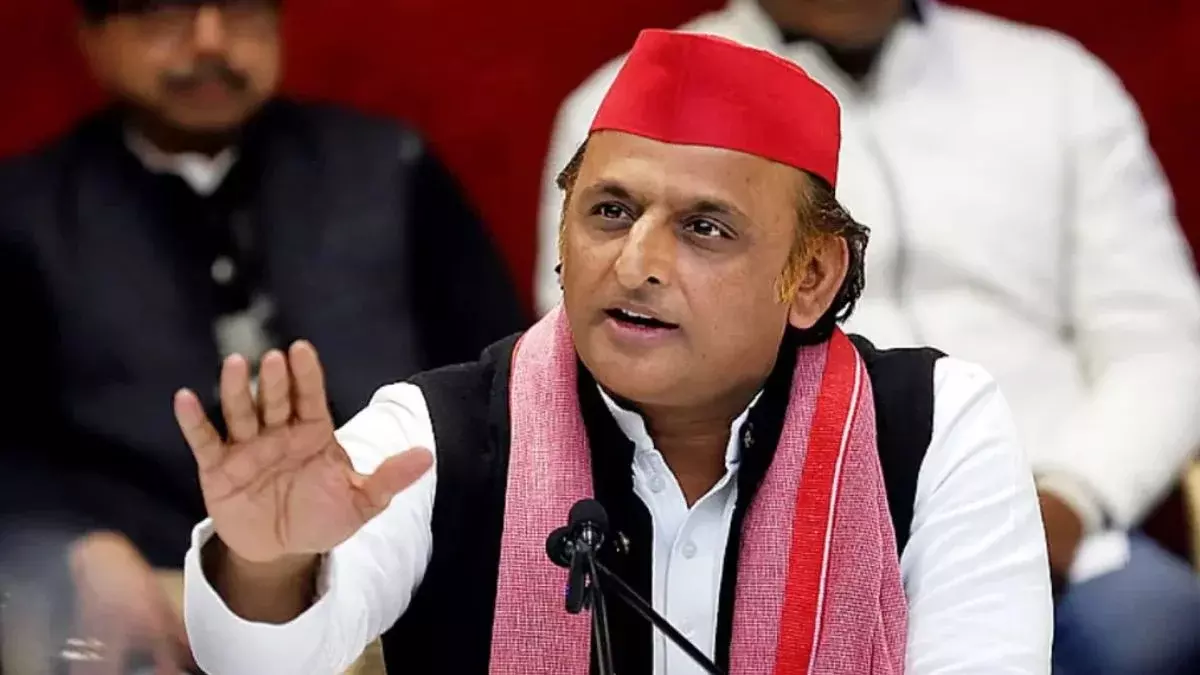
Former SP minister Pawan Pandey said corruption was carried out in the name of devotion, with no account given of public money. Former Chief Minister and Samajwadi Party (SP) national President Akhilesh Yadav demanded a CAG investigation; the ruling party called it “anti-development politics.” Is asking for an audit really anti-development?

During the same Pran Pratishtha, fraudsters ran fake “free prasad” websites and swindled devotees out of an estimated ₹3.85 crore, a scam busted by Ayodhya Cyber Police that was pulled off while the world’s eyes were on the city.
The Kumbh Surge: When the Loot Peaked
If there is a single stretch that investigators now treat as the heart of the donation theft, it is the Mahakumbh window. Between January 13 and February 12, 2025, an estimated 2.5 crore devotees travelling to the Mahakumbh in Prayagraj also passed through Ayodhya, the single heaviest footfall the temple had seen since the consecration.
More visitors meant more offerings in the boxes, and, investigators now say, more theft: by an internal estimate, roughly ₹5–6 lakh in donations was allegedly siphoned off every single day during this period, with the pilferage running for weeks because supervisors overseeing the counting room were, according to reports, complicit rather than watchful.
One commentator’s independent estimate put the Mahakumbh-period theft alone at more than ₹4 crore. The bigger the crowd of the faithful, in other words, the bigger the theft,and,for over a month, nobody stopped it.This estimate also does not include gold and silver donations, for which there are no records.
Cash Recovery So Far
As the SIT’s arrests have widened, so has the paper trail of what was actually stashed away. Investigators say cash recoveries from the homes of the eight accused have now crossed ₹1.4 crore, alongside seized jewellery, property documents and foreign currency.
₹12 lakh was found concealed under cow dung at Lavkush Mishra’s ancestral home, belonging to a man earning a reported ₹12,000 a month who had built a ₹25 lakh house in his wife’s name.
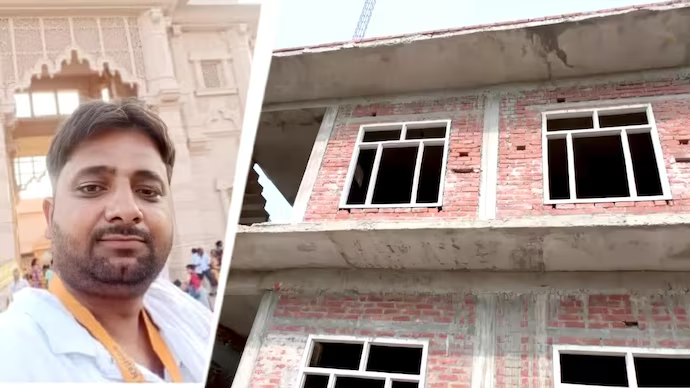
Roughly ₹36 lakh was recovered from Manish Kumar Yadav, ₹20 lakh from Avinash Shukla, along with 3,609 ₹500 notes and 1,121 US dollars, ₹18 lakh from Karunesh Pandey, and ₹16 lakh from Anukalp Mishra.
Cash, jewellery and property papers were also seized from the home of Ramshankar Yadav, alias Tinnu Yadav, an aide of Champat Rai.
The FIR was registered on June 25, 2026, and police have said more names could still be added as the investigation widens. This is what has been recovered so far,not what was taken. The gap between those two numbers is exactly what the SIT is now trying to measure.
It is worth noting who is, and who is not, on this list. All eight men named in the FIR are counting-room floor staff, clerks and hired hands drawing salaries of ₹12,000–20,000 a month. Not one of them is a trustee.
The men who supervised the counting room, signed off on the audits, and ran the Trust while this was allegedly happening day after day have, so far, faced questions and resignations, not FIRs.
Small fish have been netted; whether the investigation is willing to go after whoever was standing over them is the question still hanging.
The Chairman, the Treasurer, and the Names Missing from the Chargesheet
Two men sit above everyone else in the Trust’s chain of command, and neither has been named in the FIR.
Nripendra Misra, chairman of the temple’s construction committee, is not an ordinary trustee—he is a former Chief Secretary of Uttar Pradesh and served as Prime Minister Narendra Modi’s Principal Secretary from 2014 to 2019, making him one of the most experienced administrators in the country.
Once the scandal broke, Misra himself told television channels that CCTV surveillance across the temple premises was “non-existent or poor,” that overall vigilance was “zero,” and that footage reviewed by analysts showed a single individual personally handling the inflow and outflow of donations and keeping bundles of cash in personal custody—an admission close enough to calling it open robbery, if not in those exact words.
Yet his first public response, when reporters pressed him on the donations themselves, was to say that his mandate was “only construction” and leave it there.
That answer sits awkwardly next to his own admission. If vigilance was “zero” and the malpractice ran for close to two years, as complainant Santosh Dubey, who filed the original complaint, has pointed out, is it credible that the man chairing the committee, a career bureaucrat who once ran the entire Uttar Pradesh administration, had no idea what was happening in a counting room a few hundred metres from where his committee’s decisions were made?
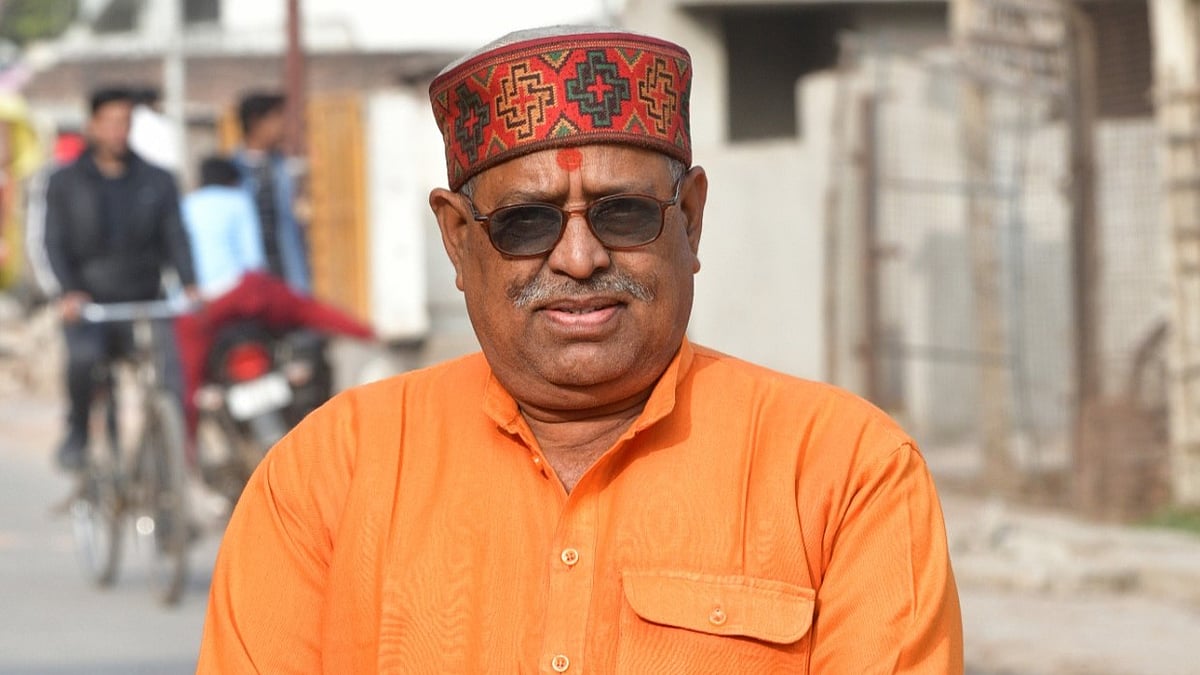
“This is a major scam. So far, action has been taken only against small fish,” Dubey has said. “If such malpractice had been going on for nearly two years, it is difficult to believe the chairman was completely unaware of it. The investigation should determine who knew what and when.”
That is exactly the question the chargesheet, as it stands, does not answer.
The other conspicuous absence is the Trust’s own treasurer Swami Govind Dev Giri, the man the Trust itself says “oversees financial matters.”
It was Govind Dev Giri, not Champat Rai, who publicly confirmed the resignations of the general secretary and a trustee, and who moved up the Trust’s crucial meeting to deal with the fallout.
Jyotirmath Shankaracharya Swami Avimukteshwaranand Saraswati has gone further, publicly alleging that the treasurer is “the principal figure responsible for the alleged scam” but is being protected while attention stays fixed on Champat Rai.
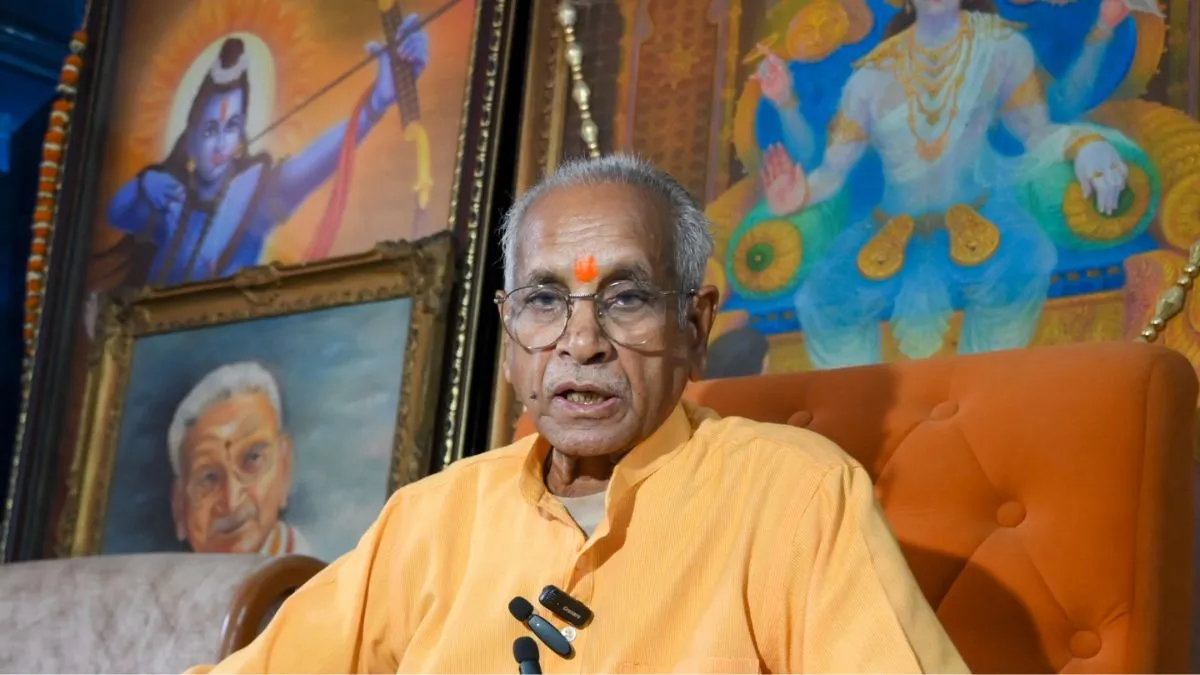
If donations worth crores went missing on a treasurer’s watch, why does the FIR name eight counting clerks and not the man whose job was to account for the money they were counting?
A scam of this scale, running for close to two years inside one of the most closely watched religious sites on earth, does not happen without someone at the top having a clue.
So the real test of this investigation is not whether it can catch the men handling the cash. It is whether it is willing to go after the two men whose job it was to watch them—the chairman, who admits the system failed, and the treasurer, who ran it.
A Mayor’s List and a Reward
Part I detailed how Mayor Rishikesh Upadhyay’s own network turned up on the ADA’s 2022 “illegal colonisers” list, and how the flagged land was quietly rezoned rather than acted upon. What happened to the man who was supposed to enforce that list is where the story picks up on this side of the consecration.
ADA Vice-Chairman and Municipal Commissioner IAS Vishal Singh had promised strict action in 2022; none followed. Singh held both posts through 2020–2024, the period in which the CAG flagged crore-scale irregularities in development projects and 4,305 construction works drew objections, with only 102 answered.
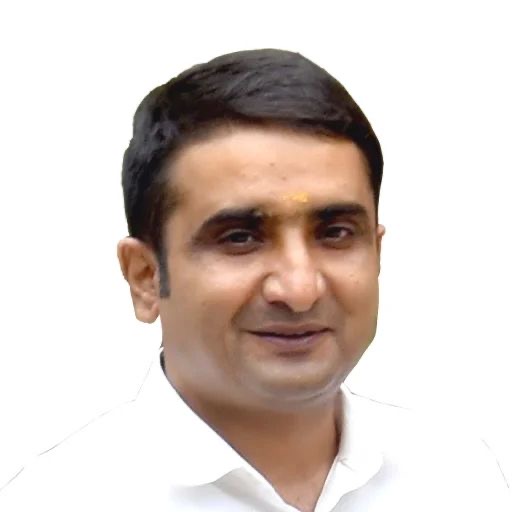
In April 2025, more than a year after the temple opened, the Yogi government appointed him Director of Information and Public Relations for Uttar Pradesh, a prestigious post that, according to Akhilesh Yadav, was handed out without a single answer to the corruption findings on his watch.
Prime Minister Narendra Modi has praised Singh’s work on the Kashi Vishwanath Corridor, and he is seen as Chief Minister Yogi Adityanath’s trusted officer. That may explain the reward. However , it does not provide satisfactory explanations for the tenure or for the mayor’s list that went nowhere.
Champat Rai’s Private Army: 400 Guards, ₹12 Crore a Year
With the temple open to the public, roughly 400 private security personnel were deployed in the complex at an annual cost of about ₹12 crore to the Trust, according to media reports and claims made by political leaders.
Congress spokesperson Supriya Shrinate argued that the issue goes beyond manipulated donations to an entire organised system: the temple already has heavy deployments of central and state paramilitary and elite forces, so why hire an expensive private force of this scale and who chose the guards?
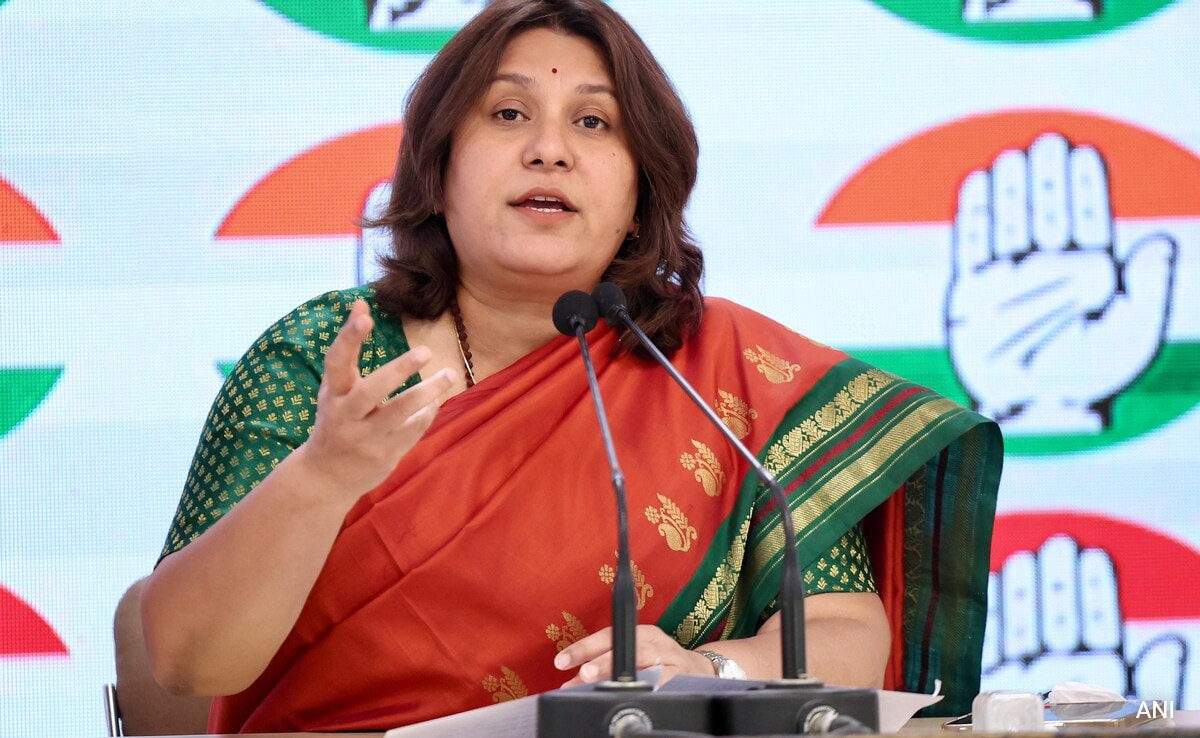
The SIT is now scrutinising the duty rosters, CCTV footage, entry-exit records and the roles of all 400 guards, while trying to establish why certain individuals received VIP exemptions during the counting and movement of offerings, who broke security protocol, and why.
The SIT Investigation: What Has Surfaced Is Chilling, What Remains May Be Bigger
The Uttar Pradesh government constituted a three-member SIT on June 14, 2026 two and a half years after the consecration.
With every layer it has peeled back, another question has followed: is this the dishonesty of a few employees, or part of a larger system that Mahipal Singh had flagged years earlier and on which no one acted?
Arrests and FIRs have followed against eight people—Anukalp Mishra, Lavkush Mishra, Avinash Shukla, Ramshankar Yadav alias Tinnu Yadav, Manish Kumar Yadav, Karunesh Pandey, Ramashankar Mishra and Subhash Srivastava—with cash hidden under cow dung at one accused’s home, turning a symbol of the holy city into a tool for concealing corruption. (The scale of what has been recovered from each of them so far is detailed below.)
Some temple employees earning monthly salaries of ₹18,000–20,000 have, in recent years, acquired property, cars and businesses worth crores; two bought land worth ₹1.5 crore, another a plot worth ₹30–40 lakh. Is that possible on such a salary? If not, where did the money come from?
No one has been given a clean chit. A senior SIT officer says the agency has raised questions about the roles of Trust General Secretary Champat Rai, trustee Anil Mishra and construction assistant Gopal Rao. Notices went out to roughly 80 Trust officials. Champat Rai was questioned for about three hours and, by the SIT’s account, could not satisfactorily answer several of the questions.
A further name surfaced: Arjun Dev, “Radio Maintenance Officer,” posted in Ayodhya since 2009 without a single transfer, responsible for wireless systems, CCTV surveillance and monitoring the counting room was transferred to Gorakhpur only after the investigation deepened. Why wasn’t that transfer made earlier and, after it, is evidence being erased somewhere?
The upheaval has reached the top: General Secretary Champat Rai and trustee Dr Anil Mishra have resigned, and temple manager Gopal Rao may follow. The Trust’s July 11 meeting is expected to reconstitute the entire administrative setup from scratch.
A senior SIT officer says the agency is also probing allegations that trustee Anil Mishra sought a 40 per cent commission on temple construction work.
More Threads: Forged Papers and an Old Wound Reopened
A priest and a revenue clerk forged land documents belonging to a separate temple trust and sold that land to the Ram Temple Trust itself, drawing an FIR, proof that even the Trust could be defrauded.
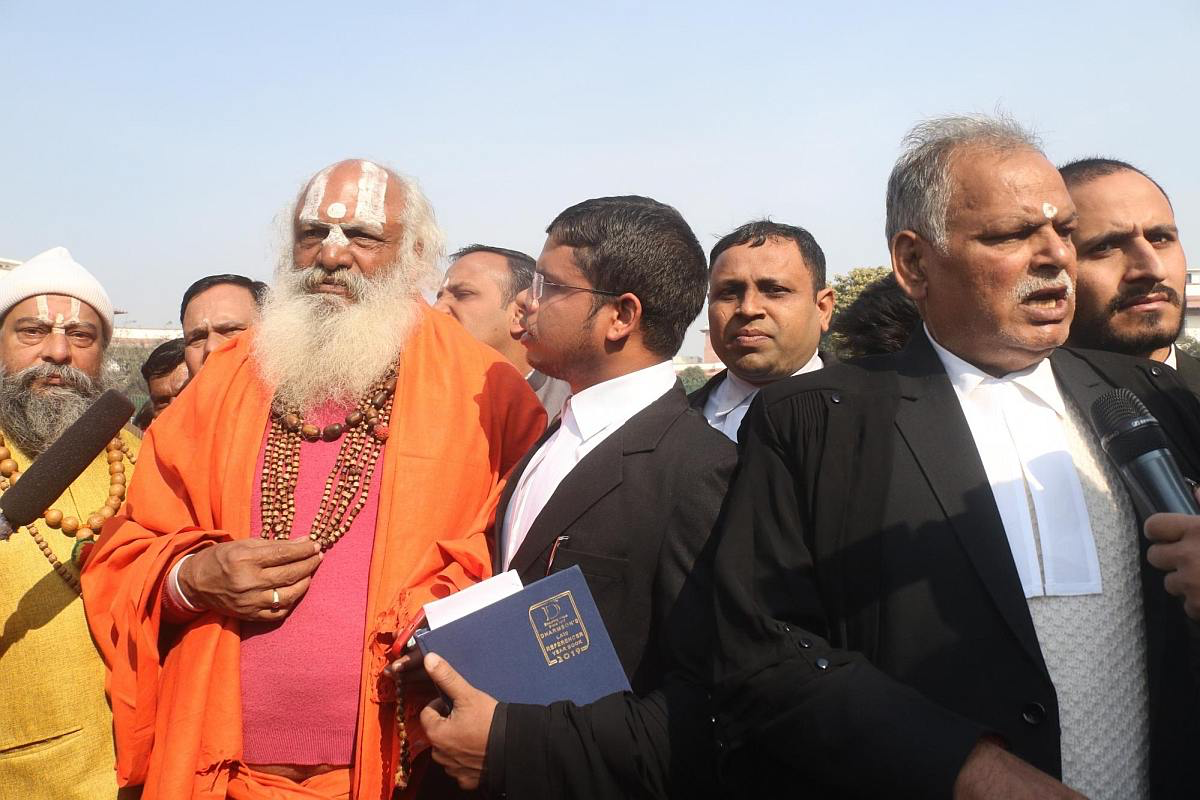
And the investigation has reopened a decades-old wound: the Nirmohi Akhara has long alleged that the VHP diverted more than ₹1,400 crore raised for the Ram Temple movement of the 1980s and 1990s towards organisational and political ends instead. That allegation was never answered before. It is being asked again now.
The Karnataka Connection
Several outlets, including Top Secret, have surfaced a new thread reaching far outside Uttar Pradesh: a Bidar district resident named Deepak has told the SIT that BJP MLA Prabhu Chouhan and RSS leader Gopal collected money from Karnataka contractors in the Ram Temple’s name, starting at ₹5 lakh without a receipt and eventually growing into crores, and that, instead of reaching the Trust’s account, the money went into real estate.
No receipt means no record. Not in the Trust’s account means no accountability. Into real estate means into someone’s private holdings.
Akhilesh Yadav has said the donation threads run directly to Karnataka and Maharashtra, pointing to a possible nationwide collection network that the SIT is now tracing.
The SIT gave the Uttar Pradesh government a preliminary report on June 23, 2026, on which the FIRs are based, and says it has found “a trail of money.”
Six banks SBI, Bank of Baroda, Canara Bank, and others have been served notices, and the digital footprints of about 80 people are under examination.
Against this sits the Trust’s own annual report: income of roughly ₹327 crore in FY 2024–25, split between ₹153 crore in donations and ₹173 crore in interest a small figure next to the volume of pilgrims and offerings the temple has seen since opening its doors.
CAG audits typically find irregularities of 5–30 per cent in large public infrastructure projects in developing countries; a single Swadesh Darshan project alone drew a ₹20 crore CAG objection, and Sanjay Singh has cited over ₹250 crore in beautification-project irregularities across 4,305 flagged works, of which only 102 drew a response.
If the trustee-commission allegation of 40 per cent holds, temple construction alone could carry more than ₹700 crore in irregularities.
Could the Real Number Be ₹20,000–30,000 Crore?
This is an estimate, not a finding of fact no accusation is being proved here. It applies the loss percentages that government and World Bank audits typically find in large public projects to Ayodhya’s known budgets.
Head |
Minimum Estimated Loss |
Maximum Estimated Loss |
|
Development budget (5–20% of ₹85,000 crore) |
₹4,250 crore |
₹17,000 crore |
|
Temple construction (10–40% of ₹1,900 crore) |
₹190 crore |
₹760 crore |
|
Land controversy (estimated) |
₹500 crore |
₹3,000+ crore |
|
Donation/fund irregularities |
₹7 crore (so far) |
Unknown possibly thousands of crore |
|
Municipal Corporation and others |
₹200 crore |
₹500 crore |
| Total estimate | ≈ ₹5,000–7,000 crore |
≈ ₹20,000–30,000 crore |
CAG audits typically find irregularities of 5–30% in large public infrastructure projects in developing countries; a single Swadesh Darshan project alone drew a ₹20 crore CAG objection, and Sanjay Singh has cited over ₹250 crore in beautification-project irregularities across 4,305 flagged works, of which only 102 drew a response. If the trustee-commission allegation of 40% holds, temple construction alone could carry more than ₹700 crore in irregularity.
Faith and Accountability Are Not Opposites
Here is a pattern that is impossible to ignore: an accountant who caught theft in 2022 was removed within a day; a Trust that denied wrongdoing for years went on to demand its own SIT probe; an officer overseeing years of flagged irregularities was promoted, not questioned; and a private guard force answerable to no one but the Trust was allowed to grow around the counting rooms.
Individually, each episode is deniable. Together, they describe an institution that has spent four years insulating itself from scrutiny rather than inviting it.
If the government’s and the Trust’s books are clean, a CAG investigation costs them nothing but time. Every month that it is delayed costs the public something else: certainty. So the question that Ayodhya’s devotees are owed an answer to is not whether more allegations will surface—they will. It is this: who, exactly, is going to open the books?
READ PART 1 OF THE ARTICLE HERE:
Ayodhya: A Crisis of Accountability In the City of Faith – PART I
Note: This article draws on media reports, audit findings and public statements. The allegations discussed remain subject to ongoing investigation and judicial determination. Several individuals and organisations named have denied wrongdoing. Indeed , final conclusions must await the outcome of the legal process.








“True respect for faith is measured not only by grand monuments but also by how people, history, and public trust are treated. Accountability is essential if development is to serve both heritage and humanity. An insightful article that deserves careful reflection.