

Bells of Burrabazar: Kolkata’s Armenians and the Memory of the Great Crime


In the humid air of Burrabazar, where the diesel fumes of yellow taxis compete with the scent of marigolds from the nearby flower market, stands the Armenian Church of the Holy Nazareth. Built in 1724, it is the oldest church in Kolkata and predates the city’s most famous British cathedrals.
Every April 24, the silence of Armenian Street is broken by the heavy tolling of a bronze bell. Armenians living in Kolkata gather at the Armenian Church of the Holy Nazareth to remember the Metz Yeghern, or the Great Crime of 1915.
From Malabar to Bengal
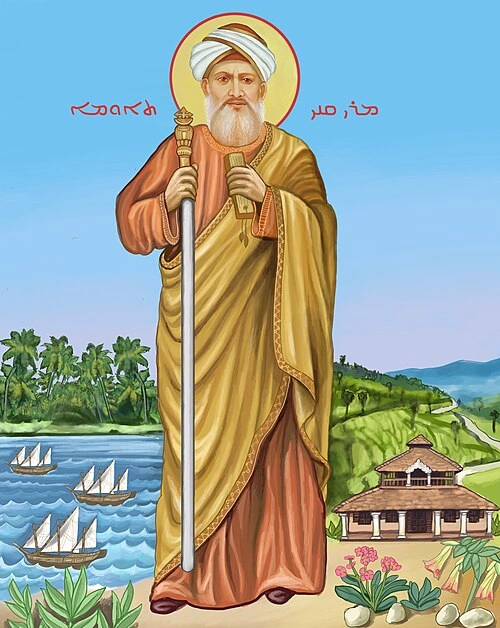
While colonial history often begins with the arrival of Vasco da Gama, records in the Delhi National Archives Directory of 1956 suggest a much older connection. Seven centuries before the Portuguese reached India, an Armenian merchant-diplomat named Thomas Cana landed on the Malabar Coast in AD 780. He is also credited with founding a commercial town near Cranganore (Kodungallur), where he built a church and opened a school. To this day, among the Christians of Malabar, Thomas Cana is known as Knayi Thomman or Kanaj Tomma, meaning “Merchant Thomas”.
Moving forward in time, from the 16th century onwards, Armenia was divided into two parts and came under the sway of two despotisms: western Armenia under Turkey and eastern Armenia under Iran. In the 17th century, the decline of the Ottoman Empire created a power vacuum and severe economic instability that significantly increased insecurity for Armenian populations. This period, marked by the Celali Revolts and the tyranny of the Pashas and Beks, resulted in widespread violence, land loss, and forced migration among Armenians.
At the same time, the disintegration of the Iranian Safavid state caused disturbances and civil wars that brought immense distress to the population of eastern Armenia. Under these conditions, Armenian migration from Turkey and Iran increased. Many migrated to Armenian colonies in Europe and Asia. One stream of immigrants came to India. They were not colonisers; rather, they were refugees favoured by the Mughal emperors and later the British for their linguistic knowledge and trading prowess.
Long before Job Charnock supposedly “founded” Calcutta in 1690, Armenian merchants were already navigating the Hooghly River. Merchants from New Julfa in Persia came to Bengal and established the silk trade in Murshidabad. They made Calcutta their principal place of residence in India, from where they conducted overland trade between Calcutta and New Julfa, as well as with various parts of India. Situated at the crossroads of caravan routes between the East and the West, Armenia had, over centuries, established deep cultural and economic ties with India. These connections helped Armenian merchants successfully conduct trade with Europe via the overland route through Afghanistan, Persia, and Armenia, through Trabizond (Trabzon), and later through New Julfa in Persia.
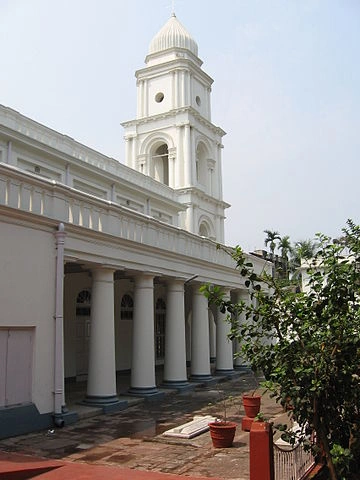
Armenians also settled in the mofussil town of Chinsurah in 1645, where, in 1697, an Armenian church dedicated to St. John the Baptist was built. The church, the second-oldest in Bengal, has been preserved by the Calcutta Armenian Church Committee. There was also a small Armenian settlement in Chandernagore.
Thus, by the time the British East India Company was setting up its ledgers, Armenians were already burying their dead in the soil of Bengal. The tomb of Rezabeebeh Sookia, dated 1630 and considered the oldest tomb in Calcutta, remains a silent witness to the antiquity of the Armenian presence in the city.
The Armenian Genocide (Metz Yeghern) and Kolkata as a Lifeboat
While the early waves of migration were driven by the trade in silk and indigo, the migrations of the early 20th century were driven by bloodshed. The Armenian Genocide of 1915, known to Armenians as the Metz Yeghern or the Great Crime, was the systematic mass murder and ethnic cleansing of approximately 1.5 million Armenians by the Ottoman Empire during and after the First World War. Beginning on April 24, 1915, with the arrest of hundreds of Armenian intellectuals in Constantinople, the campaign unfolded through mass executions, forced death marches into the Syrian Desert, and state-sponsored starvation. Driven by a nationalist ideology that sought to “Turkify” the empire, the Ottoman authorities targeted the identity and very existence of the Armenian minority.
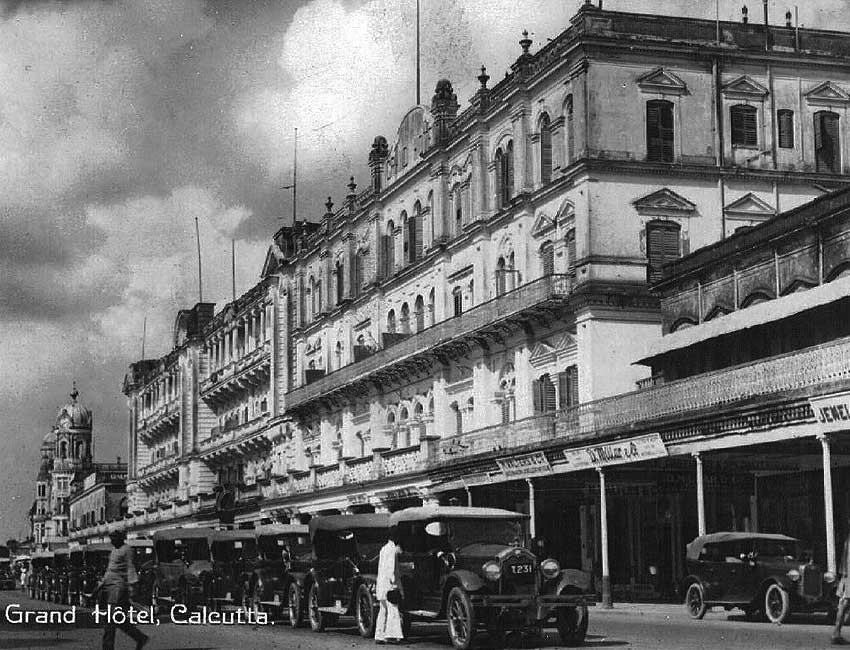
It was in these circumstances that Kolkata became a lifeboat. Refugees fleeing the burning villages of western Armenia found their way to the “City of Joy”. They brought with them little more than their liturgy, their recipes for dolma, and a determination to survive. At the same time, they adapted to local cultural currents, contributing to and expanding the city’s social and cultural landscape through iconic landmarks such as the Grand Hotel, or Oberoi Grand, at Dharmatala Esplanade, and the Park Mansions on Park Street, built by Thaddeus Mesrope Thaddeus. They became as much a part of the city’s elite fabric as the local zamindars, contributing to the “Derby” culture of the Maidan and the jazz-filled nights of Park Street.
Genocide Remembrance Day
Today, the community has dwindled to barely a hundred permanent residents, but its heartbeat remains strong at 56B Mirza Ghalib Street. The Armenian College and Philanthropic Academy, founded in 1821 by Armenian merchants Astvatsatoor Mooradkhanian and Mnatsakan Vardanian, continues to serve as the bridge that keeps the flame alive.
But on April 24, inside the Armenian Church of the Holy Nazareth, the humid air of Burrabazar gives way to the heavy scent of incense and the quiet mourning of the community, while the bronze bell tolls for the martyrs of the Metz Yeghern. The doors of the church are opened for Armenians to pay their respects to the departed souls. In the churchyard, surrounded by centuries-old graves, stands a plaque commemorating the victims. A special mass is conducted, and as the incense rises, the priest prays for the martyrs of 1915. Only those of Armenian descent, including the few remaining local residents and the students of the Armenian College and Philanthropic Academy, are permitted inside the sanctuary for the special mass.
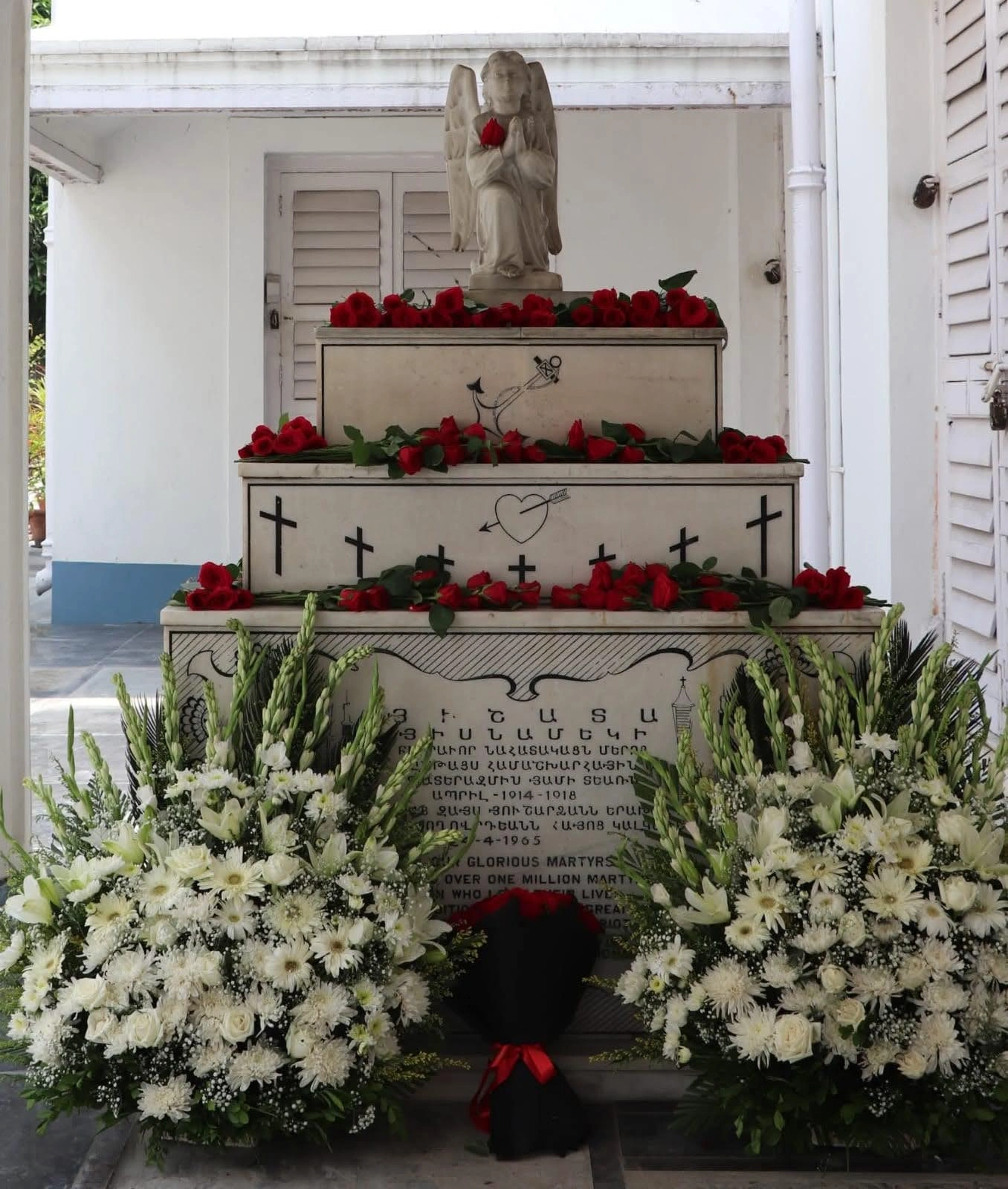
Every year, in the quiet courtyard of Holy Nazareth, the “Great Crime” is not merely a distant historical footnote; it remains a living memory, preserved by a community that refused to vanish, tucked away in the heart of a city that never stops moving.









“An evocative and deeply layered piece by Prachi Jha. Bells Of Burra Bazar: Kolkata’s Armenians And The Great Crime beautifully revives a forgotten chapter of Kolkata’s multicultural history while weaving it with mystery, memory, and social reality. The storytelling carries both historical depth and emotional resonance, making readers reflect on how cities preserve — and sometimes bury — their pasts. A compelling and thought-provoking read.