Ecology Is For The People (Part 01)

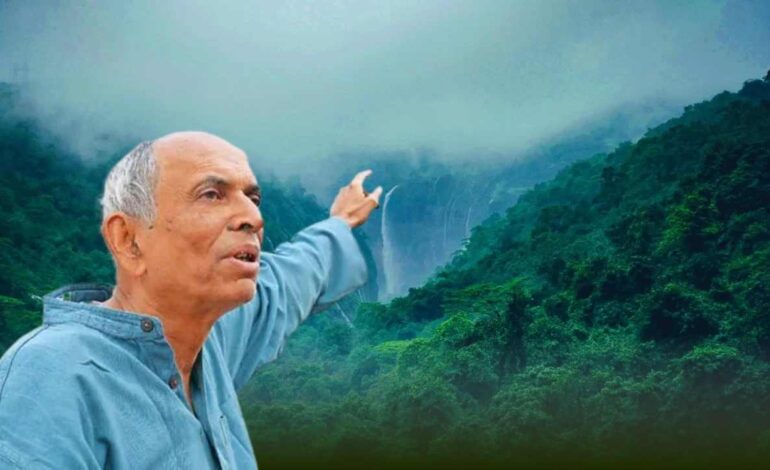
It is with profound sorrow that we note Madhav Gadgil passed away today at the age of 83, after a brief illness in Pune, marking the loss of one of India’s most influential ecologists and environmental thinkers.
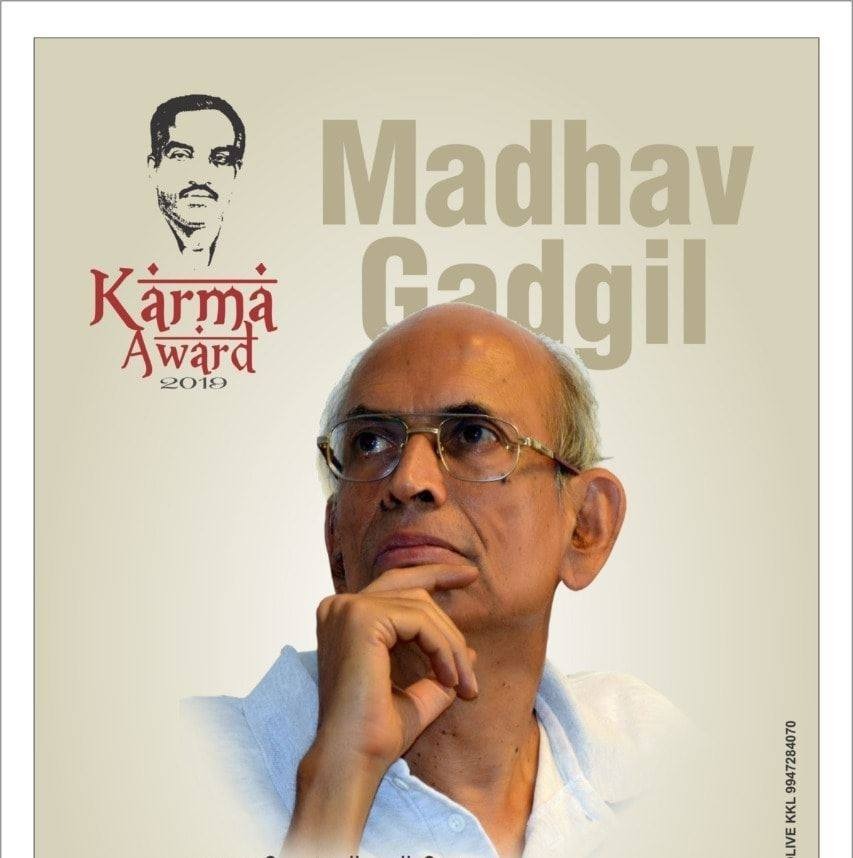
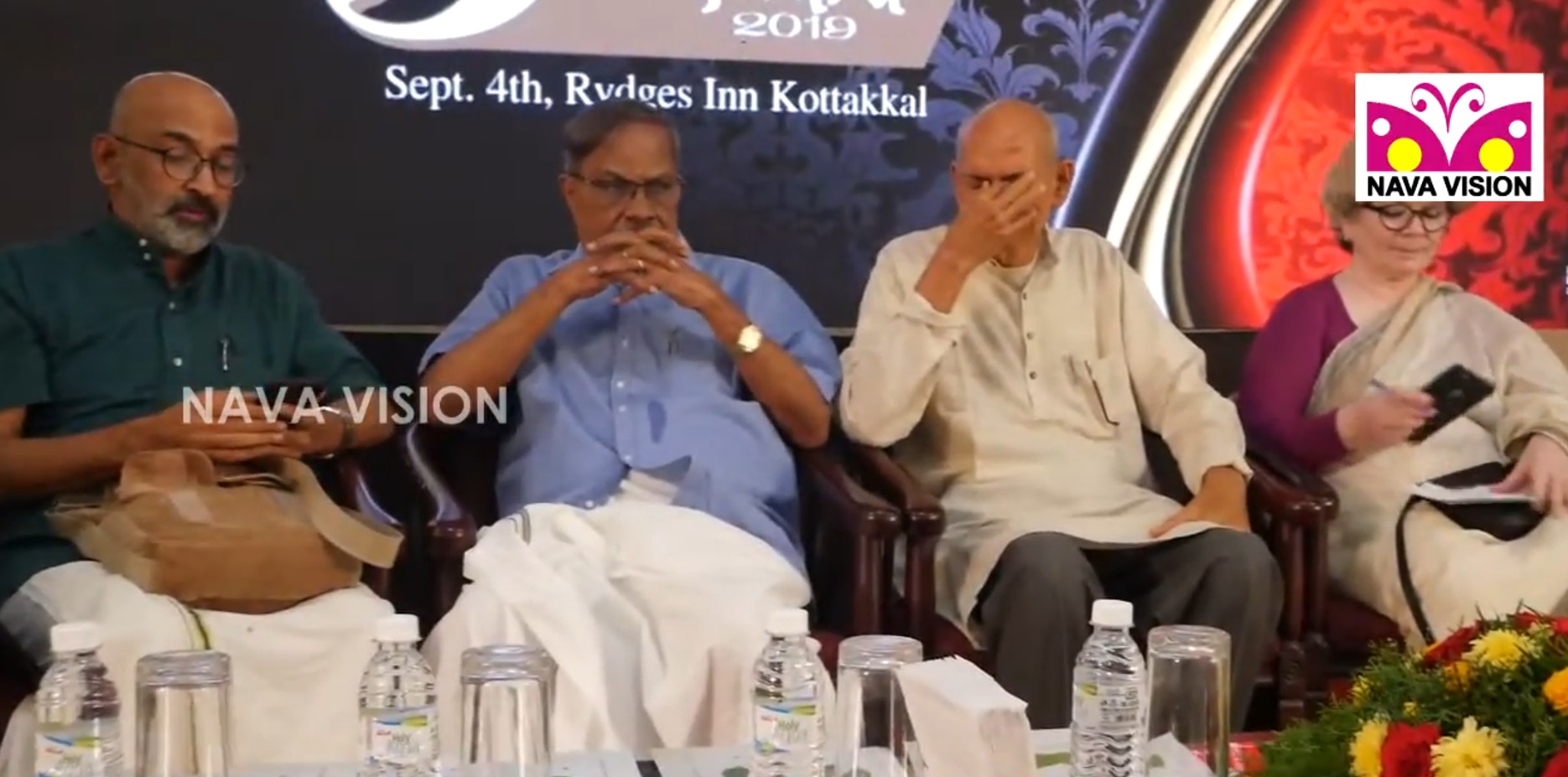
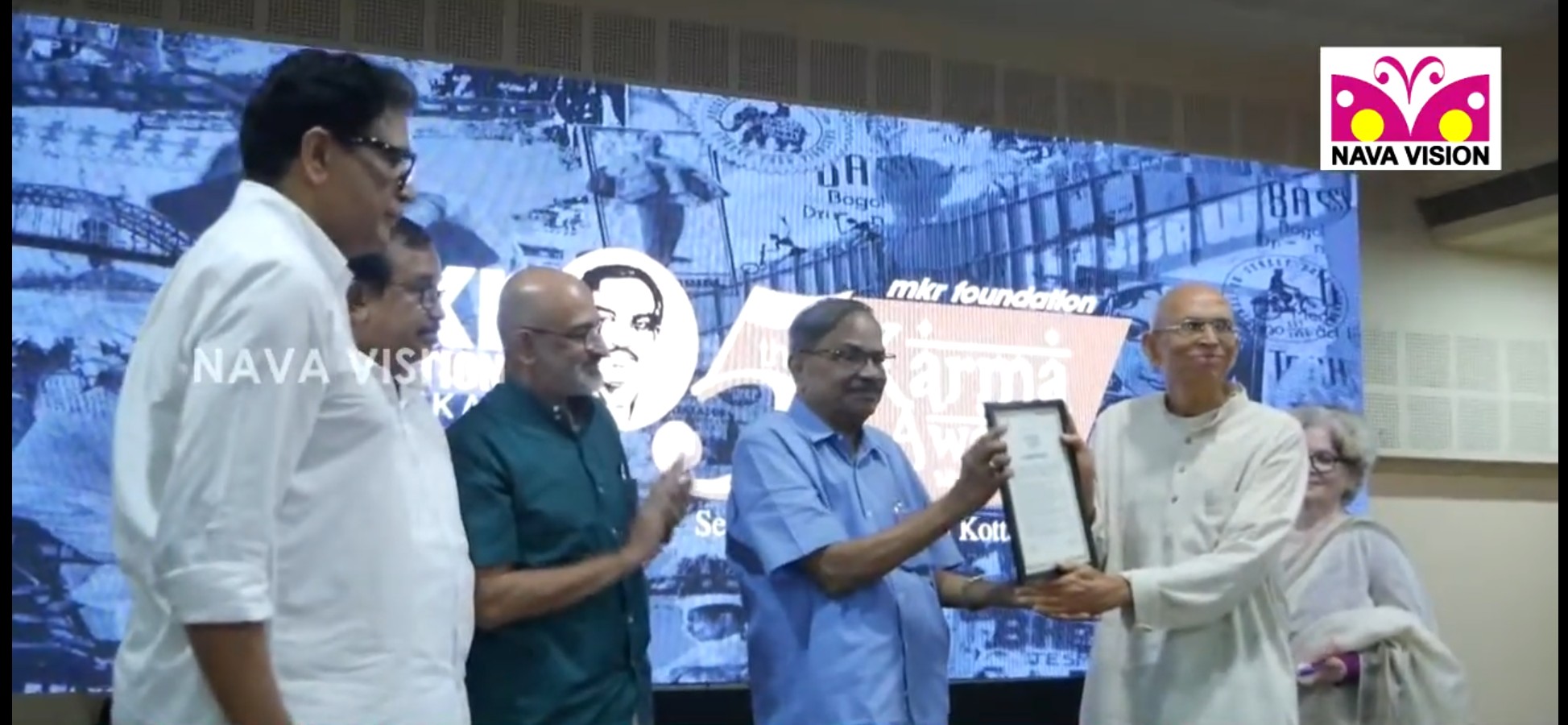
Today, The AIDEM republishes a speech that carries new depth and urgency: Madhav Gadgil’s address delivered on 4 September 2019 at the Karma Award ceremony in Kottakkal, Kerala, where he spoke eloquently about ecology, community stewardship, and the inseparable bond between people and their environment.
Gadgil was not merely a scientist; he was a voice for democratic ecological understanding and grassroots conservation, urging that the protection of nature must be rooted in the lives of the people it sustains — a message powerfully laid out in his landmark writings and public engagements, including his essay “Ecology is for the People.”
The following is an edited and condensed version of the Karma Award Lecture, delivered in Kottakkal, Malappuram on September 04 2019. Published in two parts; Read part one below.
Intense rains, floods, landslides; huge financial losses, manifold human tragedies. In 2018 many in Kerala thought that this was a calamity such as strikes just once in a century, that we will get back to normalcy soon and can merrily continue business as usual. But the probability of two such back to back events is only 1 in 10,000. So, when in 2019 the people of Kerala once again encountered the same shocking train of intense rains, floods, landslides, financial losses and manifold human tragedies, people were stunned and began to realise that it was unwise to continue business as usual, and that we must think afresh of the options before us.
1. An era of extremes
An event with a probability of 1 in 10,000 is exceedingly unlikely; what is more likely is that extreme events like intense rainfall are now likely to occur much more frequently than in the past. All the scientific studies pertaining to global warming suggest that indeed this must be so, that on a warmer earth all kinds of extremes, of rain and drought, and of heat and cold, will become more and more frequent. Humans then are responsible even for natural events like intense rainfall occurring with ever higher frequency.
The root cause of global warming is the wasteful resource and energy-guzzling lifestyle that is spreading all over the earth. True, the model for such a lifestyle originated in the United States of America which even today must accept the lion’s share of the blame for global warming. But that does not absolve us from the blame of following this model, and adding a plethora of deliberately wasteful practices to it.
2. Deliberate waste
Consider the case of the 163-megawatt (MW) Athirappilly Hydro-electric project on the 144-km long, already heavily dammed, Chalakudy river, one of the key case studies included in the report of the Western Ghats Ecology Expert Panel (WGEEP), sometimes known as the Gadgil Commission. Chalakudy, is a river of magnificent waterfalls and rapids and biodiversity-rich forests and waters. The Kerala State Biodiversity Board advised that the project be rejected since it will destroy one of the last remaining examples of low-level evergreen riverine forests in the Western Ghats and deplete the rich fish biodiversity of the Chalakudy river. The Environmental Impact Assessments prepared for the project and the public hearings conducted were flawed, and the High Court has repeatedly set them aside. Local people were against the Athirappilly project, so much so that of the more than 1,200 people attending a public hearing on 15 June 2006, no one spoke in favour, and in the 252 written representations submitted to the public hearing panel, the ratio for and against the project was 1:9. Three of the five members of the panel were against the project and among them were the presidents of Athirapilly gram panchayat and Chalakudy block panchayat; representatives of the people who would be directly affected by the construction of the dam.
[T]he currently favoured development model will count not only quarrying, crushing, and truck transport as positive development gains, but also the rise in sales of drugs and demand for hospitals as a result of the ill-health caused by the quarrying.
A careful assessment of the project by the River Research Centre (RRC) brought out several technical flaws—there is not enough water to generate the power as claimed, power generation will adversely affect the irrigation now available from the river as well as the scenic waterfall and the thriving tourism business. Yet there was continual pressure from the Government of Kerala for clearance of the project. So, at the request of the Ministry of Environment and Forests (MoEF), the WGEEP visited the proposed dam site, the reservoir area, the settlements of the primitive tribal group Kadars, and had consultations with members of the public at various levels. In addition, it organised a technical consultation, which was attended by experts from the Kerala State Electricity Board (KSEB), Chalakudy Parisara Samrakshana Samithi, RRC, Kerala Sastra Sahitya Parishad (KSSP), Kerala Forest Research Institute, Kerala State Biodiversity Board, Tropical Botanical Garden and Research Institute, Nature Conservation Foundation and officers from the state’s departments of irrigation, Scheduled Tribes development, and forest and wildlife. This was the first time that such a discussion was held between proponents and opponents of the project. The RRC team raised a number of significant issues at this technical consultation and none of them were challenged by the KSEB.
Evidently, the technically flawed project will not contribute to meeting the energy demands of Kerala; a proper life-cycle analysis is likely to show that it will expend something like 100 units of energy in construction and operation to generate 80 units. Its only justification can come from the totally unwarranted profits that will be made by contractors and their cronies, and this is what is being pushed with the greatest vigour by governments, not of the people, by the people, for the people, but of the contractors, for the contractors, and by the contractors, and supported by an all-party political cartel.
3. Economy of permanence or of violence?
This is just one of the many examples of highly wasteful use of resources that characterise India’s and Kerala’s current pattern of development. It would be salutary to recall at this stage the philosophy of J C Kumarappa, the accountant-economist who worked closely with Mahatma Gandhi and wrote the insightful book, Economy of Permanence. He pointed out that western Capitalism had elaborated a capital-intensive economy highly wasteful of natural resources because western nations had successfully accumulated large capital stocks through drain of their colonies, and had access to huge stocks of natural resources of whole continents like North and South America and Australia that they had taken over while wiping out the indigenous people.
India, on the other hand, Kumarappa wrote, did not enjoy that kind of access to capital and natural resources, but had to ensure that it did justice to its huge bank of human resources. This called for prudent use of natural resources, best accomplished by empowering local communities to safeguard them, and creating productive employment on a very large scale. Kumarappa, therefore, advocated working out an innovative Indian model that would focus on the rural economy, of a non-violent rather than predatory development on the western pattern. Otherwise, he cautioned that we would end up creating an economy of violence. Writing in 1942, his emphasis naturally was on agriculture-based economic activities in the rural sector. But today, sand, stone, groundwater as well as forests have all emerged as economic resources of substantial value, resources that must be deployed to strengthen the rural economy and generate sorely needed employment.
The saga of violence of nature, and violence at the hand of humans, such as the tragic death of Vellalippil Anoop, aged 29, of Nittoor in Kozhikode district on 20 December 2013, who succumbed to head injuries when a mob, allegedly hired by the quarry mafia, threw stones and crude bombs while he was participating in a sit-in demanding implementation of the WGEEP report, suggests that Kumarappa’s worst fears of a lopsided development have been realised.
4. Nation’s four capital stocks
As the Nobel laureate Joseph Stiglitz emphasises, any nation must aim at a harmonious development of its four capital stocks, not just the man-made capital that gross domestic product (GDP) highlights, but also natural, human and social capital. The currently favoured development model pushed with vigour by all political parties, regardless of their other ideological pronouncements, focuses exclusively on economic activity in the organised industries and service sector. So, it will count on the positive side the rise in demand for new houses and consequently for quarrying stone, following the destruction of property in the floods and landslides of 2018 and 2019. In its computations, the currently favoured development model will count not only quarrying, crushing, and truck transport as positive development gains, but also the rise in sales of drugs and demand for hospitals as a result of the ill-health caused by the quarrying.
In the absence of proper records, other relevant elements of economic activities such as the decline in agricultural productivity and loss of employment for agricultural labour, which ought to be counted on the debit side, will be largely overlooked.
More importantly, this approach totally ignores the ongoing depletion of natural, human, and social capital, an important concern of the WGEEP report. Thus, it turns a blind eye to the erosion of natural capital of land, water, forest, and biodiversity resources. The social capital residing in social harmony, cooperation, and trust is also grievously suffering in the prevailing economy of violence. This pattern of development is depleting human capital relating to health, education, and employment as well. Indeed, as the economist Amit Bhaduri has pointed out, the claim that India’s rapid economic growth is helping create much-needed employment is dubious—the annual rate of growth in employment in the organised sector was 2% when the GDP was growing slowly at 3%, and it actually declined to 1% when the GDP growth rate soared to 7%. So, what we are witnessing is jobless growth, with an accompanying erosion of natural, human as well as social capital.
5. Achieving balanced development
Our Constitution asserts that the real rulers of India are its people who are sovereign and that all development and conservation efforts should be directed towards promoting their well-being. This is the starting point for all the recommendations of WGEEP, which were cast in the framework of our constitutional duties and responsibilities and the various laws on our statute books. The vast majority of our people depend for their livelihoods on a robust base of natural resources and their health and well-being depend on a healthy environment.
WGEEP therefore believed that pitting development against conservation is a false contradiction, and that we must elaborate a model of development as desired by people that is compatible with conservation also as desired by people. Such a model should aim to replace the prevailing “Develop recklessly – conserve thoughtlessly” pattern with one of “Develop thoughtfully – conserve thoughtfully”. The fine-tuning of development-conservation practices to the local context that this calls for would require the full involvement of local communities. The Constitution demands that people have every right to say no, we do not want this type of development. On the positive side, they also have every right to fully enjoy the fruits of prudent use and conservation of the natural resources in their own localities. This people-oriented route is the only route to achieving balanced development.
6. Development by imposition
Plachimada
The WGEEP report emphasised that today we are practicing “development by exclusion, accompanied by conservation by exclusion.” This is because the many powerful interests that control decision-making are not motivated to pursue a pattern of development that will create mutually supportive relationships among beneficiaries of the organised industries-services sectors and the bulk of the Indians who are dependent for their livelihoods and well-being on a healthy base of natural resources. Plachimada panchayat in Palakkad district, where a Coca Cola plant has polluted and depleted groundwater, which has led to a drying up of wells with an adverse impact on agricultural productivity and livelihoods, furnishes a notable example of development imposed from above that the people at grass-roots opposed successfully, albeit incompletely. The people of Plachimada forced a proper inquiry into their losses; the resultant scientific studies showed that these amounted to Rs 260 crores. On the basis of this evidence, the panchayat rescinded the company’s licence.
The panchayat’s reasoning was important: it established the crucial link between governance and managing local natural resources. While cancelling the licence, the panchayat evoked its constitutional rights, arguing that as a local elected government it had the duty to protect the well-being of its citizens. It had the right to cancel—or refuse permission for—anything that affected its citizens adversely. The company’s counter-argument was that the panchayat was subordinate to the state government, which had granted it the license and that it could not operate out of its domain. The High Court of Kerala rejected this argument, affirming that people at the grassroots level do have the authority to decide on the course of development in their own locality. Reaffirming this argument, the Kerala state legislature unanimously passed a bill named the “Plachimada Coca Cola Victims Relief and Compensation Claims Special Tribunal Bill 2011”. Kerala Governor had forwarded the Compensation Claims Special Tribunal Bill 2011 for presidential assent on March 30, 2011. Regrettably, three successive Presidents of India have not signed the bill and the people are not being compensated for their losses.
Stone quarries
To cite one more instance of the imposition of so-called development, consider the case of Chembanmudy in Pathanamthitta district, where a stone quarry has triggered landslips and blockages of streams that are adversely affecting land, water, forest, and biodiversity resources. The human capital of health is also being eroded, with even young children developing lung cancer. Mothers complain that the truck traffic does not permit their children to focus on their studies. There is little employment for the locals. The few labourers employed are mainly from the tribal tracts of Orissa or Jharkhand, people whose livelihoods were destroyed by rampant mining in their own districts. There are horror stories making the rounds of how this disorganised labour force is ill-treated, with no compensation for accidental injuries or even death. Yet the strong protests by the entire local population and resolutions of the Chembanmudy panchayat are being totally ignored and the state government is in fact permitting quarrying closer and closer to the settlements. This was despite the fact that a vast proportion of these activities are completely illegal. A Committee of the Kerala State Legislature has estimated that 1500 of 1650 stone crushers operating in the state had no permission from either the Collector or the concerned gram sabhas. Such a course of action is degrading social capital as well exacerbating social disharmony and mistrust.
7. Conservation by imposition
Like development, conservation is also being imposed on people with the bureaucracy assigned the task of conservation misusing its authority. Such has been the experience of the people of Kerala relating to the Kerala Eco-fragile Lands (EFL) Act. It is alleged that the EFL Act is draconian, allowing the bureaucracy to arbitrarily declare any lands in the proximity of Protected Areas as “ecologically fragile” without citing any scientific reasons. It thereby vests such lands with the Government, extinguishing all individual rights and titles without any compensation, leading to eviction of 8,000-plus farmers from 37,000 acres without compensation.
Even tribals and marginal farmers have lost land and protests against it have been muted. Gram sabhas were not involved in the identification of these lands, and forest officials decided on lands to be taken over without any field visits. Farmers were not given notice; there was only a gazette notification. It is also alleged that the powers have been used by corrupt officials to extort bribes. The same Malayalam term is used for eco-fragile lands and Ecologically Sensitive Zone (ESZ) and as a result, the same process of extortion was reportedly launched again in 2012 with the publication of the WGEEP report.
Of course, the WGEEP report is strongly opposed to such conservation by imposition. However, since the report was not readily available to the public, it was easy to mislead people and claim, as the Bishop of Idukki did, “If the recommendations of the WGEEP report are implemented, lakhs of people living in the area will lose all their freedom and will be forced to vacate the area by themselves before the government evacuates them.”
8. Public trust
Clearly there has been a serious breach of public trust by the governments. What is meant by the public trust they should have kept is well explained in a judgement by Justice Jayashankaran Nambiar in Omana v. Anil Kumar, W.P.(C) No.20532 of 2010 & connected cases, 25 April, 2017.
9. Ecologically sensitive zones
As mentioned above, since the same Malayalam term is used for eco-fragile lands and ESZ, there has been much misunderstanding and confusion, though the WGEEP’s conception of ESZ is radically different form that of eco-fragile lands. The mandate of the WGEEP established in March 2010 explicitly included the following: “To demarcate areas within the Western Ghats Region which need to be notified as ecologically sensitive and to recommend for notification of such areas as ecologically sensitive zones under the Environment (Protection) Act, 1986. In doing so, the Panel shall review the existing reports such as the Mohan Ram Committee Report, Hon’ble Supreme Court’s decisions, recommendations of the National Board for Wildlife and consult all concerned State Governments.”
[T]he expert panel had proposed that development plans should be tailored to the locality, society and time-specific conditions with full participation of local communities.
It was therefore mandatory that we accept the recommendations of the Pronab Sen committee that had been specifically constituted in 2000 to establish the criteria for the declaration of ecologically sensitive zones and was the basis of the Mohan Ram committee report. On several of the Sen committee criteria, the entire Western Ghats region had to be declared as an Ecologically Sensitive Area (ESA). However, the Sen committee had provided no guidelines relating to the management of ecologically sensitive zones. On the other hand, the WGEEP was specifically mandated to make recommendations for “the conservation, protection and rejuvenation of the Western Ghats Region”. Many suggested that the Western Ghats should have a regulatory regime of a go-no go nature; that certain activities would be banned within the limits of the Western Ghats, but fully permitted outside these limits.
The WGEEP decided to move away from such inflexibility in development processes. Instead, the expert panel had proposed that development plans should be tailored to the locality, society and time-specific conditions with full participation of local communities. What should be ‘go’ and ‘no go’ development options ought to be decided on a case-by-case basis, in tune with the specific environmental and socio-economic context, and aspirations of the local communities. Therefore, the WGEEP advocated a graded or layered approach, with regulatory as well as promotional measures appropriately fine-tuned to local ecological and social contexts within the broad framework of regions of highest sensitivity or Ecologically Sensitive Zone 1 (ESZ1), Regions of high sensitivity (ESZ2), and the Regions of moderate sensitivity (ESZ3).
The WGEEP then had to decide on the relative extents of ESZ1, ESZ2 and ESZ3. It was mandatory that we follow other national guidelines such as those of the Forest Policy of India, which prescribes that 66% of the hill areas should be maintained under forest cover. Forest cover needs to be interpreted as cover of natural vegetation since there are many areas at high elevations of the Western Ghats where the natural vegetation is grassland. Many areas are already protected on account of high ecological sensitivity as Wildlife Sanctuaries or National Parks and these should be part of ESZ1. Therefore, we decided that we should assign to ESZ1 60% of the total area of Kerala Western Ghats including the area of Wildlife Sanctuaries and National Parks.
It seems to have taken the tragic developments of 2018 and 2019 to clear the mists of disinformation, and for the people to realise that … the scale of the damage of the last two years could have been substantially reduced.
Our job then was to decide on the criteria for identifying localities as ESZ1. Broadly, we proposed three types of criteria, namely elevation, slope and several indicators of intactness of the natural vegetation. All these criteria were discussed openly through a widely circulated scientific paper published in 2010 in India’s leading scientific journal Current Science. We received many suggestions that were taken on board for finalizing criteria for assignment of ESZ1, ESZ2 and ESZ3. In Kerala, rainfall increases steeply with elevation. High rainfall and steep slopes render localities susceptible to landslides; hence our ESZ1 would be areas susceptible to landslides. The extent of intact natural vegetation is the third component for assignment of ESZ1. Landslides are under check in areas with intact natural vegetation because of the binding of the soil by roots. However, any disturbance to natural vegetation would render a locality with high rainfall and with steep slopes susceptible to landslides. Such disturbances may include quarrying or mining, replacement of natural vegetation by plantations, levelling of the land using heavy machinery, or construction of houses and roads. Therefore, we expect that in the areas assigned by us to ESZ1 any such disturbance of natural vegetation and soil would mean greater danger of landslides. The fact that these have all been occurring in 2018 and 2019 in ESZ1 as designated by us is therefore to be expected.
Our other recommendations included avoiding these kinds of disturbing activities and had our recommendations been accepted, there is no doubt that the extent and intensity of landslides being encountered today would have been much lower.
10. Villages wanting ESZs
The experience of bureaucratically-driven nature conservation efforts coupled with development programmes driven by vested interests has been uniformly negative everywhere from the perspective of the local communities. Thus, in Maharashtra the Mahabaleshwar-Panchagani region was constituted as an Ecologically Sensitive Zone without any consultations with local communities in 2002. Naturally, people feel that ESZ is a regime imposed from outside and that it is a regime focused on rigid bureaucratic controls that are subverted by corrupt officials to harass and extort.
The WGEEP received written petitions complaining that a farmer is now obliged to pay a bribe of Rs 20,000 to get permission to dig a bore well on his farm. The Mahabaleshwar-Panchagani region has large populations of Scheduled Tribes and traditional forest dwellers. Hence, it was imperative that the Forest Rights Act should have been implemented in these areas in its true spirit as early as 2008. Nothing has been done, and it appears that this was to facilitate extortion from local people. I personally inspected some trenches dug across very old village roads by the Forest Department. Allegedly, the trenches are then filled on payment of bribes, to be dug again a little later. The apparent lack of local support to ESZ is also reflected in the report that at one time activists of Bombay Environmental Action Group could visit Matheran, one of the other Maharashtra ESZs promoted by them, only under police protection.
I therefore made a special effort to explain to the people of Maharashtra and Goa Western Ghats that this was not the way ecologically sensitive zones should be constituted and be managed and that this pattern of management was in fact violative of the constitutional rights and responsibilities of local communities. I suggested that if they wanted certain measures of conservation of nature and certain other measures as development initiatives to be taken up in their own villages, they should meet as full gram sabhas to discuss these issues and forward their recommendations to WGEEP.
In many such meetings, several gram sabhas decided that what they would want as conservation measures were very appropriate for ESZs and what they would want as development initiatives were also compatible with the protection of environment. As a result, 25 gram sabhas in the Sindhudurg district of Maharashtra passed resolutions requesting that their areas be designated ecologically sensitive localities, while suggesting the kind of development and conservation initiatives that they felt were most appropriate for their localities.
11. Suppression and perversion
In all these years nobody has pointed to any factual inaccuracies or flaws in the logic in the WGEEP report. Nor has anybody pointed to any violations of our constitutional provisions or acts. So what were the grounds for rejecting our report? All that could be said without distorting what was in the report was that it was impractical. What then, is practical? Is violation of all the constitutional provisions for environmental protection and sabotaging our democratic processes practical? Of course, many powerful economic interests and the political establishment aligned with them were demanding just such unlawful and undemocratic actions. This was clearly the reason why the report was rejected. But, of course, this was not what was openly said and a campaign of suppression and disinformation was launched that has continued to this day. It seems to have taken the tragic developments of 2018 and 2019 to clear the mists of disinformation, and for the people to realise that had a law abiding and democratic political establishment been in charge, the scale of the damage of the last two years could have been substantially reduced.
By March 2011, the bulk of the WGEEP’s work had been concluded. This was presented to the then Union Minister for Environment and Forests, Jairam Ramesh, along with all senior ministry officials. The contents as presented were fully endorsed by the minister and his officials. This was followed by some final detailed work on the report, which was submitted as required on 30 August 2011. We were told that the report would be released at a public function on 21 September. On 19 September we were suddenly informed that the report was not going to be made public, and that we should not release or discuss it publicly. Of course, there were requests for the WGEEP report under the RTI Act, which were promptly turned down at the MoEF level. An applicant then went in appeal to the Central Information Commissioner (CIC) who passed a significant order on 9 April 2012.
The CIC ordered the report to be made public by 10 May 2012. On 4 May, the MoEF asked Delhi High Court for a stay on this order. The high court dismissed the ministry’s pleas on 17 May 2012.
In 2011 technological advances would have made such an exercise [People’s Planning Campaign] much more effective and efficient, and parallel panchayat development reports for all the Western Ghats panchayats could have been on board before the end of 2013.
When the WGEEP report was presented in essentially its final form to the minister and senior officials of the MoEF in March 2011, the panel had been assured that the report would be translated into all local languages, and taken to all the gram sabhas and other local bodies at the block and district levels for their considered feedback before any final decisions would be taken. Moreover, the WGEEP’s mandate explicitly asked it to recommend the modalities for the establishment of a Western Ghats Ecology Authority under the Environment (Protection) Act, 1986. This was to be a professional body to manage the ecology of the region and to ensure its sustainable development with the support of all the states concerned. So the WGEEP expected that such an authority would preside over a democratic and transparent process of examining the report before finalising any course of action. This did not happen, nor did any state government take such an initiative on its own. If such a course had been adopted the process of obtaining feedback from the ground level could have been completed in the next few years in a transparent and participative fashion and then appropriate decisions could have been arrived at. These would have importantly involved working out the full location and society specific details of the action programme to be undertaken at the ground level.
Kerala should be a fertile land for such an exercise. During 1991-93, the panchayat of Kalliasseri was chosen for an experiment of Panchayat Level Participatory Planning in continuation with the Panchayat Resource Mapping Programme, which later came to be known as “Kalliasseri Planning Model”. Notably, the Kalliasseri Plan proposed how prudent systems of local water resource management might be revived. This became the role model for Kerala’s world-famous “People’s Planning Campaign”(PPC) of 1996.
The PPC had involved all the panchayats of the state in the preparation of panchayat development reports. In 2011 technological advances would have made such an exercise much more effective and efficient, and parallel panchayat development reports for all the Western Ghats panchayats could have been on board before the end of 2013. Instead an adversarial environment was created, in part by the suppression and deliberate distortion of the report and in part by the hype around the need for investments and mega projects and accelerated growth. State governments protested that development would be affected, without a careful reading of what the report advocated, what it promoted, and what it sought to protect, as did the MoEF. However, faced with a public outcry, the ministry decided to appoint the High-Level Working Group chaired by Dr. Kasturirangan, whose mandate was “to examine the Western Ghats Ecology Expert Panel Report in a holistic and multidisciplinary fashion.”
Kasturirangan committee’s functioning and recommendations were seriously flawed. Instead of going into details here, I would like to refer to an open letter that I wrote to Dr. Kasturirangan that was published in The Hindu on 18 May 20131 .
Part two to follow.