From Caracas to the Arctic: Trumpism’s New Geography of Power


International affairs observer Shama Rebecca Sarin analyses the recent US power games in Venezuela and Greenland, with a historical perspective on the long afterlife of regime changes effected by the US over time, across the globe.
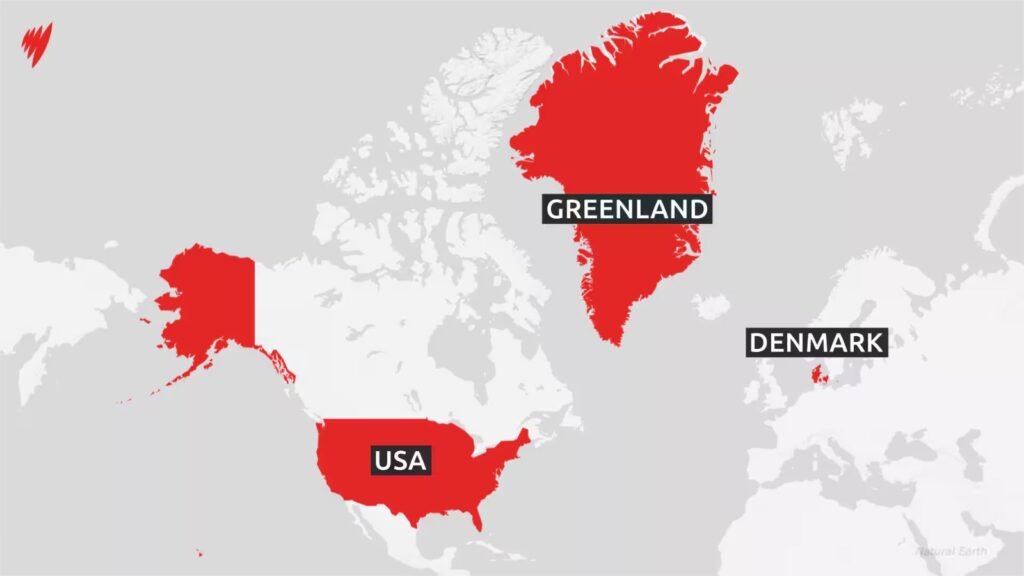
Two flashes on the global horizon – one explosive, the other deceptively casual – have together exposed a disturbing continuity in American power projection. In Latin America, reports emerged of a dramatic US special-forces operation targeting Venezuela’s head of state. In the Arctic, a former Trump insider posted a map of Greenland draped in the Stars and Stripes, captioned with a single word: “soon.”
One episode speaks the language of force; the other, of entitlement. Yet both point toward the same underlying assumption: that sovereignty is conditional, and that international norms remain binding only when they do not obstruct American strategic appetite.
Venezuela and the precedent of impunity
The most unsettling dimension of the Venezuela episode is not merely the allegation of a raid, but the global reaction – or lack of it. Former Ecuadorian president Rafael Correa described the incident as a “disastrous precedent,” warning that the world risks sliding back into “barbarism” if such actions go uncontested.
According to the reports, US forces conducted airstrikes on Venezuelan territory and captured President Nicolás Maduro and his wife, transferring them to the United States on drug-trafficking conspiracy charges – claims Maduro has long rejected. The Venezuelan leadership has consistently argued that Washington’s real objective is regime change, driven by access to the country’s vast oil reserves rather than narcotics enforcement.
What stands out is the asymmetry of outrage. Were a rival power to seize a sitting head of state beyond its borders, emergency UN sessions and sweeping sanctions would likely follow. Instead, the response here was fragmented, cautious, and quickly drowned out by the churn of the news cycle. Selective outrage, Correa suggests, has become the lubricant that allows power to move unrestrained.
If Venezuela represents overt coercion, Greenland reveals something subtler – and arguably more corrosive: the normalisation of territorial ambition as political theatre.
On X, Katie Miller, a former senior communications official during Trump’s first term, posted a map of Greenland overlaid with the US flag, captioned simply “soon.” No policy document accompanied it, yet the post reverberated precisely because of its proximity to power.

Trump first proposed purchasing Greenland in 2019, a suggestion dismissed outright by Denmark and Greenland’s authorities. Since returning to office, he has revived the idea with sharper rhetoric, calling the island indispensable to US national security and hinting that force cannot be ruled out. Denmark, reading the shift from eccentricity to pressure, has responded by strengthening Arctic defenses and expanding surveillance.
Though no longer in government, Miller remains closely linked to the administration through her husband, Stephen Miller, Trump’s Deputy Chief of Staff for Policy and a central architect of his ideological worldview. In such ecosystems, unofficial gestures often serve as trial balloons – testing resistance before ambition hardens into policy.
Denmark’s ambassador to Washington, Jesper Moller Sorensen, responded swiftly, reaffirming the alliance while insisting on “full respect for the territorial integrity of the Kingdom of Denmark.”
The long, insidious record of regime change
What makes these moments truly dangerous is that they do not arise in a vacuum. They echo a long history of US regime-change operations whose consequences have been consistently downplayed once strategic objectives were met.
In Iran, the 1953 CIA-backed overthrow of Prime Minister Mohammad Mossadegh replaced a democratically elected government with an authoritarian monarchy to safeguard Western oil interests. The eventual backlash – the 1979 Islamic Revolution – reshaped the Middle East and entrenched hostility that persists to this day.
In Guatemala, a similar operation in 1954 toppled President Jacobo Árbenz after he challenged United Fruit Company’s land holdings. The result was not stability but decades of military rule, civil war, and genocide against Indigenous populations – violence that Washington neither prevented nor meaningfully acknowledged.
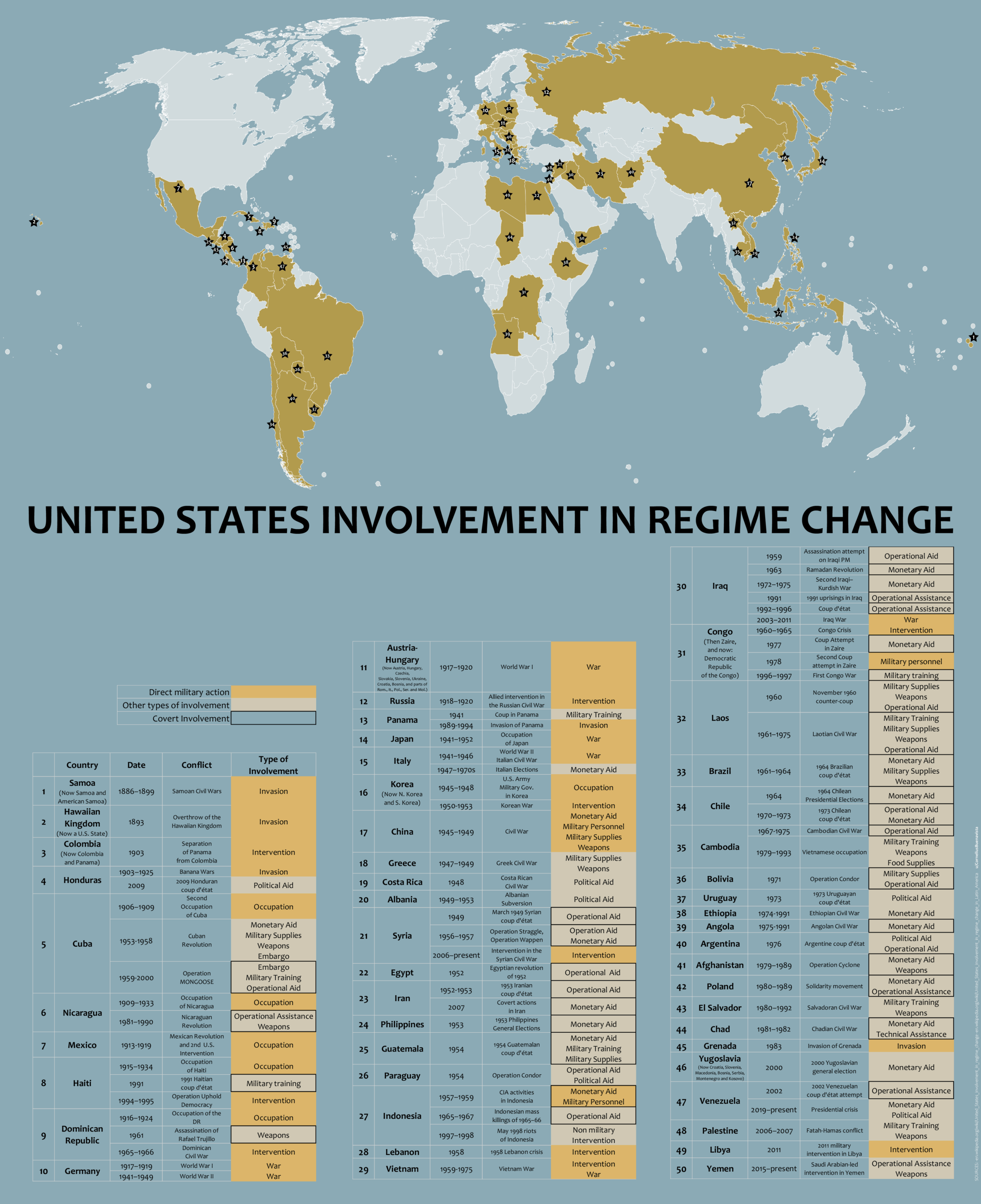
In Chile, US support for the 1973 coup against Salvador Allende installed Augusto Pinochet’s dictatorship, ushering in years of torture, disappearances, and neoliberal restructuring imposed at gunpoint. Democracy returned eventually, but the social scars remain deeply embedded.
The 2003 invasion of Iraq, justified by fabricated claims of weapons of mass destruction, dismantled the Iraqi state and triggered sectarian violence, regional destabilisation, and the rise of extremist groups whose consequences still haunt West Asia.
More recently, NATO’s intervention in Libya and prolonged covert involvement in Syria followed the same pattern: removal without reconstruction, destruction without responsibility. Institutions collapsed, societies fractured, and chaos was rebranded as “complexity.”
Across decades and continents, the method has remained consistent – sanctions that devastate civilian life, covert operations that hollow out political legitimacy, and military interventions that erase state capacity without replacing it. Each case was framed as exceptional. Together, they form a doctrine.
When chaos becomes policy
The real peril lies in how these disasters have been absorbed into the background of global politics. Once the bombs stop falling, accountability evaporates. Failed states are reframed as unfortunate inevitabilities, civilian suffering as collateral, and imperial overreach as strategic necessity.
Against this ledger, Venezuela and Greenland no longer appear aberrational. They look like extensions of a familiar logic – one that treats the world as a map of resources, corridors, and leverage points, rather than a community of sovereign societies.
The map itself becomes the message
History rarely announces its turning points with clarity. More often, norms erode quietly – through tolerated raids, unchallenged threats, and jokelike claims that test how far power can stretch before it snaps back.
Venezuela tests how openly force can be applied before outrage ignites. Greenland tests how casually borders can be discussed before they are redrawn. Together, they remind us that the empire today does not always arrive with armies; sometimes it comes as a post, a precedent, a silence.
And once the world learns to live with that silence, barbarism does not return with a bang – but with a shrug.