


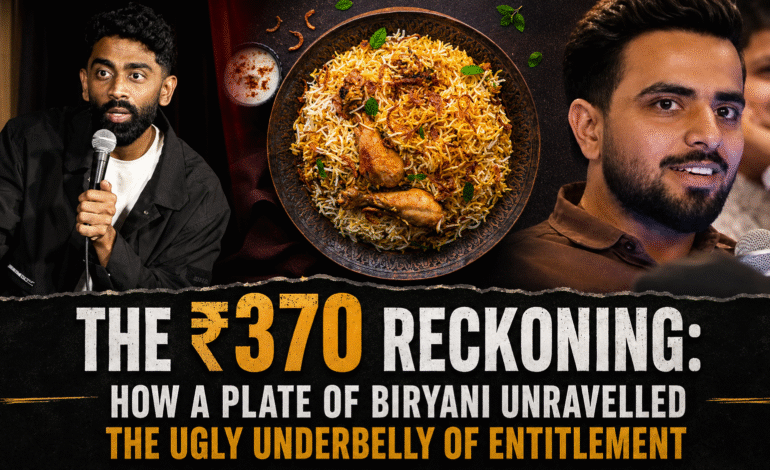
In the modern digital age, cultural reckonings rarely begin with grand manifestos. Sometimes, they start with an ill-conceived punchline under the warm, dim lights of a comedy club. In June 2026, the catalyst for India’s most visceral debate on dating, misogyny, and bodily autonomy was something astoundingly mundane: a ₹370 plate of chicken biryani. What unfolded over a matter of days was not just a fleeting viral moment, but a stark mirror held up to the transactional underbelly of modern romance — culminating in a rallying cry that echoed across the internet: “Biryani is dinner, not consent.”
The Anatomy of a Joke Gone Wrong
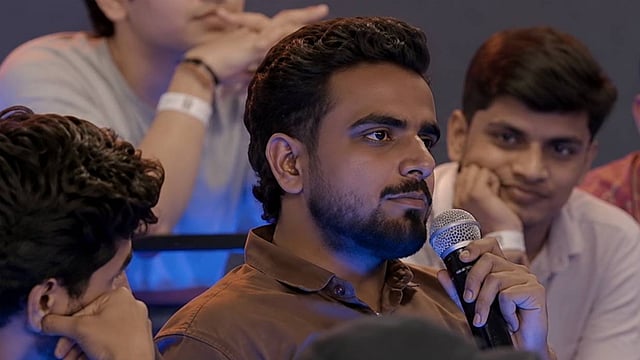
The controversy traced its origins to a routine crowd-work segment during a stand-up comedy show by Pranit More in Gurugram. The format, which relies on spontaneous banter between the comic and the audience, usually yields harmless laughs. But the atmosphere shifted when a 22-year-old web developer, Himanshu Jangra, took the microphone to recount a recent date.
Jangra narrated taking a woman in her late twenties out for chicken biryani, proudly declaring that the bill came to a modest ₹370. He then nonchalantly informed the room that because he had paid for the meal, he intended to “wasool” (recover) his investment. Despite the woman expressing a desire to go home, Jangra recounted steering the date towards a secluded park with the explicit expectation of physical intimacy as a return on his financial expenditure.
Instead of shutting down the deeply problematic narrative, More and the audience laughed along. The clip was subsequently uploaded to YouTube and Instagram, packaged as a relatable anecdote of modern dating. The internet, however, was not laughing.
The Cost of Entitlement
Within hours of the clip gaining traction, a fierce backlash ensued.
Women across the country recognised the anecdote not as a joke, but as a chilling articulation of a lived reality: the insidious expectation that buying a woman a meal purchases a right to her body.
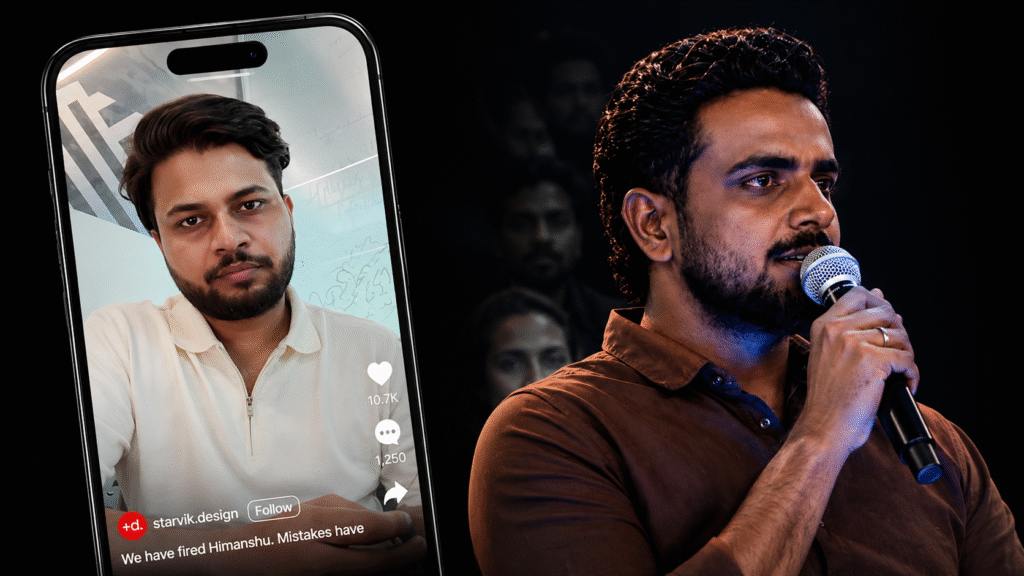
The swift and unforgiving nature of the digital public square brought real-world consequences to the doorsteps of those involved. Social media users and prominent influencers condemned the blatant misogyny. Recognising the gravity of the situation, Starvik Design, the firm where Jangra was employed, abruptly terminated his contract. The company’s founder released a statement emphasising that a workplace cannot shelter individuals who publicly harbour such toxic viewpoints.
Meanwhile, comedian Pranit More found himself in the eye of a reputational storm. Criticised heavily for not only enabling but actively platforming the misogynistic rhetoric, More was forced to issue a public apology before deactivating his Instagram account. The Maharashtra Police and the National Commission for Women soon took cognisance of the incident, pushing the controversy from the realm of internet outrage into the jurisdiction of legal accountability.
“Biryani is Dinner, Not Consent”
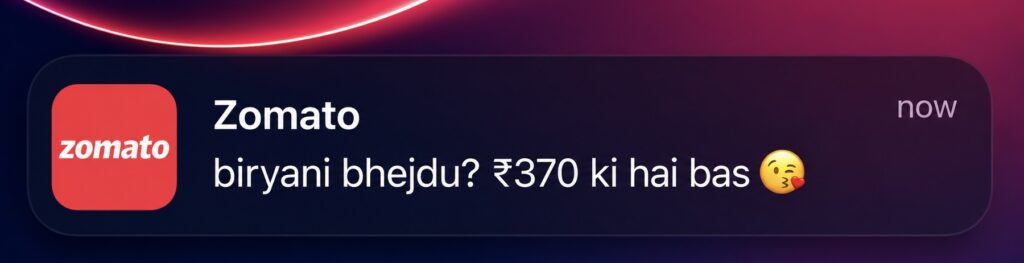
As the debate raged, the internet’s penchant for misinformation added a bizarre twist to the saga. A fabricated screenshot began circulating widely, mimicking a push notification from the food delivery giant Zomato. The fake notification read, “Biryani bhejdu? ₹370 ki hai bas” (Should I send biryani? It’s only ₹370), attempting to capitalise on the viral outrage.
Recognising the danger of being associated with a narrative that trivialised sexual coercion, Zomato broke its silence with a masterclass in corporate communication. Across its social media platforms, the company posted a stark, black-and-white graphic denying the screenshot’s authenticity. Accompanying the denial was a simple, unassailable declaration:
“Biryani is dinner, not consent.”
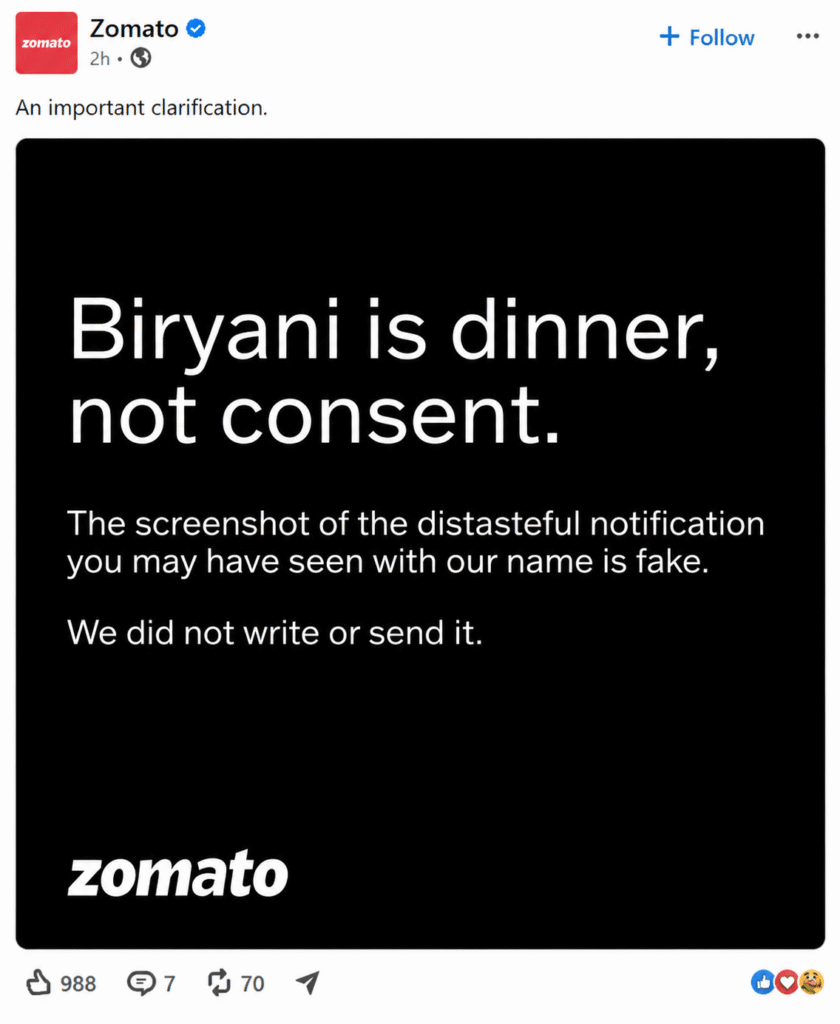
“The screenshot of the distasteful notification you may have seen with our name is fake. We did not write or send it,” the company clarified, effectively transforming a moment of brand jeopardy into a powerful social statement.
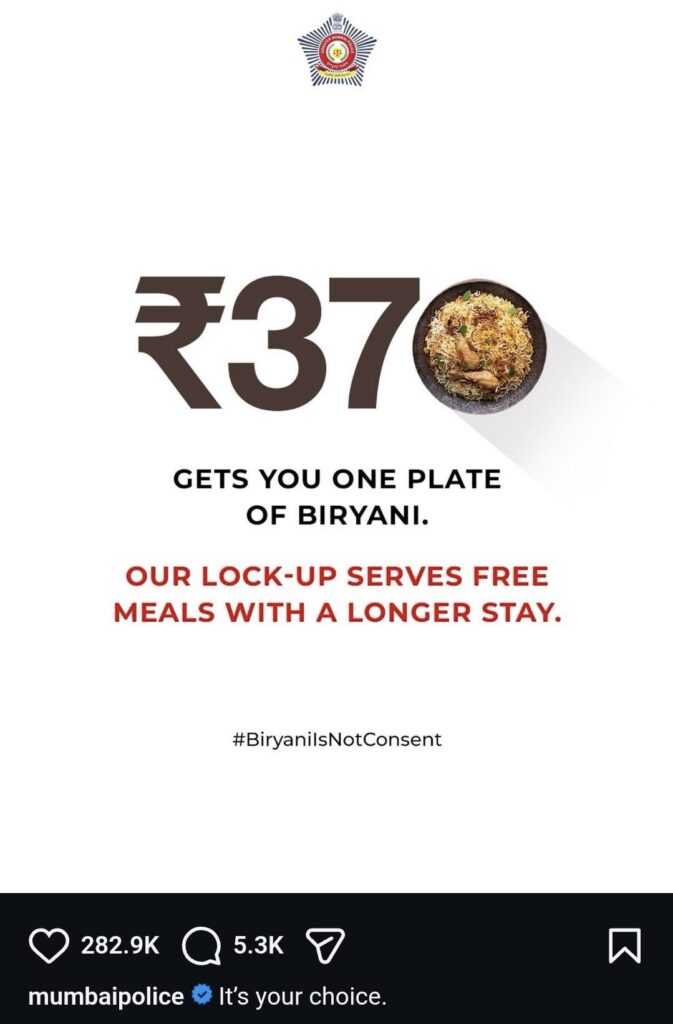
Not to be outdone, the Mumbai Police, renowned for their incisive moment marketing, joined the fray. Utilising their vast social media reach, they posted a creative that struck a perfect balance between wit and warning: “₹370 gets you one plate of biryani. Our lock-up serves free meals for a longer stay. #BiryaniIsNotConsent.”
A Cultural Litmus Test
The ₹370 biryani saga is more than a fleeting internet controversy; it is a cultural litmus test. It forcefully dissects the patriarchal assumption that romance operates on a ledger, where financial expenditure inevitably demands physical compliance. The phrase “wasool” laid bare a deeply ingrained sense of entitlement, one where women are stripped of their agency and reduced to commodities that can be bought for the price of a modest dinner.
What the internet’s unified response demonstrated, however, is a shifting tide. A younger generation is no longer willing to dismiss casual misogyny under the protective guise of “edgy comedy”. They demand accountability, recognising that the jokes we normalise dictate the culture we inhabit.
In the end, Himanshu Jangra’s ₹370 biryani turned out to be exorbitantly expensive. It cost him his job, it cost a comedian his platform, and it forced a society to confront its darkest presumptions about dating. Most importantly, it permanently codified a fundamental truth into the digital lexicon, a reminder that respect cannot be purchased, and consent is never on the menu.








“It is remarkable how a story that begins with a simple plate of biryani unfolds into a powerful reflection on prejudice, discrimination, and social inequality. The article goes beyond the incident itself to expose deeper societal realities, making it both thought-provoking and deeply relevant.”