In the Narendra Modi government’s political grammar, acronyms are never accidental. This has been reiterated once again through the proposed new bill that seeks to replace the Mahatma Gandhi National Rural Employment Guarantee Act (MGNREGA), originally enacted by the Manmohan Singh–led first United Progressive Alliance (UPA) government (2004–09).
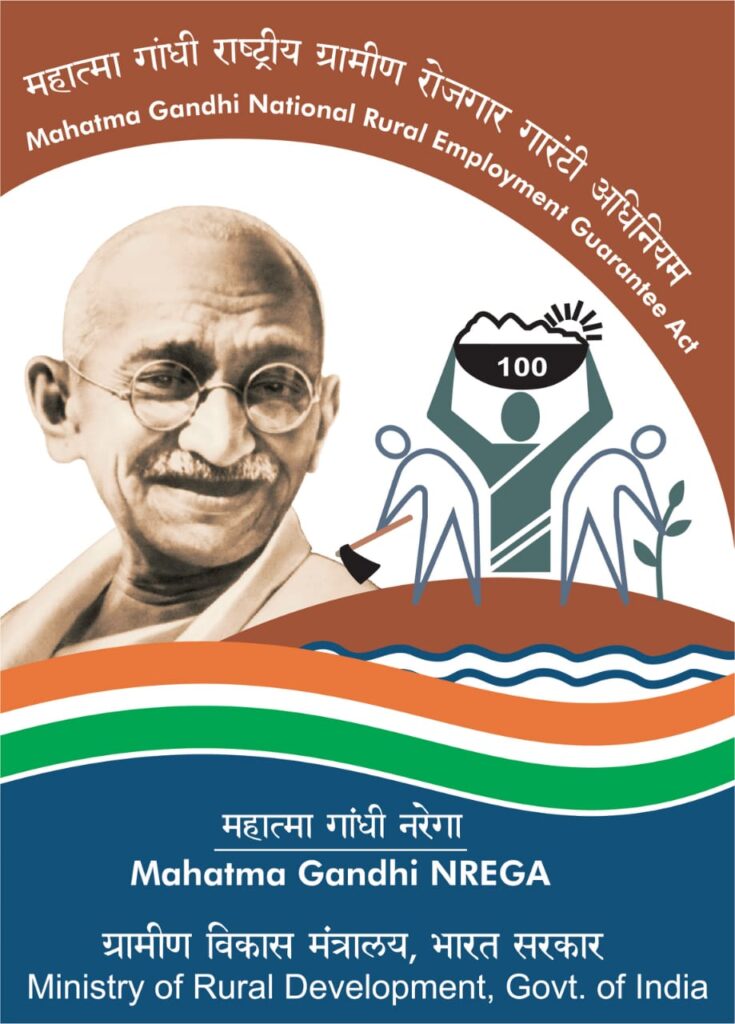
The new move does not merely rename the Mahatma Gandhi National Rural Employment Guarantee Act; it re-engineers its spirit through language, structure, and administrative design. The shortened form—“VB-G-Ram-G”—is not a neutral acronym but a carefully curated ideological signal, where religious symbolism is smuggled into welfare legislation under the cover of bureaucratic efficiency.
The insertion of “Ram” functions as a cultural marker, embedding a majoritarian subtext into what was once a secular, rights-based law. This is communalisation without declaration, signalling belonging to some while alienating others.
The quiet removal of Mahatma Gandhi’s name from the legislation is arguably the most consequential shift. Gandhi’s presence in NREGA was not ornamental; it anchored the law to ideas of moral economy, decentralised power, and the dignity of manual labour. Erasing his name is an attempt to sever the scheme from its ethical lineage.
Beyond nomenclature, the bill introduces structural changes that weaken the rights-based character of NREGA. Provisions reportedly move away from guaranteed employment as a legal entitlement towards a more discretionary, target-driven framework aligned with centrally defined “Viksit Bharat” goals.
The increased emphasis on digital compliance, Aadhaar-linked verification, and centralised monitoring is framed as efficiency but, in practice, risks excluding the most vulnerable—migrant workers, the elderly, and those in regions with poor connectivity. What was designed as an inclusive safety net becomes a conditional system filtered through technology.
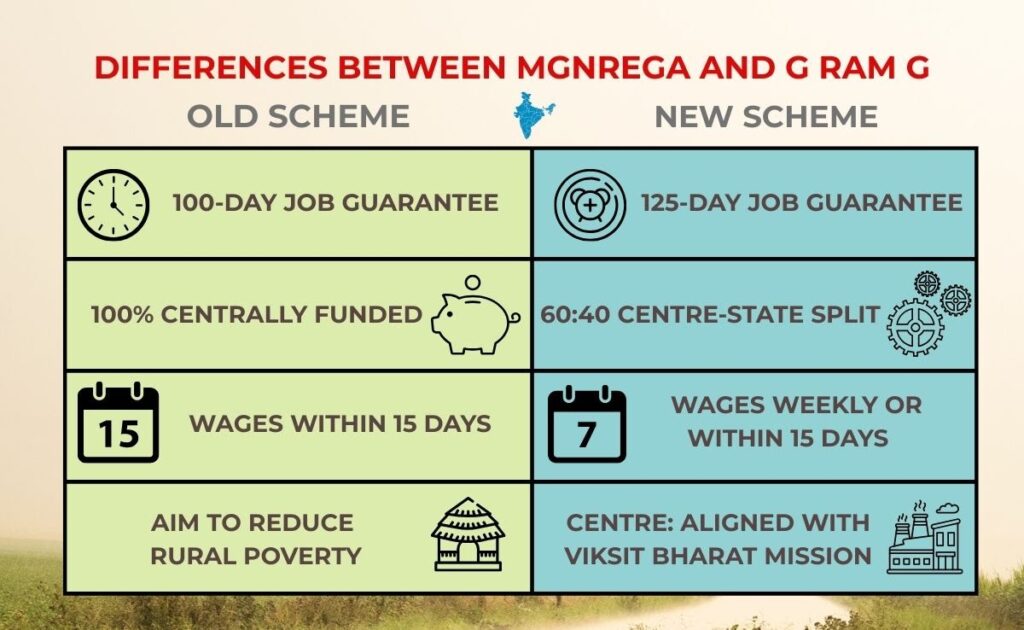
The bill also expands the Centre’s role in defining permissible works and implementation priorities, diluting the authority of gram sabhas and panchayats. This marks a shift from bottom-up rural planning to top-down administrative control.
Funding mechanisms appear more flexible for the Centre but less predictable for workers. Delays in wage payments, already endemic, are likely to worsen as fiscal responsibility is rhetorically decentralised while operational power remains centralised.
Seen together, these changes suggest not reform but a managed retreat. The scheme is not dismantled outright; instead, it is thinned, rebranded, and ideologically repackaged—survival in name, erosion in substance. The observation that “Viksit Bharat is like a preposition attached to everything” captures the hollowing out of policy discourse. “Viksit” functions less as a measurable outcome and more as a linguistic varnish, coating policies regardless of their impact on employment or rural distress.
This is the Modi government’s preferred mode of governance: symbolism over substance, branding over budgets, narrative over rights. NREGA once stood as a constitutional promise—that the state would not abandon its poorest citizens in times of distress. The new bill recasts that promise as a programme of conditional benevolence.
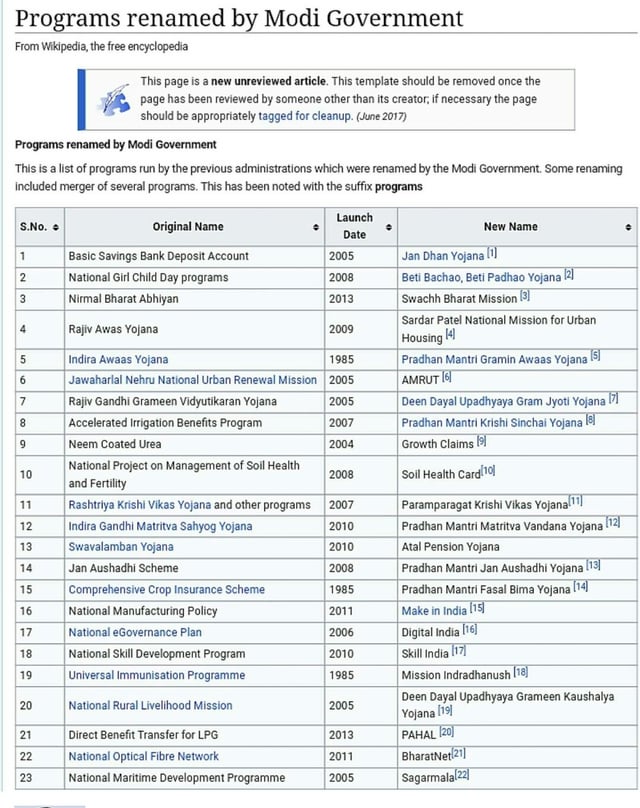
In excising Gandhi from the law and embedding ideological codes in his place, the state is not merely rewriting a statute; it is rewriting the very idea of welfare itself—from a right owed to citizens to a favour dispensed by power. What unfolds here is not development, but the slow, careful unmaking of a social contract, carried out quietly, acronym by acronym.