


Bisrakh, a modest village in Gautam Budh Nagar district adjoining the urban sprawl of Noida, retains a strangely timeless character. Despite lying only 20 kilometres from the national capital, New Delhi, its narrow lanes, pitted and dusty roads, and ancient village layout evoke a sense of antiquity that modernity has not erased. Administratively, it serves as the headquarters of the Bishrakh Block in western Uttar Pradesh.
What sets Bisrakh apart is its cultural claim: the village is traditionally believed to be the birthplace (janmabhoomi) of Ravana, the king of Lanka in the epic Ramayana. A small temple in the village is dedicated to him, making Bisrakh one of the few places in India where Ravana is worshipped. While there are several temples across the country associated with Ravana, Bisrakh alone identifies itself as the site of his origin.
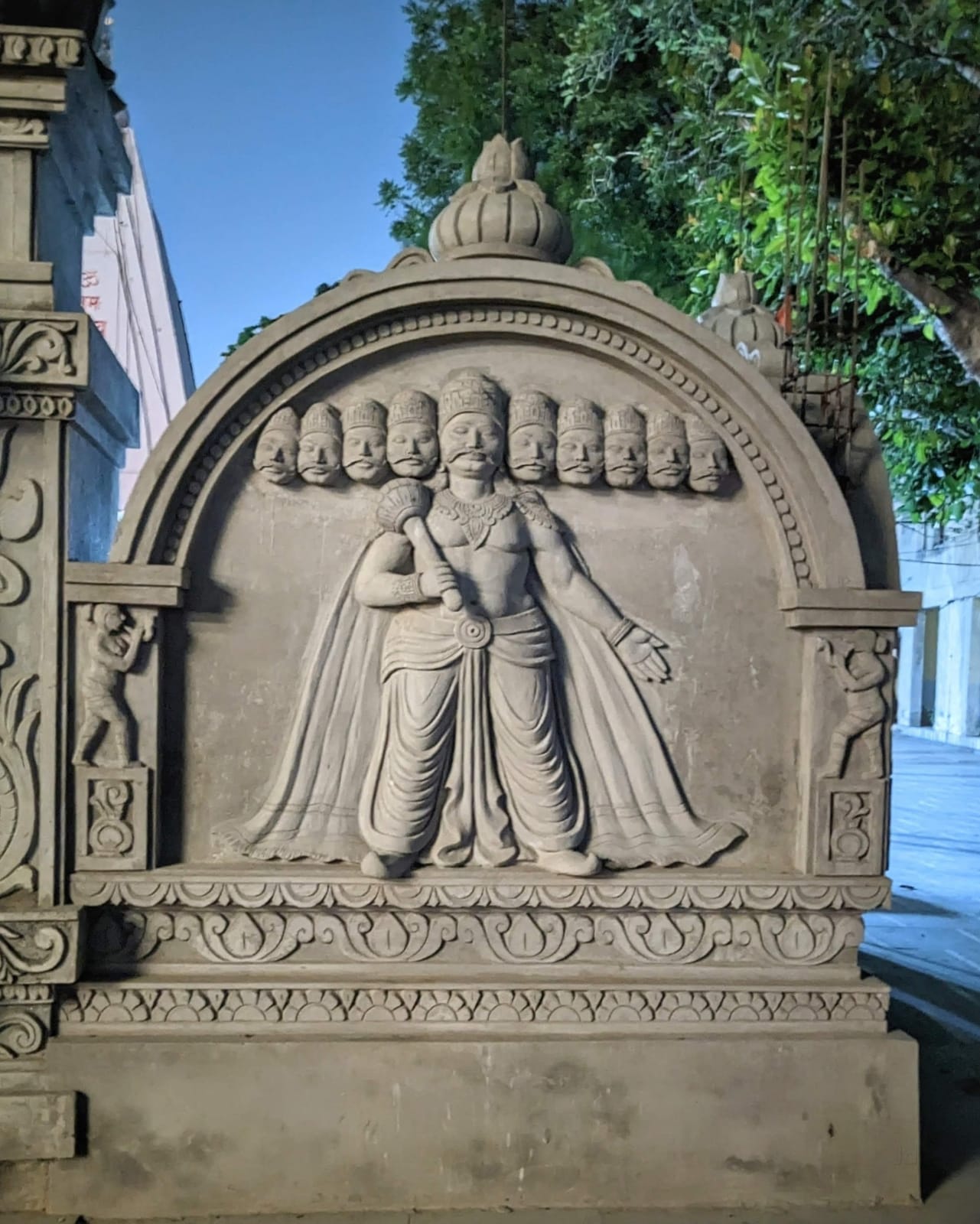
Temples to Ravana can be found in many regions of India, reflecting varied perceptions of his character. Notable examples include the Dashanan Temple in Kanpur, Uttar Pradesh; the Kakinada Ravana Temple in Andhra Pradesh; the Ravangram temple in Madhya Pradesh; and shrines in Mandsaur, Mandore (Jodhpur, Rajasthan), and the Baijnath Temple in Himachal Pradesh. Each of these sites illustrates the layered ways in which Ravana is remembered—sometimes as an adversary of Rama, sometimes as a scholar and devotee of Shiva, and sometimes as a figure of local or regional pride.
Ravana himself occupies a unique place in Indian cultural memory. In the Ramayana, he is portrayed as a powerful ruler, a skilled administrator, and a man of great learning, credited with mastery over the Vedas, astrology, and classical music. He is said to have been a skilled veena player and is often associated with the invention of the Ravanahatha, a stringed instrument still played in parts of Rajasthan. His devotion to Shiva and his composition of hymns such as the Shiv Tandava Stotra reflect the depth of his scholarship and artistic sensibilities.
At the same time, Ravana’s ambition and the abduction of Sita define his role in the Ramayana as Rama’s adversary, leading to his downfall. In other traditions, however, his image varies. Jain texts sometimes depict him as a noble but flawed ruler, while in Buddhist stories from Southeast Asia he is presented more as a powerful monarch than a demon. In South Indian folk narratives, especially in Tamil Nadu and Andhra Pradesh, Ravana is remembered with a certain respect as a learned king, reflecting the diversity of his portrayals across regions and cultures.
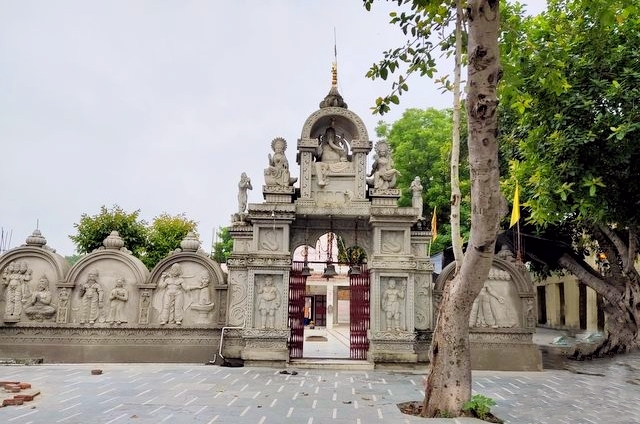
According to local tradition, the very name “Bisrakh” is derived from Vishravas, the father of Ravana. Vishravas is said to have lived in this area and practiced penance, and it is here that Ravana is believed to have been born and spent his early years.
This association influences the way festivals are observed in the village. In most parts of India, Dussehra is marked by the burning of effigies of Ravana, symbolizing the victory of Rama over evil. In Bisrakh, however, the nine days of Navratra leading up to Dussehra are observed differently. Villagers treat the period as one of mourning, conducting prayers and Yagna rituals for the peace of Ravana’s soul rather than celebrating his defeat.
Such practices highlight how mythology and cultural memory can differ across regions. Ravana—condemned in one place, venerated in another—remains a complex figure whose legacy continues to be interpreted in diverse ways. Bisrakh, through its traditions, preserves one of these alternative narratives.






Never knew such a place existed . indeed wonderful . Plan to visit it some time .