
The Anatomy of an Alienating Argument: Why Misrepresenting Conscience as Sedition Fails India

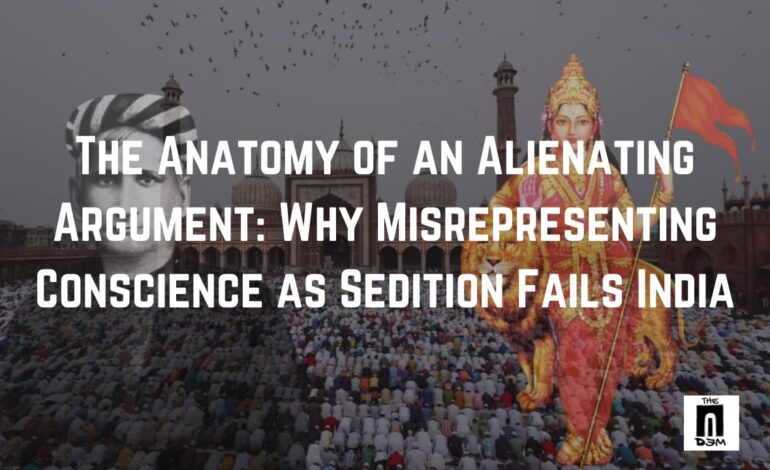
The recent column by Ibn Khaldun Bharati in The Print (“Vande Mataram was anti-British. Here’s how it became ‘anti-Muslim’”) is less a historical analysis and more a meticulously constructed political polemic. Cloaked in the language of scholarly inquiry, the piece ultimately performs a dangerous generalisation, dismissing a complex issue of religious conscience as mere political defiance and a fundamental rejection of the Indian nation. This line of reasoning is not only historically selective but fundamentally misunderstands the constitutional spirit of pluralism it purports to champion.
Here is a point-by-point rebuttal to the central arguments advanced by the column:
On ‘Abstruse’ Theology vs. Foundational Creed
Bharati dismisses theological objection — “abstruse” theology — to idol worship as “convoluted reasoning” and insists it is the cornerstone of Islamic faith. Yet it requires ignoring the foundational tenet of Islam: absolute monotheism. While the author correctly notes that the term “Vande” has various meanings, ranging from “praise” to “worship”, the full hymn, as contained in the novel Anandmath, explicitly describes the Motherland as various Hindu deities (Durga, Lakshmi, Saraswati). The context matters profoundly. To salute a nation as a motherland (Madar-e-Watan) is accepted globally by Muslims; to be compelled to salute a Motherland that is simultaneously a goddess (Bharat Mata) is where the red line of conscience is drawn. The Indian state, in its wisdom, chose to adopt only the first two stanzas of the song, thereby acknowledging this very conflict. A strong democracy accommodates conscience; it does not police it.
The Selective Experiment
The author cites Arif Mohammad Khan’s experiment, where a Nadwa seminary approved an Urdu translation of Vande Mataram (“Taslimat”, Raza), simplified anonymously. This is a deliberate simplification. The approval of a generic salutation to a mother is irrelevant. The objection is not to the words per se, but to their original source and intended cultural context. The ulema’s opinion was sought on a secular translation, not the charged symbol Vande Mataram itself. This is akin to removing the cross from a crucifix and asking a non-Christian if the remaining wood is offensive. Context is everything in faith and politics.
On National Loyalty and the ‘Idea of India’
The column asserts that the opposition is “not so much an opposition to the song as to the idea behind it — the idea of India as a nation.” The rebuttal: This is the most dangerous form of political blackmail — equating dissent on a specific cultural symbol with sedition against the nation. If opposing a specific practice amounts to opposing the idea of India, then how does one explain the millions of Indian Muslims who pledge allegiance to the flag, vote, serve in the military, and sing Jana Gana Mana (the National Anthem) without controversy? The difference is clear: Jana Gana Mana is a prayer to the “dispenser of India’s destiny”, a secular ode to the country. Vande Mataram, by its very source and subsequent political history, remains a religiously freighted symbol. A truly inclusive Indian nationalism does not demand conformity to a majority’s spiritual symbols; it respects the diversity of loyalties that converge under a secular republic.
On the Anandmath Problem
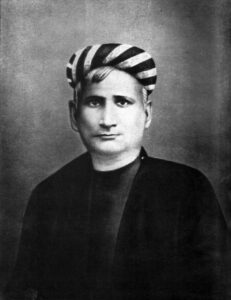
The column attempts to mitigate the anti-Muslim overtones of Bankim Chandra Chatterjee’s novel Anandmath by arguing the revolt was merely a “class war” against oppressive Muslim rulers, not a “hatred against Muslims”. The rebuttal: This revisionist history stretches credulity. Anandmath is an openly polemical text that depicts Muslim rule as the ultimate source of India’s degradation. Regardless of whether it was a “class war”, the text is historically complicit in the construction of a Hindu-majoritarian narrative that positions Muslims above historical grievance rather than within it. Insisting that a minority must embrace a symbol inextricably linked to a narrative of their community as the historical oppressor is not fostering composite nationhood; it is demanding historical self-denial.
Historical Context and Post-1937 Shifts
Bharati argues that the objections are a post-1937 political manoeuvre by a ruling elite upset by the rise of Hindu power, noting the song’s widespread acceptance pre-1937. The rebuttal: This interpretation is a failure of political-historical analysis. The context of a symbol shifts dramatically. Pre-1937, Vande Mataram was a powerful slogan of anti-British resistance. It was a rallying cry, not a mandate of a sovereign state. Maulana Abul Kalam Azad and others used it in that functional, anti-colonial sense, separating the song from the full hymn’s religious content. Post-independence, the song’s status changed from a revolutionary slogan to a formal, recognised national song. This shift requires a different standard of political accommodation. The question became: should a sovereign, secular republic impose veneration of a symbol that their religious minorities find theologically objectionable? Congress leadership’s ultimate decision to select only the first two stanzas — and make Jana Gana Mana the National Anthem — was an act of pragmatic, inclusive nation-building, precisely because they understood the legitimacy of theological objection, which the author today dismisses.
The Cost of Conformity
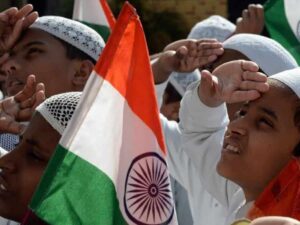
Ibn Khaldun Bharati’s article attempts to force a zero-sum loyalty: either accept the song without question or be branded an opponent of the Indian idea. This is a false dichotomy. A strong nation is not one that demands its citizens shed their faith at the altar of majoritarian symbols, but one that ensures the state remains neutral, allowing every citizen to express their loyalty through constitutionally safe and universally inclusive means. By consistently legitimising objection of conscience as an act of political alienation, the column only serves to deepen the chasm it claims to bridge. The test of India’s pluralism is not the minority’s willingness to surrender its religious doctrines, but the majority’s capacity to choose symbols that unite, rather than those that perpetually necessitate defensive theological explanation.
This article is also published in the print edition of the Delhi based daily “The Emerging World.”