The Champions We Refuse to See; India’s Blind Women Cricketers and the Mirror They Hold Up to Us


“The sound of the rattling plastic ball hitting Khula Sharir’s bat was the sound of a world championship being won, yet the silence of India’s media was deafening.”
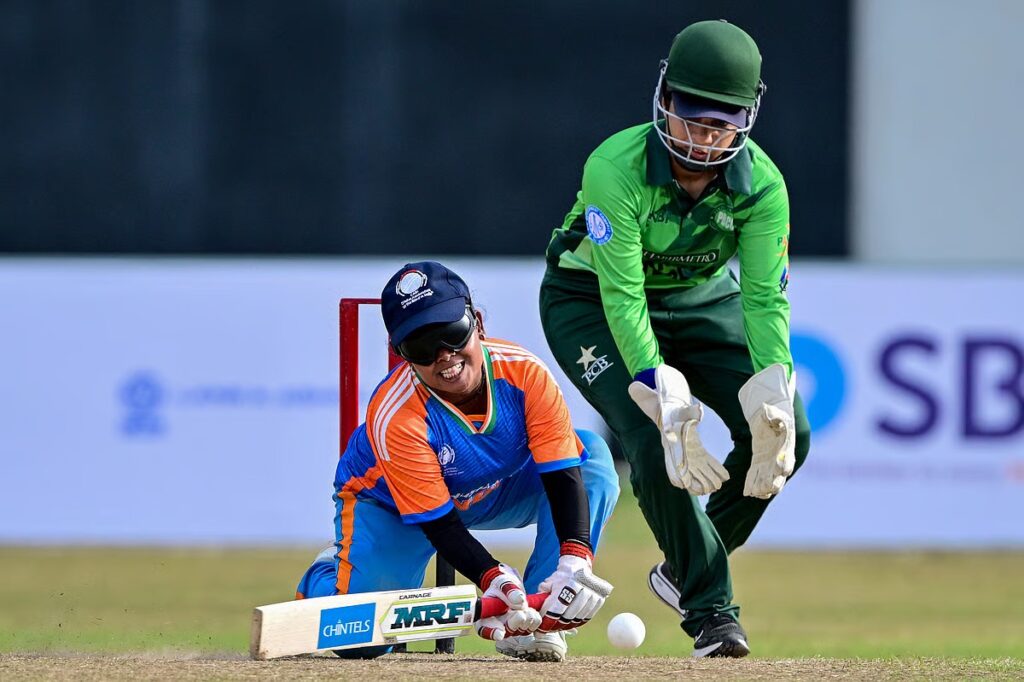
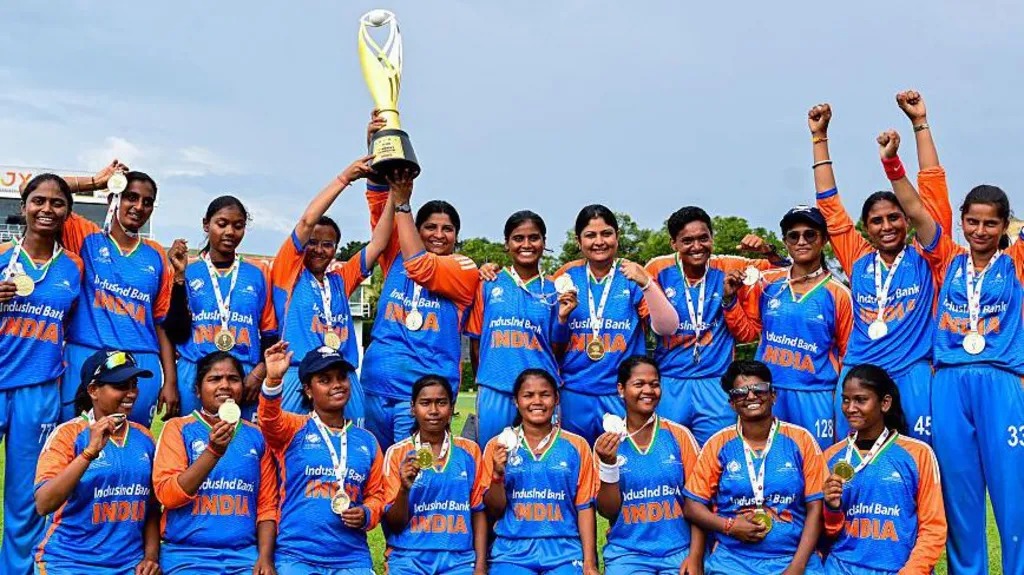
On 23 November 2025, in Colombo, the Indian women’s blind cricket team did something no other squad had done before them. They lifted the first-ever Blind Women’s T20 World Cup, staying unbeaten throughout the tournament and defeating Nepal by seven wickets in a clinical, almost ruthless final chase. Khula Sharir’s unbeaten 44 off 27 balls was a performance that would have trended for days had it come from a mainstream cricket star. Instead, it flickered briefly across television tickers, floated hesitantly through a few social media timelines, and drowned quietly in the ocean of India’s cricket industrial complex.
Even so, tHis win – this victory stitched together by discipline, courage and an almost spiritual love for the sport – deserves far more than momentary applause. It demands recognition not just as a sporting triumph, but as a cultural wake-up call for a cricket-mad nation that still hasn’t learned how to see all its cricketers.
A Triumph Built in the Blind Spots of Indian Cricket
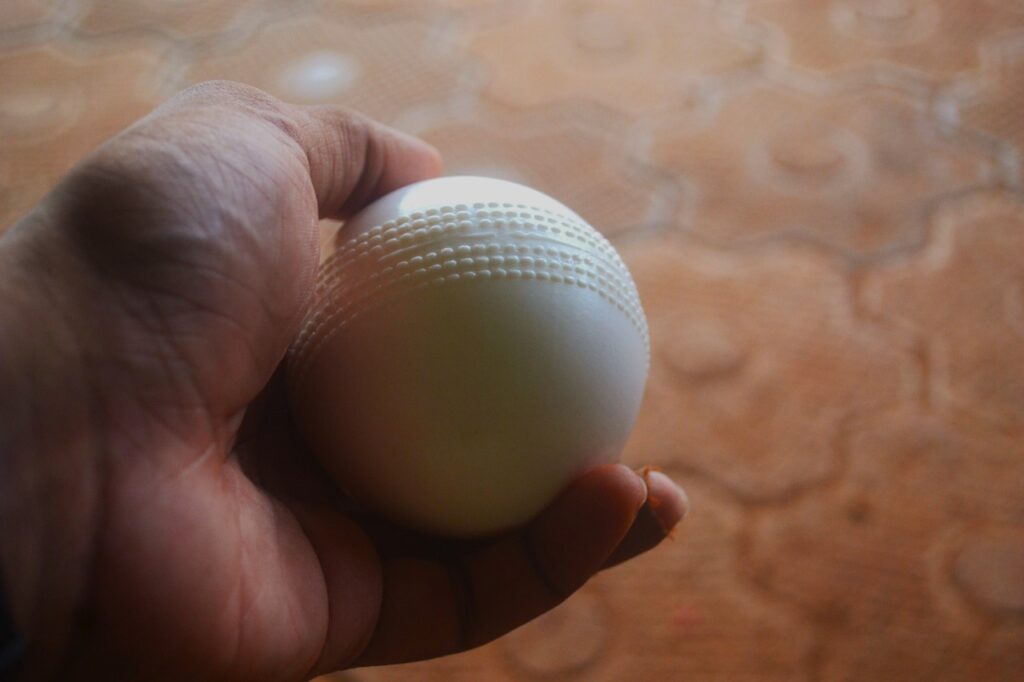
The Colombo tournament featured six teams – India, Nepal, Pakistan, Sri Lanka, Australia and the US. It was played with a rattling plastic ball, underarm bowling, blindfolded parity rules, and an athleticism that refuses condescension. India didn’t simply win. They dominated. They outplayed Sri Lanka and the US early on, conquered Pakistan without theatrics, dismantled Australia with a nine-wicket win in the semifinals, and chased Nepal’s 114 in only 12.1 overs.
For any other Indian cricket team, this would have triggered wall-to-wall primetime coverage. Brands would be scrambling for partnerships. Players would return home to drumbeats in their local towns. Instead, as always with blind cricket, the celebrations remained intimate – proud, emotional, but insulated from the mainstream’s attention economy. And this is where the contradiction of Indian cricket reveals itself most sharply: we worship cricket, we monetise cricket, we mythologise cricket… but we still do not see cricket when the players are visually impaired.
The Uncomfortable Gap Between Glory and Recognition
Just two years ago, a report highlighted that blind cricket players – international players – received as little as ₹3000 per match. A figure so absurdly low it is an insult to their national commitment. On the other hand, uncapped benchwarmers in the IPL earn crores.
This contrast is not simply economic; it is symbolic. It tells a larger story about whose achievements India chooses to amplify and whose it quietly files away. The Indian women’s blind cricket team is world champion today – but did they trend? Did your favourite cricket shows analyse their strategy? Did newspapers send correspondents? Did anyone argue about squad selection on primetime panels?
India’s mainstream sporting imagination, as always, remains selective. It expands upward for celebrity athletes and collapses downward when the athletes come from marginalised categories – visually impaired, deaf, wheelchair-bound, or simply from “non-trending” sports.
And yet, these athletes train under conditions most elite cricketers will never experience: limited funding, borrowed grounds, makeshift equipment, and the weight of invisibility.
In that sense, their victory is not just historic. It is heroic.
A Game That Changed Me
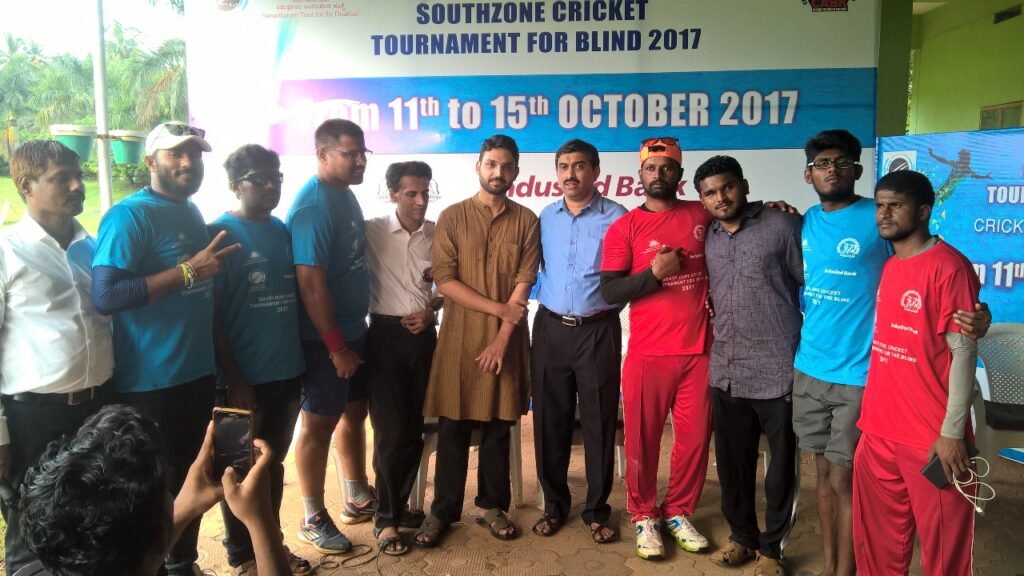
In 2017, while working on a documentary on blind cricket during the CABI (Cricket Association for the Blind in India) South Zone tournament in Kannur, I met dozens of players whose passion for cricket redefined my understanding of the sport.
I saw bowlers describing their run-up purely by memory, players timing shots based on sound alone, fielders clapping to signal their positions in moments that demanded split-second reflexes. I remember interviewing G. K. Mahantesh – the founder of Samarthanam Trust and Chairman of CABI – whose quiet, disciplined conviction built the foundation on which this current victory stands.
This World Cup win is not a miracle. It is the predictable result of years of unseen labour.
Triple Burden, Zero Visibility: Women, Disability, and Sport.
The women of this team carry not one but three intersecting burdens:
- They are women in a sporting culture that still undervalues female athletes.
- They are visually impaired in a system that still fights for basic accessibility.
- They play a sport that the country claims to worship but practices caste-like segregation within.
In mainstream coverage, women’s cricket already struggles for equity. Add disability to the equation, and the recognition collapses almost entirely. And yet, on the field in Colombo, none of this mattered. What mattered was precision, teamwork, and a deep, uncomplicated love for a sport that has rarely loved them back with equal intensity.
Indian captain T. C. Deepika’s gesture – leading her team to shake hands with Pakistani players after a league match – was a quiet reminder of something sighted cricket often forgets: that sport is, at its best, a bridge, not a battlefield.
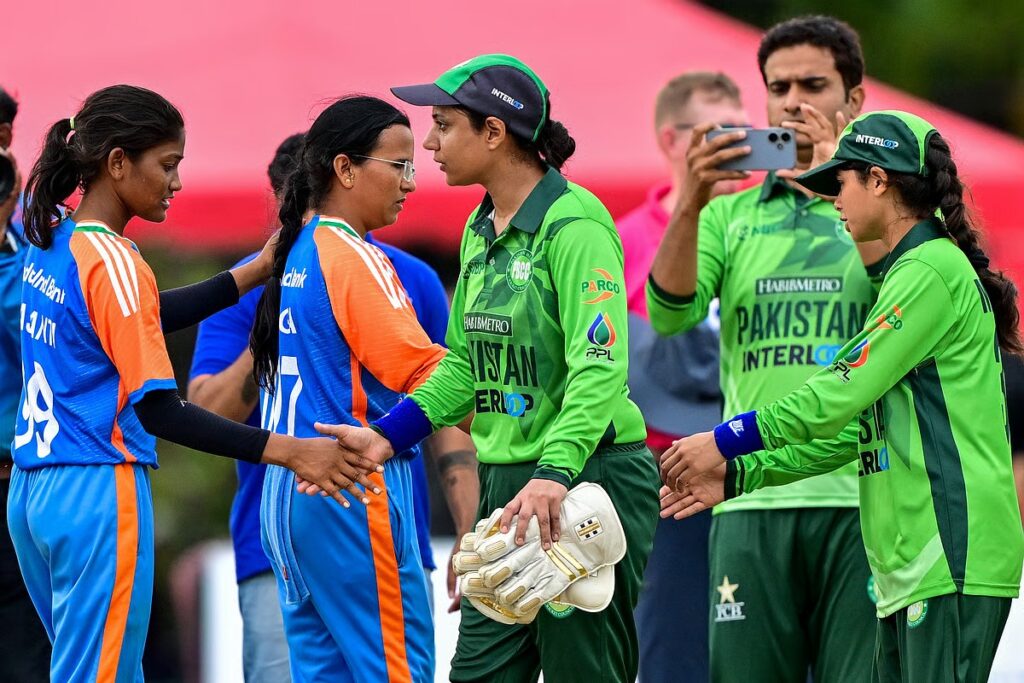
At a time when political hostilities between the two countries routinely spilled into sport, these women did what elite men’s teams often refuse to do: uphold dignity.
Their sportsmanship says something profound about who we expect to be “torchbearers” of national honour.
What India Chooses to See – and What It Chooses to Ignore
This recent victory is by no means an anomaly; in fact, it is the culmination of sustained excellence. Over the last three years alone, India’s blind men’s and women’s teams have remained consistently dominant in international tournaments, even as participation has expanded to include teams from the US, Australia, and Europe.
Furthermore, talent pipelines are actively forming, even in states where blindness is often stigmatized. Yet, despite this proven, high-level success and expanding footprint, recognition remains threadbare.
The reason is simple: Indian sport’s infrastructure mirrors Indian society, where admiration is hierarchical, visibility is manufactured, and respect is often directly proportional to sponsorship opportunities. Blind cricket, by its very nature, disrupts this established hierarchy. It demands acknowledgement of sheer ability without spectacle, achievement without celebrity, and excellence without the leverage of massive television rights. Ultimately, the mainstream Indian cricket ecosystem—with its billion-dollar leagues, heavily marketed icons, and hyper-televised masculinity—has not yet found a genuine place for inclusion that is not purely decorative.
India Loves Cricket, But Does It Love Its Cricketers?
If this sounds harsh, consider the parallels with another ignored sport: Indian football.
In 2018, Sunil Chhetri had to record an emotional video begging fans to fill stadiums – an appeal that became the most retweeted sports tweet of the year. The captain of the national football team had to ask a country of 1.4 billion people to show up.
Blind cricket experiences this tenfold.
But here is the deeper tragedy: Blind cricket has the emotional narrative power, the competitive intensity, and the national pride quotient that India normally celebrates. It could easily be a mainstream phenomenon. But it is not. Because India has mistaken broadcast cricket for real cricket. And anything that doesn’t fit that televised formula remains invisible – even when the players themselves cannot see.
Redefining Cricketing Greatness
Blind cricket requires a skill set that even elite athletes would struggle with:
- tracking movement exclusively by sound,
- timing a shot with minimal visual input,
- developing peripheral awareness through memory,
- enhancing spatial cognition without sight,
- building extraordinary auditory reflexes,
- performing all this under competitive pressure.
If sighted athletes were asked to play even one over under these rules, many would miss every ball.
But blind cricket is not an “inspirational sport.” It is an elite sport. It is competitive, tactical, and physically demanding.
It is cricket. It deserves to be understood as such. And this extraordinary skill and tactical depth demands not just respect, but systemic change.
After the Trophy: What Must Change Now
For once, the victory garnered top-level attention, with the Home Minister celebrating it as “a historic day” and the Prime Minister calling the team a “shining example of determination.” However, symbolic praise is the easiest form of recognition; what blind cricket truly requires now is structural support and institutional change. This transformation must begin with substantial financial backing—moving beyond token stipends and charity to provide institutional funding equivalent to the skill and commitment these athletes demonstrate.
Furthermore, broadcast partnerships are essential, ensuring every match of the next World Cup is streamed, as visibility is a right, not a favor. Crucially, the sport demands national integration into the BCCI’s development structures, being formally recognized not as a separate, marginal category, but as a core branch of Indian cricket. This structural elevation must be paired with grassroots recruitment in schools for the visually impaired, establishing blind cricket as a genuine pathway to empowerment for thousands of young girls. Finally, brand sponsorships must treat blind cricketers as elite athletes, not emotive side-projects, as this normalization of excellence is the only way to dismantle systemic discrimination.
The Victory We Needed, The Introspection We Avoid
This World Cup win is a sporting triumph. But it is also a mirror – and like all honest mirrors, it reveals uncomfortable truths.
It reveals how narrow our definition of “national sports hero” is.
It reveals how deeply exclusion is woven into our sporting imagination.
It reveals how much we still need to learn about seeing, beyond visibility.
But most importantly, it reveals something else: that love for sport is purer at the margins than at the centre.
In Colombo, the Indian blind women’s team played not for endorsements, not for accolades, not for media spectacle, but for the sheer joy of the game. And in doing so, they brought honour to the country in a way that transcends rankings and trophies.
Their success should not be an exception. It should be a turning point.
A country that claims to love cricket must learn to love all its cricketers and the time has come for India to finally open its eyes and truly see its champions.