

The following article is part of the Trailblazing Women of India series. A series presented by The AIDEM, exploring the lives and ideas of women who played a decisive role in shaping India’s social, political, and intellectual history.
The AIDEM underscores the enduring contemporary relevance of revisiting the lives of these women leaders and the ideas they championed. Click here to watch the video.
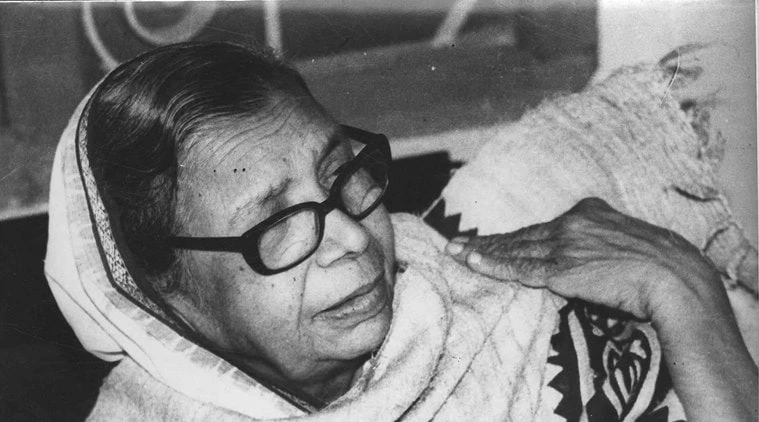
History has a habit of “boxing” women. We find a comfortable label and stick to it. For Mahadevi Verma, that label was “poet”—the “Modern Meera” of the Chhayavaad movement, often reduced to an ascetic, lost in separation and longing.
But if you look closer, you’ll find that this literary genius was actually a radical philosopher who anticipated modern feminist and humanist ideas by decades.
Between 1935 and 1938, Mahadevi served as the editor of Chand magazine. Under her leadership, she transformed it into a crucial platform for radical humanist ideas, expressing anger against systemic injustices and oppressions.
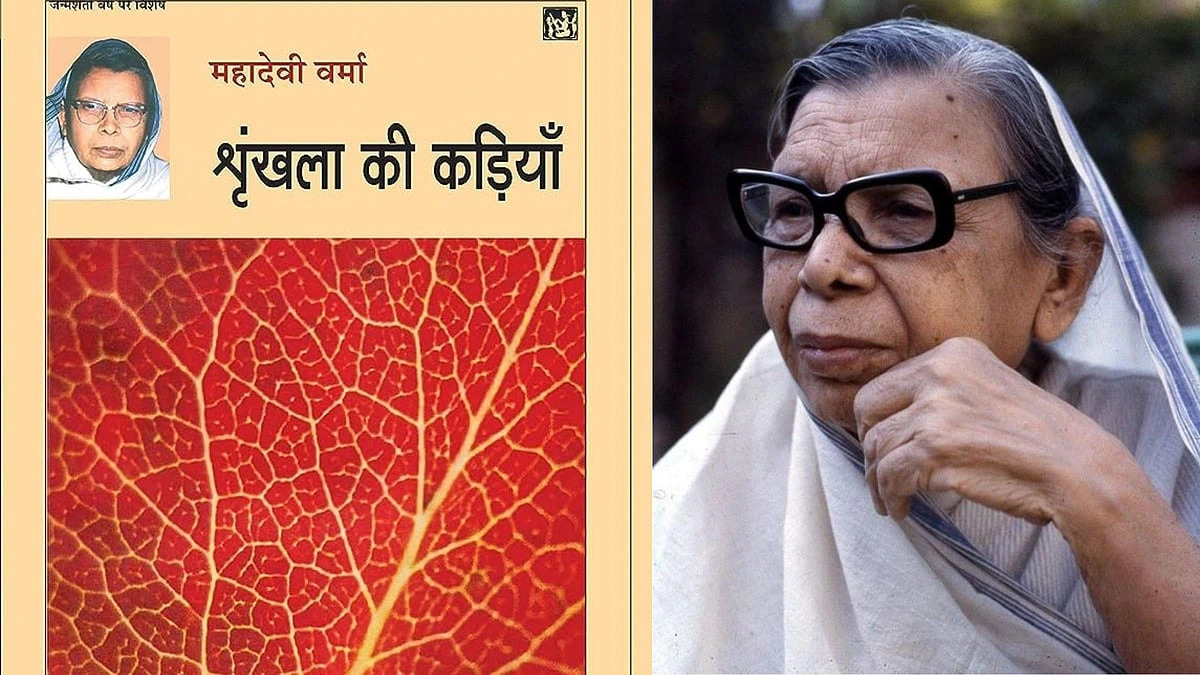
In 1942, while India was on the brink of independence, Mahadevi was fighting a second front: the structural conditions of women’s oppression. In her seminal work, Mahadevi Verma (Links in Our Chain), she tore apart every justification society gave for keeping women in chains.
She argued that the deification of women—treating them as “Goddesses”—was limiting women to an orthodox interpretation of norms, which denied them the status of equal beings. Decades before Western feminist theory, Mahadevi was questioning the denial of women as worthy beings and advocating for women’s agency.
She did not just theorize; she built. Denied admission to study theology at the Banaras Hindu University because of her gender, she excelled at Allahabad University and eventually became the Principal and Vice Chancellor of Prayag Mahila Vidyapeeth.
In this feminist space, she insisted that education is an “awakening of consciousness”. She taught her students not to be prized possessions paraded to demonstrate familial status, but to be self-reliant agents of their lives and active contributors to the larger cause of nation-building.
Her radicalism extended beyond humans. In her 1972 work Mera Parivar, she challenged the perceived first right humans exert on this earth, prioritizing their own comfort over the very existence of other beings.
By naming her animal companions—like the cow Gaurangini—as distinct individuals, she integrated them into her life world, fundamentally challenging the tradition that a family comprises only human beings while simultaneously questioning the civilization that justifies violence against the voiceless.
She leveraged her standing to improve the lives of those who didn’t inherit the same advantages. In a deliberate renunciation of class status, she discarded her material legacy and expensive silk sarees for simple khaddar.
In 1955, she established the Literary Parliament (Sahityakar Sansad) in Allahabad, alongside Ilachandra Joshi, fostering a community for writers and poets and initiating India’s first conferences for women poets. She also edited the publication, Sahityakar, ensuring voices of dissent were not silenced by poverty.
Mahadevi Verma lived a life of “praxis”—the integration of radical thought and daily action. She was a pillar of literature, but she was also a political philosopher, a Gandhian, and an institution builder who saw the interconnectedness of all beings.
She held a mirror up to society and asked: “Which of the chains I’ve identified do you still wear today?