

What Keeps a Story Alive? Honesty, Craft and other Ruskin Bond Lessons


In this edition of “Everything Under the Sun”, Nalin Verma reflects on the enduring legacy of Ruskin Bond, one of India’s most beloved storytellers, whose writings have captivated generations of readers. As he enters his 93rd year, his remarkable literary journey offers an opportunity to explore what gives a story its lasting life. Inspired by the recent conversation between Ruskin Bond and Prannoy Roy, Nalin Verma examines the timeless appeal of Bond’s work, the enduring value of literary craftsmanship, and why honesty of observation remains the bedrock of great storytelling in an age dominated by relentless publishing, marketing spectacles, and digital noise.
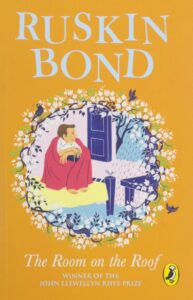
The highlight of Dr Prannoy Roy’s interview of Ruskin Bond on the latter’s 92nd birthday for his DeKoder platform was the longevity of The Room on the Roof, which Ruskin had written when he was barely 17 years old and which was published in 1956.
The journey of The Room on the Roof resembles the timelessness of the song that the birds, leaves and flowers in the Garhwal hills sing, and the rhythm with which the Ganges quietly flows through the plains of India.

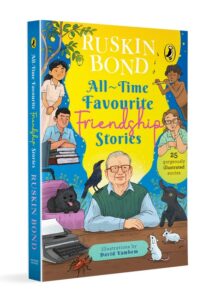
What adds to the uniqueness of The Room on the Roof is that its author, who entered the 93rd year of his life on May 19, still writes his stories with as much joyful passion as he did when he was a 17-year-old. Nothing soothes children’s hearts more than Rusty’s stories. In fact, the latest book that Prannoy Roy explored with the author during their DeKoder interview was All-Time Favourite Friendship Stories. This title, launched on Ruskin’s 92nd birthday, has striking similarities with the style and craft that the author employed in The Room on the Roof when he was 17.
Between The Room on the Roof and All-Time Favourite Friendship Stories, Ruskin Bond has authored countless stories and hundreds of books across publications and journals. The physical and demographic geography, economy, politics, society and technology have undergone multilayered changes during these decades. Dehradun and Mussoorie, where Ruskin Bond has spent most of his life, too have changed beyond recognition.
But what has remained unchanged is Rusty—the character Ruskin Bond has chosen for himself in his creations. So have Binya, the young hill girl of The Blue Umbrella, the unnamed girl in “Night Train at Deoli”, and countless other boys and girls drawn from ordinary lives who come alive in his stories.
What are the reasons for Ruskin Bond’s and his stories’ phenomenal longevity? Why are they timeless? Why do the stories he wrote over seven decades ago appear as new and fresh as the ones he writes today? For most of his life he wrote with a fountain pen or a ballpoint pen. However, with weakened eyesight and an unsteady gait in advanced age, he can neither move around freely nor write as he once did. He now dictates his stories to his granddaughter. Yet the rhythm and cadence remain the same. Why is the joy of Ruskin’s writing—and of his readers—so enduring?
In the Jungle of Books and Publishers
Prannoy Roy, in the course of his conversation with Ruskin Bond, captures the beautiful irony behind the birth of The Room on the Roof. At 17, Ruskin was sent away to England and the Channel Islands. Lonely and yearning for the warmth, fragrance and friendships of Dehradun, he poured his homesickness into a personal diary. That raw, youthful longing became the manuscript of The Room on the Roof, which was first published in England in 1956, winning the young author the prestigious John Llewellyn Rhys Prize in 1957.
When Penguin Books established its presence in India, it published The Room on the Roof for Indian readers. It transformed a story written in exile into an essential rite of passage for generations of readers.
Over the decades since Penguin entered India, numerous global conglomerates and indigenous giants—Penguin Random House, HarperCollins, Hachette, Pan Macmillan, Rupa Publications, Aleph Book Company, Westland Books, Om Books, Speaking Tiger, Seagull Books, Jaico Books and Juggernaut Books—have made India their home.
These major English-language publishers alone, according to estimates, publish tens of thousands of books every year. One can witness the mushrooming growth of book fairs, literary festivals and book-related events not only in metropolitan cities but also in smaller towns. Added to this are a plethora of social media platforms and online bookselling sites promoting books day in and day out. Artificial Intelligence (AI) and the internet have remarkably improved the look, graphics and cover designs of books.
But how many books survive in readers’ memories?
Celebrities from Bollywood, politics and sports are often the toast of book events and festivals. Publishers and modern marketing agencies apparently measure a writer’s value by his reach and his ability to secure endorsements from high-profile politicians, film stars and sporting icons. But do these extravaganzas ensure what is known as the shelf life of books and stories?
Book-marketing giants have employed content writers, publicists and influencers to use the right keywords for search-engine optimisation (SEO). Yours truly, though an old-fashioned and ordinary writer, has nothing against these technological tools and styles of marketing. Yet the question remains: do they, in any way, contribute to the longevity of books beyond the cameras and the razzmatazz of literary events? Anecdotal evidence suggests that many books—if not most—disappear from readers’ consciousness within a year or two of publication.
Purity of Craft and Stories
Mulk Raj Anand, according to Saros Cowasjee of the University of Regina, who edited Classic Mulk Raj Anand: Untouchable, Coolie and Private Life of an Indian Prince (Penguin Books), wrote Untouchable over a long weekend in 1930. It was revised several times over the next four years. By September 1934, it had been rejected by some 19 publishers. Exhausted and demoralised, Anand contemplated suicide but was saved by the timely intervention of the young British poet Oswell Blakeston, who took the manuscript to Wishart Books. Edgell Rickword, the editor, liked the novel for its “sincerity and skill” but pointed out that its sales prospects would be greatly enhanced by a preface from E. M. Forster. Forster had already read the novel while it was making the rounds of publishers and agreed to write the preface.
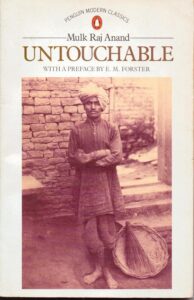
“We could not have had anything better,” declared Rickword on reading it, and Untouchable reached the bookshelves in 1935. “Anand’s career as a novelist had begun,” writes Cowasjee in his introduction to the volume.
The point I wish to drive home is that honesty of observation and purity of craft are the cornerstones of a book’s lasting survival, whether in the era of Rudyard Kipling, Mulk Raj Anand, R. K. Narayan, Rabindranath Tagore and Munshi Premchand, or in that of Amitav Ghosh, Vikram Seth, Salman Rushdie, Arundhati Roy and Chitra Banerjee Divakaruni.
Some argue that the internet-driven flood of fast-moving content has led to a decline in reading habits. There may be some truth in that. Yet I believe that both reading and writing are essentially solitary exercises; they have never been mass acts.
Namrata, the diligent editor of the literary platform ‘Kitaab’ and founder of the award-winning ‘Keemiya Creatives’, who also writes the incisive weekly column “Between the Lines” on trends in South Asian literature, repeatedly champions the idea that craft is not merely about fancy vocabulary or adherence to grammatical rules; it is about how effectively and truthfully a writer translates human experience onto the page.

What I understand from reading Namrata’s columns and watching her podcasts is that a major part of craft lies in cultivating an authentic eye. It means avoiding lazy clichés and melodrama. Instead, a writer must observe the world with honesty—capturing how people actually speak, how a rural landscape or a changing city feels, and the raw, unpolished nature of human relationships.
I fully agree with her. Honesty of observation and purity of craft will always remain the cornerstone of a writer’s life. And Ruskin Bond possesses these qualities in abundance.
Happy Birthday, Ruskin Bond.
Watch Dr Prannoy Roy’s interview of Ruskin Bond here:










“A beautiful reminder that great stories survive not because they are loud, but because they are honest and deeply human. Ruskin Bond’s simplicity continues to inspire generations of readers and writers alike.”