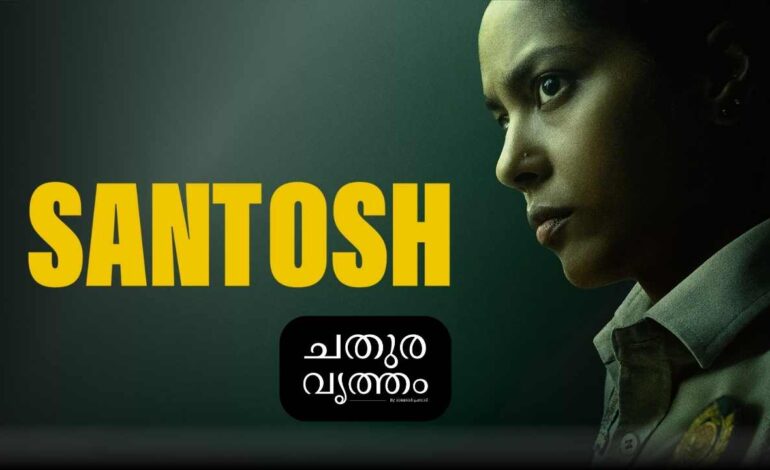
The column Chathuravrutham, written by noted writer and socio-cultural media critic Damodar Prasad for The AIDEM, begins here. The Malayalam phrase Chathuravrutham literally means Rectangular Square. Damodar Prasad’s writing has steadily reflected this unique snd offbeat character. He has consistently engaged with deep explorations of the theory and praxis of media as well as media education linking these disciplines into societal trends.
In Chathuravrutham, Damodar Prasad plans to delve into cinema, contemporary, visual culture, and visual technologies. Through a lens of subtle and in-depth analysis, this column would present critical reviews of newly released Indian-language films as well as world cinema. It would also include analytical reviews of noteworthy web series. Moreover, as part of an evolving evaluation of visual culture, Chathuravrutham would critically examine advertisements, animations, and AI-based creations.
In short, a reflective critique on visuality and visual culture, their transformations, and the underlying dynamics of cultural politics. At a broader level, it would address contemporary perspectives on milestone works of world cinema including unique films and their creators, making it an insightful engagement with the ever-changing world of visual expression.
The Hindi film Santosh, winner of the Best Debut Film award in 2024, has been denied certification by the Central Board of Film Certification. That denial is hardly accidental. The film belongs to a long cinematic tradition that probes India’s contemporary experience of caste through documentary realism. But Santosh also dares to look unflinchingly at another wound festering within the nation—the systematic marginalisation of Muslims, and the ever-present threat of their social devaluation. For a censor board that sees itself as guardian of “Sanatana” orthodoxy, such interventions are treated as unforgivable trespass.
The Indian caste order has not withered with modernity; it has merely disguised its untouchabilities—some visible, some invisible—while preserving its hierarchies with remarkable tenacity. Rural India remains rigidly segregated, and even the migration to small towns reproduces the same ghettoisation. In Santosh, documentary realism becomes the lens through which we see these ghettos as the lived reality of a nation that proclaims itself “developed” and “self-reliant.”
No wonder the film unsettles those who measure art against the yardstick of “modern patriotism.” Santosh lays bare what polite nationalism would rather keep hidden. Even if it finds an eventual release on OTT platforms, the state’s attempt to stretch its censorial hand into digital spaces signals only more turbulence ahead.
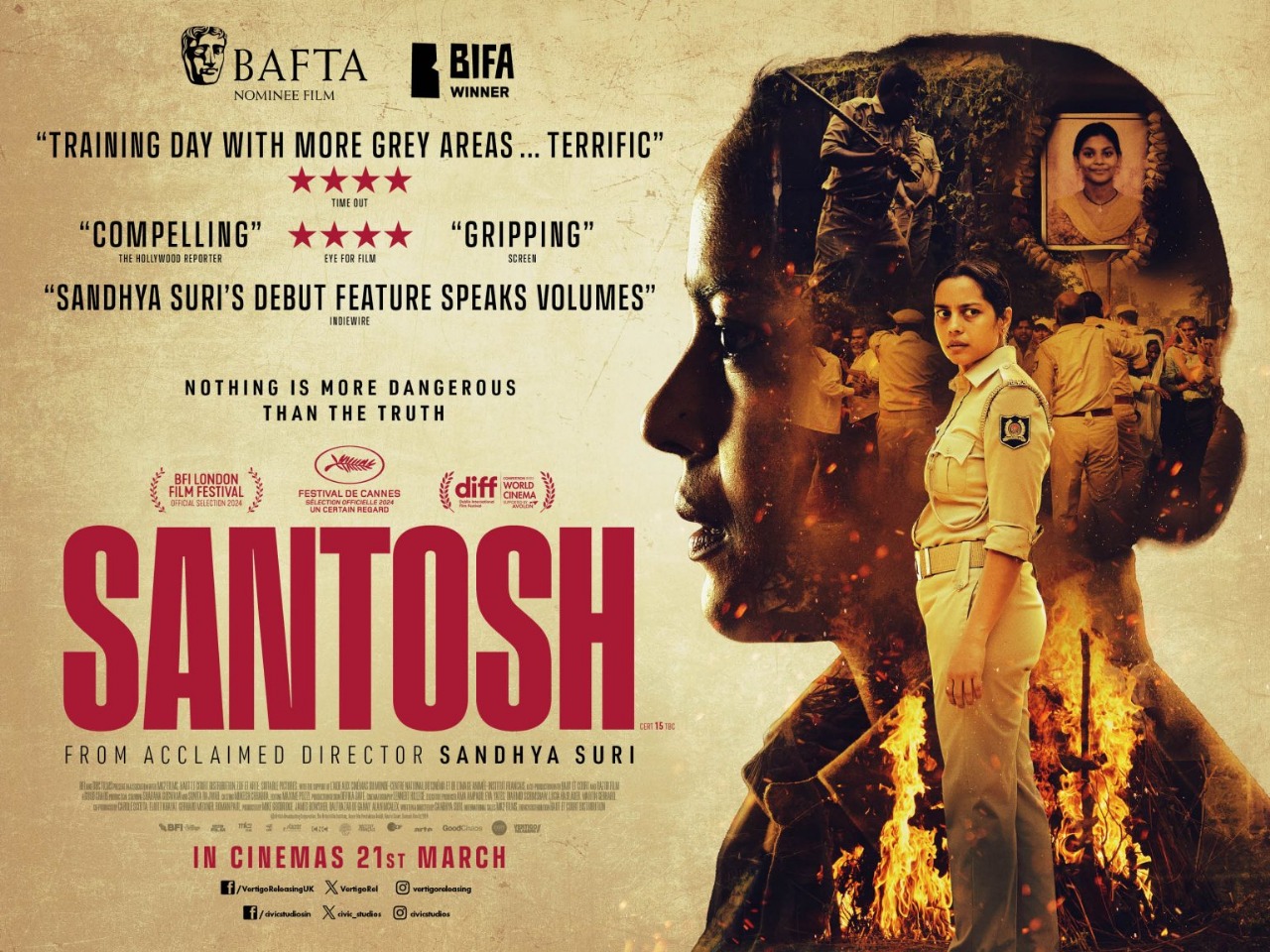
At its core, Santosh is a volcanic eruption from beneath India’s discriminatory social crust. Daily life may appear orderly under the iron machinery of suppression, but the film captures the simmering discontent and fury of the subaltern. That anger often finds voice through women and youth, lone protesters who defy authority. In the documentary textures of Santosh, their defiance gleams sharper than fear.
The choice of title is deliberate. “Santosh” is a name that carries a gender-neutral cadence, teasing the question: “Is Santosh a man?” Yet the protagonist is not drawn as a feminist hero. Rather, Santosh is someone positioned within the machinery of power, yet constantly negotiating its limits, looking at its inner walls from the inside.
The story traces Santosh, widowed by the murder of her husband—a police constable—during communal violence. She herself is appointed as constable. The irony is sharp: in India, if villages preserve the past, police stations preserve it even more stubbornly. Any real social transformation should alter their character. But in Santosh, these stations stand as citadels of continuity—repositories of India’s archaic social order masquerading as institutions of law.
Though pitched as a commercial film, Santosh borrows heavily from the discipline of documentary realism. Its starkness makes us confront how even the supposedly sacrosanct Indian Penal Code functions as a guardian of entrenched inequalities. Shahana Goswami embodies Santosh with measured restraint. The film is directed by Sandhya Suri, with cinematography by Lennert Hillege and production design by Maxim Posi-Garcia.
There are moments where the documentary idiom breaks into allegory. One scene shows Santosh at a crowded eatery, reacting with disgust as a man casually exposes himself nearby. It is not simply revulsion; it is the flash of a consciousness unwilling to accept indignity.
Premiered at the 77th Cannes Film Festival, the film and its makers had to navigate the pressures of an India increasingly defined by “Love Jihad” rhetoric and communal suspicion. In a wrenching sequence, Salim—an accused Muslim youth—is subjected to third-degree torture, with Santosh drawn into complicity. When Salim dies after a blow from Santosh, the system’s cruelty is laid bare. Geetha Sharma, Santosh’s superior officer, is suspended for showing a hint of sympathy.
This is one of the film’s most devastating revelations: how law itself becomes the weapon that marks certain lives as expendable. The police and courts may speak the language of neutrality, but caste and religion inscribe every procedure, every outcome. The lives of Dalits and Muslims, the daily realities of India’s “untouchables,” remain absent in the Constitution’s promise of equality. Feudal interests, landowning classes, and their modern avatars still dictate the rhythms of justice.

And yet Santosh is not a film of novelty—it is a film of honesty. India’s social conditions have been stagnant for decades. What feels like innovation here is the refusal to embellish that stagnation.
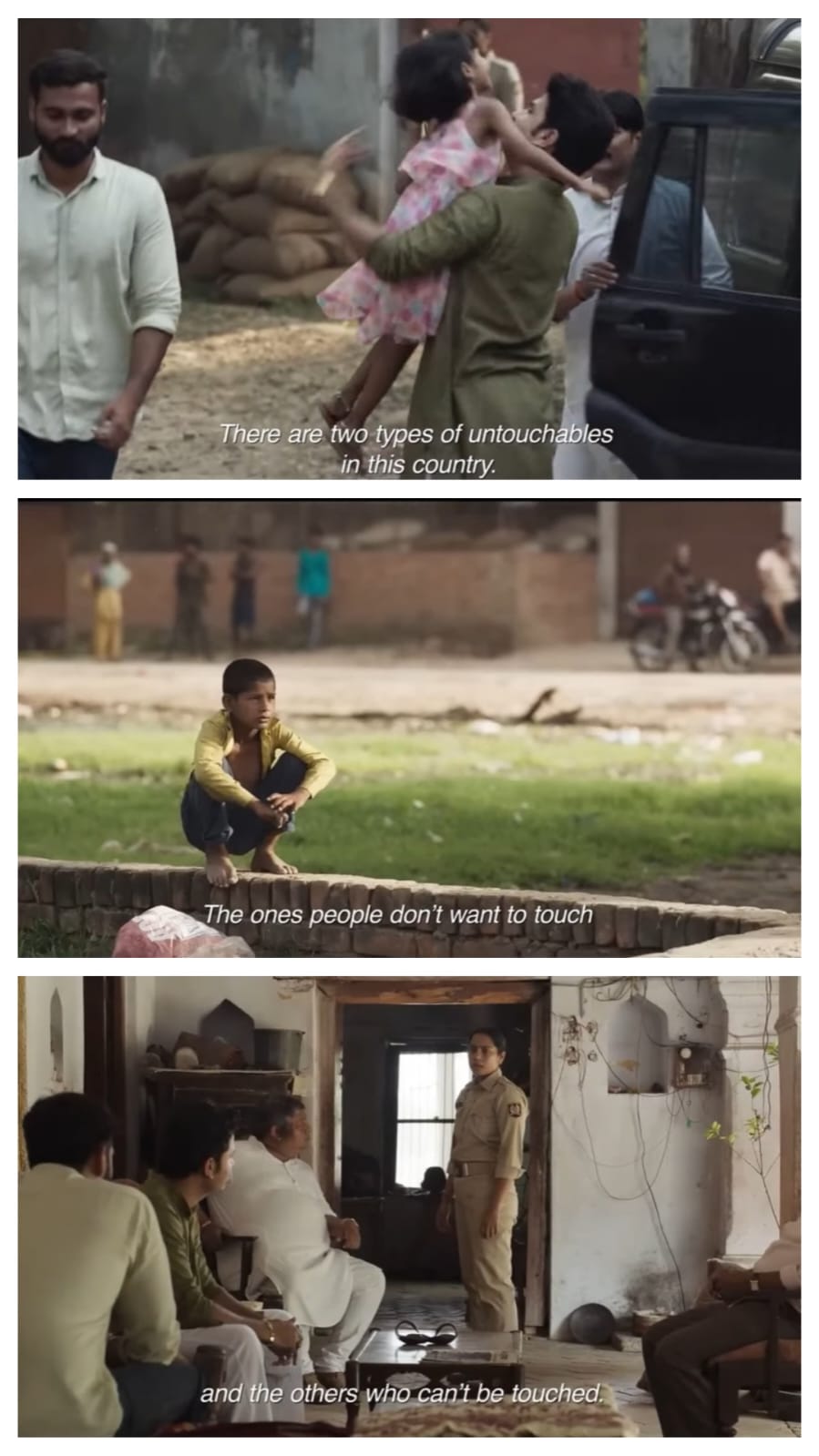
Amid this bleakness, the film sketches fragile human intimacies. As Geetha Sharma grows closer to Santosh, she gifts him a tracksuit for his morning exercise. His shy delight in receiving it contrasts sharply with the brutality surrounding him. In the climax, as Geetha reaches for Santosh with desire, she utters a line that crystallises the film’s vision:
“In this country, there are two kinds of untouchables:
those whom nobody wishes to touch, and those whom nobody dares to touch.”
This paradox—between those reduced to absolute exclusion and those insulated by absolute power—defines the architecture of Indian social life. In Santosh, this architecture is made visible through decaying dwellings, claustrophobic offices, and interior chambers heavy with authority.
There is one brief flash of fantasy: photographs on Salim’s phone, showing him in Mumbai, imagining himself free in the metropolis. It is a fleeting reminder of the universal desire for escape, for another life. Otherwise, Santosh stands unflinchingly in its realism—an unadorned mirror to the caste-communal order of India, and perhaps the reason why the censor board trembles before it.
This article is part of The AIDEM Series: Chathuravrutham, originally published in Malayalam. Read here.