

From Reep’s Notebook to Guardiola’s Algorithms: How Football’s Two Great Intellectual Traditions Converged

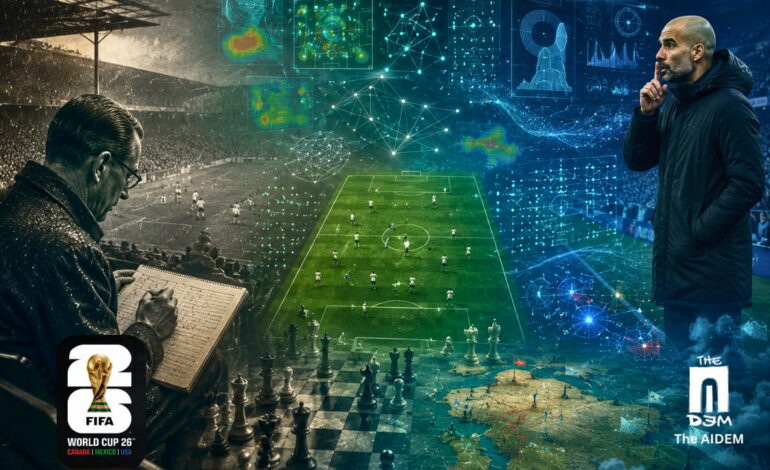
As The AIDEM’s countdown to the FIFA World Cup 2026 continues, this essay explores the history of football through the theories and ideas pursued by some of the sport’s most devoted students.
Over the decades, these efforts evolved along two distinct intellectual paths: one sought to understand football scientifically through observation, measurement and analysis; the other sought to organise it collectively through systems, structure and spatial control. In the contemporary game, have these two traditions finally converged?
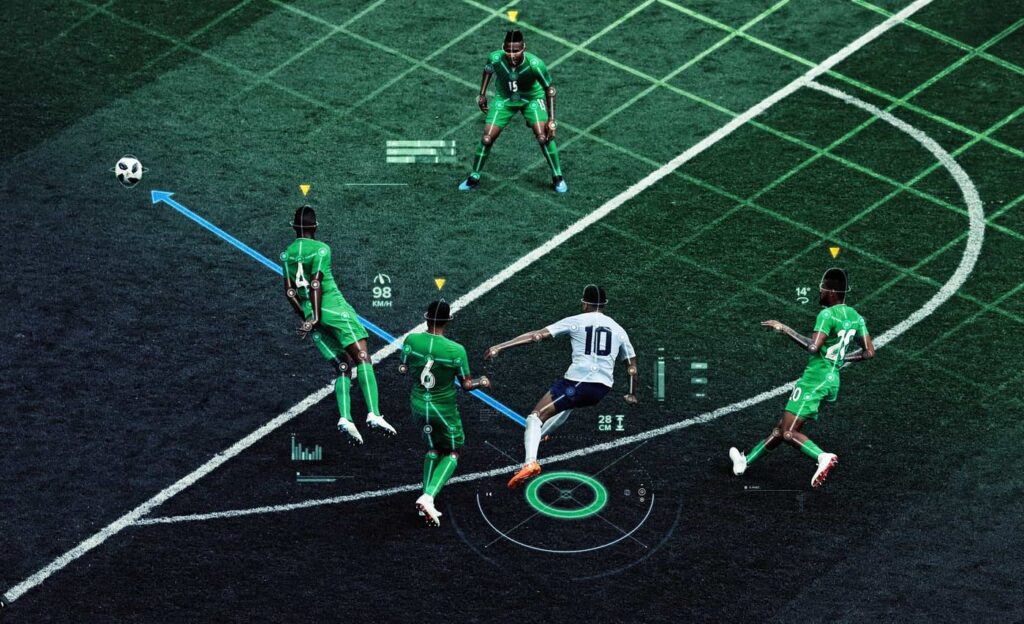
Football is perhaps the most analysed sport on earth. Every sprint is tracked. Every pass is measured. Every shot is assigned an expected-goals value.
A modern football club often resembles a research laboratory more than the romantic institutions celebrated in sporting literature. Elite clubs employ mathematicians, data scientists, physiologists, psychologists and software engineers to break down the game into increasingly comprehensible components.
Simultaneously, it is also one of the most unpredictable human activities. Despite the sophistication of modern interventions, football remains stubbornly resistant to prediction.
A deflection can decide a World Cup final. A Champions League campaign can collapse because of a missed penalty. Morocco can reach a World Cup semi-final while Germany exits in the group stage. Argentina can suffer a shocking defeat to Saudi Arabia in the opening week and, a month later, lift the trophy. The deeper one probes, the more paradoxes emerge.
Tracing the intellectual history of modern football helps illuminate these paradoxes. The story of football runs through two parallel rivers of thought. The first sought to understand football scientifically; the second sought to organise football collectively.
River One: The Analysts
Charles Reep and the Birth of Data Collection
The first river begins with an unlikely figure. Not a coach. Not a player. Not even a football man in the conventional sense.
Charles Reep was a Wing Commander in the Royal Air Force. Long before Opta, StatsBomb and artificial intelligence, Reep was manually collecting data. In the 1950s, he sat in football grounds with notebooks and pencils, recording every pass, every possession and every sequence of play.
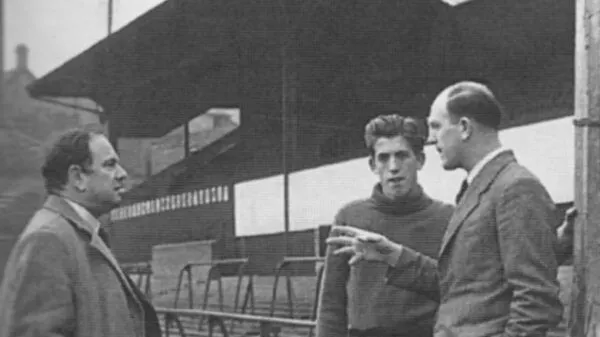
His conclusions were startling. Football possessions were remarkably short. Most attacks broke down quickly. Goals were rare, and a significant number appeared to emerge from direct play rather than lengthy passing sequences.
The title of his widely read paper, Skill and Chance in Association Football, captured his central insight. Reep was not merely studying tactics; he was investigating the relationship between order and randomness.
Many of his tactical conclusions would later be challenged, but his central question remains at the heart of modern football analytics: how much of football is skill and how much is chance?
Martin Lames and Irreducible Uncertainty
Half a century after Reep, another analyst revisited the same problem. But where Reep used notebooks, Martin Lames employed computers.
A Professor of Training Science and Sport Informatics at the Technical University of Munich, Lames spent decades analysing football through tracking systems, mathematical models and performance analytics. The remarkable thing is that he arrived not at certainty, but at uncertainty.
Lames demonstrated that football behaves less like a machine and more like a complex adaptive system. A basketball game contains hundreds of scoring events. A football match may contain only two or three. This difference changes everything.
Across a league season, the better team usually prevails because superiority has time to reveal itself over thirty-eight matches. In the World Cup, however, the better team frequently fails to win because football contains an irreducible element of uncertainty.
Lames effectively rediscovered in football what Carl von Clausewitz had discovered in war: friction.
Clausewitz, in his seminal work On War, defined friction as “the force that makes the apparently easy so difficult”. Psychological, physical and environmental realities invariably differ from theoretical plans. The result is a gap between capability and outcome.

Countless minor and unpredictable variables accumulate to disrupt even the most carefully prepared plans. Clausewitz identified four principal sources of friction:
The Elements of Chance: unforeseen environmental conditions, such as severe weather or adverse playing conditions.
Imperfect Information: miscalculations, faulty intelligence or deliberate deception.
Physical and Mental Strain: exhaustion, pressure, danger and fear affecting judgement and performance.
Organisational Complexity: breakdowns in communication, logistical failures and ordinary human error.
Clausewitz compared operating in war to moving through a resistant element, like walking through water rather than air. Military structures and battle plans may appear neat on paper, but once confronted by a living opponent, absolute certainty disappears.
Football is no different.
Chris Carling and Football Without the Ball
Working in French professional football, Chris Carling used advanced tracking systems to study player movement. His findings were extraordinary.

For roughly 99 per cent of a match, professional footballers do not touch the ball. They spend almost the entire game moving without possession. When they do receive the ball, the average possession lasts little more than a second.
Carling demonstrated that football is largely played without the football.
This transformed modern thinking. The central question was no longer, “Who has the ball?” It became, “What are the other twenty-one players doing when they do not?”
River Two: The System Builders
While analysts were measuring football, another group was attempting to redesign it. Their concern was not data. It was space.
Viktor Maslov and Collective Football
Viktor Maslov was the first great revolutionary.
He remains surprisingly unknown outside specialist circles, yet modern football may owe him more than any other coach. In the Soviet Union during the 1960s, Maslov introduced concepts that now appear self-evident: pressing, zonal defending, collective movement and compactness.
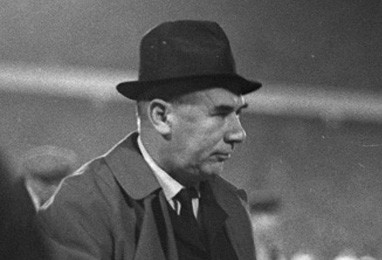
Before Maslov, football was largely organised around individual battles. Maslov began treating the team as a coordinated organism. His players moved together, pressed together and defended space rather than individual opponents.
Modern football, in many respects, began here.
Arrigo Sacchi and the Geometry of Space
Maslov discovered the idea. Arrigo Sacchi perfected it.
At AC Milan in the late 1980s, Sacchi transformed football through a deceptively simple belief: the team is more important than the individual.

His sides compressed space relentlessly. Distances between players were measured almost obsessively. Defenders stepped forward together. Midfielders shifted together. The entire team functioned as a synchronised unit.
Sacchi transformed football from a collection of positions into a geometry problem. Football became the management of space.
Louis van Gaal and the Engineering of Position
Louis van Gaal pushed the logic further.
For Van Gaal, football was fundamentally an exercise in creating superior positioning. Not possession. Not dribbling. Not tactics in the conventional sense. Positioning.

His teams sought numerical superiority, positional superiority and spatial superiority.
Much of what modern analysts now describe through pitch-control models and influence maps was being taught intuitively by Van Gaal decades earlier.
Pep Guardiola and the Synthesis
Pep Guardiola represents the convergence of all these traditions.
His football often appears revolutionary. In reality, it is evolutionary.
Maslov’s pressing. Sacchi’s compactness. Johan Cruyff’s positional philosophy. Van Gaal’s spatial engineering. All combined with the analytical tools of the modern age.

Guardiola’s teams are not obsessed with possession for possession’s sake. They use possession to control space. They use space to control transitions. And they use transitions to manage uncertainty.
The Great Convergence
In recent years, these two rivers have begun to merge.
In retrospect, it becomes clear that these apparently different thinkers were wrestling with the same problem.
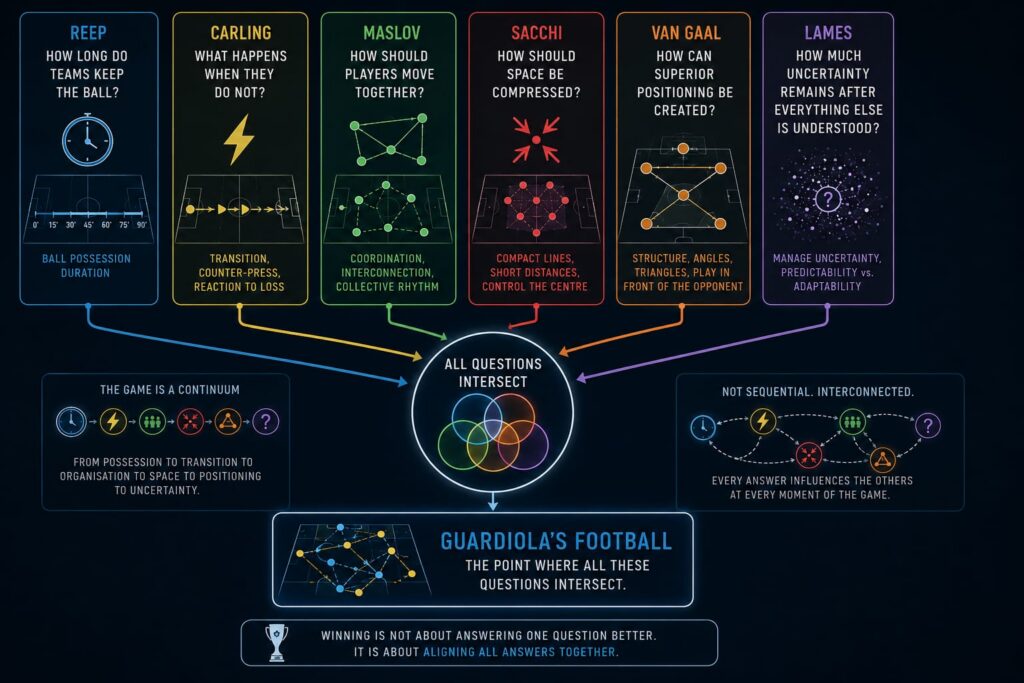
Reep asked: How long do teams keep the ball?
Carling asked: What happens when they do not?
Maslov asked: How should players move together?
Sacchi asked: How should space be compressed?
Van Gaal asked: How can superior positioning be created?
Lames asked: How much uncertainty remains after everything else is understood?
Guardiola’s football represents the point where all these questions intersect.
What Lies Beyond Possession?
Perhaps the most significant analytical shift of the past decade is that football is no longer primarily understood as a game of possession.
Possession has become merely one tool among many.
The emerging consensus views football instead as the management of space, transitions and uncertainty.
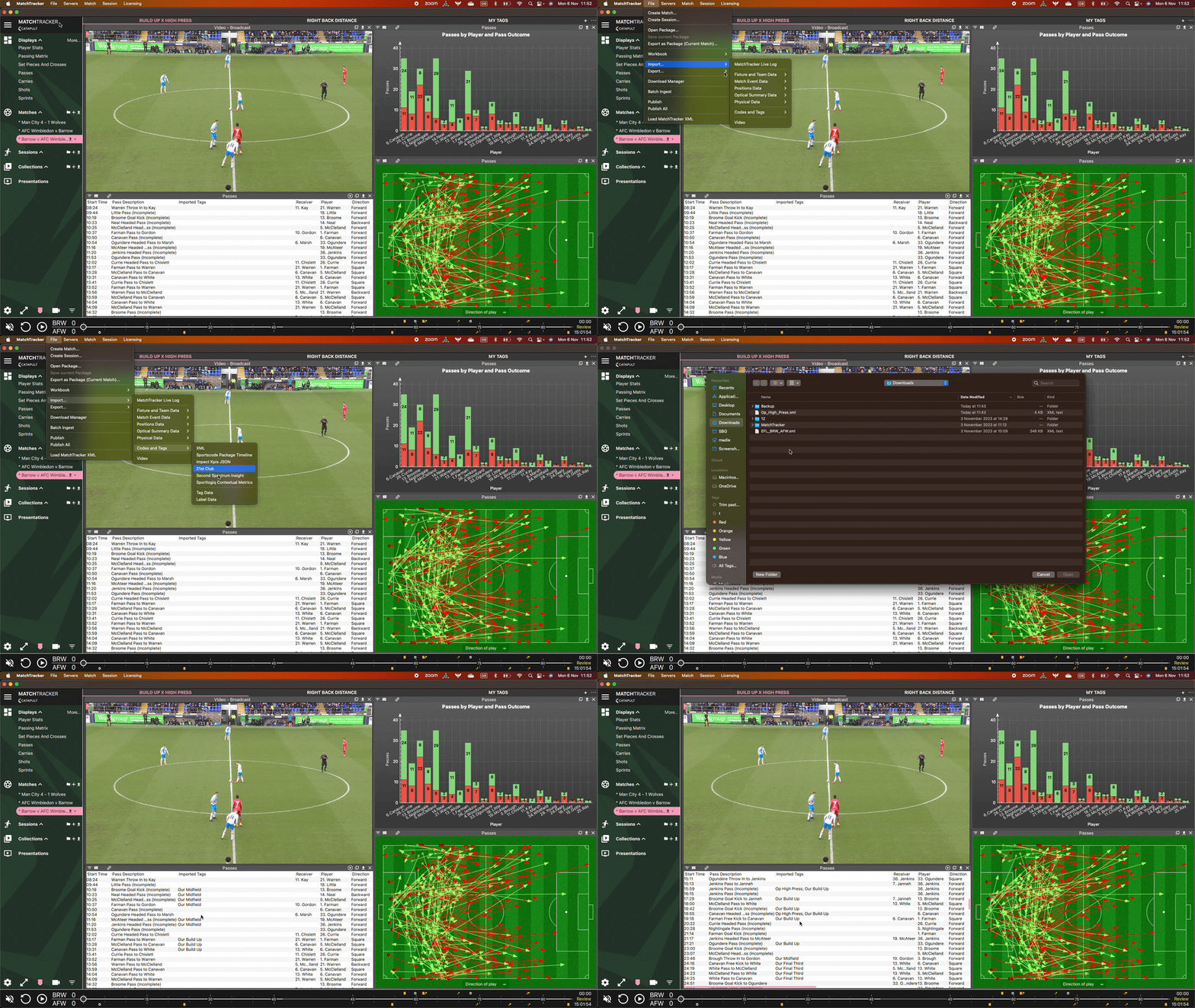
A team may begin a move in a 4-3-3. Attack in a 3-2-5. Press in a 4-4-2. Defend in a 4-5-1.
The formation listed on the team sheet is increasingly irrelevant.
The real game unfolds in the spaces between formations.
Football’s intellectual history has travelled a remarkable distance. From Reep’s notebooks to artificial intelligence. From Maslov’s pressing schemes to Guardiola’s positional play. From counting passes to mapping space.
Yet the deepest lesson may be the simplest.
The more football has been measured, the more analysts have discovered how much remains beyond measurement.
The more football has been organised, the more uncertainty has asserted itself.
Martin Lames and Charles Reep arrived at this conclusion from opposite directions. One used notebooks; the other computers. Both eventually encountered the same frontier.
Beyond tactics.
Beyond data.
Beyond probability.
A realm where preparation meets contingency. Where superiority meets chance. Where systems meet friction.
The ball is still round. The game still lasts ninety minutes.
Everything else remains theory.

Check in tomorrow for the next essay in The AIDEM’s countdown to the FIFA World Cup 2026.
This series is a concise adaptation of the author’s longer-form World Cup essays published on Substack. The complete series can be read here.
Related Stories: FIFA World Cup 2026










“A fascinating analysis of how football’s traditional schools of thought are increasingly blending in the modern game. The article highlights that success at the 2026 World Cup may depend not on rigid philosophies, but on the ability to combine tactical intelligence, adaptability, and collective discipline. Thought-provoking and insightful.”