


Blurring Fact and Majoritarian Fiction
In the past few years, Indian cinema has changed significantly, shifting from a source of entertainment to a kind of legal authority. The film industry often acts like a court, where popular stories are presented as facts, and entire groups are judged by the media without a fair chance to defend themselves. This new trend in political films, which often claim to be “based on true events,” blurs the line between what really happened and what is meant to provoke strong feelings.
This cinematic approach goes beyond just telling stories; it often undermines the basic principles of fair legal process, replacing the idea of being innocent until proven guilty with a presumption of guilt.
When state machinery implicitly endorses these narratives through tax-free declarations, it effectively weaponises history to engineer social consent. Consequently, the right to a fair trial, the rigorous standards of criminal jurisprudence, and the fundamental right to human dignity under Article 21 of the Constitution are frequently relegated to collateral damage in the pursuit of box-office dominance.
The Mechanics of Majoritarian Fiction
To understand how the celluloid courtroom operates in practice, one must scrutinise recent high-profile cinematic releases that leverage the “based on true events” loophole to trigger intense legal and societal conflict.

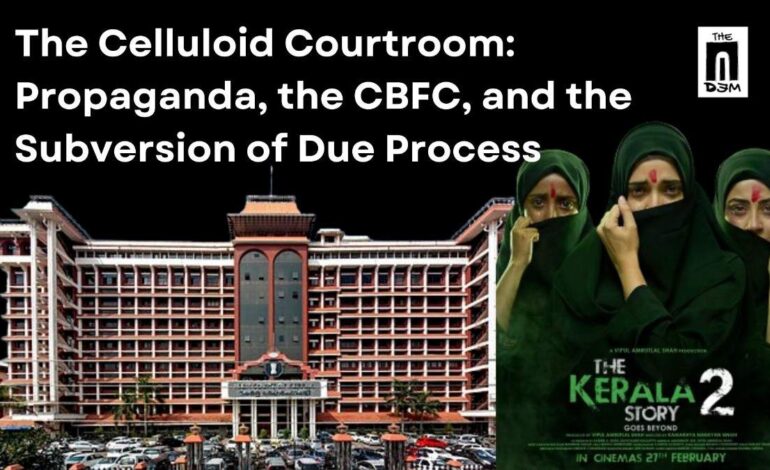
The Kerala Story franchise leans heavily on geographic stereotypes, depicting the historically peaceful and secular state of Kerala as a hotbed of extremism. The first film ignited widespread anger across the country with its initial, unverified assertion that 32,000 women from Kerala had been forcibly converted and recruited by ISIS. Under legal pressure, the filmmakers discreetly revised the number to three women, but the political fallout had already taken hold, fueled by state-sponsored tax breaks and endorsements from influential politicians.

Now, its sequel, The Kerala Story 2: Goes Beyond, has faced sharp reprimands from the Kerala High Court. Hearing petitions against the film’s certification (including a petition filed by Sreedev Namboodiri), Justice Bechu Kurian Thomas orally observed that Kerala is a secular state living in communal harmony, and projecting isolated incidents as a pan-state phenomenon gives a wrong indication that risks inciting communal passions.1 The cinematic claims of a massive “terror hub” are entirely debunked by official data. Parliament statements and National Investigation Agency (NIA) records confirm no evidence of an organised, large-scale conspiracy of forced conversions. In fact, 2016 government data noted only 54 ISIS-related arrests nationwide, and a 2020 intelligence-backed report identified merely 66 known Indian-origin fighters globally. Furthermore, the film portrays the nature of the threat as widespread, organised demographic change and “love jihad,” yet the NIA found no organised, mass-scale conspiracy. Finally, the entire state is depicted as a radicalised “Terror Hub,” a stark deviation from the High Court’s observation of Kerala’s peaceful, secular coexistence, noting that such geographic stereotyping actively risks public order.
In stark contrast to the statistical exaggeration of The Kerala Story 2, the recent release Dhurandhar 2: The Revenge weaponises actual political history to validate the ruling establishment’s policies. The film, featuring an undercover agent fighting the Karachi underworld, intercuts its fictional revenge masala with real archival footage of the 2014 election victory and the 2016 demonetisation announcement. By directly linking demonetisation to the crippling of ISI-backed terror funding, the film frames a highly debated economic policy as an infallible national security masterstroke.

Furthermore, the film’s depiction of a character based on the deceased gangster-turned-politician Atiq Ahmed, referred to as ‘Aatif Ahmed’ in the film, raises several concerns. Although the actual Atiq Ahmed was subject to numerous accusations of extortion, kidnapping, and murder, the film significantly diverges from reality by explicitly connecting his cinematic counterpart to Pakistan’s ISI, Lashkar-e-Taiba, and a larger plot to establish a “pro-Pakistan” administration in Uttar Pradesh. This depiction serves as a readily available instrument for disseminating the government’s perspective, retrospectively seeking to legitimize unlawful actions by artificially transforming a local criminal figure into a global terrorist. Detractors and opposition figures have vocally denounced this, asserting that it operates as a state-sponsored propaganda apparatus, intended to vilify a particular group and propagate fabricated, polarizing stories, all presented within the framework of a masala thriller. Moreover, the film’s depiction of his assassination further blurs the line between justice and vigilantism. The narrative hints that his killing was the direct result of central government intervention, showing high-ranking officials coordinating with the state police to orchestrate the event. The film’s portrayal of this extrajudicial killing as a victory for national security effectively glorifies the brutal side of police actions, all without the benefit of a trial.
These depictions actively subvert constitutional principles by supporting the violation of a citizen’s basic right to legal representation and the presumption of innocence, thereby legitimizing extrajudicial actions under the pretext of expeditious justice. When confronted with accusations of disseminating such overt propaganda, the filmmakers utilize the “gangster defense,” asserting that the antagonist is modeled on a real individual, while concurrently shielding themselves with a legal disclaimer that any similarity to actual persons is purely coincidental. This dual strategy enables the narrative to exploit the emotional impact of real-world occurrences without bearing legal or historical responsibility.
Political Narratives: Engineering Consent Through Cinema
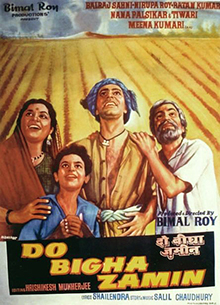
The employment of cinema to construct political narratives is not a recent development in India, although its current application is notably divisive. During the Nehruvian period, the government perceived cinema as an educational instrument for fostering national unity. The Films Division produced documentaries that championed the Five-Year Plans, while mainstream Bollywood films frequently depicted the “Five Year Plan Hero,” a secular, socialist figure dedicated to collective advancement, as exemplified by films such as Naya Daur and Do Bigha Zamin. The propaganda of this time was explicit, yet its primary objective was social harmony and agrarian progress.
This dynamic shifted towards authoritarian personality cults during Indira Gandhi’s Emergency (1975–1977). The government employed strict censorship and produced sycophantic documentaries like Our Prime Minister to justify the suspension of civil liberties and enforce state discipline.
Today, however, the narrative-building project is largely privatised. The state no longer relies solely on the Films Division; instead, mainstream commercial cinema does the heavy lifting. Films such as Article 370, Bastar: The Naxal Story, and The Vaccine War serve as vehicles for the propagation of majoritarian ideologies, frequently employing the terms “urban naxals” or “terrorist sympathisers” to vilify those with opposing viewpoints. The present political regime, by conferring tax-exempt status upon these films and actively disseminating them during electoral campaigns, utilizes cinema as a tool to solidify its voter base and exacerbate societal divisions, thereby ensuring a significant bias within the political discourse.
The CBFC’s Double Standard
This proliferation of majoritarian cinema is institutionalised by the Central Board of Film Certification (CBFC), which exhibits a glaring double standard in its regulatory mandate. While the Board routinely greenlights state-aligned films laden with Islamophobic tropes and provocative rhetoric under the guise of “artistic freedom,” it aggressively censors narratives that challenge systemic oppression.
A clear example of this disparity is the certification process for Dhadak 2, the Hindi version of the acclaimed Tamil anti-caste film Pariyerum Perumal. The Central Board of Film Certification (CBFC) required sixteen cuts, specifically demanding the removal of the “blue colour of the dog,” a crucial symbol of Dalit identity and Ambedkarite resistance in the original film.
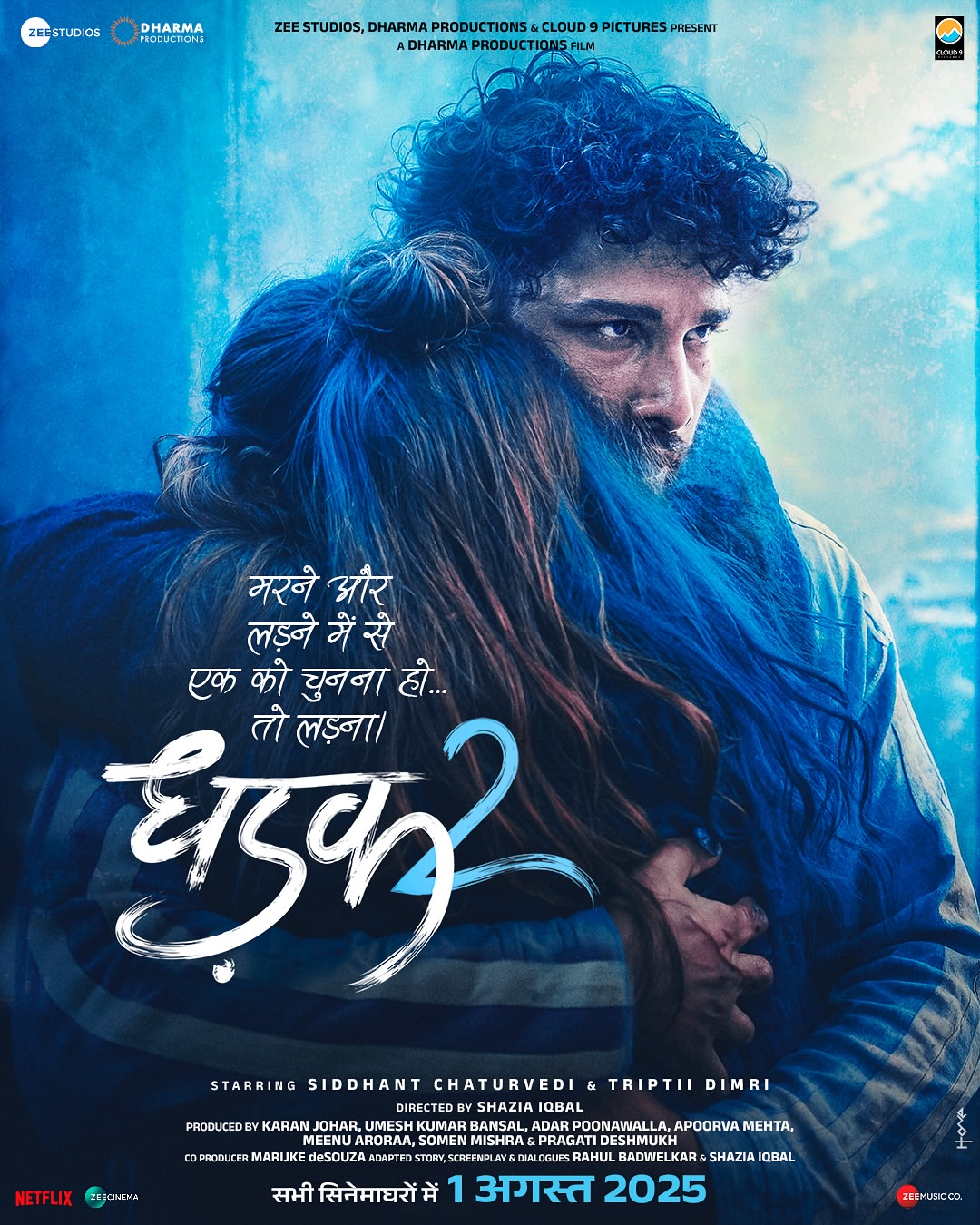
By eliminating this symbol, the Central Board of Film Certification (CBFC) effectively muted the film’s commentary on caste-related violence, thus aligning with the preferences of the dominant castes. As a result, the Board functions not as an unbiased enforcer of public order, but instead as a promoter of identity-based messaging, subjecting minority and marginalized viewpoints to excessive scrutiny, while granting greater freedom to majoritarian narratives.
The Legal Violations: Subverting the Evidence Act and Due Process
Beyond ideological manipulation, the celluloid courtroom inflicts severe damage on the public’s understanding of criminal jurisprudence. Contemporary action thrillers routinely portray police First Information Reports (FIRs) and chargesheets as absolute, uncontested truth. The cinematic logic dictates that a police accusation is sufficient proof of guilt, entirely bypassing the rigorous standards of the Indian Evidence Act, 1872 (now the Bharatiya Sakshya Adhiniyam, 2023).
Section 25 of the Evidence Act clearly states that a confession made to a police officer cannot be used against the person accused of a crime. This rule is meant to protect against abuse and forced confessions while in custody. The Supreme Court has consistently supported this principle. For example, in Munikrishna v. State by Ulsoor PS, even confessions recorded on video and given to the police were ruled inadmissible as evidence2 Similarly, the landmark Queen Empress v. Arumugam And Ors. (1897) judgment clarified the limited evidentiary value of police reports prior to trial.3 Yet, the cinematic “khaki-clad saviour” extracts truth through brute force, and the resulting extrajudicial killing is celebrated as instant justice.
These films, by treating police claims as unquestionable, completely ignore the presumption of innocence. This presumption, which is the basis of Article 21, requires the State to prove guilt beyond a reasonable doubt. This cinematic distortion of the burden of proof dangerously prepares the public to accept harsh legal changes, such as the reverse onus clauses in the Prevention of Money Laundering Act (PMLA) and the Protection of Children from Sexual Offences Act (POCSO). Through persistent media portrayals, the public is conditioned to see due process not as a cornerstone of justice, but as a bureaucratic obstacle designed to protect the guilty.
The Judicial Dilemma: High Courts and Super-Censors
The Central Board of Film Certification (CBFC), ensnared by political pressure and unpredictable censorship, has led Constitutional Courts to intervene more frequently. These courts are now tasked with navigating the delicate balance between the freedom of speech and expression guaranteed by Article 19(1)(a) and the right to dignity protected by Article 21.
The courts frequently face the challenge of the CBFC acting as a “super-censor.” In early 2026, in the case of KVN Productions LLP v. CBFC (W.P.No.380 of 2026), the producers of the Vijay-starring film Jana Nayagan went to the Madras High Court, seeking to force the CBFC to grant a U/A 16+ certificate after facing unnecessary delays4 While recognizing the difficulties filmmakers endure, the Division Bench made it clear that the judiciary cannot issue directives to mandate a specific certification, as that responsibility lies with the revising committee. Ultimately, the producers withdrew the petition to pursue the bureaucratic route, highlighting the exhausting legal hurdles filmmakers face when the CBFC stalls.

The judicial dilemma is equally pronounced in cases involving privacy and defamation. The 2025 release of Haq, a legal drama inspired by the historic Mohd. Ahmed Khan v. Shah Bano Begum case, prompted her daughter to seek a stay from the Madhya Pradesh High Court.5 In her petition, Ms. Siddiqua Begum Khan v. Union of India (2025 SCC OnLine MP 8047), she argued that the film distorted her mother’s legacy into commercial sensationalism, violating the family’s right to privacy and dignity.6 The High Court dismissed the plea, relying on the precedent that privacy and reputation rights extinguish upon death, and noting that the film drew from publicly available court records. While legally sound, the judgment exposes a profound ethical void: the law permits the endless commercial commodification and potential distortion of a real individual’s trauma, so long as they are deceased and the filmmakers hide behind an “inspired by true events” disclaimer.
Accountability and the Right to Dignity
The Indian silver screen is no longer an innocent bystander in the nation’s political discourse; it has been fundamentally re-engineered as a celluloid courtroom that subverts due process and engineers communal divides. The strategic deployment of the ‘true events’ tag allows filmmakers to propagate majoritarian fictions without bearing the burden of journalistic or historical accountability.
Coupled with the CBFC’s institutional double standard and the pervasive cinematic erosion of the presumption of innocence, this trend poses a severe threat to the constitutional right to a fair trial and human dignity. While the judiciary must continue to protect artistic freedom against extra-legal mobs and frivolous bans, it is imperative to establish stricter accountability mechanisms for docu-dramas that exploit real-world tragedies and demographic data. Until the legal framework bridges the gap between creative liberty and malicious defamation, the foundational principle of justice, that every citizen has the right to dignity and the presumption of innocence, will remain a casualty of the box office.
Works cited
‘Apprehensions of people of Kerala can’t be ignored’: HC raps Kerala Story 2, accessed March 21, 2026, https://www.newindianexpress.com/states/kerala/2026/Feb/24/apprehensions-of-people-of-kerala-cant-be-ignored-hc-raps-kerala-story-2
Supreme Court of India Rejects Video Recorded Police Confessions as Inadmissible Evidence: Analysis of Munikrishna Case – Edu Law, accessed March 21, 2026, https://www.theedulaw.in/content/judgements/115/Supreme-Court-of-India-Rejects-Video-Recorded-Police-Confessions-as-Inadmissible-Evidence:-Analysis-of-Munikrishna-Case
Limitations on Accused’s Right to Inspect Police Reports under Indian Evidence Act: Queen Empress v. Arumugam And Ors. – CaseMine, accessed March 21, 2026, https://www.casemine.com/commentary/in/limitations-on-accused%E2%80%99s-right-to-inspect-police-reports-under-indian-evidence-act:-queen-empress-v.-arumugam-and-ors./view
IN THE HIGH COURT OF JUDICATURE AT MADRAS RESERVED ON: 07.01.2026 PRONOUNCED ON, accessed March 21, 2026, https://images.assettype.com/barandbench/2026-01-09/a9m3hgkv/_KVN_Productions_v__CBFC.pdf
Mohd. Ahmed Khan v. Shah Bano Begum – Wikipedia, accessed March 21, 2026, https://en.wikipedia.org/wiki/Mohd._Ahmed_Khan_v._Shah_Bano_Begum
MP HC denies relief to Shah Bano’s daughter against release of ‘Haq’ Movie – SCC Online, accessed March 21, 2026, https://share.google/rdd0uIlZt1K9t4TY8









“A sharp and thought-provoking take on how cinema can influence public perception of justice. It raises serious concerns about propaganda and the subtle erosion of due process.”