The Spirited Resistance and Rise of International Left Politics


In recent years, international politics has been dominated by the growing influence of right-wing forces across different parts of the world. Yet, a series of remarkable developments have signalled the spirited resurgence of progressive, left-wing politics. The election of Zohran Kwame Mamdani as Mayor of New York, Catherine Connolly as President of Ireland, and Rob Jetten’s liberal-centrist party D66 leading to victory in the Netherlands exemplify this trend.
In New York, Mamdani defeated Andrew Cuomo — a candidate backed by billionaires and former President Donald Trump — by a significant margin. As the leader of the Socialist Group within the Democratic Party, Mamdani’s triumph marked a historic breakthrough in America’s largest and wealthiest city.
In Ireland, Connolly secured a decisive victory in the presidential election, while in the Dutch parliament of 150 seats, D66 under Jetten’s leadership surpassed the far-right Party for Freedom (PVV).
Across Europe, far-right movements have gained momentum — in Italy, Hungary, Finland, Serbia, Switzerland, Britain, Germany, France, and Spain. Yet, these three victories — in New York, Ireland, and the Netherlands — stand out as powerful exceptions, reaffirming that progressive and inclusive politics continue to resonate deeply with the public.
A People’s Mandate in New York
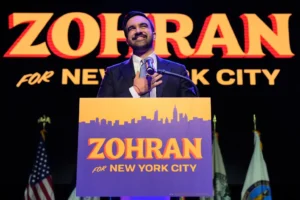
Mamdani articulated this pro-people shift succinctly. To finance his ambitious welfare agenda, he proposed an additional two per cent tax on billionaires and corporations — a striking idea in a city where one in every 24 residents is a millionaire. His campaign’s core rested on economic justice and opposition to the anti-welfare, anti-immigrant, and Islamophobic policies associated with Trumpism.
He placed key livelihood concerns — rising rents, inflation, childcare, and healthcare — at the heart of his campaign. His promises included:
-
A three-year rent freeze.
-
Free and rapid bus services for workers pushed to city outskirts by high housing costs;
-
Free childcare for school-going children;
-
Government-controlled stores in select areas to combat inflation, with scope for expansion; and
-
A minimum wage increase to at least $30 a day.
At the same time, while Trump intensified immigration raids through the Immigration and Customs Enforcement (ICE) system, he sought to appeal directly to voters by declaring himself a “Muslim immigrant” — a pointed attempt to connect with diverse constituencies. (Mamdani, notably, is of Indian origin and had migrated from Uganda.) In his victory speech, Mamdani reaffirmed his inclusive vision: “This is a city of immigrants, built by immigrants, and led by an immigrant.”
He did not hesitate to condemn the genocide in Gaza and called Israeli Prime Minister Benjamin Netanyahu a war criminal. While the Democratic Party continued to back Israel’s position in the U.S., Mamdani stood firmly with the Palestinian cause. His stance represented a sharp moral divergence within American politics.
At a time when Trump announced his intention to seek a third term, Democrats secured major victories — winning the New York mayoralty and gubernatorial posts in New Jersey and Virginia — marking significant setbacks for the Republicans.
This moment stands as both a warning to Trumpism and a beacon of hope for progressive politics.
Europe’s Countercurrents
Across Europe too, as far-right forces advance, counter-movements have emerged — most notably in Ireland and the Netherlands. In early October elections, the far-right became the largest single party in the Czech Republic, while in Italy, Hungary, Finland, Serbia, and Switzerland, far-right parties are already in power. In Britain, a rally organised by far-right leader Tommy Robinson drew nearly 150,000 people, and in Germany, France, and Spain, parties such as AfD, National Rally, and Vox have made significant inroads.
Against this backdrop, the victories of 68-year-old Connolly in Ireland and Rob Jetten in the Netherlands — both advancing left-wing ideals — are particularly noteworthy.
Connolly’s Progressive Coalition
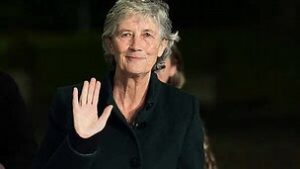
Connolly secured a resounding win with 64.6% of the vote (on a 45.8% turnout). The traditional Fine Gael candidate, former minister Heather Humphreys, managed only 27%, while Fianna Fáil’s candidate Jim Gavin polled just 8.4% — meaning Connolly garnered twice as many votes as the two major-party candidates combined.
The far-right could not even field a candidate; instead, its supporters opted to spoil their ballots as a form of protest. What stands out most is that Connolly, unaffiliated with any single major party, successfully united all anti-far-right voters under one banner.
Her victory was supported by a broad alliance — including Labour, the Greens, the Communist Party of Ireland, People Before Profit, 100% RED (a Donegal-based movement), the Social Democratic and Workers’ Party, Sinn Féin, trade unions, cultural organisations, language activists, and anti-war groups. Sinn Féin’s endorsement was particularly significant, given its long-standing call for the reunification of Ireland — a nation divided under British colonial rule.
Northern Ireland remains under UK jurisdiction, with nearly half its population holding Irish citizenship. Ireland has also been one of the strongest voices in Europe protesting against Israel’s actions in Gaza. While the EU and the U.S. stood by Israel, Ireland witnessed some of the most passionate demonstrations. Connolly not only joined those protests but also boldly described Israel as a terrorist state. She reminded the world that history did not begin on October 7 and vowed to stand with the Palestinian people “till her last breath.”
She also opposed NATO and Ireland’s growing military engagement, and her firm anti-NATO and anti-arms-trade positions further enhanced her credibility among voters.
The Dutch Breakthrough
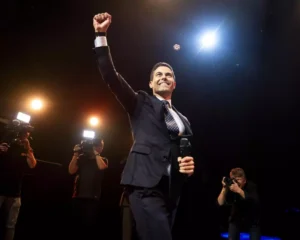
In the Netherlands, the far-right PVV government led by Geert Wilders had been in power for a year before collapsing in June under mounting pressure over its hardline anti-immigrant policies. This time, PVV won only 26 seats, fewer than in 2023. The Liberal Democratic Party (D66) — founded in 1966 — made a dramatic comeback, winning 27 seats, up from just 9 previously. Its 38-year-old leader Rob Jetten is now poised to become the next Prime Minister and is holding coalition talks excluding PVV.
Forming a coalition in the Netherlands typically takes several months, but if successful, Jetten will become both the youngest and the first openly gay Prime Minister in Dutch history.
Undoubtedly, this marks a significant setback for the far-right — and a powerful affirmation of inclusive, progressive politics in Europe.