Senior Journalist and author Nalin Verma’s fortnightly column in The AIDEM titled ‘Everything Under The Sun’ continues. As the title suggests this column addresses diverse issues ranging from politics, social issues, culture and literature, all abiding passions of this veteran writer and teacher. This is the 19th article in the column.
Bihar Stands at A Crossroads
The Mandal politics that reshaped the state’s political landscape over three and a half decades ago has failed to deliver its broader promise of social justice and has weakened over time. Similarly, the Ram Mandir movement, which emerged as a counterforce to Mandal politics, has lost its appeal despite evolving into a radical Hindutva tool targeting minorities.
Prashant Kishore’s nascent Jan Suraj Party (JSP) has entered the fray in Bihar’s Assembly election, a state governed for the first 15 years by the staunch Mandal advocate Lalu Prasad Yadav and his wife Rabri Devi, followed by 20 years of a blend of Mandal and Mandir politics represented by Nitish Kumar’s Janata Dal (United) (JDU) and the BJP.
Persistent disputes over seat-sharing within the National Democratic Alliance (NDA) and the Indian National Developmental Inclusive Alliance (INDIA) reflect deeper issues plaguing both—Nitish Kumar’s NDA and Tejashwi Yadav’s Mahagathbandhan. Even as the first phase of nominations closed, major allies in both coalitions struggled to agree on the 243 seats in the Bihar Assembly.
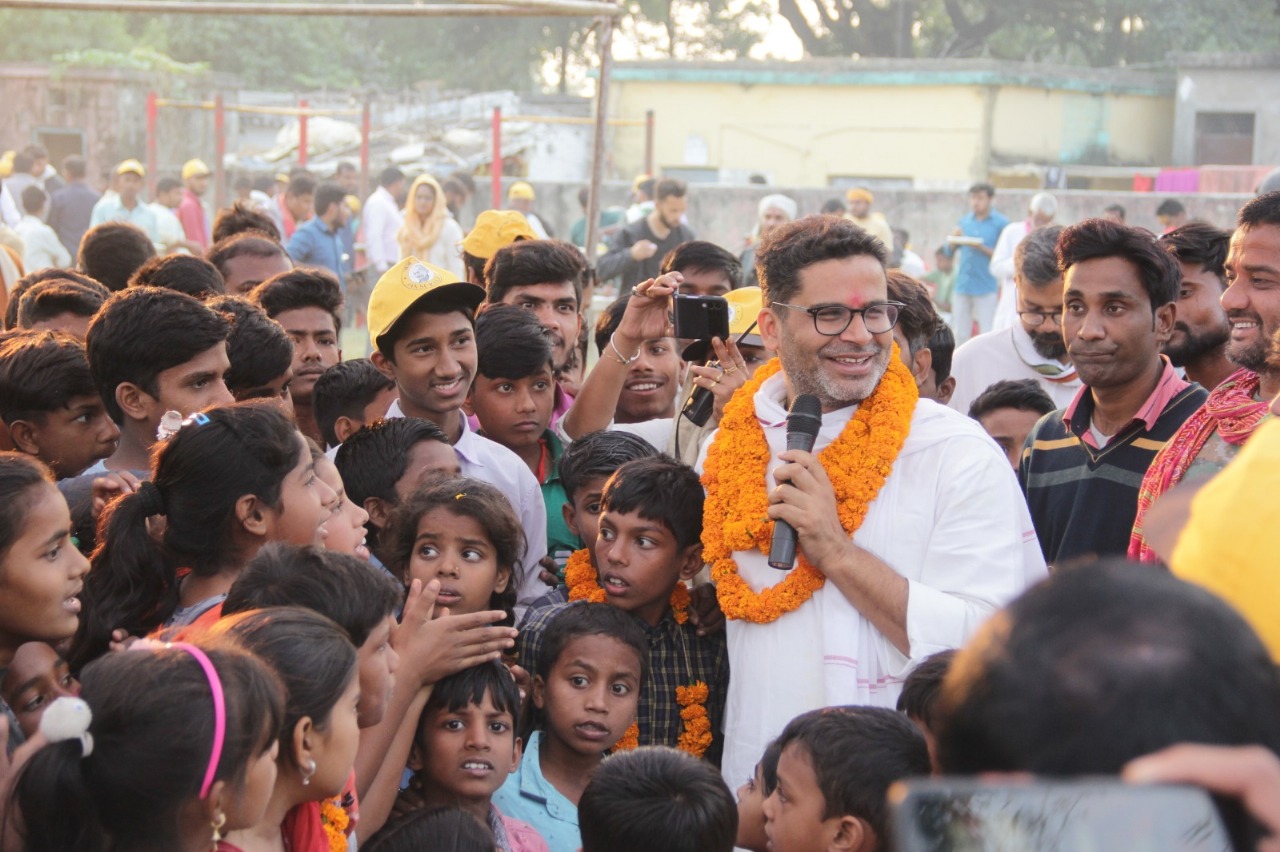
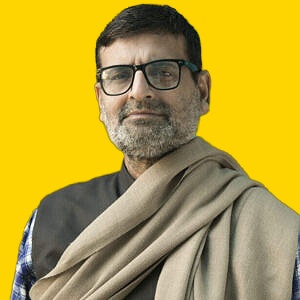
Prashant Kishore, embodying a new era of politics driven by data, technology, Corporate-style, and a compelling narrative addressing systemic corruption, unemployment, migration, and inadequate education, has tirelessly campaigned across Bihar’s hinterlands for three years. With exceptional communication skills, a robust ground-level organisation, active social media presence, and substantial resources, Kishore has become a household name.
The buzz around him is palpable, especially along the 140-km stretch from Sonepur to Siwan-Gopalganj in north Bihar. Yet, predicting JSP’s vote share or seat tally on November 14 remains challenging.
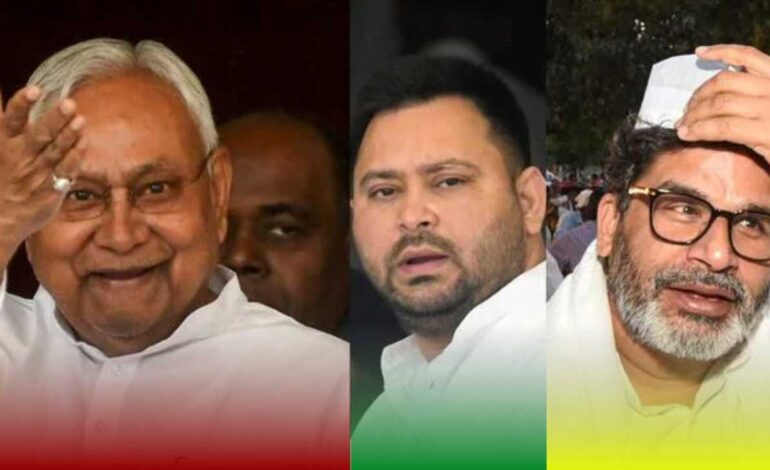
Bihar’s political landscape is fluid. Most psephological surveys rank Tejashwi Yadav as the top choice for chief minister, followed by Prashant Kishore and Nitish Kumar. Kishore’s ratings have surged recently, but such surveys, often more entertainment than science, fail to capture the complexity of Bihar’s politics.
Let’s examine the strengths and weaknesses of the three major players: NDA, INDIA, and JSP.
NDA
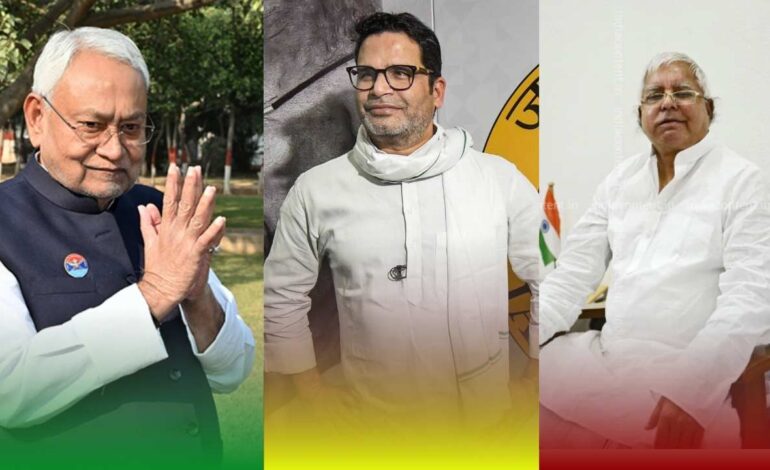
The relationship between Nitish Kumar and the Narendra Modi-Amit Shah duo is a constant game of cat and mouse. In the pre-Modi-Shah era, trust underpinned the alliance between Nitish’s JDU and the Vajpayee-Advani-led BJP. That trust has evaporated, with Modi and Shah employing tactics to replace Nitish with their preferred chief minister, while Nitish maneuvers to protect his position.
The BJP has backed Chirag Paswan to undermine JDU within the NDA, co-opted some JDU MPs, and positioned its ‘hidden’ friends like JDU’s working president Sanjay Jha and minister Vijay Kumar Choudhary to potentially destabilise Nitish, akin to an Eknath Shinde-style maneuver. Nitish countered by briefly joining Lalu Yadav’s camp in 2022, only to return to the BJP in 2024 as Tejashwi’s stature and ambition to become chief minister grew.
Narendra Modi’s influence in Bihar hinges on Nitish Kumar, without whom his strength in the state would wane. Initially, Modi and Amit Shah declared Nitish as the NDA’s chief ministerial candidate for the post-2025 polls, but their true intent was to replace him. Working covertly with JDU’s Sanjay Jha, the BJP wrested nearly a dozen JDU strongholds, redistributing them to itself and the Lok Janshakti Party (Ram Vilas).
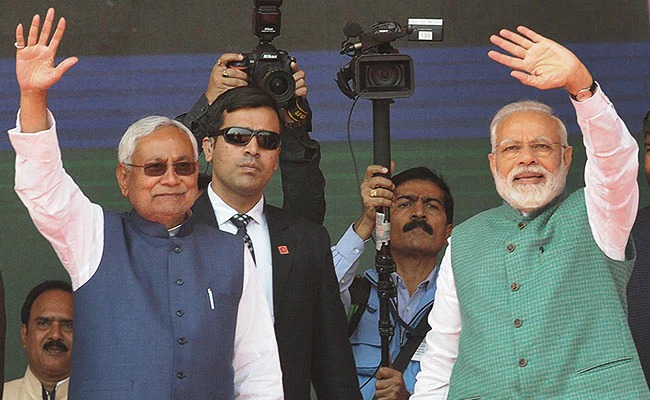
Despite his declining health, Nitish has sensed this “conspiracy” and erected roadblocks within the NDA. These behind-the-scenes maneuvers will reshape post-poll permutations and combinations too. Despite Modi’s rhetoric and demagoguery, his brand of Hindutva has failed to establish the dominance in Bihar that it enjoys in Uttar Pradesh and Madhya Pradesh.
In Bihar, Modi’s image alone cannot secure a unilateral BJP victory. While his hate-laced Hindutvahas gained traction among some Other Backward Classes (OBCs) and Extremely Backward Classes (EBCs) benefiting from his welfare schemes, it lacks the potency to dominate the state’s politics.
Conversely, Nitish Kumar, a socialist at heart, has compromised on secularism by supporting Modi on issues like the CAA, NRC, and Waqf Bill. Yet, he has outmaneuvered Modi in welfare politics, building a formidable women’s constituency through networks of ASHA and Aanganwadi workers, reserving 35% of government jobs and 50% of local body positions for women, and providing Rs 10,000 cash transfers to women householders.
Additionally, Nitish’s social engineering since 2005, segregating EBCs and Dalits from Lalu Yadav’s broader Mandal coalition, has kept him relevant election after election. However, these measures fall short of granting him unchallenged sway in Bihar.
INDIA
Historically, the Congress, with its core support from Dalits, Muslims, and Brahmins, dominated Bihar from 1952 to 1990, with brief interruptions by socialists like Mahamaya Prasad Sinha and Karpoori Thakur.
The 1990 Mandal Commission implementation, masterfully leveraged by Lalu Prasad Yadav, transformed Bihar’s political landscape. With unparalleled communication skills, an unwavering commitment to social justice and secularism, and broad appeal among minorities, marginalised classes, and progressive sections, Lalu’s Janata Dal (later RJD) secured landslide victories in the 1991 Lok Sabha, 1995 Assembly, and 1996 Lok Sabha elections, establishing him as a towering socialist leader in the Hindi heartland.
However, just as Congress succumbed to Brahmin elitism until 1990, Lalu’s RJD gradually became synonymous with Yadav dominance. The Yadavs, Bihar’s largest caste at over 14% of the population, alienated the EBCs, who, despite being fragmented into numerous castes and sub-castes, constitute over 36% of the state’s population. Nitish Kumar, from the upwardly mobile Kurmi caste, capitalised on this by engineering a split, drawing EBCs away from the Yadavs to fuel his own ambitions.
Lalu’s son, Tejashwi Yadav, recognises these shifts and has taken steps to reconnect with non-Yadav backward castes, but it remains doubtful whether he can replicate his father’s 1990s magic.

Prashant Kishore
Prashant Kishore has injected a breath of fresh air into Bihar’s politics, emerging as a novel phenomenon. Unburdened by the legacy of the Congress or the Socialist movement, he is distinct from the Sangh Parivar’s Hindutva and the caste Hindu-dominated Congress of its pre-Rahul Gandhi era.
It would be misguided, however, to liken him to Arvind Kejriwal or assume he lacks a political ideology. While working on UN-funded health initiatives, Kishore achieved remarkable success as an election strategist, collaborating with top leaders across India, from Narendra Modi and Nitish Kumar to Mamata Banerjee, Jagan Mohan Reddy, and Amarinder Singh.
He has become an integral “cog” in India’s political machinery. His evolving ideology, reflecting traces of Mahatma Gandhi’s idealism and B.R. Ambedkar’s social sensitivity, is still taking shape but follows a distinct path, independent of Hindutva or Socialist frameworks.
Kishore’s commitment to the Indian Constitution’s core values—socialism, secularism, and justice—is evident in his party’s ticket distribution, which mirrors the demographic proportions of social, religious, and gender groups. As a seasoned political consultant, he has amassed sufficient resources to run the Jan Suraj Party transparently and effectively.
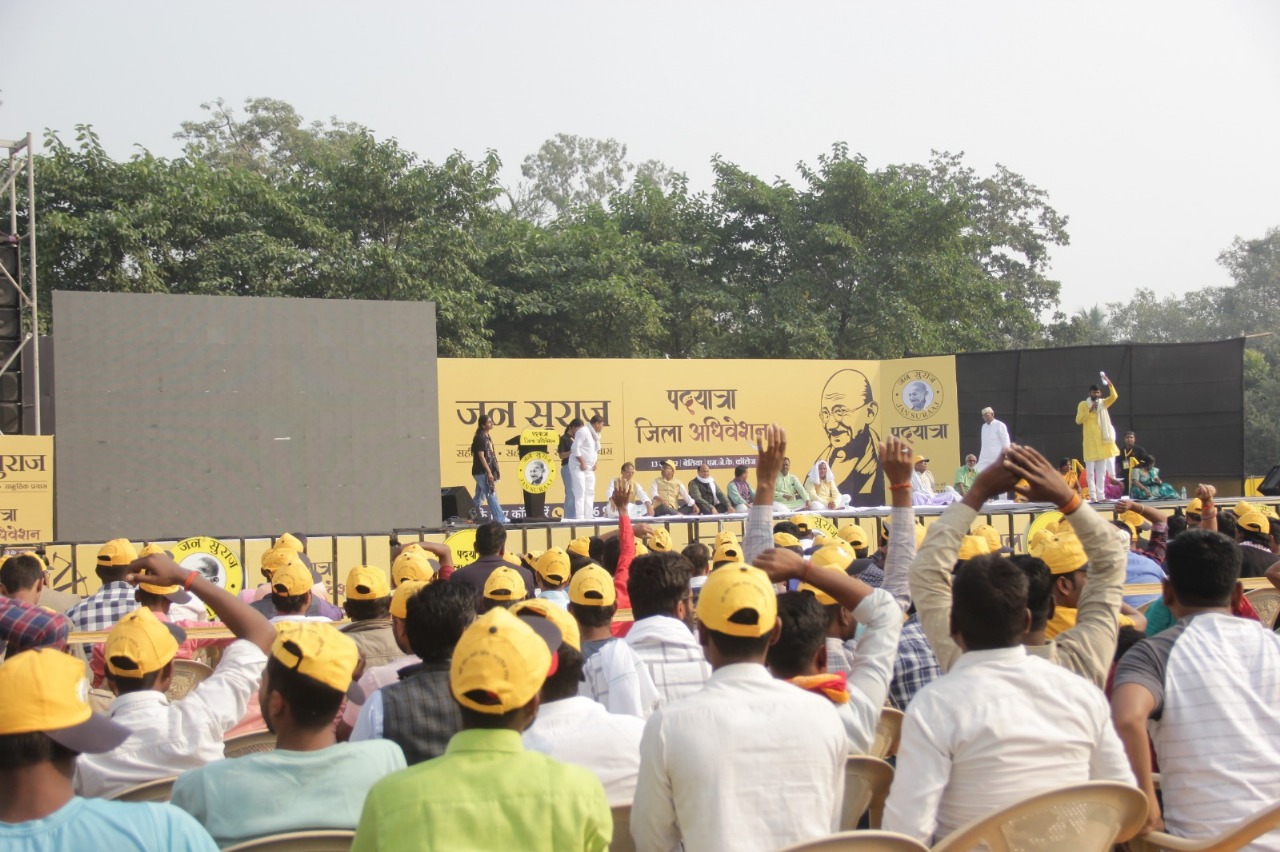
For the upcoming election, Kishore focuses on pressing issues like distressed migration, unemployment, and Bihar’s failing education system, articulating a clear vision that resonates with crowds. Yet, convincing voters entrenched in identity, religion, pride, and prejudice to embrace his experiment is a challenge.
Kishore remains pragmatic, stating, “Yaa tou arsh par, na tou farsh par” (Either 0 to 10 MLAs or over 150). It’s premature to judge Kishore’s success solely by seats won. If his party secures even 10% of the vote share and penetrates Bihar’s complex social fabric, the 2025 polls could mark the dawn of a new political era and the beginning of Prashant Kishore’s transformative journey.
Read more from this Series: Everything Under the Sun.