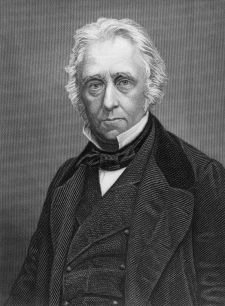
While delivering the Ramnath Goenka Lecture, Prime Minister Narendra Modi stated that India should take a ten-year pledge to root out the “colonial mindset.” In ten years, he noted, it will be two centuries since Lord Macaulay introduced the English-based pattern of education.
According to Mr. Modi, “Macaulay’s project was to reshape Indian thought by dismantling indigenous knowledge systems and enforcing colonial education.”
He went on to declare that Macaulay’s “crime” was creating Indians “who are Indians in appearance but British in thought.” (I.E., November 18, 2025)
Modi, a long-time pracharak of the RSS, draws from Hindutva nationalism, a worldview that traditionally focused on the narrative of “evil Muslim kings,” temple destruction, and forced conversions. According to this view, India enjoyed a golden era until the “Muslim invaders” arrived.
In recent years, however, Hindutva thinkers have shifted their cultural critique from medieval history to “coloniality,” presented as the British-imposed mindset that allegedly suppressed traditional Indian knowledge systems.
It is important to recall that this ideological tradition largely kept itself away from the anti-colonial struggles waged by Indian masses under Mahatma Gandhi’s leadership.
Macaulay’s Legacy: Harm, Benefit—or Both?
While Modi’s camp portrays Macaulay as the architect of India’s intellectual decline, Dalit thinkers like Chandrabhan Prasad credit Macaulay for enabling the very conditions that later allowed Dalits and marginalised communities to access rights, justice, and dignity.
The Hindutva reading assumes a straight, uncontested trajectory from Macaulay to modern India. Ironically, the same camp upholds a European-style nationalism defined by linguistic or religious identity, ignoring India’s much more layered social evolution.
English education, in fact, introduced modern liberal values and opened access to knowledge for communities historically excluded from traditional learning.
Gurukul education remained restricted to upper-caste men; Dalits and women were almost entirely shut out. Modern education disrupted this monopoly.
India’s traditional knowledge systems—shaped by Sushrut, Aryabhata, Brahmagupta, the Lokayat school, and Bhaskar—had advanced society, but access to this knowledge was tightly controlled by elites. Knowledge, power, and privilege moved together.
Nationalist Leaders Educated in the Same System
Macaulay’s project had undeniable imperial motives. The British wanted clerks and administrators who would serve the empire. Writers like Rudyard Kipling even promoted the idea of the “white man’s burden” to legitimise colonial rule.
Yet the same English education system produced nationalist giants who challenged the empire itself. Gandhi, Patel, Subhas Chandra Bose, and Nehru were all educated in England.
Their leadership, rooted in exposure to modern legal, political, and philosophical thought, ultimately paved the way for freedom—captured in Nehru’s iconic “Tryst with Destiny” speech.
Did English suppress regional languages? Evidence suggests otherwise. Leaders like Tilak (Kesari) and Gandhi (Navjivan) revitalised regional-language journalism.
Literary icons like Rabindranath Tagore and Munshi Premchand flourished in this period.
Rediscovering India: Colonial Tools, Indian Outcomes
British scholars contributed, often unintentionally, to rediscovering India’s heritage. Swaminathan Aiyar (TOI, November 2025) notes that the British created the Archaeological Survey of India under Alexander Cunningham, whose excavations uncovered major heritage sites—from Taxila to Nalanda.
Illustration of an Indian scholar studying ancient manuscripts, symbolising the evolution of traditional knowledge through global exchange.
India did not accept British thinking wholesale. Thinkers like Dadabhai Naoroji, M.G. Ranade, G.K. Gokhale, and R.C. Dutt fiercely critiqued colonial economic and administrative policies. The freedom movement itself was the largest intellectual challenge to British ideology.
Over time, English became Indianised. Writers like Amitav Ghosh, Arundhati Roy, and Kiran Desai use the language to express deeply Indian experiences.
Why ‘Traditional Knowledge’ Cannot Be Isolated
Traditional knowledge systems thrive only through interaction with other intellectual traditions. With linguistic states now in place, regional languages and India’s knowledge heritage have ample room to flourish.
What remains crucial is acknowledging that global engagement—far beyond the West—has helped challenge entrenched caste and gender hierarchies. Modern education, despite limitations, opened pathways for equality and justice for historically excluded groups.
Shashi Tharoor’s Oxford debate highlighted the economic loot of British rule, yet Dr. Manmohan Singh later acknowledged the British role in shaping modern administration and education. History’s legacy is mixed, not monolithic.
Hindutva’s Present Focus: Restoring Hierarchies?
The ideological predecessors of today’s Hindutva nationalists had little interest in fighting colonialism.
Shamsul Islam cites Golwalkar’s reported advice: “Hindus, don’t waste your energy fighting the British. Save your energy to fight our internal enemies: Muslims, Christians, and Communists.”

Why then is “coloniality” suddenly the target?
Because Hindutva nationalism upholds traditional caste and gender hierarchies that were challenged—albeit modestly—by the freedom struggle and the Indian Constitution.
Re-framing modern education as a colonial imposition helps create ideological space to restore older social structures.
Knowledge Grows Through Exchange
Civilisations never progress in straight lines. India’s intellectual journey has always been shaped by exchange—between regions, cultures, and worlds.
Opposing Macaulay or Western education cannot revive a mythical pure tradition; nor can it undo centuries of intellectual cross-pollination.
Modern education, despite its colonial origins, opened doors that traditional systems kept shut. India’s challenge today is not choosing between traditional and modern knowledge, but ensuring open access, critical inquiry, and equality in knowledge for all.
This article was also published on Punjab Today News.