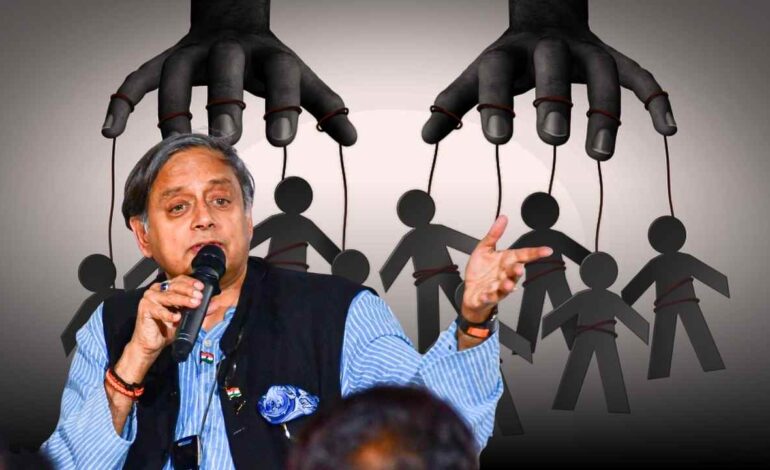
Shashi Tharoor – a former UN diplomat, Congress MP, and self-styled liberal intellectual – embodies the crisis of postcolonial liberal democracy in India. His political trajectory, from critic of Hindutva to de facto legitimiser of Modi’s security state, cannot be dismissed as mere opportunism. Tharoor’s contradictions are not personal; they are structural—symptoms of a political system in which opposition and power no longer stand apart, but exist on a continuum of state capture.
Operation Sindoor and the national political discourse that followed brought these contradictions into sharp relief. Tharoor’s journey—from a senior UN official to a Congress politician and now a consistent apologist for Modi’s security narrative—has exposed deep fissures in his political identity. This identity is best understood as rhizomatic: spreading laterally across ideological terrains without fixed roots.
His refusal to align with the Congress party line, while simultaneously leading an all-party delegation to justify India’s counter-terrorism measures abroad, reveals not simply opportunism but a deeper structural pathology. As Deleuze and Félix Guattari describe, this is the schizophrenic nature of capitalist subjectification: the subject simultaneously inhabits contradictory positions without experiencing contradiction. Tharoor embraces liberal cosmopolitanism while endorsing Hindu nationalist state power; he presents himself as “above ideology” in the name of nationalism, even as he serves specific political interests and reinforces coercive state authority.
These inconsistencies exceed hypocrisy. They illustrate the production of the ideal neoliberal political subject: adaptable, internally contradictory, rhetorically sophisticated, and ultimately harmless to power. Rather than reading his stance as a betrayal of Congress ideology, it is more instructive to examine how his political subjectivity functions as a heterogeneous assemblage—connecting liberal internationalism, Hindu nationalism, elite cosmopolitanism, and parliamentary democracy. Each element grants him leverage in different contexts.
His former UN status offers international legitimacy; Congress membership provides the posture of opposition; elite social capital ensures proximity to power; and his liberal reputation secures a cosmopolitan audience. Yet his recent interventions make one thing clear: this assemblage increasingly serves to legitimise authoritarian power while preserving the camouflage of liberal dissent.
Tharoor’s statement in Panama City that terrorists now “have to pay” reveals how fully his aspirations have fused with the state’s security apparatus, chauvinistic nationalism, and what may be called the daddy-state. Deleuze and Guattari’s analysis of fascism in Anti-Oedipus is instructive here: the desire for security and order can easily be channelled into authoritarian formations, even among those who rhetorically oppose them.
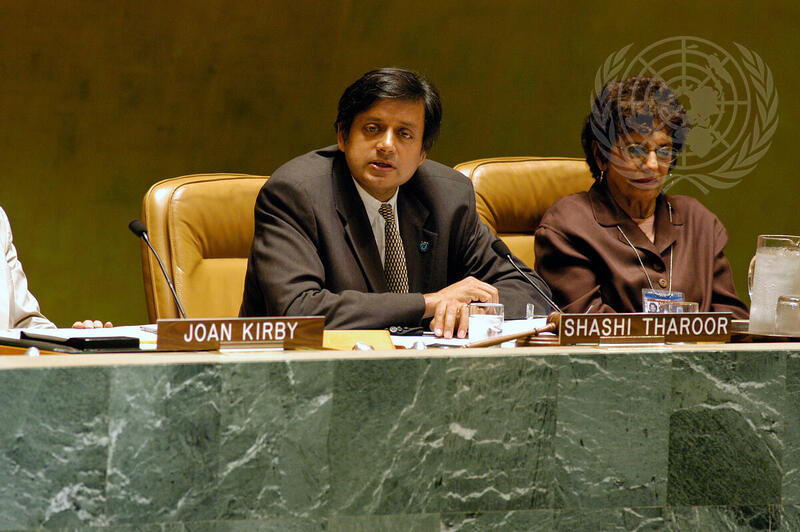
This transformation is not abrupt. Tharoor, who once warned the Congress against “Hindutva-lite” becoming “Congress-zero”, now aligns almost seamlessly with Modi’s security discourse. As Deleuze describes, this is the becoming-fascist of liberal democracy—not a sudden rupture but a gradual, molecular process in which democratic institutions and subjects begin to function according to authoritarian logics. Even the judiciary now exhibits this tendency.
Tharoor’s post-Sindoor statements—“I won’t criticise this military operation”, “Security operations shouldn’t be politicised”, “I’m being pragmatic, not ideological”—are classic markers of this molecular shift. His political subjectivity—the internalised self produced by power—has been colonised by fascism. This is not the result of coercion; it is actively embraced, as it resolves the tension between his elite self-image and his formal opposition role. It satisfies his desire for relevance, authority, and statesmanlike gravitas.
Tharoor: A Nomadic Intellect
How does one remain a Congress MP while acting as a consistent apologist for Modi’s government? What grants Tharoor immunity within the Congress ecosystem? He exemplifies what Deleuze calls the nomadic intellect: a figure who moves freely across institutional boundaries while retaining elite privilege.
This nomadism, however, is deceptive. Rather than disrupting power, it serves the sedentary state by lending it intellectual legitimacy. Unlike classical nomadic intellectuals who unsettled authority, contemporary figures like Tharoor are captured by the state apparatus. While he claims to transcend party politics, his actions repeatedly align with state power. His leadership of international delegations transforms him from a critic of Hindutva into its global spokesperson.
Majoritarian nationalism thus successfully incorporates dissent into its operational logic. Tharoor’s mobility is performative: he shifts roles but not class position, changes language but not allegiance, appears flexible while remaining fully captured.
The Plane of Immanence and Political Subjectivity
On the plane of immanence of bourgeois politics, secularism and Hindutva, liberalism and authoritarianism, are not opposites but differential expressions of the same capitalist-state machine. Tharoor’s elite liberalism and Modi’s populist authoritarianism are two poles of a single assemblage of power.
In classical liberal democracy, opposition parties offered alternative political futures. Today, they function as managed dissent—criticising power in ways that ultimately reinforce it. Opposition no longer challenges the state; it legitimises state action by making authoritarianism appear debated rather than imposed.
This explains how Tharoor can condemn communalism at home while defending military aggression abroad. His dissent generates the appearance of debate while leaving outcomes unchanged. The system requires both a liberal face and an iron fist. Congress and the BJP may differ rhetorically, but they converge on core commitments: neoliberal economics, national security doctrine, elite privilege.
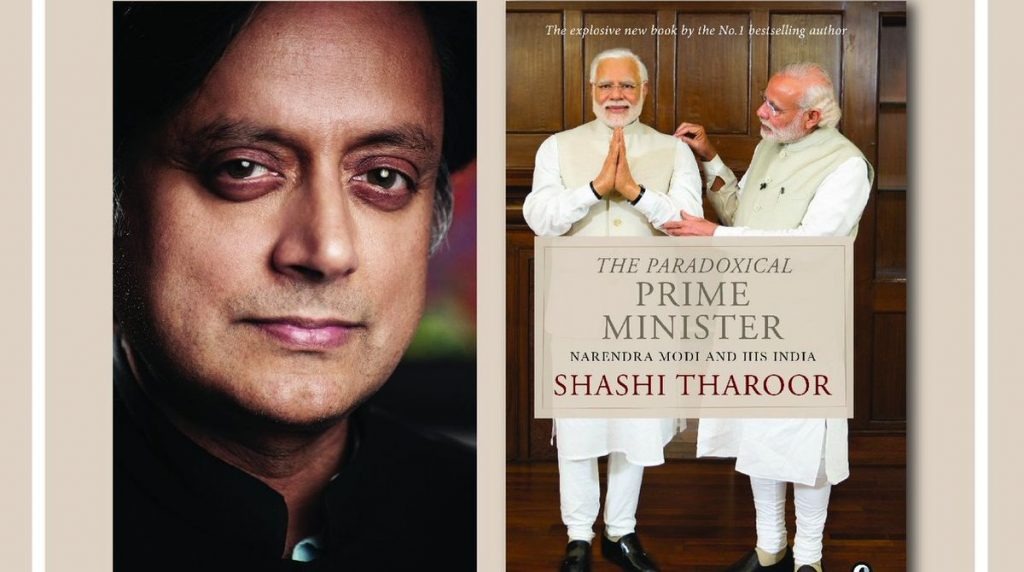
Tharoor’s critiques of Modi’s cultural politics pose no threat to the regime; they help sustain the fiction of a “vibrant opposition” even as authoritarianism deepens. As a cosmopolitan elite, he can oppose cultural Hindutva while endorsing state militarism because both serve the same capitalist-security order.
The imperial logic binding secular liberalism and Hindu nationalism is state supremacy, bourgeois nationalism, elite governance, and international legitimacy. Both accept state violence when deemed “necessary”, prioritise order over justice, and marginalise subaltern voices. The structure remains constant; only its surface expressions shift.
Becoming Modi and the Logic of Micro-Fascism
“Becoming” explains how identities mutate through incremental shifts rather than dramatic conversions. Becoming Modi is not about opposition figures joining the BJP; it describes a deeper structural absorption of Modi’s security-first psyche by liberal opposition itself.
This includes hesitation to criticise military operations, acceptance of national security as a trump card, preference for administration over politics, and unquestioned adoption of terrorism discourse. This is micro-fascism: not the spectacle of dictatorship, but the everyday normalisation of authoritarian logic.
Consider the statements:
- “National interest comes before party interest”
- “Criticism during operations helps terrorists”
- “Security issues shouldn’t be politicised”
- “Responsible opposition supports the state abroad”
Individually, none appears overtly fascist. Collectively, they transform political subjectivity. These positions are presented as maturity and responsibility, but they mark the internalisation of authoritarian rationality. The shift from politician to “statesman” is precisely the process of becoming fascist.
The danger of figures like Tharoor lies not in overt authoritarianism, but in their ability to make authoritarianism appear reasonable, measured, and sophisticated.
A perfect Subject of Control Society
The Tharoor phenomenon exposes the exhaustion of liberal democracy as a viable political form. His contradictions are not moral failures but symptoms of a system in which the boundary between democratic opposition and authoritarian governance has collapsed.
Tharoor is not a hypocrite; he is the perfect subject of the control society—adaptable, eloquent, and ultimately servile to power. His trajectory from critic to apologist reveals the bankruptcy of liberal opposition in an era where democracy and authoritarianism function as competing management styles of neoliberal capital.
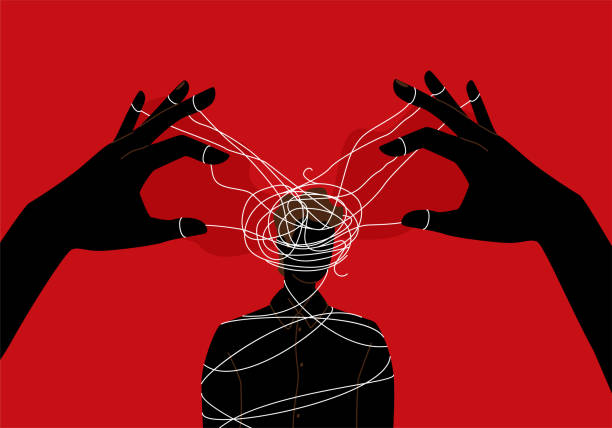
Deleuze’s warning is unmistakable: the task is not to rescue liberal democracy, but to dismantle its machinery and construct political forms that escape the double capture of state and capital.
Tharoor’s rhizomatic contradictions are a signpost: the old political maps are obsolete. Real resistance must emerge from outside institutional circuits—from movements that refuse absorption. The 2020–21 farmers’ movement exemplified this: decentralised, rhizomatic, and resistant to co-option. It sought victory, not negotiation.
The task ahead is not reform, but rupture—to build forces the state cannot capture.