Ecology Is For The People (Part 02)


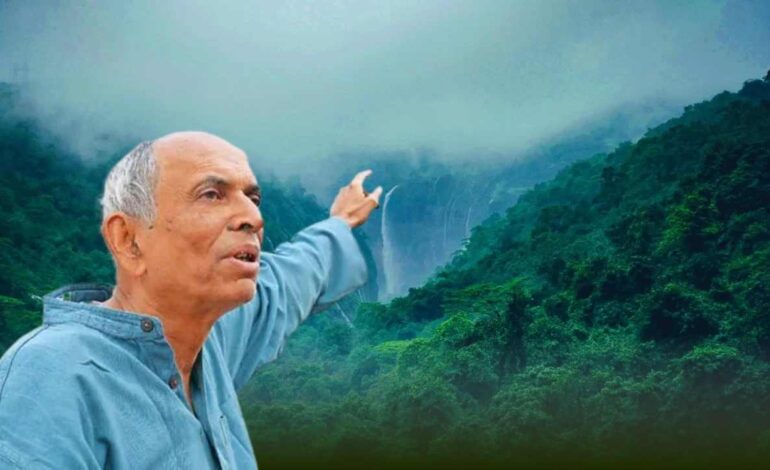
Madhav Gadgil’s message shall live forever, even as his passing leaves a silence that words struggle to fill. With profound sorrow, we mark the loss of one of India’s most luminous ecologists and environmental thinkers – someone who saw science not as an abstract pursuit but as a moral responsibility. Gadgil believed that ecology belonged to the people, that the protection of nature could never be separated from the lives it nourishes, a belief he articulated with rare clarity and compassion in his writings and public life, most memorably in his essay “Ecology is for the People.”
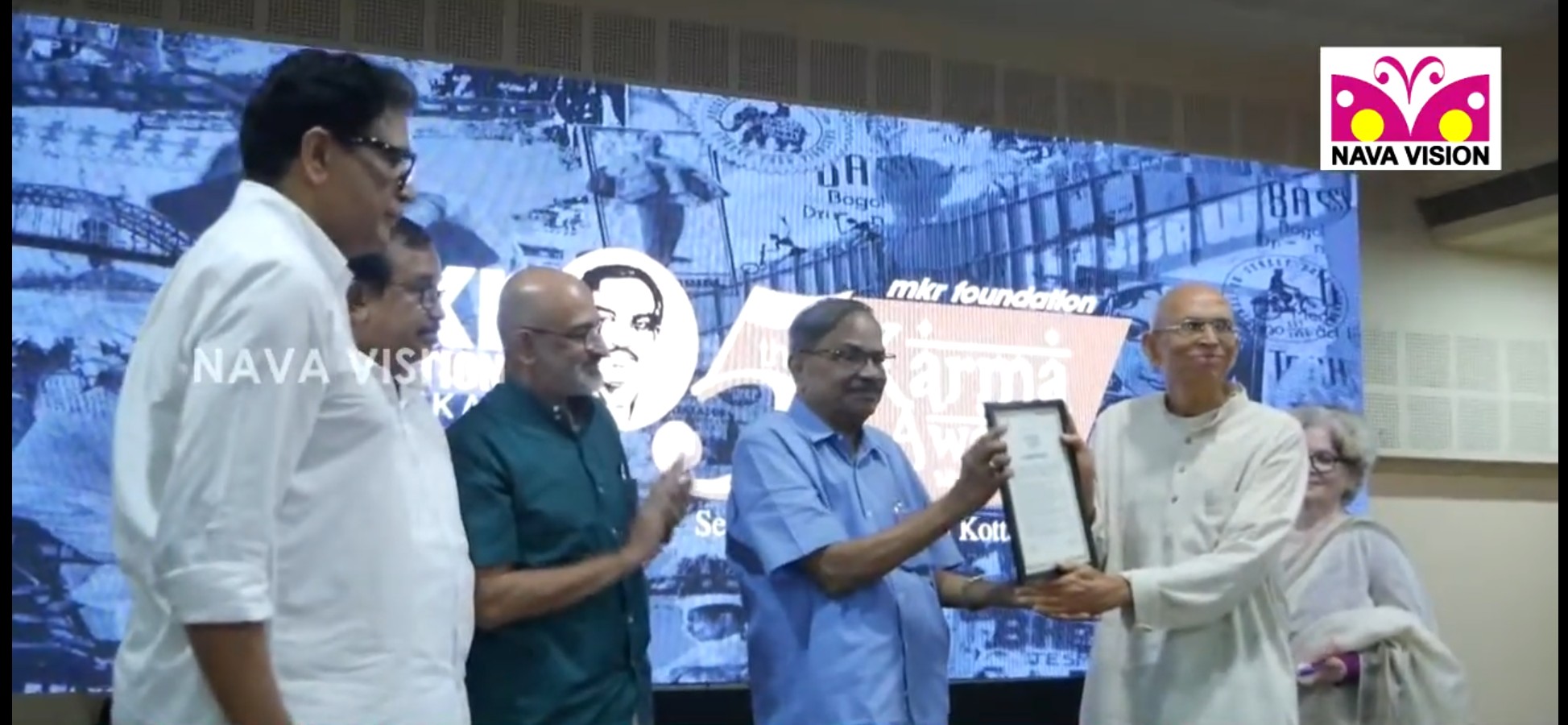
The AIDEM is republishing a speech that carries new depth and urgency: Madhav Gadgil’s address delivered on 4 September 2019 at the ‘Karma Award’ ceremony in Kottakkal, Kerala, where he spoke eloquently about ecology, community stewardship, and the inseparable bond between people and their environment.
The following is the second and final part of the edited and condensed version of the Karma Award Lecture, delivered in Kottakkal, Malappuram on September 04 2019.
12. Guardians of nature
As a seasoned bureaucrat once told me, what we need is not more teeth but more honest jaws. So what is needed is not more laws or more stringent laws, but proper implementation of the many existing, though currently sabotaged, constitutional and legal provisions to protect the environment and engage people in the development processes that are a result of sensitivity to their needs in our well-entrenched democracy. Indeed, the world over environmental protection has always been the result of motivation of people or pressure from them, never has there been such initiatives from the rich and the powerful.
Moving ahead through forest rights
Thus, in India peafowl and nilgai roam over many parts of the country because of people’s protection, while the tigers were wiped out right inside Sariska Tiger Reserve under the supposedly firm protection of the Forest Department. While religious beliefs have played a role in protecting species, as in the case of Mahua, sacred to tribal communities of central India, such species might often have been chosen in the first place because of their economic value or their ecosystem function. Mahua, still preserved in huge numbers, and an important source of sugary flower petals and an oil seed, was decimated when the British took over large tracts of earlier community-controlled forests and justified the take-over as safeguarding the forests against destructive practices of shifting cultivation. Tribals then retorted that now the British were clear-felling absolutely all tree growth, including the huge Mahua trees always protected in the course of their shifting cultivation.
Folk conservation practices not only focused on specific species but also entire habitat patches in the form of sacred groves or pools or river stretches. The only remnants of original primeval evergreen forest on Kerala’s thickly populated coastal tracts are to be found in Sarpakavus or sacred groves dedicated to serpent worship. A species of flowering plant, entirely new to science, Kunstleria keralensis, was discovered in one such sacred grove in Kollam district of Kerala near Kodumon. What is even more remarkable and heartening is that sacred groves of very substantial size are now being newly set up in the Community Forest Rights forests of Eastern Maharashtra.
The Scheduled Tribes and Other Traditional Forest Dwellers (Right over the Forests) Act of 2006 (TFRA) is the result of a long struggle to undo historical injustices to the tribals and other forest dwellers of the country. TFRA, whose implementation was initiated on 1 January 2008, presents a major opportunity and a great challenge, not only for conservation, but also for sustainable use and regeneration of the country’s forest as well as domesticated biodiversity.
In its preamble, the Act declares that the recognised rights of the forest-dwelling scheduled tribes and other traditional forest dwellers include the responsibilities and authority for sustainable use, conservation of biodiversity and maintenance of ecological balance, thereby strengthening the conservation regime of the forests while ensuring livelihood and food security of the forest-dwelling scheduled tribes, and other traditional forest dwellers. The rights granted under TFRA include secure individual or community tenure, or both, on all forest lands, including reserved forests, protected forests and protected areas such as Sanctuaries and National Parks to which the community had traditional access. The community rights are of two kinds, firstly for community facilities such as hospitals or Anganwadis and, secondly, and most significantly as Community Forest Resources (CFR) for management of non-timber forest resources. These CFRs are defined as customary common forest land within the traditional or customary boundaries of the village or seasonal use of landscape in case of pastoral communities, including reserved forests, protected forests and protected areas to which the community had traditional access.
On such land, they will enjoy:
- Right of ownership, access to collect, use or dispose of minor forest produce that have been traditionally collected within or outside village boundaries; TFRA defines MFPs as all non-timber forest produce of plant origin including bamboo, brushwood, stumps, cane, tussar, cocoons, honey, wax, lac, tendu leaves, medicinal plants and herbs, roots, tubers and the like;
- Other community rights of uses or entitlements such as fish and other products of water bodies, grazing (both settled and transhumance) and traditional seasonal resource access of nomadic or pastoralist communities
- Right to protect, regenerate or conserve or manage any community resource that they have been traditionally protecting and conserving for sustainable use
- Right of access to biodiversity and community right to intellectual property and traditional knowledge related to biodiversity and cultural diversity
Any other traditional right customarily enjoyed by the forest-dwelling Scheduled Tribes, and other traditional forest dwellers as the case may be, but excluding the traditional right of hunting or trapping or extracting any part of the body of any species of wild animal.
Furthermore, the holders of any forest rights, the gram sabha and the village-level institutions in areas where there are holders of any forest right, are empowered to:
- Protect the wildlife, forest and biodiversity;
- Ensure that adjoining catchment areas, water sources and other ecological sensitive areas are adequately protected;
- Ensure that the habitat of forest-dwelling STs and other traditional forest dwellers is preserved from any form of destructive practices affecting their cultural and natural heritage;
- Ensure that the decisions taken in the gram sabha to regulate access to community forest resources and stop any activity that adversely affects the wild animals, forest and the biodiversity are complied with.
The TFRA thus very specifically empowers the gram sabha and village-level institutions, an important step in the direction of direct, participative democracy. It confers on the forest dwellers the responsibilities and authority for sustainable use, conservation of biodiversity and maintenance of ecological balance. The WGEEP had urged that the community forest resource provision should be widely implemented throughout the Western Ghats tracks which harbours large populations of tribal and other traditional forest dwellers. However, the vested interests such as mining pitted against implementation of community forest resource rights are very strong and there has been little progress on the Western Ghats. However, there has been better progress in the Eastern Maharashtra districts. Over 1300 CFR lands amounting to over 3 lakh hectares have been granted in Gadchiroli district and the experience has been very positive.
As a notable case, one may mention here the case of Pachgaon from Chandrapur district. Pachgaon now has a Community Forest Resource area of 1000 hectares. The conferment of these rights activated the citizens of Pachgaon who decided to work out a whole series of community level regulations not just in terms of management of Community Forest Resources, but conduct of civil life in their community. The gram sabha resolved that all must contribute to the formulation of these regulations, and so each household was asked to offer 5 regulations to kick off the process. This generated a list of some 500 potential regulations, naturally with a lot of overlap. So, a committee appointed by the gram sabha undertook the editorial job and produced a list of about 150 proposals. These were debated over two days of full meeting of gram sabha, leading to the finalisation of a list of 115 regulations that were adopted by consensus. The entire community was thus party to the decisions arrived at and has now taken to their implementation wholeheartedly.
Remarkably enough the regulations include setting apart an area of 34 hectares, amounting to 3.4% of the Community Forest Resource area as a strictly protected nature reserve, or in the idiom appropriate to their culture as a Pen Geda or sacred grove. This is an area along the crest-line of the hillock within the Community Forest Resource area, with the best-preserved natural forest, rich in wildlife and the source of their perennial streams. It may be noted that this is close to the proportion of the total forest area of the country set aside as Wild Life Sanctuaries and National Parks.
Other interesting regulations agreed upon include banning smoking as well as consumption of alcoholic drinks in the village. It so happens that tendu is a major produce from their Community Forest Resource area; these leaves are used for bidi-making. The harvest of tendu leaves entails extensive lopping and setting of forest fires. So the Pachgaon community has decided to forego this income and let the tendu tree profusely bear the highly nutritious tendu fruit. The villagers are now enjoying eating the abundant fruit after a gap of over 20 years and letting the birds enjoy them too.
In 2015 Pachgaon gram sabha’s bamboo sales fetched it Rs 60 lakh . Out of this, they paid their own citizens wages at rates three times what the contractors paid them, and were left with a net income of Rs 35 lakhs after taxes and other incidental expenses. They have carefully deployed these funds towards a series of village and forest development activities that now generate year-long employment within the village itself. Prior to these developments a large fraction of adults used to migrate for 8 months of the year to distant destinations mostly in Gujarat. This out-migration has now stopped and they have much more satisfactory employment in their own village. Since their own gram sabha is employing them, the wages are paid promptly. Most importantly, the people have gained greatly in self-respect, a precious acquisition for any human being and the ownership of Community Forest Resources by gram sabhas is conferring such self-respect on these people.
13. Water resources
The disasters of 2018 and 2019 have much to do with water, the most vital of resources for all of life. The WGEEP had pointed out in 2011 that the current project-oriented, demand–supply based ad-hoc approach to water resource planning and management leaves much to be desired and that the time is ripe for a paradigm shift in the approach to river basin-level management of water resources, with water being considered an integral part of the natural and the human ecosystem. The panel recommended several important measures that should be adopted in this regard. These included:
- Develop local self- government level decentralised water management plans for the next 20 years; these should incorporate appropriate watershed measures including afforestation, eco-restoration of catchments, rainwater recharging and harvesting, storm water drainage, water auditing, recycling and reuse. These local level water management plans should be integrated into basin level management plans.
- Reschedule reservoir operations in dammed rivers and regulate flows in rivers to improve downstream flows and also to act as a conflict resolution strategy. These should be implemented with an effective public monitoring system in place.
- Initiate participatory sand and stone quarry auditing and put strict regulations in place, so as to improve the water retention capacity in the rivers.
- Initiate environment flow assessments involving social movements for river protection; with research institutions and NGOs working with communities putting in place indicators for environmental flow assessment.
None of these recommendations of the panel were accepted by the government machinery that does not want to accept any accountability and relinquish its stranglehold on management of the natural resources of the country. Such undemocratic functioning is clearly in violation of our Constitution and all its provisions for democratic devolution. Fortunately, this does not go unchallenged in our open society and there are many voluntary efforts on the part of the civil society to exercise their constitutional rights to monitor and engage in the management of natural resources.
A shining example of this is the RRC that has been actively monitoring the flows in Chalakudy, one of Kerala’s major rivers for the past several years. Chalakudy witnessed unprecedented levels of flooding in August 2018. The RRC group, along with many concerned local citizens, including elected panchayat representatives, were monitoring the Chalakudy flows since the beginning of the monsoon of 2018. There were very heavy rains in July and the many reservoirs upstream had been completely filled up. The RRC and others had been constantly warning the authorities that this was undesirable, that there should be regulated releases so as to retain some storage space in the reservoirs. The authorities completely ignored these repeated, well-informed warnings leading to overtopping in August of dams like Poringalkuthu. Had the authorities been responsive the maximum flood level in Chalakudy would have been less by at least 2 meters and loss of property could have been reduced substantially.
Citizen Science
In its report, the WGEEP had called for participatory monitoring and planning of all natural resources, along with that of water. This is in conformity with the provisions of our 73rd and 74th Constitutional amendments, as well as the Biological Diversity Act, 2002. Regretfully, these significant measures to engage our citizens in monitoring and managing natural resources find stiff resistance from the bureaucracy and have not been translated on the ground. Kerala’s pioneering attempts to move forward in this direction through its experiment of People’s Planning Campaign also suffered heavily from non-cooperation of the bureaucracy leading to its discontinuation beyond 1996.
But voluntary efforts have persisted, notably by the RRC as narrated above, and these have provided a very worthwhile understanding of what is going on in the Chalakudy river basin. Typically, the Government did not take cognisance of the information the RRC were generating and the warnings they had provided. To my mind the lessons are clear. We must cease to depend solely on the Government to encourage any involvement of the people, though we must continue to pressurise it to move in this direction. However, in the modern era of the information communication technology revolution, people can organise themselves with little investment apart from their own time in monitoring and assessing different aspects of their own environment, something that is undoubtedly of vital interest to all people.
Kerala has so far led the country in taking science to the people through [many] efforts…It would therefore be fitting if Kerala takes a lead in developing a broad-based citizen science endeavour motivated and driven by people going down to the grass-roots.
Indeed, this is what is today being called “Citizen Science” and there are several interesting examples available. For instance, in Kerala itself, there has been an inventory of the stone quarries through a voluntary network and a proper geo-referenced computerised database has been created. This has resulted in publication of a book, Murivetta Malayazham: Keralathile Paramadakal Srishtikkunna Samoohika Paristhithika Prashnangal (“The Wounded Mountains: Social and Environmental Threats Posed by the Quarries in Kerala”) by Nabeel CKM as well as scientific papers by Dr. Sajeev.
Another inclusive and participatory effort is the India Biodiversity Portal (IBP) which has accumulated information of great value on a very large number of Indian plant and animal species, primary through the efforts of amateur nature lovers. The IBP is so far restricted to participation by English-speaking urban middle classes. However, recent development including ready availability of Unicode for all Indian languages has now rendered participation by a much greater mass of Indians more comfortable in their own languages readily possible. It is estimated that 80 crore smartphones are in use in India today, and fully 90% of users are sticking to their own languages, be it Malayalam or Telugu or Hindi. Excellent mobile-based data collection tools such as Epicollect 5 are also available and again these can be used deploying Indian languages.
Hence, a participatory citizen science with a very wide base of Indian people can now be easily visualised. Kerala has so far led the country in taking science to the people through efforts such as those of Kerala Sastra Sahitya Parishad with its involvement in the Silent Valley, Chazhiar river pollution and Vembanad Lake studies, total literacy campaign, panchayat-level resource mapping and People’s Planning campaign. It would therefore be fitting if Kerala takes a lead in developing a broad-based citizen science endeavour motivated and driven by people going down to the grass-roots.
Australian Waterwatch
Australia’s Waterwatch programme is an excellent model of Citizen Science. Waterwatch is an environmental education and awareness programme that aims to encourage and support the community to take responsibility for improving the quality of water in the catchment. It is managed by the Environment Department with funding from the Commonwealth. Monitoring water quality provides a picture of catchment health and can assist with the maintenance and rehabilitation of the waterways and catchments. Most projects focus on a particular area of a waterway that members are interested in or which is easily accessible. This ensures that local people can easily identify problems and implement solutions.
Waterwatch groups conduct biological and habitat assessments plus physical and chemical water tests to build up a picture of the health of their waterways and catchments. At the request of the citizens, the Department of Environment arranges two-day training sessions in which they are properly trained in the necessary data collection tools and methodology. Over time, Waterwatch groups can determine if the health of their waterway and catchment are improving, declining or being maintained. Waterwatch groups collect data using nationally adopted protocols for nine parameters: water insects, dissolved oxygen, temperature, pH, conductivity, turbidity, reactive phosphorus, nitrogen, riparian habitat assessment. The data is recorded using nationally agreed units and national site code systems and then entered into a standard national Waterwatch database. The data can then be pooled, analysed and interpreted for specific catchments or larger regions. This system enables reports to be produced for water management authorities to assist in natural resource management. Kerala can go further and develop a broader participatory Environment Watch.
14. Digging the earth cooperatively
India’s economic growth involves both a healthy component of efficiently managed enterprises without having excessively negative impacts on the environment and social fabric, as well as enterprises that yield very high level of profits, while employing low levels of technological inputs and relying heavily on corruption and coercion, such as mineral and sand mining and quarrying. While India must continue to develop modern technology-based industries and services, it is clear that these cannot generate employment on the massive scale required. It is therefore imperative that this modern sector minimise its adverse impacts on the labour-intensive, natural resource-based occupations and livelihoods and nurture a symbiotic relationship with this largely unorganised sector. This would be best accomplished through organising the unorganised in cooperative enterprises accountable to their communities. Extraction of widespread, readily available resources like sand and stone could be an excellent basis for such cooperative enterprises. This offers a great opportunity for India to develop enterprises that will nurture the nation’s human resources and move away from a violence-torn society towards a cooperative commonwealth.
Doubts may be expressed as to whether community-based organisations are capable of handling such a responsibility. However, D N Bhargava, one of the country’s most respected mining engineers and former Director-General of the Indian Bureau of Mines assures us that there need be no such misgivings. In a letter published in Mining Engineers’ Journal on 19 April 2016 he opined:
It is unfortunate that the Adivasis have experienced environmental degradation due to mining, particularly the decrease in availability of water. Naturally therefore they have stood up against mining. This should not however cause any concern as the mineral resource would remain in the ground for mining in future as and when the local community finds in it the potential of transforming their quality of life. In my opinion, this could be possible if concerned authorities consider a people-centric approach, give up the idea of granting mining rights for major mining projects and instead promote the idea of granting mining rights to the local community. The Government as a facilitator may provide them expert technical and managerial support and enable the community to get engaged in labour-intensive mining. Such a project would not require much capital investment. There is no need for investing in drilling and blasting; it could be out-sourced to contractors. Also, transport could be arranged on contract by owner-driven trucks. The community will only spend on the purchase of crow-bars, pick-axes, hammers and tagaries. Marketing would also not be any problem as demand for iron-ore will only grow further. I consider that it is much easier to control environmental degradation in case of labour-intensive small-scale mining.
Bhargava, who now stays in Mangaluru in coastal Karnataka, has expressed his willingness to help build technical capacity of organisations that come forward to take up the challenge of organising mining and quarrying as community-based cooperative enterprises.
In fact, as early as the 1990s, people of Mendha (Lekha) in Gadchiroli district of Maharashtra, the first village in India to be granted community forest resource rights in 2009, had initiated management of the stone quarry in their community or nistar land in a cooperative fashion by the women’s self-help group. The manual operation of this quarry with stone mettle as the end-product had generated substantial economic returns and employment till the quarry was closed a few years ago as the stone resource was nearing exhaustion. There has, however, been an interesting spin-off. Since the transport by hired tractors ate substantially into the profits, the self-help group purchased a tractor 10 years ago with a bank loan, fully clearing the loan five years ago. Today hiring out this tractor is generating significant income for the self-help group.
Kudumbashree
In Kerala, the responsibility for running stone quarries could be handled very competently by the Kudumbashree programme that is accountable to the community instead of a cooperative society that is apt to be captured by a small coterie of politicians. The Kudumbashree experiment, initiated in 2004, has successfully organised cooperative farming over 1 lakh acres of what used to be fallow lands. It has not only enhanced earnings by these poor women, but also contributed to the food security of their families. From an environmental perspective it has had the very positive impact of substantially reducing the use of chemical fertilizers. Above all it has bestowed on these women, what Dr. B R Ambedkar considers as a human being’s most precious asset: a sense of dignity and self-respect.
15. Western Ghats Ecology Authority
Many divergent views were put forth on the constitution and functioning of the Western Ghats Ecology Authority during the deliberations of the WGEEP and no clear consensus emerged. However, there was unanimity that the authority should be open, transparent and participative, and accountable to people. It should, for instance, immediately upload all its proceedings on a website in English as well as the various state languages in properly searchable form and not wait for RTI enquiries to share any information. In its functioning it should follow a Greenhouse rather than a Blueprint approach, providing broad guidelines and creating a supportive environment of a greenhouse for grassroots creativity to flourish, instead of rigidly specifying through a blueprint of what should or should not be done across the entire Western Ghats region with its tremendous diversity of ecological, social, economic and political settings.
16. Towards direct democracy
The world over the experience has been that it is people’s pressure that has resulted in protection of the environment, often overcoming resistance by a state aligned with the interests of the rich and powerful. Naturally, the environment has been protected best in countries where people’s voices are heard, where democracy is strong and decision-making powers have been devolved to lower levels of government and as in the case of Switzerland, all the way to the people. As a corollary, the environment had suffered greater degradation under erstwhile communist regimes of Eastern Europe, primarily because those at the grass-roots who smarted under environmental degradation had little opportunity to make their voices heard. I narrate below some of these international experiences.
Japan
In Japan, people’s protests against their sufferings from the Minamata disease was a major factor in democratising the country in the post-World War II period and in the consequent enactment and enforcement of more strict pollution control legislation. This disease was first discovered in Minamata city in Kumamoto prefecture, Japan, in 1956. It was caused by the release of methylmercury in the industrial wastewater from the Chisso Corporation‘s chemical factory, which continued from 1932 to 1968. This highly toxic chemical bioaccumulated and biomagnified in shellfish and fish in Minamata Bay and the Shiranui Sea, which, when eaten by the local population, resulted in mercury poisoning. While cat, dog, pig, and human deaths continued for 36 years, the government and company did little to prevent the pollution. However, the pollution control legislation that this resistance prompted in the 1960s had a very interesting fallout. This legislation meant that the automobile industry too had to ensure that automobile exhausts were cleaned up. In the 1970s, petroleum prices suddenly went up resulting in a rise in global demand for fuel efficient cars. It turned out that it was the Japanese cars that had become the most fuel efficient on the world market because of the pressure to control automobile exhaust pollution. In consequence, the Japanese automobile companies captured a large share of the global market. Thus, in the long run, the Japanese economy too benefited from people’s pressure for a clean environment.
Germany
Today, the pro-environment Green Party is an important political player in Germany. It gained people’s support through its agitation against radioactive pollution from nuclear power production, and its influence has led to the Germans being very active in the deployment of solar and wind energy and cutting down on their greenhouse gas emissions in order to check global warming. But going beyond that, it has ensured that Germany now has strict pollution control laws and the German industry obeys them. This has had may salutary effects such as the cleaning up of the once highly polluted Rhine river.
Switzerland
Switzerland is a hilly country like the Western Ghats region and is admired today for its extensive green cover. But its forest cover had been reduced to a mere 4% by 1850. As on the Western Ghats today, this triggered a series of devastating landslides, leading to a public awakening, a turn-around from the then prevailing pattern of exploitative development and a restoration of tree cover. Notably, this forest regeneration has all been managed by local communities – not by any government department. It is the Swiss cantons, equivalent to our panchayats or nagar palikas, that own and meticulously maintain their forest wealth. Notably, today Switzerland comes closest to fully operationalising direct democracy. All the major decisions at their canton level are made not by elected representatives, but through a vote of all adult members of the canton every few months.
17. Positive incentives
Costa Rica
In countries like India where the rule of law is weak and corruption rampant, and negative regulations are often perverted into opportunities for corrupt gains, we need to shift to positive incentives. In fact, the WGEEP report had mentioned several such schemes that would provide positive incentives and had called for their implementation. One possible system of positive incentives is Payments for Environmental Services (PES). These link those who value a given service with those who can provide it. The best- known example comes from Costa Rica. In this system, landowners receive direct payments for the ecological services which their lands produce when they adopt land uses and forest management techniques that do not have negative impacts on the environment and which maintain people’s life quality.
Costa Rica’s Forest Law recognises four environmental services provided by forest ecosystems: (i) mitigation of Green House Gas emissions; (ii) hydrological services, including provision of water for human consumption, irrigation, and energy production; (iii) biodiversity conservation; and (iv) provision of scenic beauty for recreation and ecotourism. Since 1997, nearly one million hectares of forest in Costa Rica have been part of these PES schemes at one time or another. Meanwhile, forest cover has returned to over 50 percent of the country’s land area, from a low of just over 20 percent in the 1980s.
Australia carbon sequestration
Australia recognises that managed agricultural soils can sequester large volumes of atmospheric carbon dioxide, significantly improving soil water-holding capacity, nutrient status and agricultural productivity. Under the Australian Soil Carbon Accreditation Scheme (ASCAS), carbon sequestration is measured within Defined Sequestration Areas (DSAs) located on regeneratively managed cropping and grazing lands. Soil Carbon Incentive Payments (SCIPs) are paid annually and retrospectively for validated soil carbon increases above initial baseline levels determined within each DSA. Receipt of SCIPs is similar to being paid ‘on delivery’ for livestock or grain, with the bonus being that sequestered carbon remains in the soil, conferring production and natural resource management benefits.
18. Way ahead
The catastrophes that Kerala, God’s own country, has faced in two successive years pose before us serious challenges. One can only hope that these challenges are turned into opportunities to make a shift on a permanent basis away from the current paradigm of imposing both development and conservation from above and translate on the ground what our democratic constitution demands:
- Conservation and development should go hand in hand
- Benefits of development should percolate to all segments of society
- Local communities should guide the course of development
- Conservation must not imply excluding people
This requires that both the state and the people must now adopt new ways of functioning.
State action
As Justice A K Jayashankaran Nambiar has so eloquently pleaded, the state must now begin to keep public trust. To demonstrate this, it should take the following steps:
- Immediately act to revive the spirit of the days of people’s planning campaign of 1996 and pass on to all the Western Ghats region panchayats, nagar palikas and mahanagar palikas KSSP’s Malayalam translation of the WGEEP report, request them to study it, examine the recommendations therein, and then proceed to prepare their own local body development reports embodying what they want on the lines of panchayat development reports of 1996.
- It must empower local bodies, i.e. gram, taluk and zilla panchayats and nagar palikas and mahanagar palikas to take decisions on environmental as well as development issues affecting their own people in their own specific localities. A good way to begin would be to ensure that the President of India signs the “Plachimada Coca Cola Victims Relief and Compensation Claims Special Tribunal Bill 2011” and the people of Plachimada receive due compensation. The government must assure the people of Kerala that it will abide by the Kerala High Court verdict that people at the grassroots level do have the authority to decide on the course of development in their own locality
- Strictly enforce environmental laws such as Air and Water Acts to control pollution.
- Facilitate, not suppress freedom of expression and assembly of people drawing attention to issues of environmental degradation.
- Put in place Biodiversity Management Committees (BMC) in all local bodies, fully empowered under the Biological Diversity Act, 2002, to document status of local ecosystems and biodiversity resources, regulate use of local biodiversity resources, and to charge Collection Fees. Additionally, they should receive grants as conservation service charges for continued protection of biodiversity resources, for instance in the form of sacred groves.
- Initiate registration of crop cultivars as called for by Protection of Plant Varieties and Farmers’ Rights Act, 2001, and give grants to panchayats to build capacity for in situ conservation of crop genetic resources.
- Promote switchover to organic agriculture through payment of grants as conservation service charges for enhancing organic content of soils on the model of the Australian scheme.
- Implement fully the Forest Rights Act.
- Carry out a radical reform of Environmental Clearance process through [a] assigning preparation of Environmental Impact Analysis (EIA) statements to a neutral competent body that does not depend on payment by project proponents, [b] making mandatory involvement of local BMCs in the process of EIA preparation, [c] making mandatory taking on board all information submitted and suggestions made during Public Hearings, [d] making mandatory periodic environmental clearance requirement, preferably every five years, [e] making mandatory involvement of BMCs in the process of monitoring of implementation of conditions laid down while granting Environmental Clearances, [f] making mandatory preparation of regional Cumulative Environmental Impact Analyses
- Enhance the scope of Regional Development Plans to include key environmental concerns and make mandatory involvement of BMCs.
- Promote full access to all pertinent information, for instance, through freely making available the currently suppressed Zoning Atlas for Siting of Industries (ZASI).
- Take action on organising an Indian Biodiversity Information System (IBIS) in line with the proposals before the National Biodiversity Authority since 2004.
Organise a public transparent, participatory database on Indian environment by drawing on student Environmental Education projects as recommended by Curriculum Framework Review, 2005 of the National Council for Educational Research and Training, on People’s Biodiversity Registers that BMCs are mandated to maintain, and on Environmental Status Reports that ward sabhas should prepare in accordance with provisions of 73rd and 74th Constitutional Amendments.
Citizen Initiatives
We must and should hope and pressurise the state to keep public trust and act the way it ought to. However, it would be unwise to let it rest there. Democracy is not merely voting once in five years; it is the active involvement of us citizens in governing the country at all levels, most importantly in our gram sabhas and ward sabhas. We must insist that the Kerala High Court ruling that local bodies have the authority to decide on the course of development in their own localities should be made genuinely operational and should empower all the panchayats and nagar palikas throughout the country. We must ourselves organise an Environment Watch and develop an open, participatory database on the lines sketched above. We must take full advantage of powers and responsibilities conferred on citizens under provisions such as 73rd and 74th amendments to the Constitution and the Biological Diversity Act 2002. We should assert that conservation prescriptions should not be merely regulatory, but include positive incentives as conservation service charges. We must hand over essential but environmentally damaging economic activities like quarries to agencies like Kudumbashree groups accountable to local communities. We, the sovereign people, are the real rulers of India and must engage ourselves more actively in the governance of the country and lead it on to a path of people-friendly and nature-friendly development.
Read Part One Here.