

Coastal Voices Turn the Tide: How High-Tide Flooding Became a Recognised Disaster in Kerala


On January 30, 2026, the Government of Kerala issued G.O.(Ms) No.5/2026/DMD, declaring Coastal High-Tide Flooding/Sea Incursion a State-Specific Disaster. For thousands of families along Ernakulam’s coast, this was more than a bureaucratic notification—it was the culmination of years of struggle, mapping, testimony, and collective advocacy.
The order means that damages caused by waves intruding beyond the legally defined High Tide Line (HTL) are now eligible for relief assistance under the State Disaster Response Fund (SDRF). For the first time, the everyday flooding that corrodes furniture, damages boats, ruins crops, and disrupts livelihoods has been recognized as a disaster in its own right.
This achievement did not emerge from government offices alone. It was the result of collective action across multiple tiers of governance and a field action project that brought together communities, local governments, civil society organisations, bureaucrats, legislators, and academia—including the Tata Institute of Social Sciences (TISS), Mumbai; the M.S. Swaminathan Research Foundation; and Equinoct. Their combined efforts transformed lived experiences into policy impact.
Historical Roots of Vulnerability
Kerala’s coastal belt has long been environmentally dynamic, exposed to monsoon variability, tidal fluctuations, siltation cycles, and saline intrusion. Historical records show that shifts in the Southwest monsoon, episodic storm surges, and fluctuations in estuarine hydrology have periodically reshaped coastal livelihoods.
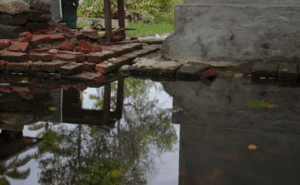
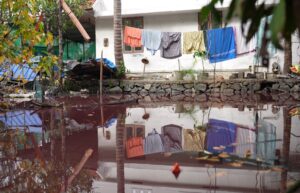
High-tide flooding, once dismissed as a natural phenomenon, has become a recurring crisis. Seawater surges beyond the legally defined High Tide Line (HTL), spilling into residential areas through rivers, canals, and backwaters. For families in low-lying areas, this means waterlogged homes, damaged belongings, ruined crops, and disrupted livelihoods.
Women were central to these coastal systems—working in coir retting, fish processing, clam collection, and Pokkali agriculture. Yet their labour remained undervalued and invisible in official narratives. With modernisation and capitalist restructuring, their ecological knowledge was sidelined.
In the twentieth century, anthropogenic practices rapidly transformed coastal ecology. Dredging deepened channels; sand mining destabilised shorelines; shrimp aquaculture destroyed mangroves; real-estate expansion reclaimed wetlands; and industrial runoff polluted estuaries. These were fundamentally capitalist interventions—driven by state–corporate interests that viewed the coast as an economic resource rather than a lived habitat.
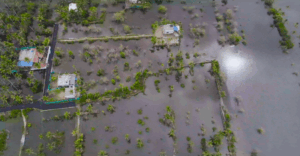
Mangroves that once buffered tidal flows were replaced by aquaculture ponds. Backwater systems that sustained artisanal livelihoods were dredged to enhance shipping. Wetlands that absorbed floodwaters were reclaimed for commercial development.
This restructuring intensified climate vulnerability long before “climate change” became part of public discourse. Historical climate variability—monsoon failures, saline ingress, tidal anomalies—interacted with these transformations to deepen precarity. Fishing and agricultural castes, confined to low-lying, hazard-prone areas, bore the brunt.
Climate vulnerability became deeply gendered, demonstrating how women experience multi-layered disadvantages shaped by gender, caste, class, spatial location, livelihood precarity, and institutional invisibility. Each flood, each instance of waterlogging, compounds these intersecting layers.
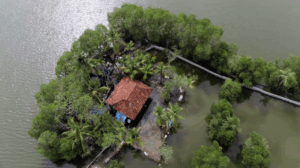
“We don’t sleep peacefully anymore,” said Mary, a fisherwoman from Chellanam. “Every high tide, we wonder if the water will enter again. We keep our children’s schoolbooks in plastic bags, ready to run.” Women internalise this uncertainty through daily routines—cleaning before school hours, lifting furniture, managing infections, and reorganising time around tidal cycles.
Indigenous Livelihoods Under Threat: Pokkali and Shrimp Systems in Crisis
High-tide flooding has destabilised indigenous livelihoods such as Pokkali farming and rotational shrimp cultivation.
Scientific studies show salinity levels in Kerala’s backwaters have risen sharply due to sea-level rise, tidal amplification, and reduced freshwater flow. In Ezhikkara, Kumbalangi, and Puthenvelikkara, canals remain saline year-round, traditional bunds have weakened, and farmland stays waterlogged for weeks.
For Pokkali farmers, the delicate tidal rhythm that once sustained cultivation has been replaced by uncontrolled flooding, pushing the system beyond its ecological threshold. What was once a source of food security and cultural identity has become a site of uncertainty.
Shrimp aquaculture, traditionally rotated with Pokkali, has also suffered. Extreme salinity, disease outbreaks, bund breaches, and erratic temperatures have devastated stocks. Ecological vulnerability has translated directly into economic instability. Global competition and price fluctuations have compounded losses, pushing small farmers into cycles of debt and trapping women-headed households in precarious microfinance arrangements.
The collapse of Pokkali and shrimp systems demonstrates that high-tide flooding is not merely an environmental hazard—it is an economic disaster.
It is within this layered vulnerability that the Field Action Project (FAP), supported by the U.S. Consulate’s Alumni Engagement Innovation Fund (AEIF), became significant.
Community Counter-Maps and Panchayat Resolutions
The project Community Resilience in Climate-Change Induced High Tide Flooding in Coastal Kerala, led by TISS Mumbai’s School of Habitat Studies in collaboration with the M.S. Swaminathan Research Foundation and Equinoct, mobilised women from the Kudumbashree network as community researchers and storytellers.
Based in the coastal panchayats of Puthenvelikkara, Kumbalanghi, and Ezhikkara, the project sought to co-create a bottom-up model of resilience through gender counter-mapping, conceptualised and operationalised by Prof. Manjula Bharathy.
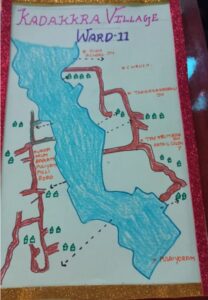
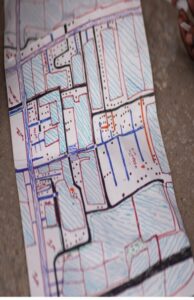
Three gender counter-maps—Community Mapping, Community Video, and Community Theatre—were developed under her leadership, anchored by Kudumbashree, one of the world’s largest women-led community organisations. These interventions challenged dominant data regimes and operationalised the AAA network (Activists, Academicians, Artists).
“I have accepted waterlogging as part of my life. But the training taught me how to convert my distressing daily experiences into valuable scientific data,” said one gender resource person.
Community mapping identified recurrent flooding zones. Seventeen Gramsabhas across Ernakulam passed resolutions declaring high-tide flooding a disaster and submitted them to the state government, backed by community testimonies and visual evidence.
“Earlier we were not seen or heard. Now we have a respected space at home and outside,” shared a participant. “It is no more the same world. It is no more the same life.”
These testimonies reflect a shift in visibility, agency, and epistemic power.
The Government Order: A Collective Victory
On January 30, 2026, the Government of Kerala formally declared Coastal High-Tide Flooding/Sea Incursion a State-Specific Disaster. The order recognized that damages to life, property, livelihoods, and infrastructure caused by waves intruding beyond the HTL fall within the definition of “disaster” under the Disaster Management Act.

This recognition was won through:
- Community documentation and mapping
- Panchayat resolutions
- Civil society mobilisation
- Academic translation of lived experience into policy language
- Gendered interventions foregrounding women as knowledge producers
“This is not just a government order,” said a fisherman from Vypin. “It is the result of our fight.”
Beyond Relief: The Road Ahead
Relief assistance will help families rebuild. However, long-term resilience requires improved coastal management, drainage infrastructure, and sustainable land-use planning.
“Relief money will help repair our homes,” said Lilly, a farmer from Ezhikkara. “But what about next year? The sea will rise again.”
Conclusion: Policy Born from Collective Struggle
The declaration of high-tide flooding as a disaster marks a landmark in Kerala’s climate governance. It demonstrates that policy can emerge from collective intervention—rooted in women’s experiences, panchayat resolutions, civil society mobilisation, and academic engagement.
The Government Order affirms that everyday flooding is not routine—it is disaster. It underscores that resilience is political, participatory, and grounded in solidarity.
This achievement stands as a testament to participatory action. When communities, local governments, civil society, and academia collaborate, they can reshape definitions of disaster—and secure justice for those living at the margins of the tide.
“We fought for this recognition,” commented locals . “Now we will fight for a safer future.”










A timely piece on how grassroots voices pushed the state to recognise high-tide flooding as a real disaster. It underlines why listening to coastal communities is essential for climate justice and effective policy in Kerala.