

Aravind Eye Care – A Gandhian Business Enterprise

The conventional wisdom about large-scale social programs—whether they originate in government ministries or corporate boardrooms, is that they begin with resources. You need capital, technology, regulatory approval, and, if you are running a private enterprise, a credible path to profit. The needs of ordinary people may nominally be the destination, but the vehicle is always money. Gandhian philosophy inverts this logic. It begins with the need itself, then works backward to invent the technology, scrape together the financing, and reimagine every assumption that made the problem seem intractable in the first place. Profit, if it comes at all, is a byproduct—evidence that you have done something right, not the reason you set out.
There is no cleaner example of this inversion than the Aravind Eye Care System, headquartered in Madurai, in the South Indian state of Tamil Nadu. Aravind is, by most measures, the largest eye-care provider in the world. Its hospitals perform more cataract surgeries per year than the entire National Health Service of the United Kingdom. Its in-house manufacturing subsidiary supplies roughly twelve per cent of the global market for intraocular lenses. And yet nearly half of all the surgeries it performs are provided free of charge or at heavily subsidized rates to patients who could not otherwise afford them; while its operating-profit margin hovers around thirty-nine per cent, three times that of India’s leading for-profit hospital chains.
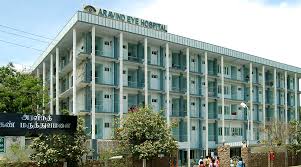
Aravind Eye Hospital, Madurai
The man who set all of this in motion was Dr. Govindappa Venkataswamy, known to almost everyone who encountered him simply as Dr. V. In 1976, when he decided to act on a lifelong conviction that blindness was not an inevitable fate for the rural poor of India, he was fifty-eight years old, recently retired from government service, and in possession of a pension that no sensible financial adviser would have called sufficient for the task he had in mind. Any management consultant, confronted with his resources and his ambitions, might have concluded that he had taken leave of his senses.
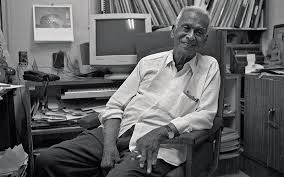
Dr. Govindappa Venkataswammy
“A free service is not enough. If the people you serve cannot access it, you have served no one.”
He began in his own home.
THE HOUSE ON THE STREET
The founding idea was breathtaking in its simplicity and its audacity: patients who could pay would pay, and patients who could not would be treated anyway, at the same standard of care, under the same roof, by the same surgeons. The paying patients would, in effect, cross-subsidize the rest. This is not a novel concept in theory, it describes the aspirational model of many public health systems—but Aravind was determined to make it work without government funding, without philanthropic dependency, and without cutting corners on quality.
What began as a handful of beds in a rented house grew, over the following decades, into a network spanning seven tertiary hospitals, seven secondary hospitals, and a hundred and seventeen remote primary eye-care centers. Today, more than twenty thousand patients pass through its facilities every single day. Between two thousand and twenty-five hundred surgeries are performed daily. Three hundred to three hundred and fifty visiting medical professionals receive training on the premises at any given time.
The question of how Aravind achieved this and why no one else had done it first- turns out to be less a story about charity than a story about engineering.
THE ASSEMBLY LINE OF SIGHT
Henry Ford’s great contribution to industrial civilization was not the automobile. It was the insight that complex manufacturing processes could be decomposed into discrete, repeatable tasks and that workers trained to perform a single task with extraordinary efficiency would outproduce generalists by an order of magnitude. A car that once took twelve hours to build now rolls off a line in under sixty minutes. The assembly line, in other words, is a machine for eliminating waste.
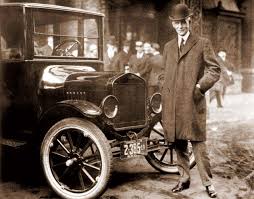
Henry Ford
Aravind’s founders asked a question that nobody in medicine had thought to ask: what if a hospital worked the same way?
The bottleneck in any surgical facility is the surgeon. Surgeons are expensive, rare, and slow to replace. In a conventional operating theater, a surgeon’s time is consumed not only by surgery but by the procedural margins around it—the minutes spent waiting while a patient is prepped, the minutes spent waiting again while a finished patient is moved out and the next one brought in. These margins, taken together, can consume more than half of a surgeon’s available hours. Aravind’s solution was almost comically straightforward: install two operating tables in every theater, with the surgical microscope mounted on a swivel between them. While the surgeon operates on one patient, the next is being prepared on the adjacent table. The moment one procedure ends, the surgeon pivots—literally—and begins the next. There is no waiting.
The effect on throughput was transformative. A surgeon who might have performed one or two procedures under conventional conditions can now complete five or six. The cost per surgery falls proportionally. And this being the question that skeptics invariably raise—the quality of outcomes has not suffered. Aravind’s complication rates are comparable to those of the British N.H.S.
The surgical staff itself is another departure from orthodoxy. The nurses and surgical assistants who manage the procedural margins—patient preparation, post-operative care, equipment handling, are recruited from surrounding villages, educated only through the tenth standard, and trained intensively in-house. They are paid modest salaries. They are also, by most accounts, exceptionally good at their jobs, because their jobs are carefully defined, relentlessly practiced, and precisely matched to their skills. The same logic that Ford applied to bolt-tightening, Aravind applied to corneal measurement.
Aravind’s complication rates are, by published measures, lower than those of the British N.H.S.
SAMBAVAN’S LESSON
None of this would matter much if the patients never arrived.
The population that Aravind was built to serve-elderly, often poor and illiterate, scattered across Tamil Nadu’s remote villages, was not going to walk into a sophisticated urban hospital on its own initiative. Blindness, in communities where every able-bodied family member works a daily-wage job, is frequently treated as an unfortunate but manageable condition. A blind grandmother does not earn money. But transporting her to a distant city, paying for her keep, and losing a day’s wages to accompany her cost money that most rural families cannot spare. The result is that people go blind from cataracts, a condition that is, in the overwhelming majority of cases, curable in under thirty minutes simply because the logistics of getting cured are beyond their means.
Aravind’s initial response was to take the hospital to the villages. Partnering with local civic organizations—Lions Clubs, Rotary chapters, community associations—it established a network of free eye camps in rural areas. Patients were examined on the spot. Those who needed glasses received them from a selection of frames broad enough to accommodate personal taste; Aravind understood early that eyeglasses are not merely medical devices but objects of self-presentation, and that patients who feel dignified in their care are more likely to return for it. Those who needed surgery received a referral.
And here is where the lesson was learned.
Of all the patients referred for free cataract surgery at the end of an eye camp, only fifteen per cent followed through. Aravind’s administrators went looking for the other eighty-five per cent. What they found, in case after case, was not reluctance or ignorance but logistical impossibility.
Thulasiraj Ravilla, the system’s longtime executive director, describes one such case: a man named Sambavan, who lived by begging in the precincts of a Madurai temple. He had come to an eye camp. He had been examined. He had been told he was a candidate for surgery that would restore his sight. He had not come to the hospital. When asked why, he said he did not have the bus fare.
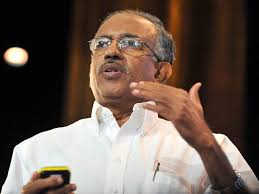
Thulasiraj Ravilla ( Aravind Executive Director)
The man was blind. He was poor. He was told, at no cost, that his blindness could be cured. He did not come because he could not afford the bus.
Aravind’s response to this information was not to conclude that such patients were beyond its reach. It was to redesign the system. At the end of every eye camp, patients identified as surgical candidates are now transported to the hospital by bus—arranged and paid for by Aravind and its partner organizations. They are housed, fed, operated on, and then returned, by bus, to the place from which they came. Every element of access that stood between Sambavan and his restored sight has been removed.
“A free service is not enough,” Ravilla says, “If the people you serve cannot access it, you have served no one.”
THE LENS FACTORY
By the late nineteen-eighties, Aravind faced a constraint that threatened to undermine everything it had built. The intraocular lens—the tiny artificial implant that replaces a cataract-clouded natural lens and restores clear vision, was manufactured almost exclusively in the West and sold at prices that reflected Western markets. A pair of lenses cost roughly a hundred dollars, or around nine thousand rupees. For a hospital performing tens of thousands of surgeries on patients who were either paying nothing or paying very little, this was an existential problem.
Aravind asked its suppliers to reduce their prices. The suppliers declined. The currency risk alone—the Indian rupee’s periodic depreciations against the dollar, made imported lenses an unpredictable expense. The hospital did what any organization with sufficient scale and sufficient desperation might do: it decided to make the lenses itself.
This decision on whether to buy or to build, in the language of management strategy is most sensibly made only after a market has been established. The risk of investing in manufacturing capacity before you know whether demand will justify it is the risk of stranding capital in idle equipment. Aravind faced no such uncertainty; it was already the largest consumer of intraocular lenses in India. The question was not whether the demand existed. It was whether the lenses could be made.
They could. Aravind’s manufacturing subsidiary, Aurolab, brought the cost of a pair of lenses down from roughly nine thousand rupees to nine hundred—a ninety per cent reduction. Today, Aurolab supplies approximately twelve per cent of the global market for intraocular lenses, exporting to more than a hundred countries. Aravind’s lens costs are not merely competitive with the products it once imported; they have transformed the economics of cataract surgery worldwide, particularly in developing nations where the imported alternatives remain prohibitive.

Aurolab
The financial arithmetic that results from all of this is startling. A cataract surgery at a leading private hospital in India costs around fifty thousand rupees. The same procedure in a developed Western country can cost the equivalent of three hundred thousand rupees or more. Aravind performs the surgery at roughly half the Indian private-sector rate and, for a substantial fraction of its patients, for nothing at all. Last year, of the seven hundred and thirty thousand surgeries Aravind performed, one hundred thousand were provided completely free of charge, two hundred and fifty thousand at subsidized rates, and the remaining three hundred and seventy thousand at roughly half the prevailing market price. The system’s EBITDA margin was thirty-nine per cent.
Of seven hundred and thirty thousand surgeries last year, one hundred thousand were free, two hundred and fifty thousand were subsidized—and the margin was thirty-nine per cent.
THE QUESTION OF THE MARKET
There is a doctrine, widely held among economists and business strategists, that competitive markets are the most reliable engine of efficiency. The argument is familiar: competition forces suppliers to reduce costs, improve quality, and pass the gains along to consumers. In health care, the argument goes, a well-functioning market should produce affordable, high-quality care.
Aravind exists as a direct challenge to this doctrine. Or, at least, to the confidence with which it is applied to health care.
India’s private medical sector operates in one of the world’s least-regulated health-care environments. Competition among private hospitals is intense. And yet the prevailing market price for a cataract surgery remains fifty thousand rupees, several times what Aravind charges while still generating three times the profit margin. The market, in this instance, has not delivered efficiency. Aravind’s hybrid model that combines social mission, operational discipline, and strategic self-sufficiency has delivered it instead.
Peter Drucker, whose thinking about organizational purpose was as clear as anyone’s in the twentieth century, argued that the goal of an enterprise is not profit but the satisfaction of its customers’ needs. Profit, he said, is the signal that you are doing this correctly. Aravind’s founders appear to have internalized this logic before they had ever read Drucker. They identified the need—vision for the poorest people in one of India’s most impoverished regions—and worked backward from it to construct an enterprise capable of meeting it. Profit followed.
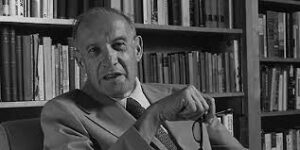 Peter Drucker
What Aravind has demonstrated is that Gandhian and market logics are not necessarily incompatible. They operate on different premises and serve different primary purposes, but where the social enterprise is well-designed, the financial outcomes can be superior to those of a purely commercial competitor. The key is that the social purpose must be primary, not decorative. The moment profit becomes the goal rather than the evidence, the incentive structure shifts, and the ingenuity that drives efficiency tends to migrate toward extraction rather than service.
A DIFFERENT KIND OF SCALE
For all of Aravind’s achievements within the hospital walls, its administrators have remained unsatisfied with the fraction of the population they are actually reaching. A study the system conducted on its own outcomes found that even after years of intensive outreach, thousands of eye camps, tens of thousands of referrals; less than seven per cent of the people who needed eye care in its catchment area were receiving it.
The response was characteristically systematic. Working with Professor Ashok Jhunjhunwala of the Indian Institute of Technology Madras, Aravind built a network of technology-enabled primary eye-care centers in remote villages, connected by live video conferencing to the main hospitals. This was, in the early two-thousands, no small technical achievement in rural Tamil Nadu, where internet connectivity was sparse and unreliable. A patient arriving at one of these satellite centers pays twenty rupees—roughly twenty-five American cents—to be examined by a locally trained technician using modern diagnostic equipment. The records are entered into an electronic system. The patient then consults, via live video link, with a doctor at the main hospital, who prescribes medications or glasses. Both are available at the center.
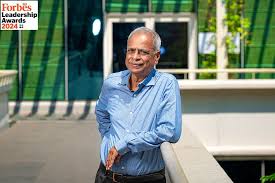 Professor Ashok Jhunjhunwala (Indian Institute of Technology, Madras)
By the end of the 2023–24 fiscal year, Aravind operated a hundred and seventeen such remote centers, covering a population of twelve million people in Tamil Nadu. The centers had collectively treated close to a million patients, facilitated fifty-four thousand surgeries, and distributed a hundred and fifteen thousand pairs of glasses. In the area covered by the network, Aravind estimates that it now reaches roughly twenty-five per cent of those in need; still short of universality, but a dramatic improvement over the seven per cent baseline that prompted the expansion.
THE LAST MAN
Gandhi, who thought seriously about the obligations of enterprise, offered what he called a talisman—a test to be applied whenever one was uncertain about a course of action. Recall, he said, the face of the poorest and most helpless person you have ever seen, and ask whether what you are about to do will serve him. If yes, proceed. If not, reconsider.
This test as, essentially, the design brief for the entire Aravind system. The organization defines its customer not as the patient who can pay but as the patient who cannot. It builds its capacity around the assumption that service will be required where income is absent, that transport will need to be arranged, that dignity must be protected along with vision, and that the definition of “free” must include everything that stands between a patient and the cure.
Sambavan, the blind beggar of Madurai, could not afford bus fare. That fact, trivial in dollar terms but devastating in human terms, was treated by Aravind not as the outer limit of its responsibility but as a problem to be engineered away. He is now, in a sense, the system’s founding principle made flesh: the last man in the socioeconomic pyramid, reimagined as the organization’s core customer.
Whether this model can be replicated in other medical specialties, in other countries, in other sectors of the economy where essential services remain beyond the reach of the poor is a question that development economists and social entrepreneurs have been wrestling with for decades. Aravind has not solved the problem of inequality. It has demonstrated, with considerable rigor and over nearly fifty years, that the problem is more tractable than the market, left to its own devices, tends to make it appear.
Dr. V died in 2006. He had, by that point, presided over the restoration of sight to millions of people who would otherwise have remained blind. The enterprise he built from a rented house in Madurai, with a pension and an idea, now employs thousands, trains hundreds of specialists annually, manufactures lenses that reach the world’s poorest countries, and generates enough surplus to fund its own growth without dependence on donors or governments.
In the language of management, this is called sustainability. In the language Gandhi preferred, it is something simpler: a man who saw another who was blind decided to do something about it. He did not wait for the market to correct itself.
“When we grow in spiritual consciousness, we identify with all that is in the world. So, there is no exploitation. It is ourselves we are helping; it is ourselves we are healing”. – Dr.G.Venkitaswamy






“An inspiring example of how compassion and Gandhian values can shape a successful and socially responsible enterprise. Truly remarkable work.”
Inspiring to read the practice of Gandhian principles in true sense and spirit.