

Five Critical Sectors at Risk in India: The Fallout of the Iran War

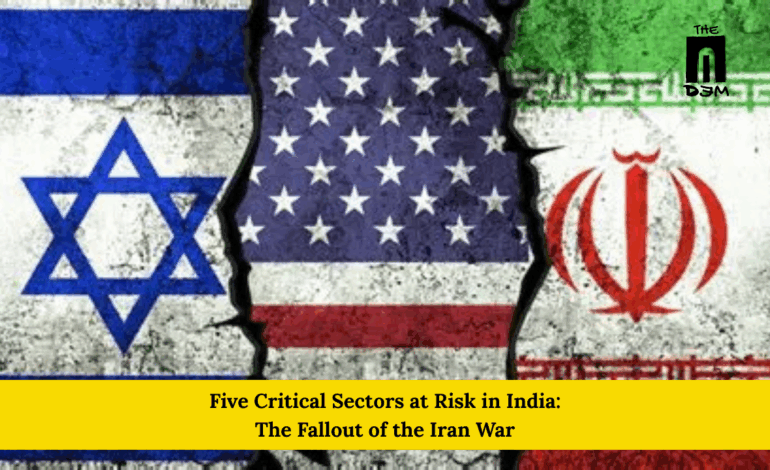
From fuel to food to jobs, the cascading impact of the US–Israel–Iran conflict is exposing deep structural vulnerabilities in India’s energy-dependent economy.
History in a Capsule: Why Energy Still Shapes Wars
WINSTON CHURCHILL famously argued that the key to energy security lay in diversified sources of supply. “Safety and certainty in oil lie in variety and variety alone,” he told Parliament in 1913. This principle likely shaped British foreign policy in West Asia.
However, given the feudal loyalties and internecine conflicts among Arab clans, the Sykes–Picot Agreement (1917) and Lord Rothschild’s advocacy of a Jewish-majority Palestine took shape.
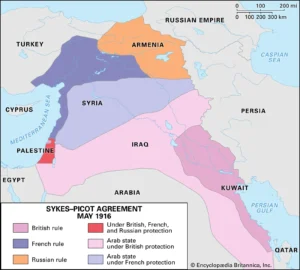
This system kept the world in a relatively stable balance for over a century—until the first US–Israel–Iran war in 2025, followed by a far more devastating conflict on February 28, 2026, which shows no signs of ending.
Western sanctions on Russia after its invasion of Ukraine in February 2022 had already introduced uncertainty into global energy supplies.
The ongoing conflict has further aggravated these vulnerabilities. Combined with erratic US tariff regimes (since struck down by the US Supreme Court) and unprecedented public debt, these developments have pushed the global economy into a downward spiral—one that could far exceed the shocks of the 2000s.
POL Derivatives: The Invisible Backbone of Modern Economies
Crude oil—and increasingly data—has emerged as one of the most strategic resources of the 21st century. Yet even data infrastructure remains dependent on energy-intensive systems powered largely by fossil fuels.
Petroleum derivatives include fuels such as propane, gasoline, kerosene, and diesel; solvents such as paint thinners and industrial chemicals; and lubricants such as motor oil, waxes, and asphalt. Petroleum-based chemicals are also the foundational feedstock for products as diverse as plastics and pharmaceuticals.
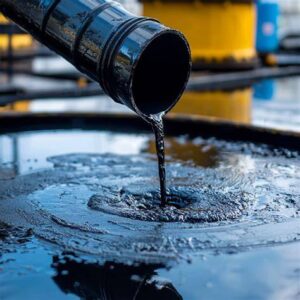
Crude petroleum exists as sweet crude (low sulphur) or sour crude (higher sulphur content), and is estimated to contain between 17,000 and 20,000 chemical compounds, a large number of which remain chemically unidentified. It may also exist as light or heavy crude, or as bitumen.
Owing to a large number of causes, petroleum and its by-products are widely present in the environment and in everyday use.
Common household or workshop hydrocarbons include gasoline, diesel, kerosene, turpentine, naphtha, white spirit, xylene, and toluene. These are used for cleaning, degreasing, paint removal, and as solvents in paints, varnishes, and adhesives.
Given its vast and irreplaceable range of applications, it is evident that renewable energy, while essential, cannot yet fully substitute hydrocarbon-based systems and their derivatives.
India’s Vulnerability: A Non-Oil Economy in a Disrupted World
For a country like India, heavily dependent on imported energy, disruptions in supply chains or maritime trade routes can have cascading effects. The ongoing US–Israel–Iran war threatens precisely such disruptions.
A sectoral analysis reveals how deeply embedded energy dependence is within India’s economic structure—particularly across employment-intensive and GDP-critical sectors.
Employment Shock: Gig Economy Faces Systemic Disruption
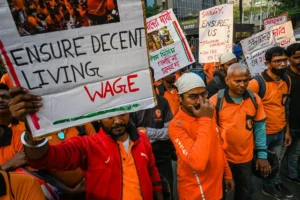
India’s gig economy is experiencing rapid growth, with an estimated 7.7 million (77 lakh) workers in 2020–21, projected to expand to 23.5 million (2.35 crore) by 2029–30.
This workforce is expected to contribute between 1.25% and 2.5% of India’s GDP by 2030, accounting for roughly 4.1% of the total workforce. A large proportion of this segment consists of low-paid freelancers operating within energy-dependent service chains.
The food delivery platform sector alone employed approximately 1.37 million workers in FY24 and is growing at a compound annual growth rate (CAGR) of 12.3%, according to estimates by the National Council of Applied Economic Research (NCAER).
NITI Aayog has similarly projected a sharp expansion in gig employment over the decade.

The tax multiplier in this segment is estimated at 0.04—meaning production worth ₹10 lakh crore yields approximately ₹40,000 crore in indirect taxes.
However, the sustainability of this ecosystem depends critically on uninterrupted availability of petroleum products (POL) and natural gas. If, for want of fuel, even 75% of this vast gig economy were to be grounded, the consequences would be severe.
Assuming an average monthly gross remuneration of ₹50,000, such a disruption could result in at least one crore unemployed workers. With an average family size of four, this translates into over four crore individuals becoming dependent on state support.
Even a basic welfare measure—such as 5 kg of dry ration per person (valued at approximately ₹3,000 per month)—would impose an additional burden of nearly ₹2 lakh crore on Central and State finances.
If governments were to provide direct economic assistance of ₹10,000 per family per month, the fiscal burden could escalate to nearly ₹10 lakh crore annually.
The secondary effects would be equally severe: defaults on EMIs, non-payment of school and college fees, delays in medical treatment, rising utility arrears, repossession by lenders, postponed social obligations, and increased law-and-order expenditure arising from economic distress.
Taken together, the gross national economic fallout from this segment alone could conservatively be estimated in the range of ₹24–30 lakh crore.
Retail: A Consumption Engine Under Threat
A study by KPMG indicates that India’s retail sector employed approximately 35 million people in 2022, though this may decline to 25 million by 2030 due to digitisation. The organised retail market is expected to reach ₹19.7 lakh crore by 2030, up from ₹11.3 lakh crore in 2024.
The broader retail ecosystem—including unorganised and online channels—is projected to exceed ₹137 lakh crore by 2030, making India one of the fastest-growing retail markets globally.
This sector depends critically on uninterrupted energy supply for logistics, warehousing, e-commerce infrastructure, and data centres. Without assured access to fuel, electricity, and natural gas, retail operations would grind to a halt.
A proportional economic impact—benchmarked conservatively against the gig economy—could result in losses of ₹8–10 lakh crore annually, excluding the additional impact of disrupted imports and exports.
Textiles: A Labour-Intensive Sector at Risk
India is among the world’s leading exporters of textiles and apparel, with the sector contributing 8.21% of total exports and holding a 3.9% share in global trade. Major export destinations include the United States and the European Union.
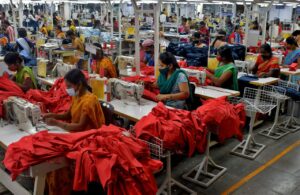
The sector provides direct employment to around 45 million people and supports over 100 million livelihoods indirectly.
However, textiles are heavily dependent on fuel for manufacturing, transportation, and storage. Any disruption in fuel availability or raw material supply chains would paralyse production and exports.
Given the scale of employment involved, the economic fallout could be enormous, running into several lakh crore annually when factoring in lost output, disrupted exports, and employment shocks.
Agriculture: The Most Systemically Exposed Sector
Nearly 42% of India’s population depends on agriculture. The sector’s vast geographical spread makes it highly vulnerable to disruptions in fuel, fertilizers, and logistics.
India relies heavily on fertilizer imports from countries such as Russia, Saudi Arabia, Morocco, Oman, and China. Recent export restrictions by key suppliers, combined with disruptions in West Asia, have severely constrained availability.
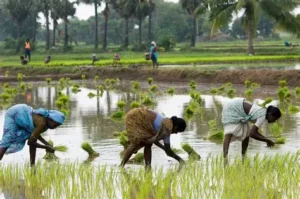
At the same time, India remains dependent on imports of edible oils, pulses, and other agricultural commodities to maintain domestic price stability.
Without fuel to transport produce, and with rising shipping and insurance costs, both domestic distribution and exports face serious risks.
Storage infrastructure remains inadequate, and most farmers lack the financial capacity to sustain prolonged holding of produce.
The likely outcome is lower yields, reduced quality of output, supply disruptions, and rising prices—translating into economic losses running into thousands of crore.
Medical Supplies: A Silent Systemic Risk
India’s pharmaceutical sector is one of the largest globally, yet it remains dependent on imports for critical inputs and medical devices.
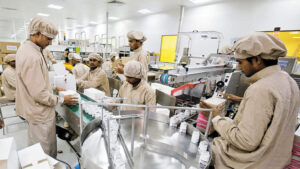
The disruption of helium supplies—essential for MRI machines—and rising logistics costs could severely impact healthcare delivery.
Transport of raw materials, manufacturing processes, and distribution networks all depend on reliable energy access. Disruptions could lead to idle capacities, delayed diagnosis, shortages of critical supplies, and increased healthcare costs.
The cumulative economic and human cost of such disruptions is difficult to quantify but is likely to run into several lakh crore annually.
A Crisis Larger Than Covid?
If the COVID-19 pandemic disrupted global economies, the ongoing Gulf conflict could prove to be an even larger systemic shock. At one level, it reflects shifting geopolitical realities; at another, it threatens to pull entire economies into a vortex of disruption.
India’s response so far appears cautious, though arguably inadequate to the scale of emerging risks. The warning signs are clear, and the economic implications are already unfolding.
In the final analysis, this conflict could shave 2–3 percentage points off India’s GDP growth in 2026–27 and beyond—if not more.
Originally published on Punjab Today News










“This piece sharply highlights how global conflicts like the Iran war can ripple through India’s economy and strategic sectors. It’s a timely reminder that geopolitical tensions aren’t distant events—they have real, immediate consequences at home.”