

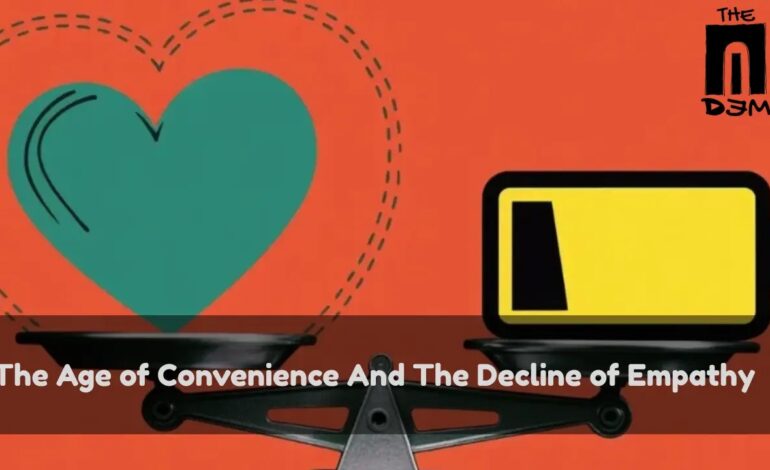
The Age of Convenience And The Decline of Empathy

The present state of the world has witnessed some of the most dire developments across regions — the Russia–Ukraine war, Israel’s ongoing assault on Gaza post-October 7, instability in several countries in the West Asian region due to US–Israel attacks on Iran, rapid advancements in AI, and much more.
As a student of Journalism and International Relations, one aspect I have particularly noticed in public reactions is the alarming correlation between convenience and empathy. Throughout history, resistance and radical change have only truly been possible through the mass mobilisation of community voices. Yet, everything unfolding around the world today does not seem sufficient to generate such a collective voice.
But why is this happening? Why are so many people, despite being aware of these atrocities, not taking meaningful action to bring about real change?
Israel’s offensive against Gaza did not begin on October 7, 2023. It dates back to 1948, when the state was established and Jewish settlers first arrived in Palestine. Many communities were ethnically cleansed, olive trees destroyed, and people displaced from their homes. Yet the narrative presented to the world about Palestine has often been rooted in Islamophobia.
The Boycott, Divestment and Sanctions (BDS) movement emerged in 2005, highlighting corporations and brands complicit in the oppression of Palestinians. It regained prominence after October 7, 2023, gaining widespread support on social media, with many seeking alternatives.

However, recent trends suggest that people have largely forgotten these atrocities. Stranger Things Season 5 garnered high ratings and viewership despite being streamed on Netflix and featuring cast members publicly aligned with Zionist positions. The same people who had once reposted “Free Palestine” messages continued to share their Spotify Wrapped summaries, despite Spotify’s reported investments in military AI companies linked to Israel.
Additionally, the rapid advancement of AI tools such as ChatGPT and Gemini is concerning, to say the least. We are no longer in an era where photographs serve as definitive proof of reality. Instead, we exist in a timeline increasingly comfortable with AI-generated art — creations that were once the result of human effort, time, and emotional depth. Even more alarming is the environmental cost, particularly the strain on freshwater resources.
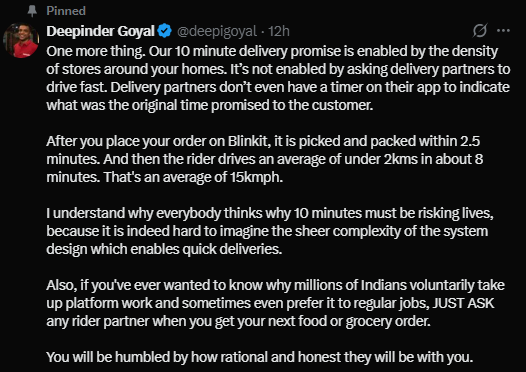
This phenomenon — the prioritisation of convenience over empathy — is not confined to global movements like Free Palestine. It is evident in local contexts as well. In December 2025, India’s gig workers, particularly rapid delivery personnel, organised a collective strike on the 31st, halting services on platforms such as Zomato, Swiggy, and Blinkit. The protest stemmed from multiple concerns, primarily the lack of social security and the pressures of the “10-minute delivery model”. In cities like Hyderabad, at least 12 delivery worker deaths were recorded in 2025 alone. Are product deliveries so important that they justify human lives lost in road accidents? It appears so, given comments from Zomato CEO Deepinder Goyal, who maintained that the current model does not overwork delivery personnel.
A recurring pattern emerges in both global and local contexts — increasing convenience for the masses accompanied by declining empathy. It is far easier to stream a popular show on a paid platform than to seek alternatives. Easier to opt for a 10-minute delivery service than to visit a physical store or wait a little longer. Easier to use music streaming platforms that underpay artists while promoting AI-generated content. Easier to generate art using AI than to consider its environmental cost. Yet, it is somehow difficult to pause and reflect on the human consequences of our pursuit of convenience.










“A sharp reflection on how convenience is quietly reshaping human connections—important and thought-provoking.”