

The Silence of Conscience: India, Gaza, and the Burden of Complicity

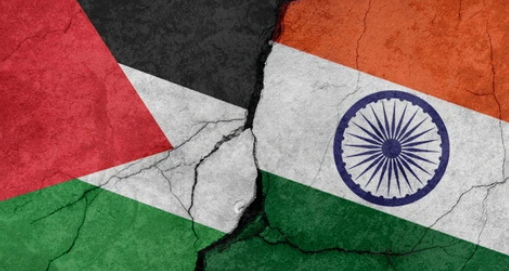
There are moments in history when neutrality is not restraint—it is surrender. When silence is not prudence—it is complicity. The latest report emerging from the United Nations on Occupied Palestine places India at precisely such a moral crossroads.
The accusation is grave: that India has continued exporting rockets, explosives, and critical military components to Israel during its ongoing assault on Gaza—an assault widely described across international forums as disproportionate, indiscriminate, and, increasingly, genocidal in character. These are not abstract allegations; they point toward a supply chain of violence in which India is no longer a distant observer but an active enabler.
What makes this indictment even more unsettling is not merely the act itself, but the institutional silence that surrounds it?
When a plea was brought before the Supreme Court of India seeking to halt such exports during the height of the Gaza siege, one expected at least a moral interrogation, if not immediate restraint. Instead, the dismissal of that plea has raised a deeply uncomfortable question: has the judiciary, the very institution entrusted with upholding constitutional morality, chosen to look away at a time when it was needed the most?
This is not about foreign policy alone. Nations often act in their strategic interest—this is the language of realism. But there is a threshold beyond which strategy becomes stain. Supplying instruments of war during an ongoing humanitarian catastrophe is not merely a geopolitical decision; it is an ethical position, whether acknowledged or not.
India has long prided itself on its legacy—of non-alignment, of moral leadership, of standing with the oppressed. From the anti-apartheid movement to vocal support for Palestinian self-determination in earlier decades, India’s global identity was once anchored in a language of justice. That legacy now stands in stark contrast to present actions.
What has changed? Is it merely strategic alignment? Economic interests? Or a deeper shift in moral vocabulary where human suffering is weighed against trade metrics and diplomatic convenience?
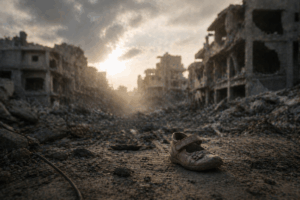
The tragedy of Gaza is not unfolding in isolation. It is being watched, documented, and judged in real time by the world. Civilian deaths, destroyed hospitals, starving populations—these are not collateral abstractions; they are human realities. And when weapons or their components continue to flow into such a theatre of destruction, the question is no longer who fired the shot, but who made it possible.
The argument that India is not directly responsible for how exported materials are used does not absolve responsibility—it merely distances it. History, however, is not so forgiving. It records complicity not only in action, but in facilitation.
Equally troubling is the erosion of public debate within India on this issue. Where are the institutional voices? Where is the ethical resistance? A democracy does not merely function through elections—it breathes through dissent, through questioning, through the courage to confront uncomfortable truths.
To question this policy is not to weaken the nation; it is to strengthen its moral core.
Because ultimately, the question is not whether India supports genocide as a matter of declared policy. No nation would openly claim that. The real question is far more piercing:
At what point does strategic cooperation become moral betrayal?
And when that point is crossed, who within the system has the courage to say—enough?










:
English: “A deeply thought-provoking piece that questions the moral silence surrounding Gaza. It compellingly highlights the ethical dilemmas and the weight of complicity in today’s global discourse.”