


Does Bengal’s Communal Past Hold a Promise for the BJP in West Bengal?
Professor Partha Chatterjee in conversation with Paranjoy Guha Thakurta
In this conversation with renowned historian Professor Partha Chatterjee, senior journalist and author Paranjoy Guha Thakurta focuses on the history of Hindu-Muslim politics in the state of West Bengal. The discussion is particularly relevant in the context of the elections to the West Bengal Legislative Assembly, scheduled for April 23 and 29. One of the key questions in these polls is whether the Bharatiya Janata Party (BJP) will become stronger in the state, and whether the historical evolution of Hindu-Muslim relations would facilitate that process. The interview was originally published in audiovisual format on Paranjoy’s YouTube channel, and the link to the interview is appended.
Paranjoy Guha Thakurta:
I’m very happy to have Professor Partha Chatterjee with me for this interview. At 78, you are a very active retired Professor Emeritus at Columbia University and an Honorary Professor at the Centre for Studies in Social Sciences, Calcutta. You were educated at Presidency College, earned your PhD from the University of Rochester, and have authored 25 books published by Permanent Black, Oxford University Press, Princeton University Press, and Columbia University Press. You are also an eminent political scientist, historian, and anthropologist. Thank you so much, Partha, for giving us your time.
If you could briefly summarise for our viewers how Hindu-Muslim relations in this part of the country have evolved over the last century—how the situation has changed from the 1920s to the present.
Partha Chatterjee:
If you look at what has happened over the last hundred years, it has changed a great deal. In the 1920s, for instance, when the first set of Gandhi-led agitations began—the Non-Cooperation Movement, which was tied to the Khilafat Movement—that was a period of enormous amity between Hindu and Muslim politicians. In Bengal, this unity existed under the leadership of Chittaranjan Das (C.R. Das).
At that time, Das did not agree with the broadly Gandhian position of boycotting elections or refusing to enter municipal institutions. Instead, he led the Congress to contest elections and win several municipalities, including the Calcutta Corporation, as well as bodies in the districts and union boards. Under his leadership, there was a Hindu-Muslim pact—a formula through which a certain number of jobs in these new institutions were distributed between Hindus and Muslims according to an agreed proportion. This arrangement enabled substantial Muslim participation in the joint movement.
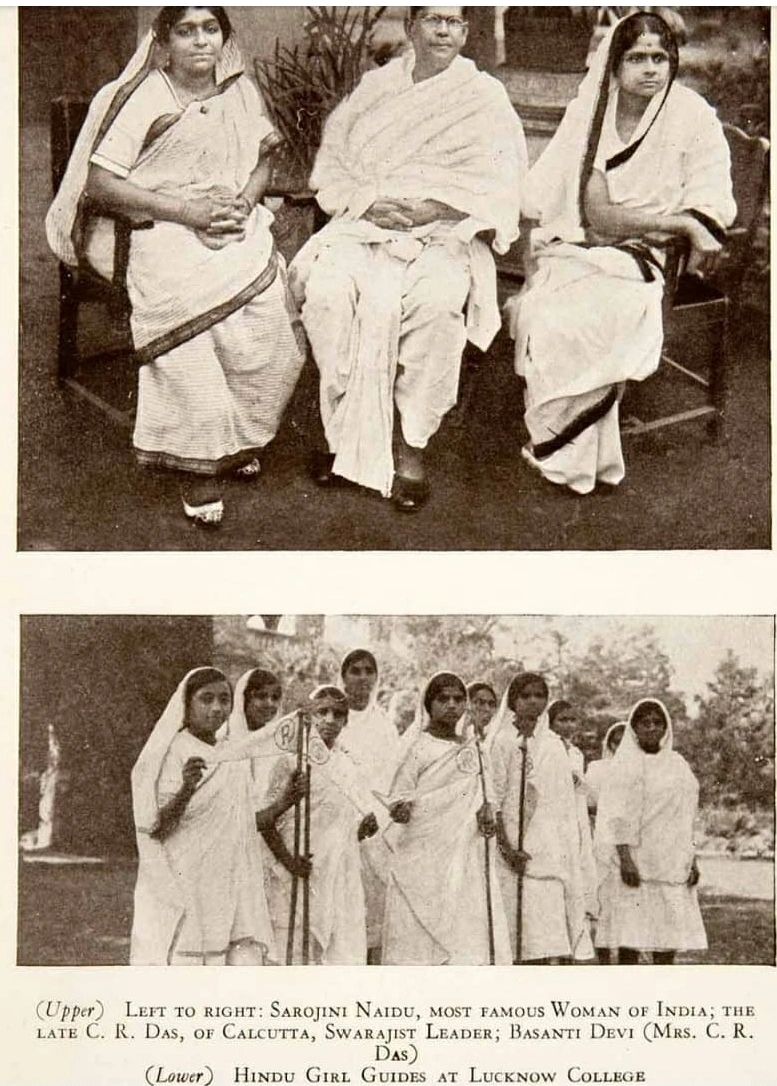
However, after C.R. Das’s death, from 1926 onwards, this pact collapsed. Sections of the Hindu leadership—largely upper-caste and propertied—refused to abide by it. This led Muslim politicians to gradually leave the Congress, so that by the late 1930s, there were very few important Muslim leaders remaining within the party.
From the 1940s, with the emergence of the demand for Pakistan, Muslim political leadership and support largely coalesced around the Muslim League. The Congress, as we know, opposed Partition and advocated a united polity. But in Bengal, this period also saw the rise of a specifically Hindu political formation in the form of the Hindu Mahasabha.
Paranjoy Guha Thakurta:
Yes, the Hindu Mahasabha, with leaders like Nirmal Chatterjee—the father of Somnath Chatterjee—and Shyama Prasad Mukherjee, who later joined Nehru’s cabinet. Let me interrupt you here. The 1940s were a tumultuous period in Bengal—the 1943 Bengal Famine, the Second World War, and then the run-up to Partition in August 1947, along with the Great Calcutta Killings of 1946–47. We know that when Jawaharlal Nehru was delivering his “Tryst with Destiny” speech at midnight on August 15, 1947, Mahatma Gandhi was fasting in Beleghata in Kolkata. How would you situate the 1940s in terms of the evolution of communal politics and Hindu-Muslim relations in this region?
Partha Chatterjee:
That was a particularly crucial phase when Hindu-Muslim amity was extremely limited. There was widespread violence, which ultimately culminated in Partition.
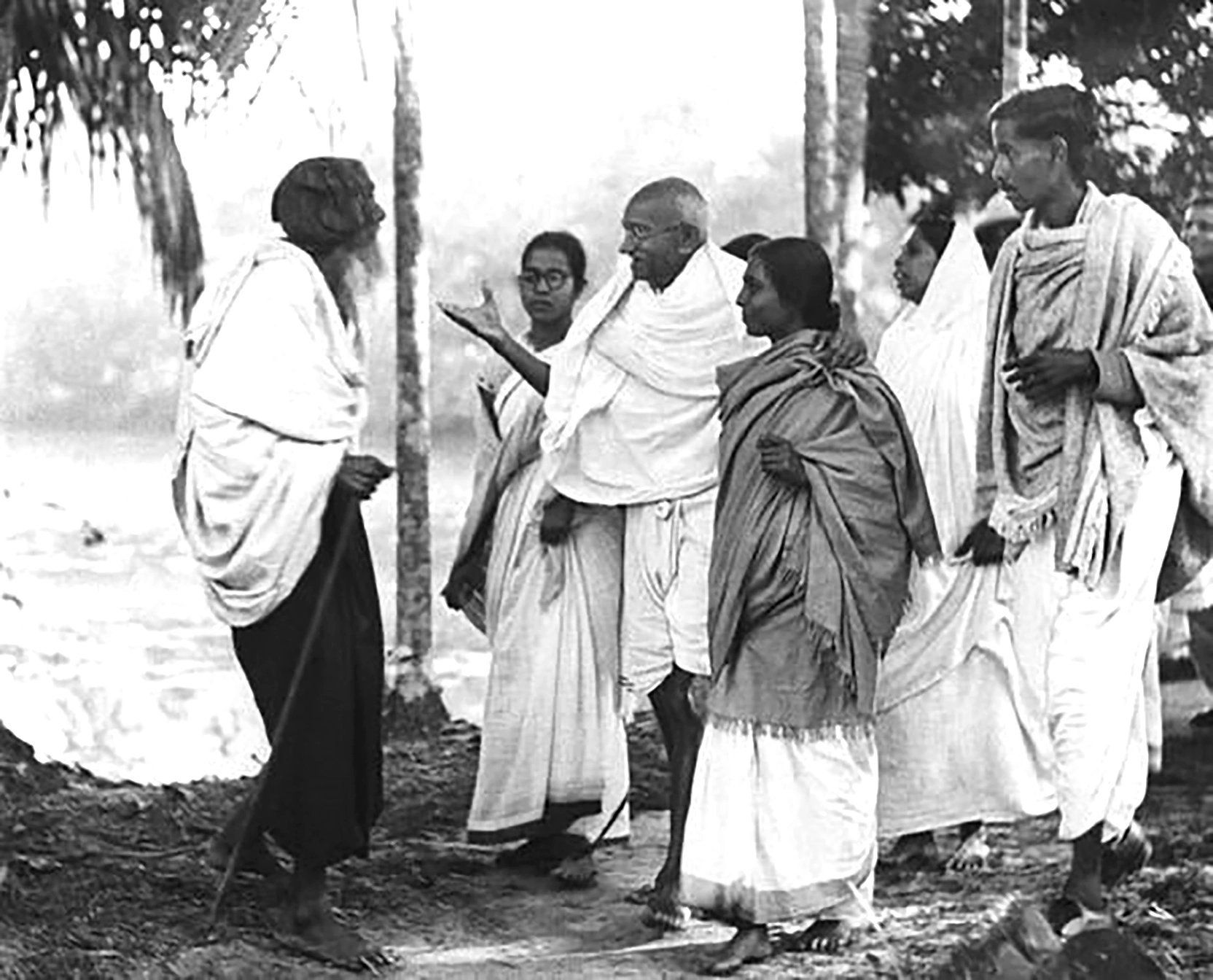
Following Partition, an important development occurred in January 1948 with Gandhi’s assassination. This led to widespread suspicion of Hindu nationalist groups such as the Hindu Mahasabha and the RSS. Sardar Vallabhbhai Patel, then the Home Minister, imposed a ban on the RSS. As a result, there was a general decline in the influence of these groups across the country. In Bengal too, the Hindu Mahasabha largely faded.
By the 1950s, the Congress ruled Bengal, while the principal opposition space was occupied by Left forces. Through movements such as the refugee movement and the food movement of the 1960s, communist parties emerged as the primary opposition.
Paranjoy Guha Thakurta:
As you pointed out, until 1977 the Congress ruled the state, barring brief United Front governments in 1967 and 1969. Then came a period of repression under Chief Minister Siddhartha Shankar Ray, followed by the Emergency. Throughout this period, Left parties were the principal opposition. From 1977 onwards, the Left Front came to power and remained in office for 34 years, winning seven consecutive elections until 2011.
Today, we see a legislative assembly with 294 members where there is not a single MLA from the Left and not a single MLA from the Congress. How did this kind of polarization take place? To what extent has communal politics played a role in this transformation?
Partha Chatterjee:
As you mentioned, between 1977 and 2011, the Left was in power, with the Congress as the principal opposition. The Congress weakened over time due to the rise of Mamata Banerjee and the Trinamool Congress. By 2011, the Trinamool had replaced the Congress as the principal opposition and eventually came to power.
The emergence of a new kind of Hindu-oriented politics in West Bengal can be traced to the Ram Janmabhoomi movement in 1989 and the Babri Masjid demolition in the early 1990s. Through the 1990s, a new political formation developed under the BJP and associated organisations such as the RSS and the VHP.
Paranjoy Guha Thakurta:
Would you not argue that the ideological fountainhead was the RSS, with the BJP as its political wing?
Partha Chatterjee:
In Bengal, however, these organisations initially had a minimal presence. While the RSS existed, it was confined to small pockets. It was with the political rise of the BJP at the national level—particularly under Narendra Modi—and the increasing presence of central leaders in Bengal that this ideological space expanded. This allowed organisations such as the VHP and the RSS to grow their networks and establish shakhas.
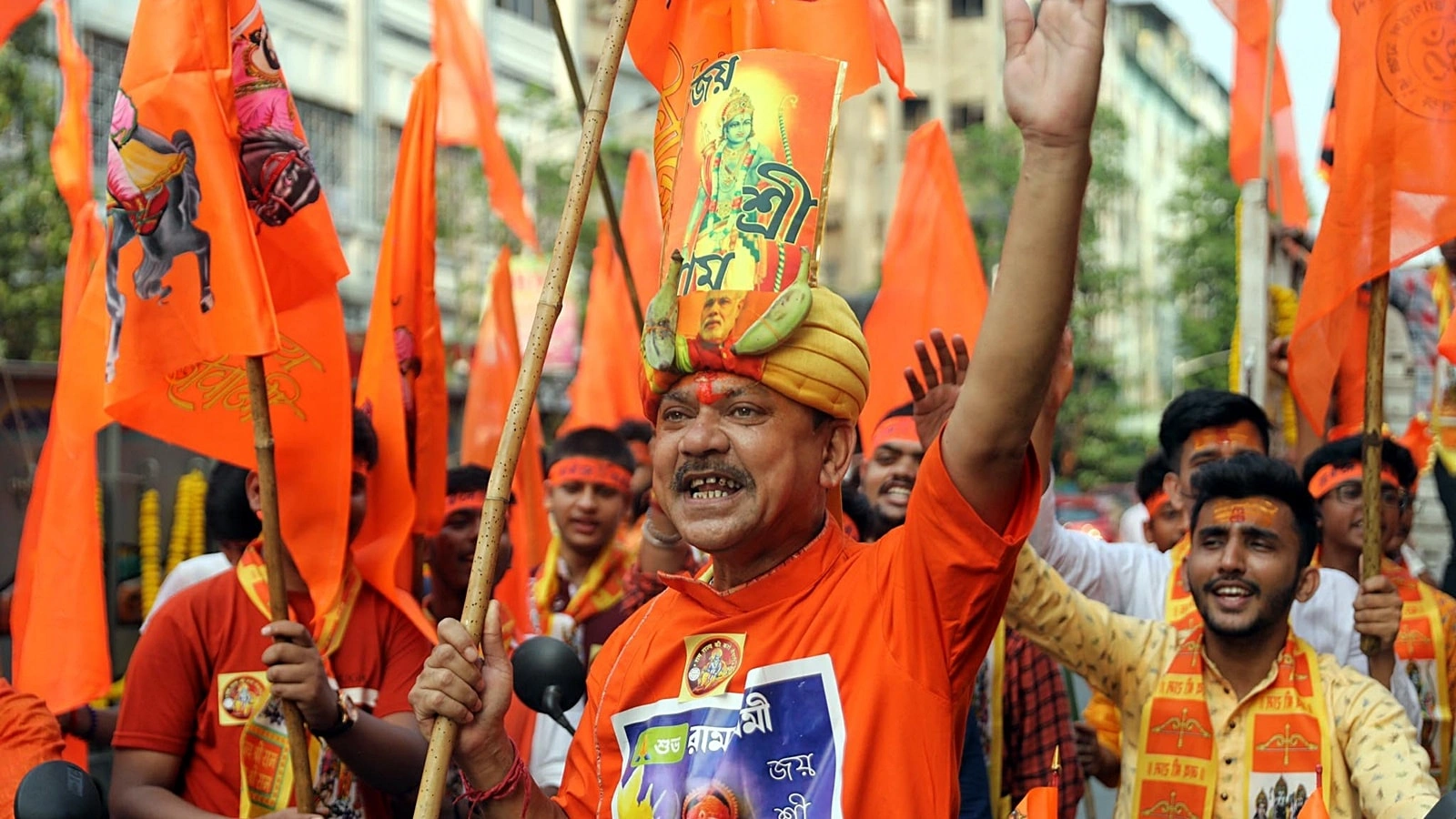
This expansion was accompanied by cultural changes. Practices such as Hanuman worship and Ram Navami processions, which were not traditionally part of Bengali public culture, began to be promoted, often with financial backing. In some cases, even local clubs aligned with other political parties adopted these practices.
Paranjoy Guha Thakurta:
How do you see communal and right-wing politics playing out in Bengal today? The 2011 Census showed that roughly 27 percent of the state’s population is Muslim. We now see Mamata Banerjee, once accused by her opponents of minority appeasement, also emphasising her Hindu credentials through temple-building and religious symbolism. How do you interpret these shifts?
Partha Chatterjee:
This reflects the success of the BJP in projecting a strongly ideological politics centred on Hindu identity and the idea of a Hindu Rashtra. This has compelled a response from its opponents. However, the counter-narrative—often based on linguistic or regional identity—has not proved equally effective.
As a result, political contestation is increasingly framed as a choice between hard Hindutva on one side and soft Hindutva on the other. Mamata Banerjee, for instance, must demonstrate that she is not anti-Hindu while also countering accusations of minority appeasement. That, in a sense, has become the political trap.
Paranjoy Guha Thakurta:
Let’s step back a bit. After the creation of Bangladesh in 1971, questions of language, culture, and religion took on new significance. Recent developments in Bangladesh, including political instability, have also had an impact on Bengal. At the same time, issues like the Citizenship Amendment Act and voter list revisions are becoming central. What impact do you think these factors could have on the upcoming elections?
Partha Chatterjee:
There are two issues here. One is the impact of recent developments in Bangladesh, particularly reports—widely highlighted in sections of the media—of violence against Hindus. This has fed into a broader narrative about Muslim fundamentalism. However, it is not yet clear how far this will influence electoral outcomes in Bengal.
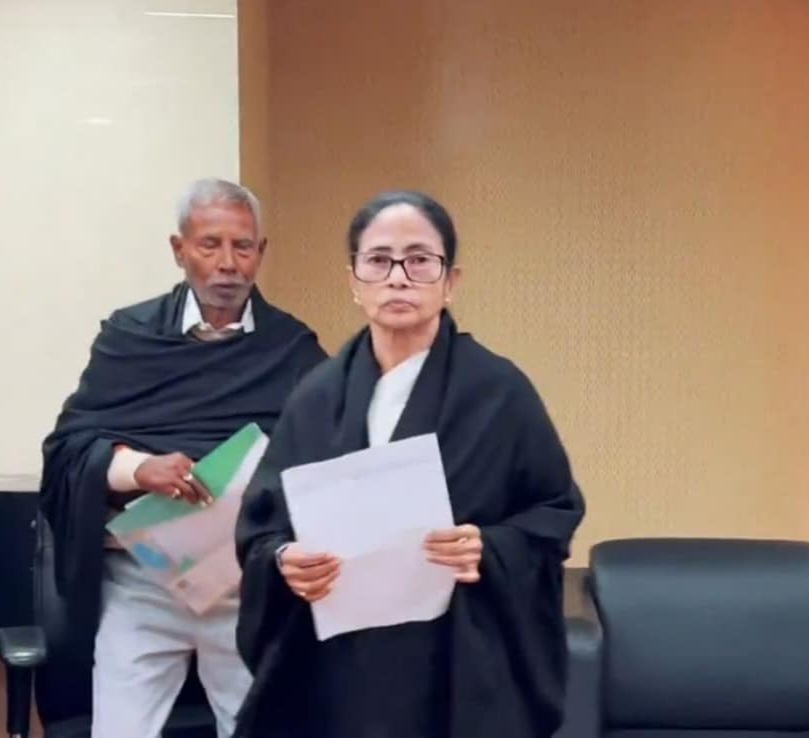
The second issue is the revision of voter rolls and allegations of manipulation. Similar concerns have been raised in other states. In this context, the Trinamool Congress appears to be well prepared. From the very beginning of the process, Mamata Banerjee has strongly challenged the Election Commission’s actions, even approaching the Supreme Court. This has ensured closer scrutiny of the process.
Paranjoy Guha Thakurta:
Given Bengal’s history of electoral violence, do you anticipate tensions escalating in the run-up to the elections? The BJP appears stronger than ever. What could happen both before the polls and after the results?
Partha Chatterjee:
I would be cautious about saying that the BJP is stronger than ever. In previous elections, particularly in 2019 and 2021, there was a wave of defections from other parties to the BJP. That is not as visible this time. The party seems to be relying more on its existing leadership rather than recent entrants.
Much will depend on how events unfold in the coming weeks. Emotional or unforeseen incidents could influence voter sentiment. At the moment, however, there does not appear to be a dramatic shift in the overall balance. A hung assembly remains a possibility, and in such a scenario, the role of the governor could become crucial.
Paranjoy Guha Thakurta:
Thank you so much, Partha, for giving us your valuable time and for explaining with such clarity how Hindu-Muslim relations and politics have evolved in this state.
To watch the video of the interview in full on paranjoyonline YouTube channel click here.







“This article thoughtfully explores Bengal’s communal past and how it continues to shape present-day politics. It offers a nuanced perspective on the opportunities and challenges for the BJP in West Bengal, adding depth to the ongoing political discourse.”