


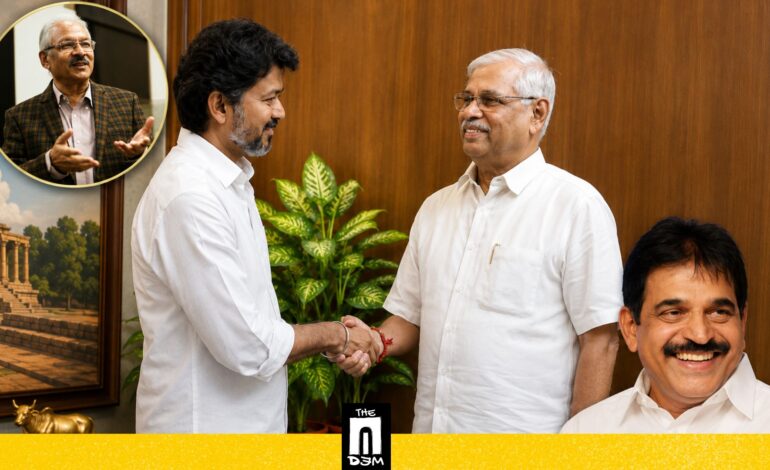
At a moment when Indian democracy is increasingly being tested not merely by ideological contestation but by the erosion of institutional norms, senior journalist A.J. Philip intervenes with two sharply argued open letters that speak to two distinct but deeply connected crises in public life. One addresses constitutional propriety — questioning the expanding discretionary impulses of gubernatorial authority in Tamil Nadu and reaffirming that legislative legitimacy can only be tested on the floor of the Assembly. The other addresses political morality within the Congress — urging party General Secretary K.C. Venugopal to recognise the difference between organisational power and democratic legitimacy, and to place national responsibility above personal ambition. Together, the letters are less about individuals than about a larger democratic ethic: that institutions survive only when restraint, accountability and political wisdom prevail over entitlement and expediency.
Read the letters in full here.
An Open Letter to K.C.V
Your Place Is in New Delhi
Dear Shri K.C. Venugopal Ji,
I understand that you have staked your claim to the post of Chief Minister of Kerala. As the right-hand man of Rahul Gandhi, you may well have influenced the distribution of tickets to some of your followers, but that alone does not legitimise your claim.

You are the General Secretary of the Indian National Congress. If you claim credit for the party’s success in Kerala, you must also accept responsibility for its rout in West Bengal, Tamil Nadu, Assam and Puducherry. One also recalls your disappointing performance in Bihar, where your strategy arguably helped the Bharatiya Janata Party more than it did your own party.
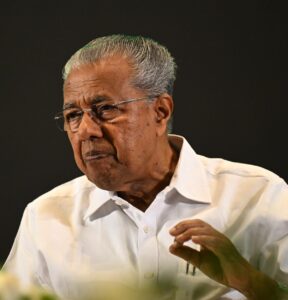
If you believe that the people voted for you or even for the Congress, you are mistaken. They voted against the style and substance of governance associated with Pinarayi Vijayan. In fact, there is reason to believe that even sections of the Left electorate tactically supported the UDF in certain constituencies to send a message. You are, at best, a beneficiary of anti-incumbency.
When you won from Alappuzha in 2024, you had to resign from the Rajya Sabha. The vacancy that arose in Rajasthan was filled unopposed by a BJP candidate, costing the Congress a seat in the Upper House. These are not small matters in a closely contested national political landscape.
If you become Chief Minister, there will inevitably be two by-elections—one for the Alappuzha Lok Sabha seat and another for the Assembly, for which a Congress MLA will have to make way. And if, by chance, you are defeated, the UDF could find itself in disarray.
Malayalees, as you well know, are not easily overawed by power. Few communities in India are as quick to puncture political pretensions. A reading of Kunchan Nambiar is enough to remind one of that tradition.
My earnest appeal to you is to return to New Delhi and focus on rebuilding the Congress at the national level. Should the party regain its footing, you could well play a role akin to that of Amit Shah to Rahul Gandhi. Let the elected MLAs in Kerala choose their leader from among themselves, as is proper in a parliamentary democracy.
In the end, leadership is not merely about ambition but about judgment—the wisdom to recognise where one’s presence is most needed, and where restraint serves both the party and the public interest. History, after all, is kinder to those who strengthen institutions than to those who strain them for personal advancement.
Yours sincerely,
A.J. Philip
Open letter to TN Governor
Let Vijay prove his majority in the Assembly
Dear Shri Rajendra Vishwanath Arlekar Ji,
Your insistence that Tamilaga Vettri Kazhagam chief Chandrasekhar Joseph Vijay produce letters of support from 118 MLAs before being invited to form the government raises serious constitutional concerns. This is not merely a procedural matter; it goes to the very heart of the conventions governing parliamentary democracy in India.
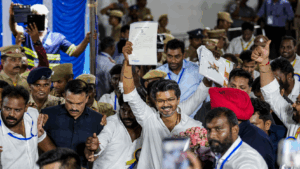
Please remember that no Governor is expected to conduct a private headcount in Lok Bhavan.
I am sure you would have heard of the Sarkaria Commission, which laid down clear guidelines in 1988 regarding the role of Governors in a hung Assembly. These recommendations were not casual observations. They emerged from India’s repeated constitutional crises and from widespread concerns about the partisan misuse of gubernatorial authority.
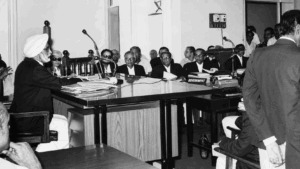
The Commission clearly established an order of preference. If no single party commands a majority, the Governor should first invite a pre-poll alliance commanding support. Failing that, the next preference is the single largest party staking a claim with the support of others. The emphasis was always on enabling government formation and testing majority support on the floor of the House.
The crucial point is this: the Commission expressly warned Governors against trying to determine majority support outside the Assembly through subjective methods. The appropriate constitutional arena for proving a majority is the floor of the House, not the drawing room of Raj Bhavan.
The Governor’s role is not that of an election returning officer verifying signatures, nor that of a political auditor demanding documentary proof before even allowing the constitutional process to begin. Once a claimant appears reasonably capable of securing confidence, the proper course is to invite them to form the government and direct them to prove their majority within a stipulated time — preferably within 30 days, as suggested by the Commission.
This principle was later reinforced judicially. The Supreme Court recognised the Sarkaria recommendations as sound constitutional conventions. Again and again, the Court has stressed that the test of majority should be on the Assembly floor.
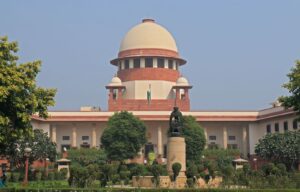
One must also remember the larger spirit behind these conventions. Governors are constitutional heads, not political gatekeepers. The Sarkaria Commission specifically noted that the Governor’s task is to ensure that a government is formed, not to engineer one according to personal preference or political comfort.
India has already witnessed the consequences of Governors exceeding constitutional restraint. From Andhra Pradesh in the 1980s to Karnataka, Maharashtra, Goa, and several northeastern states in recent years, controversies surrounding Lok Bhavans have repeatedly damaged public trust in constitutional neutrality.
Tamil Nadu has a particularly sensitive political history when it comes to Centre-State relations. Every action of the Governor is, therefore, scrutinised not merely legally, but politically and emotionally as well. Any perception that Lok Bhavan is imposing additional hurdles upon one claimant while favouring another can only deepen mistrust.
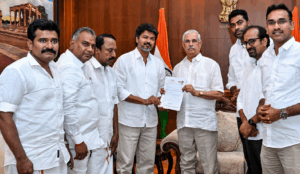
If Vijay’s claim is untenable, despite winning 108 seats on his own, the Assembly will reject him. That is how parliamentary democracy works. Legislatures decide majorities, not Governors through prior certification exercises. Please recall how A.B. Vajpayee was voted out on his 13th day as Prime Minister!
A Governor must act with constitutional humility. The office derives dignity not from discretionary assertiveness but from visible impartiality.
The people of Tamil Nadu have voted. The Assembly must now speak. If you have any doubt about the Governor’s role, please read the report of the Justice Kurian Joseph Commission, which your government had set up and whose report was submitted this year.
Yours sincerely,
A.J. Philip







A powerful and timely intervention on the meaning of constitutional propriety, political morality, and democratic responsibility. A.J. Philip’s open letters go beyond political commentary — they raise fundamental questions about accountability, institutions, and the ethical limits of power in a democracy. In times when constitutional values are constantly tested, such fearless and principled public discourse becomes essential for protecting the spirit of democracy.”