


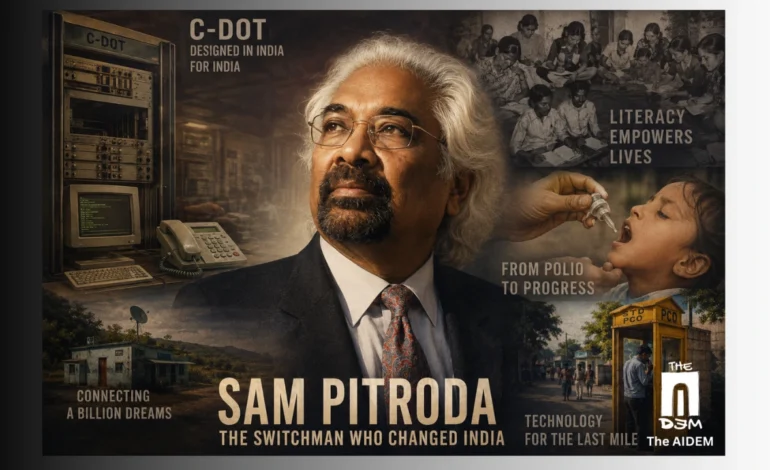
Sam Pitroda gave up a half-million-dollar salary and a vice-presidency at one of America’s leading companies to go back to India on a rupee a year. In seven years, his team designed a telephone exchange that transformed how a billion people communicated, helped eradicate polio, and taught five hundred thousand illiterate adults to read. He did all of this while collecting one rupee per year in salary. Then they drove him out.
In the mid-nineteen-seventies, one of the more celebrated Tamil films of the decade 16 vayadhinile, featured a hero named Sappani—a young man affected by polio. This was not incidental detail. In 1987, when the film was made, sixty per cent of the world’s polio cases were in India. The disease was so prevalent that its victims were simply part of the landscape: the man on the platform who moved on a wheeled board, the child with the twisted leg, the adult whose limbs had been shortened and deformed by a childhood infection that a vaccine could have prevented. Cinema, which always reflects the society that produces it, had simply noticed what was there.
Twenty-five years after that film was released, India was declared polio-free. In the same period, it had transformed from the world’s largest consumer of imported vaccines into one of its largest producers and exporters—a supplier to the world, manufacturing at a scale and cost that no wealthy country could match. Behind this transformation was a national technology mission that Rajiv Gandhi launched in 1987 and that a telecommunications engineer from rural Odisha, working for one rupee per year, was hired to run.
His name is Satyanarayan Gangaram Pitroda, known to everyone as Sam. He is not famous in India in the way that politicians and film stars are famous. He is not famous in America, where he spent twenty years building a career that most engineers would have been content to retire on. He is, however, known wherever serious people think about the relationship between technology and development—known as the man who proved that a poor country did not have to wait for rich countries to hand down their obsolete technology, that it could design its own, and that the act of designing it could itself be a catalyst for social transformation.
“Aim for the stars. That way, you might at least reach the roof.” —Sam Pitroda
From Orissa to Illinois
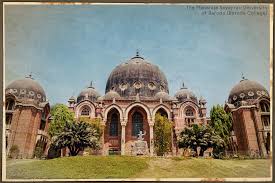
Pitroda was born in a small village in Odisha and grew up in circumstances that gave him no particular reason to expect the life he eventually built. He studied physics at Maharaja Sayajirao University in Baroda and then, through the combination of ambition and willingness to improvise that characterizes people who move from one world to another by their own effort, made his way to the United States and a master’s degree in electrical engineering at the Illinois Institute of Technology in Chicago.
He joined GTE, then one of America’s major telecommunications companies, at a moment when the industry was in the middle of a technological transition that would prove to be one of the most consequential in the history of communications. Telephone switching—the technology that connects one call to another, that routes the voice from one wire to the correct destination among millions of possible destinations—had, for most of its history, been electromechanical: physical relays, actual metal contacts making and breaking actual electrical connections, in rooms full of equipment that occupied entire floors of buildings and required armies of technicians to maintain.
The transition to electronic switching replaced this physical apparatus with circuits: solid-state components that performed the same function at a fraction of the space, cost, and power consumption, and at speeds that made the electromechanical systems look geological by comparison. A thousand times more capable, in the language of the engineers who designed them. Pitroda worked at the leading edge of this transition, accumulating forty patents in the process—not as a collector of intellectual property but as someone who was genuinely working out new problems for the first time.
He was, by every measure, a successful corporate scientist. He was also restless. The patents and the salary and the recognition within the industry were real satisfactions, but they did not add up to what his friend Madhu Mehta later described as Pitroda’s actual ambition: ‘to create outcomes of extraordinary value through technology.’ The outcomes he was creating at GTE were valuable to GTE’s shareholders. They were not changing anything about the world that he could feel proud of having changed.
He left GTE and co-founded a company called Wescom with two American investors, with the specific goal of integrating the newly available microprocessor into telephone switching systems—a combination that had not yet been achieved in a commercially viable form. Four years of work produced the 580 DSS switching system, which was, at the time of its release, more capable than anything else available in the American market. The telecommunications industry described him, in the admiring shorthand that technical communities use for their most accomplished members, as the guru of switching system design. Wescom was eventually acquired by Rockwell International; Pitroda’s share of the transaction was three and a half million dollars. He joined Rockwell as a vice president, at a salary of half a million dollars a year.
He was comfortable. He was accomplished. He was, by the standards of what an immigrant from rural Odisha might reasonably have hoped for, extraordinarily successful. And he could not stop thinking about India.
The Pilgrimages to Delhi
In 1981, the Times of India reported that Prime Minister Indira Gandhi was pursuing a plan to modernize India’s telecommunications infrastructure, under the direction of a retired official named Sarin. Pitroda read the report in Chicago and decided that he needed to be involved. He wrote to the Secretary of of the Department of Telecommunications (DOT) but no respone. After multiple attempts he eventually met the Secretary at Delhi and requested him for a meeting with the Prime Minister Indira Gandhi but the meeting with the Prime Minister didn’t happen.
He flew back to Chicago. He returned to Delhi several more times over the following months, each time expecting to meet the Prime Minister, each time finding that the meeting had been rescheduled or cancelled or was simply not going to happen in the way that meetings with the leader of a country do not happen for people who are not, themselves, already embedded in the structures through which such meetings are arranged. He spent, by his own estimate, several hundred thousand dollars on this campaign of access—flights, hotels, the informal costs of trying to move in a world whose rules he did not yet fully understand—and came away with nothing except a sharpened certainty that the thing he was trying to do was worth the effort.
An introduction eventually materialized, through Rajiv Gandhi’s network of friends—Rajiv being then a member of Parliament and not yet the Prime Minister, but already a figure of considerable informal influence. Pitroda met him, and the encounter was productive in ways that a meeting with Indira might not have been: Rajiv Gandhi was of Pitroda’s generation, genuinely interested in technology, and not yet burdened by the weight of actual executive power.
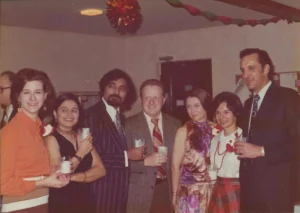
In 1983, Pitroda was in Chicago with friends, watching the film ‘Gandhi.’ He had seen the film before. This time, something in the combination of Attenborough’s images and the accumulated weight of his years of effort produced a response he had not anticipated: he walked out of the theatre in tears and understood that he was going back to India. Not for another visit. Permanently.
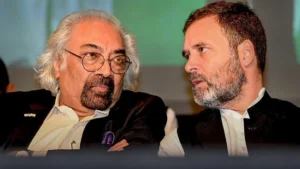
In April 1984, Indira Gandhi approved the creation of the Centre for Development of Telematics—known as C-DOT—as an autonomous research institution outside the normal apparatus of the Indian government. Its purpose was to design and develop the electronic telecommunications equipment that India needed, in India, by Indians. Its leader would be Sam Pitroda. His salary would be one rupee per year.
The One-Rupee Salary
The autonomy was real and it was deliberate. Pitroda had watched the Indian government work closely enough to understand that the bureaucratic culture of a ministry—its hierarchies, its procurement procedures, its risk-aversion, its tendency to subordinate technical judgment to administrative precedent—was incompatible with genuine research. C-DOT was designed to operate outside that culture: its own rules, its own hiring practices, its own procurement systems, its own definition of what constituted acceptable progress.
He hired young engineers—recent graduates, people with no institutional habits to unlearn—and organized them not in the pyramid that Indian government organizations typically use but in flat, collaborative teams, each with a defined objective and the authority to pursue it. He announced publicly, in the manner of someone who understands that ambitious commitments create useful pressure, that C-DOT would deliver Indian-designed electronic switches in thirty-six months, at a cost of thirty-six crore rupees. Neither the organization nor the facilities to do this existed when he made the announcement.
The announcement was, in retrospect, both characteristic and reckless. Pitroda has a saying he returns to often: ‘Aim for the stars. That way, you might at least reach the roof.’ The thirty-six-month deadline was the stars. The roof—what C-DOT actually achieved—took sixty months and fifty crore rupees. In the context of what was produced, these were not failures. They were the normal parameters of research conducted at the frontier of a field.
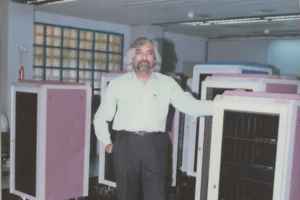
The switches that emerged from C-DOT’s work were not copies of anything that existed. They were designed for Indian conditions: they could operate without air conditioning, in the heat and dust of rural environments where Western equipment simply could not function. The technology on which they were based—state of the art at the time of their development—was licensed to multiple Indian manufacturers, creating an industrial base that had not previously existed. Equipment that would have cost hundreds of crores to develop in a wealthy country had been developed in India, by Indian engineers, for fifty crores.
The consequences for India’s telecommunications infrastructure were profound. A telephone exchange that had required a six-storey building and a hundred and fifty people to operate in the nineteen-sixties could now be managed by eight to ten engineers in a fraction of the space. The cost of expanding telephone coverage fell dramatically. The dependence on imported, second-hand technology from Western countries ended. In 1989, India was installing one new rural telephone exchange per day; by 1993, it was installing twenty-five per day. Over the following five years, landline connections increased by more than four hundred per cent. Two hundred thousand public call offices—the yellow PCO booths that became a fixture of every Indian street corner and bus station—were established, creating more than four hundred thousand livelihoods, many of them for people with disabilities who could operate the booths without the mobility that other forms of employment required.
In 1989, India was installing one rural telephone exchange per day. By 1993, it was installing twenty-five per day. The PCO booths that followed created four hundred thousand livelihoods—many of them for people with disabilities.
The Six Missions
In 1987, the Indian government formally constituted six Technology Missions, with Pitroda as their overall coordinator. The missions addressed telecommunications, literacy, drinking water, immunization, oilseeds, and dairy development. The selection was not accidental: each represented a domain where India was spending foreign exchange on imports that it could, with the right technical investment, produce at home, or where a targeted intervention could address a social problem at a scale that the normal machinery of government had failed to reach.
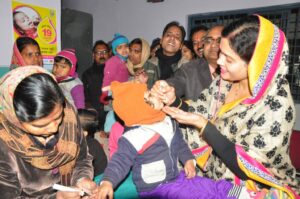
The immunization mission is the most dramatic in its outcome. When C-DOT was established in 1984, India was importing most of its vaccines and accounting for sixty per cent of the world’s polio cases. By 2012—twenty-five years after the mission began—India had been declared polio-free. In the interim, it had become one of the world’s largest vaccine manufacturers and exporters, supplying at prices that wealthy countries could not match, to markets that wealthy countries had not bothered to serve. The transformation of Indian vaccine capacity from consumer to producer is one of the more consequential industrial achievements of the post-independence period; it is, in the context of the COVID-19 pandemic, a transformation whose effects are still being felt globally. Pitroda’s contribution to it was primarily organizational: he created the institutional framework within which the technical work could be done, and he persuaded the political leadership that the investment was worth making.
The oilseeds mission addressed a different kind of problem. In the mid-nineteen-eighties, cooking oil imports were consuming a significant portion of India’s foreign exchange reserves—second only to crude oil. The mission, developed in partnership with the National Dairy Development Board, which had already demonstrated in the dairy sector that cooperative models could transform agricultural productivity, achieved a rapid expansion of domestic oilseed cultivation and processing. Cooking oil imports, which had stood around seventy per cent of domestic consumption in 1986-87, had essentially ceased by 1990.
The Literacy Campaign
The national literacy mission—known in Tamil Nadu as the Arivoli Iyakkam, the Enlightenment Movement—was, in the account of those who participated in it, something that exceeded what a government literacy program is usually expected to be.
In Vellore district, when the mission arrived, there were five hundred thousand adults who could not read or write. The mission ultimately reached four hundred thousand of them. Forty thousand volunteers were involved in the district alone, the majority of them women—many of them widows, many of them women whose husbands had abandoned them, many of them women who had never previously been recognized as having anything to contribute to a public endeavor. The movement gave them a structure, a purpose, and the experience of changing something in the world around them.
The curriculum began not with the alphabet but with the words that mattered most to the people learning. The first word taught to participants was ‘patta’—the Tamil word for a land deed. For people whose security of tenure depended on a document they could not read, this was not an abstract starting point. The second word was ‘padi’—to study, to learn. Within these two words was an entire argument about what literacy was for.
A story circulated widely about a woman who had learned only two letters—‘pa’ and ‘di’—from the word ‘padi.’ She was at a bus station, looking for the bus to her village, Panaimarathu Patti. She studied the destination boards with the intensity of someone who knew that two letters might be enough. She found the board that began with ‘pa’ and ended in a way that matched what she expected, boarded the bus, and arrived at her village without asking anyone for help. She described this experience with the excitement of a child who has just discovered that reading is real—that the marks on the board actually corresponded to something in the world, and that she could use them to navigate it.
Senthamil selvan, who coordinated the mission in Vellore district, says the movement was not only about literacy but about the discovery of agency—the experience of being able to do something that one had previously been helpless to do. This discovery, he argues, translated directly into education: parents who had learned to read became more likely to send their children to school, because the value of schooling was no longer abstract to them.
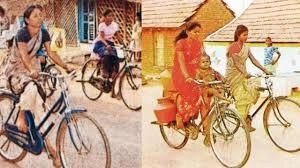
Puthukottai District Collector Sheila Rani Chunkath extended the mission in ways that connected literacy to mobility. Under her direction, cycling classes for women became a significant component of the program. A song from the movement—‘Saikkal otta kathukkanum thangachi’, ‘You must learn to ride a bicycle, my sister’—became one of the most widely recognized pieces of popular culture to emerge from the campaign. The bicycle was not incidental: for a woman in rural Tamil Nadu, the ability to travel independently was inseparable from the ability to act independently, to reach a school or a clinic or a government office without depending on a male relative’s availability and willingness.
She had learned only two letters. She found the bus to her village by reading the destination board, and arrived without asking anyone for help. She described it with the excitement of a child who has just discovered that reading is real.
The Enemies
Pitroda’s success created enemies. This is not a paradox; it is, in India as elsewhere, an entirely predictable consequence of disrupting arrangements that had been profitable for the people who benefited from them. The procurement system that C-DOT’s cheaper, domestically produced equipment replaced had been generating commissions for intermediaries. The import arrangements that the oilseeds and immunization missions disrupted had been generating revenues for the companies that supplied them. The political brokers and bureaucratic gatekeepers whose influence derived partly from their control of access to imported technology found that influence diminished by a man who was designing technology in Delhi for one rupee a year.
When V. P. Singh’s government came to power in 1989, replacing the Congress, most department heads were changed but Pitroda was not. The attack came instead from the new Telecommunications Minister, whose name was Unni Krishnan, and who leveled an allegation of forty crore rupees of corruption at C-DOT. A parliamentary investigation found some procedural irregularities—the kind that accumulate in any organization operating at speed with incomplete administrative infrastructure—but no corruption. The finding exonerated C-DOT. It did not repair the damage to Pitroda’s position or to the relationships that the allegation had strained.
During this period, many of the people who had been his allies and supporters in Delhi found reasons to be unavailable. The political class does not maintain friendships through accusations; it relocates them. Pitroda was left, for a period, with the company of scientists and engineers who had no political reason to stand by him but did so anyway, because they had watched him work and knew what the allegations amounted to.
One morning, S. P. Godrej—the chairman of the Godrej business empire—appeared at Pitroda’s office. He had come from Bombay specifically for the visit. He said: you are doing important work; do not let this deter you; we are with you. And then he left. Pitroda has mentioned this visit in interviews many times since. It was, he has said, the kind of human gesture that matters when nothing else does.
The Return
Rajiv Gandhi was assassinated in 1991. The political landscape shifted in ways that made Pitroda’s continued effectiveness in Delhi increasingly difficult. In 1994, he returned to the United States.
He came back in 2005, when Prime Minister Manmohan Singh asked him to chair the newly created National Knowledge Commission—an advisory body charged with recommending reforms to India’s education and knowledge infrastructure. Over three years, the commission produced recommendations on the Right to Education Act, on technical education, on the reform of higher education and research institutions, and on the creation of digital networks that would connect India’s universities and libraries. In 2009, he chaired the National Innovation Council and served as an adviser to the Prime Minister.
These later roles were advisory rather than executive, and they operated in a political environment that had changed considerably from the one that Rajiv Gandhi had created in the nineteen-eighties. The urgency was different. The institutions were different. Pitroda himself was different—older, more patient, perhaps more realistic about the distance between a good recommendation and a changed policy. But the underlying conviction was the same: that technology, properly deployed, was not a luxury for the wealthy but a tool for the development of the poorest, and that India had both the talent and the obligation to develop that technology for itself rather than buying it from countries that had developed it for their own purposes.
What He Proved
The question that Pitroda’s career poses is not ‘What can technology do?’ but ‘Who is technology for?’ These are different questions with different answers. The first is answered by engineers; the second is answered by how engineers are organized, what they are asked to build, and whose conditions they design for.
The switching systems that C-DOT produced were not designed for the conditions of an American city, then adapted—as had been the practice with imported equipment—to the rather different conditions of rural India. They were designed for rural India from the beginning: for heat, for dust, for unreliable power, for maintenance by people who had not been trained as electrical engineers. This was not a small distinction. It was the entire point. Equipment designed for one set of conditions and deployed in another fails in ways that the designers never anticipated and the users cannot fix. Equipment designed for the conditions in which it will actually operate tends to work.
Gandhi’s position on technology—articulated in the context of the charkha and village industry, and often misread as a rejection of modernity—was not that technology was bad but that technology should serve the people at the bottom of the social and economic pyramid rather than extracting value from them. C-DOT’s switches served that criterion: they extended communication to villages that had not had it, at a cost the Indian government could afford, through an industrial process that created employment and capability in India rather than transferring money to Western suppliers.
Pitroda grew up in a village in Odisha. He built a career in America through his own intelligence and effort. He could have stayed. The life available to him in America—the patents, the salary, the vice-presidency, the comfortable suburb—was real and substantial. He gave it up for twenty years of work in a country that eventually, under a different government, accused him of corruption and drove him out. The work survived the accusation. The polio is gone. The telephone exchanges are running. The PCO booths gave four hundred thousand people a living. The vaccines supply the world.
He collected one rupee a year. It was, in the accounting that matters, an excellent return on investment.
Translated and adapted from the Tamil original. India was certified polio-free by the World Health Organization in March 2014. C-DOT (Centre for Development of Telematics) continues to operate as a government research institution. The Arivoli Iyakkam literacy figures are drawn from published state government reports.






Excellent.