

In the Shadow of Umar Khalid Case, Supreme Court Warns Against UAPA Becoming Punishment Without Trial

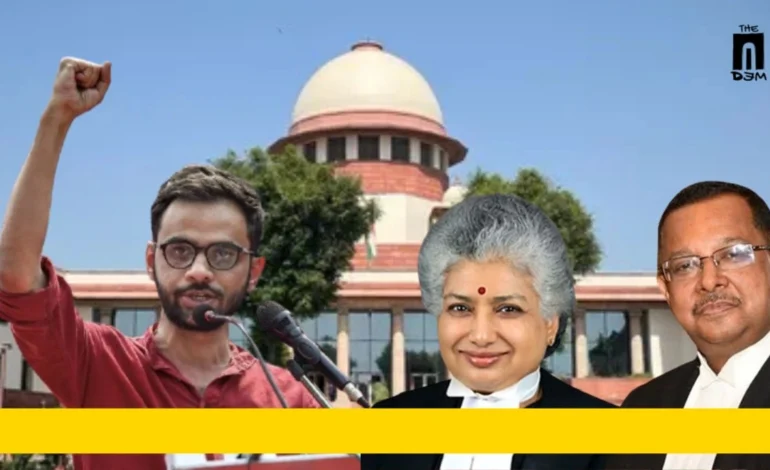
Nearly six years after the arrest of former student activist Umar Khalid under the Unlawful Activities (Prevention) Act in the Delhi riots “larger conspiracy” case, the Supreme Court on May 18 delivered a judgment that could fundamentally reshape the legal and constitutional terrain surrounding prolonged incarceration under anti-terror laws. While granting bail to Kashmiri accused Syed Iftikhar Andrabi, who had spent over six years in prison awaiting trial, the Court sharply questioned earlier rulings — including the judgment used to deny bail to Khalid and fellow accused Sharjeel Imam — for failing to properly follow the binding precedent laid down in Union of India vs K.A. Najeeb.
The significance of the intervention lies not merely in the granting of bail, but in the Court’s unmistakable attempt to push back against a growing judicial trend where incarceration itself increasingly becomes punishment, even before guilt is established.
A bench comprising Justices B.V. Nagarathna and Ujjal Bhuyan reaffirmed a constitutional principle that has steadily eroded in the shadow of national security jurisprudence: bail is the rule, jail is the exception — including in cases under the UAPA.
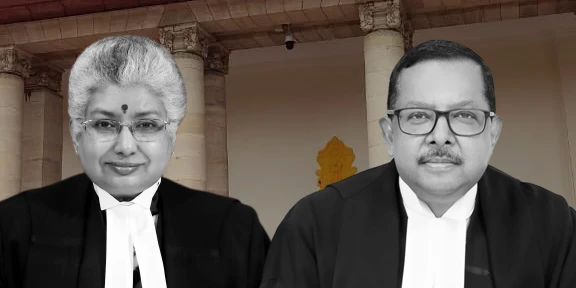
The Court made it clear that prolonged delay in trial cannot be ignored merely because stringent anti-terror provisions are invoked. Referring directly to the landmark three-judge bench ruling in K.A. Najeeb (2021), Justice Bhuyan observed that constitutional courts retain the power to grant bail when incarceration becomes excessive and trials show little prospect of timely completion.
This observation acquired immediate political and constitutional resonance because the Court simultaneously expressed reservations about the earlier Gulfisha Fatima vs State judgment delivered in January this year — the same judgment that denied bail to Umar Khalid and Sharjeel Imam in the Delhi conspiracy case. According to the Court, that ruling, along with another two-judge bench decision in Gurwinder Singh vs Union of India, failed to properly apply the binding principles laid down by the larger bench in K.A. Najeeb.
In unusually direct language, Justice Bhuyan reminded smaller benches that they cannot dilute or circumvent precedents established by larger constitutional benches. Judicial discipline, the Court observed, requires either faithful adherence to such precedents or referral to a larger bench in case of disagreement.
The implications of that observation extend well beyond technical legal doctrine.
For years, critics of the UAPA framework have argued that the law’s real power lies less in convictions and more in enabling indefinite pre-trial incarceration. Investigations routinely stretch for years, trials proceed at a painfully slow pace, and stringent bail provisions ensure that accused persons often remain imprisoned long before any determination of guilt. The process itself becomes punitive.
The Supreme Court’s latest observations amount to a rare judicial acknowledgement of this constitutional danger.
Justice Bhuyan specifically warned against evolving judicial standards that effectively make bail impossible once the prosecution crosses a minimal prima facie threshold. If such reasoning prevails while trials continue endlessly, the judgment noted, pre-trial detention acquires a “post-trial punitive character”.
That warning directly challenges the expanding architecture of exceptionalism that has come to dominate national security prosecutions in recent years.
The Court also rejected attempts to invoke the earlier Watali judgment as a blanket justification for denying bail indefinitely under UAPA provisions. Instead, it reaffirmed that Article 21 — the constitutional guarantee of life and personal liberty — remains applicable irrespective of the seriousness of allegations.
Significantly, the bench observed that the more serious the accusation, the greater the responsibility of the State to ensure a speedy trial.
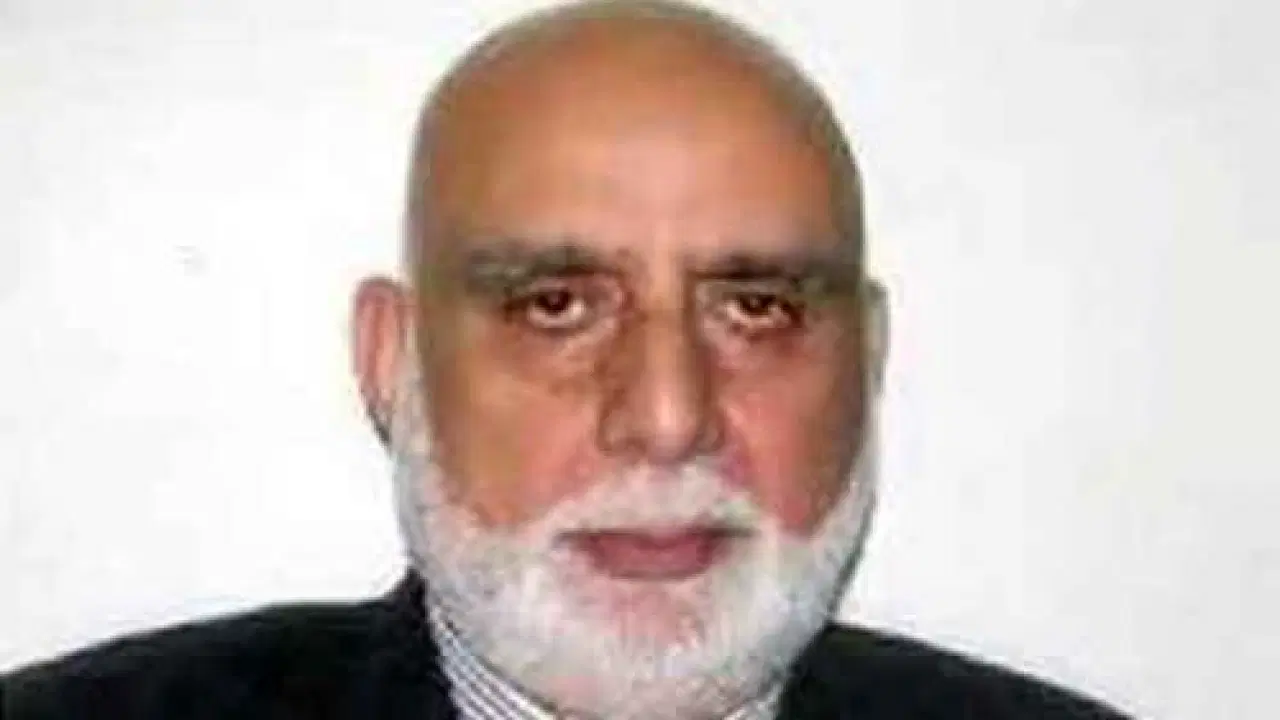
The case before the Court involved Syed Iftikhar Andrabi of Jammu and Kashmir, accused by the National Investigation Agency of participating in a cross-border narcotics and terror financing network allegedly linked to organisations such as Lashkar-e-Taiba and Hizbul Mujahideen. Andrabi had remained in custody since June 2020, while the trial showed little sign of conclusion.
But the judgment’s constitutional importance lies far beyond the facts of one prosecution.
At a moment when anti-terror laws increasingly intersect with dissent, protest politics and ideological contestation, the Supreme Court’s May 18 order signals an attempt — however cautious — to reclaim the principle that liberty cannot be indefinitely suspended in the name of procedure, accusation or national security rhetoric.









“IN the Shadow of Umar Khalid Case” raises a deeply important question about democracy, justice, and the dangerous possibility of punishment without conviction under laws like UAPA. The way theaidem.com� brings attention to the Supreme Court’s warning is both timely and necessary. This piece powerfully reminds readers that prolonged incarceration without trial weakens the very spirit of constitutional democracy and civil liberties. A sharp, courageous, and thought-provoking analysis that deserves serious public attention.