

Indigenous Self-Governance as the Future of Climate Resilience

While on a global scale we saw activists like Greta Thunberg become household names by calling attention to environmental degradation and ecological conservation, we also saw her transition to fighting against colonial oppression, genocide, war, and exploitation of communities, and it took the world no time to understand that this shift occurred because the environment as a resource is politically charged and access has always been unequal, and unsustainable. At the crux of the climate issue lie crucial ethical questions- Who’s environment can we destroy first and with little to no consequence? What unequal ownership pattern yields the most profit, and how many people can be displaced and dis-advantaged in the name of ‘progress’?
With the world gearing itself for a new technology threatening to deplete fresh water resources, hotter summers, and private corporations searching fervently for more land to build data centers, the World Environment day 2026 has aptly kept its theme as “Inspired by Nature. For Climate. For our Future.” with focus dedicated to urgent climate action, nature-based solutions, and highlighting the critical signals the Earth is sending, from melting glaciers to raging wildfires.
On World Environment Day, as the global discourse centers on climate mitigation, carbon credits, and high-tech sustainability matrixes, a tiny village in the heart of India offers a profound, grounded blueprint for the planet’s future. Tucked away in Maharashtra’s Gadchiroli district, a region blanketed by 80 percent forest cover, the Gond tribal community of Mendha has quietly perfected what global policymakers are desperately trying to engineer a perfectly balanced, sustainable human-to-nature relationship.
At a time when environmental degradation is deeply linked to the alienation of local communities from their habitats, Mendha proves that environmental conservation cannot exist without radical local democracy. By establishing themselves as the Teesri Sarkar or the third tier of government, Mendha has shown that the ultimate guardians of the earth are those whose lives, cultures, and livelihoods are intrinsically tied to it.
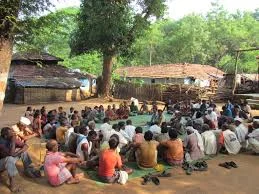
Western conservation models often rely on a “top-down,” exclusionary approach that fences off nature from humans. Mendha upends this by placing ecological management in the hands of the collective through a unique institution called the Study Circle which is locally called the Abhyas Ghatak. Inspired by Gandhian thought, this informal platform serves as the village’s intellectual and ecological decision-making engine.
In the Study Circle, resource management and ecological policy are debated until a complete consensus is reached. Only then is it formalized by the Gram Sabha, the village parliament. This ensures that every environmental rule, whether regulating the extraction of forest produce or protecting biodiversity, is not a forced government mandate, but a deeply understood, community-driven vow.
Mendha’s environmental journey was forged in non-violent resistance against destructive commercial exploitation. The region first gained prominence when villagers successfully stalled a government dam project that threatened to submerge their lands and permanently disrupt the local ecosystem.
Following the enactment of the Forest Rights Act (FRA) of 2006, Mendha made history on August 28, 2009, by becoming one of the first villages in India to secure legal title over 1,800 hectares of Community Forest Resource (CFR).
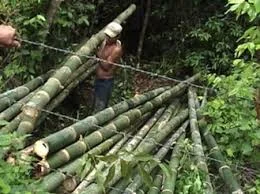
Multinational corporations sought to aggressively exploit the village’s rich bamboo reserves for short-term profit. Utilizing peaceful, Gandhian resistance, the community stood firm. They successfully established a landmark principle for tribal India: community-led ecological interest must prevail over private, profit-driven exploitation. By wresting control away from corporate entities, the Gond community transformed the forest from a commercial commodity back into a sacred, protected lifeline.
True environmental stewardship requires economic self-sufficiency. A community cannot protect its ecology if it relies on external forces for its survival. Utilizing the Maharashtra Gramdaan Act, Mendha became the first village in India to achieve total financial autonomy, gaining the legal right to decide its own budget and expenditure.
To achieve this “Bhoodani” status, every villager took an extraordinary step. They surrendered individual land ownership to the Gram Sabha, transforming the entire village into a common pool property. This communal economic pool allows the Gram Sabha to directly allocate funds based on ecological needs identified in the Study Circle. It avoids the desperation that often drives impoverished communities to over-exploit their natural surroundings. It also helps them fund local conservation and sustainable forestry practices independently.
Mendha’s model stands in stark, peaceful contrast to other parts of the Gadchiroli district, where marginalization has fueled armed Maoist conflicts. While violence offers a destructive path of resistance, Mendha provides a constructive welfare model built entirely on democratic wisdom, social justice, and ecological harmony.
Even internal social reforms were funneled through this eco-democratic lens. When liquor addiction threatened the social fabric of the community, the women of Mendha utilized the Study Circle to build a consensus that resulted in a total village-wide ban on alcohol, restricting its use strictly to essential traditional and religious ceremonies. A healthy social community, they proved, is a prerequisite for a healthy ecological community.
As the international community grapples with the twin crises of climate change and rapid urbanization, the lesson from Mendha is both urgent and profound. Remote, indigenous communities are not relics of the past incapable of modern governance, rather, they possess the precise, sophisticated ecological wisdom needed to forge an inclusive, climate-resilient future.
Mendha is not merely conserving an ancient way of life, it is mapping out the future of global democracy and planet-positive governance. This World Environment Day, as we look for scalable solutions to heal our fractured relationship with nature, we must recognize that the most effective environmental policy is to return power to the people who truly know how to listen to the earth.










Packing my bags to visit Mendha this monsoon. Aidem gets the credit.
“A powerful reminder that climate resilience is not just about technology and policies, but also about empowering Indigenous communities and respecting their self-governance traditions.”
I think the village is called Mendha-Lekha. Even we people in Mumbai don’t know much about it but Harvard know it much better.