

Between Numbers and Dreams: Football’s Great Intellectual Divide


The AIDEM’s countdown to the FIFA World Cup 2026 continues with an overview of the intellectual history of football through the perspectives of its key voices. Modern football lives between two rival temptations. One temptation is to measure everything. The other is to insist that the most important things cannot be measured at all. But, are they as far apart from each other as they appear?

Never before has football possessed such extraordinary powers of self-observation. Every sprint is measured. Every pass is recorded. Every shot is assigned a probability. Every player’s location can be tracked dozens of times every second. With statisticians, machine-learning engineers, neuroscientists, sports psychologists and performance analysts involved, the modern football club has taken the shape of a research laboratory.
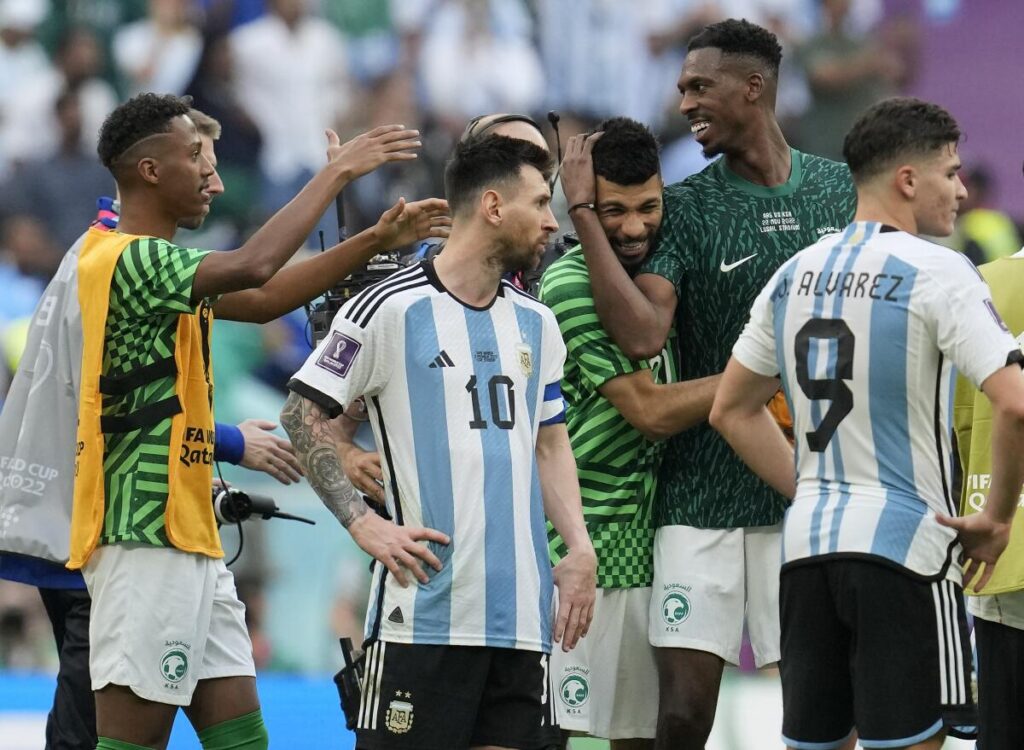
Yet, prediction stubbornly eludes. Germany can dominate possession and lose. Morocco can shock all the data and reach a World Cup semi-final. Saudi Arabia can defeat Argentina. A goalkeeper’s split-second hesitation, a deflected shot, a missed penalty or a moment of genius can outplay years of preparation and millions of dollars of investment. Football is more measurable than ever before, yet it remains gloriously resistant to certainty. This paradox points toward a question that extends beyond football and haunts modern societies organised around metrics, algorithms and quantification.
Can human excellence be reduced to numbers?
Football provides perhaps the most vivid laboratory in which to explore this question because it occupies a peculiar position. It is simultaneously a highly measurable activity and a profoundly human one. It generates vast quantities of data while continuing to depend upon qualities that remain difficult to quantify: courage, imagination, leadership, trust, fear, belief and collective identity.
The intellectual history of modern football may therefore be read as a prolonged argument between two traditions. One seeks to understand football through measurement. The other insists that the deepest truths of football lie precisely in what escapes measurement. This argument runs from the notebooks of Charles Reep in post-war England to the philosophical reflections of Jorge Valdano in contemporary Spain. It passes through Soviet cybernetics, Italian tactical revolutions, Argentine humanism and the analytics departments of the Premier League. It is, ultimately, a debate about the relationship between structure and freedom, science and art, probability and meaning.
What can football teach us which can be measured?
Charles Reep did not intend to become one of football’s intellectual founders. He was a Wing Commander in the Royal Air Force. Unlike most figures who populate football history, he was neither a celebrated player nor a famous manager. His contribution emerged from observation. He sat in football grounds across England and painstakingly recorded every possession, pass and sequence of play. Long before computers, before Opta, before expected goals and tracking data, Reep was counting football. What made Reep remarkable was not his conclusions but his method.
Football discussions in his era relied on memory, intuition and anecdotes. Managers believed what they remembered. Journalists reported what they found dramatic. Supporters recalled what confirmed their loyalties. Reep suspected that memory was unreliable, intuition often misleading, and anecdotes poor substitutes for evidence. He believed football called for empirical studies. His notebooks represented a small revolution. They implied that football possessed patterns. If enough observations were gathered, perhaps the game would reveal regularities invisible to casual observers. Football might not merely be watched; it might also be understood.
In retrospect, Reep’s approach can be compared to the early social scientists who attempted to replace speculation with systematic observation. Like the first economists counting trade flows or the first sociologists measuring demographic patterns, Reep believed that reality often differs from what people imagine. Football myths required testing against evidence.

Many of his tactical conclusions would later become controversial. His advocacy of direct football generated endless debate. Yet analytics of modern football are his descendants. Every expected-goals model, every pressing metric, every pitch-control map and every machine-learning algorithm inherits Reep’s original conviction that evidence matters. The modern analyst who builds a model to predict the 2026 World Cup is, consciously or not, participating in a project that began with Reep’s notebooks.
There is a curious irony. The deeper football analytics have penetrated into the game, the more uncertainty comes under the floodlights. If Reep represents the first generation of football analysts, Martin Lames represents the culmination of the analytical tradition. Working with sophisticated tracking systems, computer models and vast datasets, he sought to understand football with a level of precision unimaginable in Reep’s era.
One might have expected such tools to produce increasing certainty. Instead they produced humility.
Lames says that football behaves less like a machine and more like a complex adaptive system. The game contains too many interacting variables, too few scoring events and too much contingency for perfect prediction to be possible. A basketball game contains hundreds of scoring events. Football contains two or three. This difference changes everything. In basketball, superiority gradually overwhelms randomness. In football, randomness retains extraordinary influence. A deflection, a refereeing decision, a penalty or a moment of brilliance can alter outcomes dramatically. The better team usually wins the league because superiority has time to reveal itself across thirty-eight matches. The better team frequently fails to win the World Cup because tournaments magnify uncertainty.
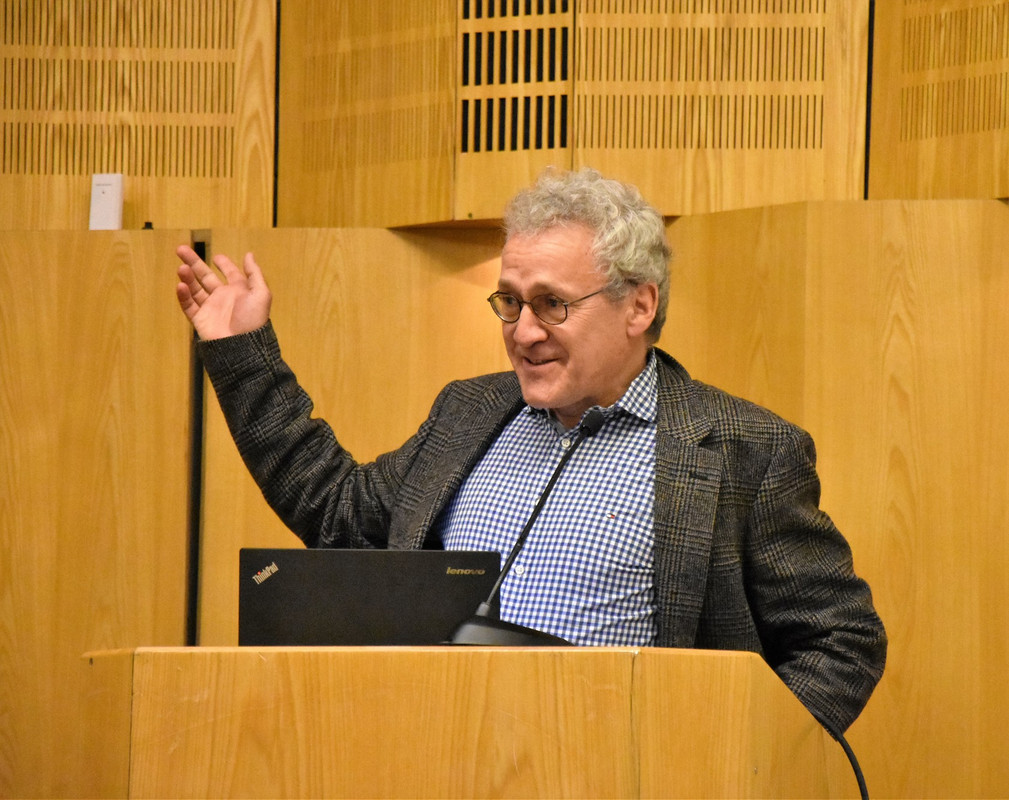
Lames’ conclusion is familiar to the Prussian theorist, Clausewitz who argued that all military plans encounter friction—the gap between theory and reality. Football possesses its own friction. Analysis can improve understanding but it cannot abolish uncertainty. Football’s analytical revolution ultimately uncovered one of the oldest truths about human affairs: knowledge improves probability, not certainty. At this point the story could remain within the realm of statistics and systems. Many contemporary accounts of football do precisely that. They move from Reep to expected goals, from expected goals to machine learning, and from machine learning to ever more sophisticated predictive models. Yet such accounts overlook something important. They explain how football works but they struggle to explain why football matters.
What remains of football after all that can be measured, has been measured?
The narrative moves from England and Germany to Argentina. Jorge Valdano belongs to a very different intellectual tradition. World Cup winner in 1986. Real Madrid striker. Coach. Sporting director. Essayist. Public intellectual. he has spent much of his post-playing life reflecting on football not merely as a sport but as a human activity. If Reep sought to count football, Valdano sought to interpret it. The difference is profound.
Reep’s analytical position begins with actions. Passes, shots, possessions, pressures and transitions. Valdano begins with people. His central concern is not optimisation but meaning. Throughout his briliant book ‘Los 11 Poderes del Líder’, one central idea recurs. Teams are not machines. They are emotional communities. Their performance depends not merely upon talent or tactical sophistication but upon confidence, trust, purpose and belief.
Valdano says, “A football team, is fundamentally a state of mind.”
This proposition appears deceptively simple. In reality it challenges some of the deepest assumptions of modern management. Contemporary organisations often imagine that performance can be engineered through processes, incentives and optimisation. Valdano does not reject these things. But he insists they remain incomplete. In his view, leadership is not primarily about authority. It is about creating a shared emotional reality. The leader’s task is to transform a collection of individuals into a community of belief. To generate trust. To create meaning. To align ambitions. To convert fear into confidence. To sustain hope during adversity. Numbers may describe performance. They do not create commitment.

This insight helps explain why football repeatedly frustrates purely technocratic interpretations. Teams with inferior resources occasionally outperform richer rivals. Groups of individually gifted players sometimes fail spectacularly. Organisations possessing every measurable advantage can still collapse under pressure. The missing variable often resides not in the data but in the collective psychology of the group.
Valdano’s leadership philosophy emerged from a specifically Argentine intellectual environment. To understand him properly one must understand Argentinian footballer César Luis Menotti. Menotti belonged to a generation of Argentine thinkers for whom football formed part of a larger cultural argument about identity, freedom and modernity. His football was not merely attacking football. It was an ethical proposition. For Menotti, beauty mattered. Not because beauty guaranteed victory; but because beauty justified victory. Football should express imagination, creativity and freedom because these were qualities worth cultivating in society itself. The football field became a miniature republic in which larger civic values were rehearsed and displayed.
Valdano inherited this worldview.
For both men, football is never merely about outcomes. It is also about the manner in which outcomes are pursued. Efficiency alone cannot constitute excellence. A purely instrumental conception of football risks stripping the game of precisely those qualities that make it meaningful. This brings us to one of the great recurring debates in football history—and, in modernity too. Is the purpose of organisation to maximise control? Or is the purpose of organisation to create the conditions under which freedom can flourish? The answer to this question divides not only football philosophies but also educational systems, military doctrines, corporations and political orders. Football renders the dilemma visible.
In the next essay in the series leading up to the World Cup 2026 football’s historical journey moves forward through the perspectives of Eduardo Galeano, Arrigo Sacchi, Louis van Gaal and Pep Guardiola. The argument between measurement and meaning becomes even more sophisticated. And, it turns out that the deepest football thinkers were never entirely on one side or the other. Their achievement lay not in choosing between science and art, but in discovering how each depends on the other.

The series continues with another facet of the World Cup tomorrow. This series is essentially a concise version of JP Santhanam’s long format Substack series on the World Cup. The Substack series can be read here.








“A fascinating analysis of how football is shaped not just by talent, but by ideas, systems, and philosophies. Looking forward to the rest of the World Cup 2026 series.” �