

A Year After AI 171: On Fragility, Fate and the Search for Meaning

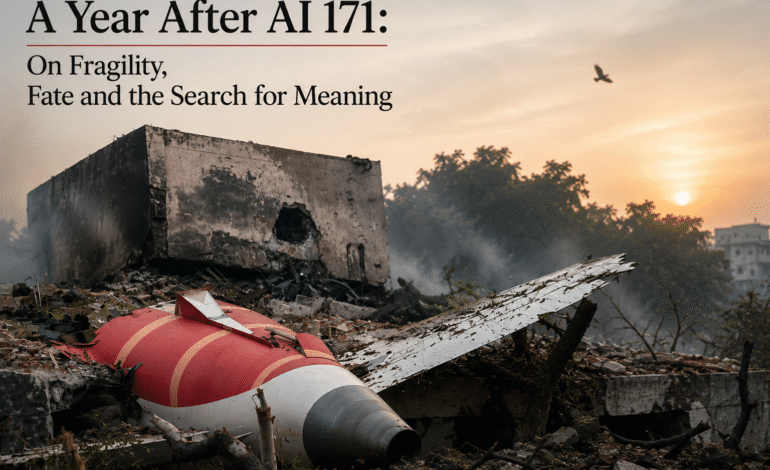
As the first anniversary of the AI 171 tragedy dawns, one unsettling fact remains: the cause of the crash has yet to be conclusively established. An aircraft bound for London from Ahmedabad in Gujarat, laden with hopes, ambitions, anticipated reunions, and the routines of professional life, vanished from the sky less than a minute after take-off. The disaster killed 241 of the 242 people on board (all 12 crew members and 229 passengers) and 19 people on the ground.
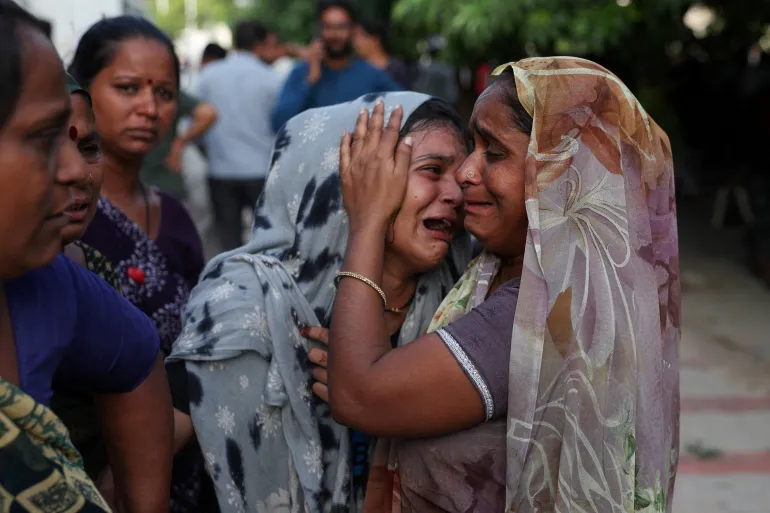
The passage of a year has dulled neither the grief nor the questions.Yet one question lingers above all others: does knowing the cause fully assuage our anguish?
The human mind loathes a vacuum. When a plane falls from the sky, we demand a villain, be it a rogue algorithm or a distracted pilot, because a villain can be conquered. Randomness cannot. We torture ourselves with the tyranny of “Why?”, falsely believing that an explanation will function as an exegesis of our pain. But a final crash report is an autopsy of a machine, not a balm for the soul.
The human mind is wired to seek explanations. We instinctively believe that if only we can identify the errant bolt, the software glitch, the pilot error, or the unforeseen chain of events, we shall somehow regain control over an uncertain world. But history repeatedly reminds us that explanation and consolation are not the same thing.
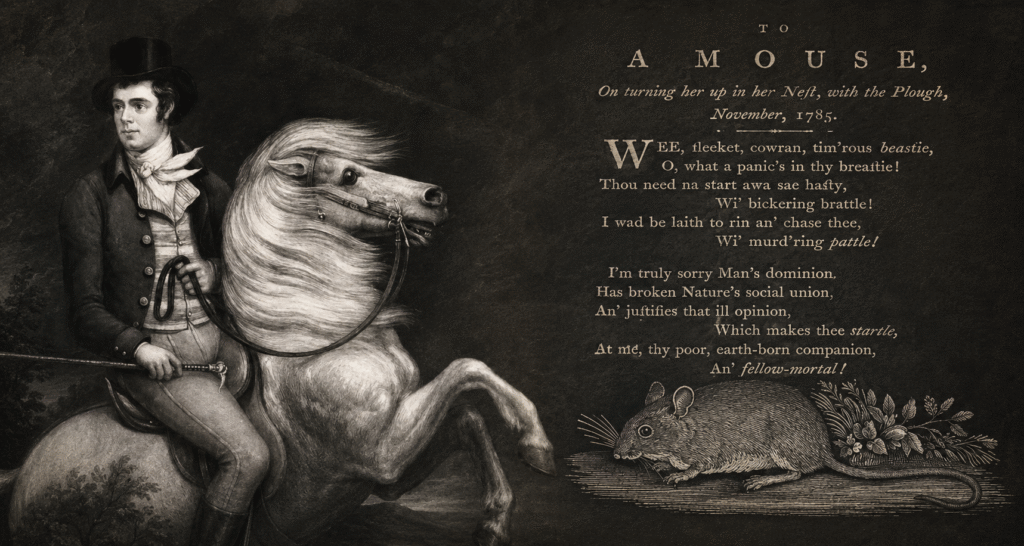
Reflecting on this tragedy, I found myself revisiting a poem written nearly two and a half centuries ago by the Scottish poet Robert Burns—To a Mouse. Written in 1785 after Burns accidentally destroyed a mouse’s nest while ploughing a field, the poem transforms a seemingly insignificant incident into a timeless meditation on fate, vulnerability, and the limits of human control.
Empathy Beyond Ourselves
“I’m truly sorry man’s dominion
Has broken nature’s social union…”
Burns apologises to the mouse whose carefully constructed home has been destroyed in an instant. In doing so, he dissolves the artificial hierarchy between human and animal suffering. The mouse’s tragedy may be smaller in scale, but not in essence.
The passengers aboard AI 171, like all of us, had plans for the evening, the week, and the years ahead. Some were travelling for work, some for celebration, some for duty, and some simply to return home. The mouse, too, had plans—a winter shelter painstakingly built against the coming cold.
Nature, fate, accident, providence—call it what one will—rarely pauses to consult our itineraries.
The Shared Vulnerability of Life
Burns’ most celebrated lines have endured because they capture a truth that transcends centuries:
“The best laid schemes o’ mice an’ men
Gang aft agley.”
The best-laid plans of mice and men often go awry.
Modern civilisation is, in many ways, a grand rebellion against uncertainty. We build stronger aircraft, smarter computers, predictive algorithms, and elaborate safety systems. Aviation itself is one of humanity’s greatest triumphs over risk. Yet every advance merely narrows uncertainty; it never abolishes it.
Aviation experts have debated whether a malfunction in the FADEC (Full Authority Digital Engine Control) system may have contributed to the tragedy. Suppose one day a definitive answer emerges. Suppose the industry responds with more sophisticated safeguards. Suppose future aircraft are governed by systems far more intelligent than today’s computers.
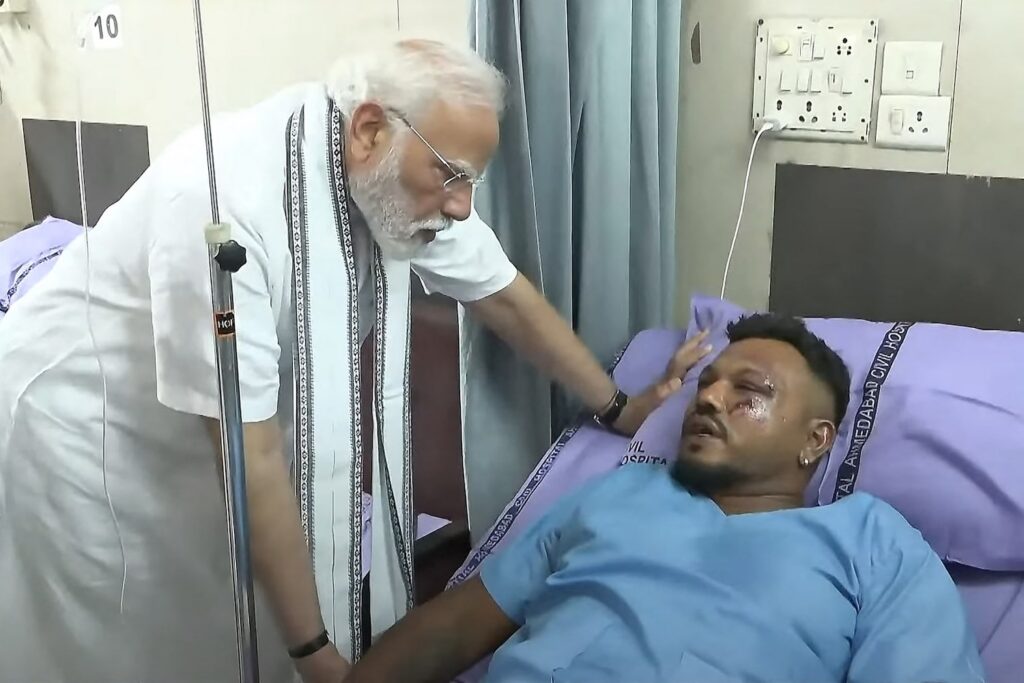
Would uncertainty disappear? History suggests otherwise.
The unsinkable RMS Titanic struck an iceberg. The Space Shuttle Challenger disaster ended in catastrophe seventy-three seconds after launch. The meticulously planned Apollo 13 mission nearly became a tragedy because of a sequence of improbable failures. Each generation believes it has finally mastered risk; each generation discovers new forms of vulnerability.
Technology changes. Human finitude does not.
The Illusion of Control
Psychologists speak of the illusion of control—our tendency to overestimate our ability to influence events. It is a useful illusion. Without it, we would never attempt ambitious projects, board aircraft, build businesses, or raise families.
But every so often, reality reminds us that control and certainty are not synonyms. The retirement of the flight number AI 171 is an act of modern corporate, institutionalised magical thinking. We cross our fingers, we change the digits, we rename the vessel. Psychologically, these are protective rituals, secular prayers offered to a sky we suddenly no longer trust. We know, rationally, that numbers have no agency, yet we alter them because facing the raw, naked randomness of existence without a ritualistic shield is psychologically intolerable. Renaming a flight cannot alter the fundamental unpredictability woven into existence.
Ancient sailors renamed ships after storms. Kings consulted astrologers before battles. Modern corporations rebrand products after failures. Human beings have always sought rituals that convert randomness into meaning.
These rituals may soothe, but they do not shield.
The Plight of the Powerless
Burns saw in the displaced mouse a reflection of the poor farmer, the labourer, the ordinary person whose life could be overturned by forces beyond comprehension or control.
The AI 171 tragedy similarly reminds us of a difficult truth: for all our sophistication, most of us remain passengers, not merely in aircraft, but in life itself. The horror of AI 171 is the horror of surrendered agency. The moment the cabin doors close, we lock our control inside a vacuum-sealed tube. The tragedy forces a terrifying psychological mirror before us: we are all sitting in cabins we do not pilot, moving through a life governed by systems, health diagnoses, and economic currents we can neither see nor control. The passengers at Ahmedabad were not unique in their vulnerability; they were merely forced to pay its ultimate price.
A sudden illness, a market crash, an earthquake, an unexpected diagnosis, a distracted driver, or a mechanical failure can redraw a life’s trajectory without warning.
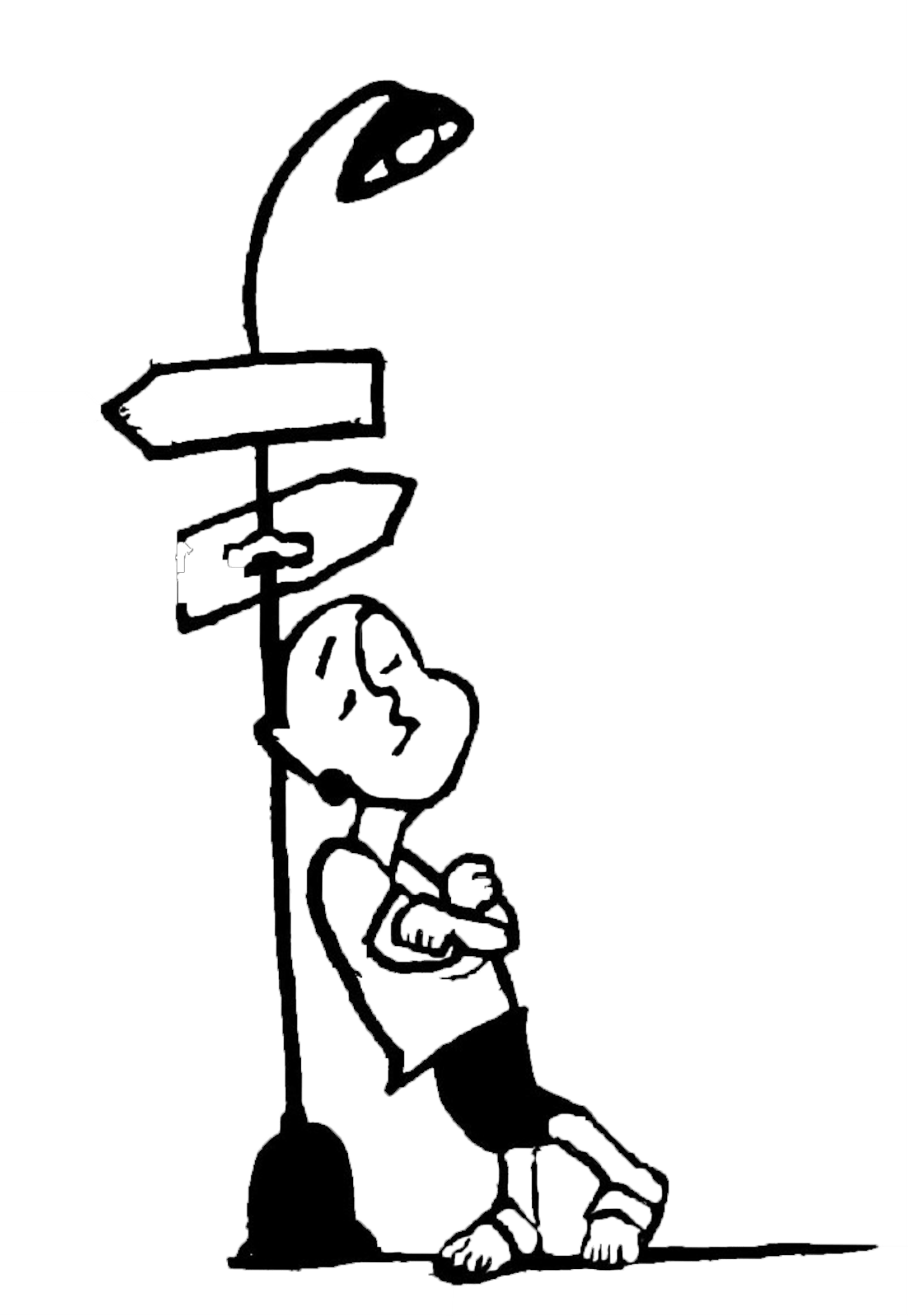
The philosopher Martin Buber observed that “all journeys have secret destinations of which the traveller is unaware”. We imagine ourselves moving towards carefully chosen destinations, yet life often has other plans. Some journeys end where we intended. Others reveal destinations we never imagined.
The Burden of Human Consciousness
Burns concludes with a striking observation:
“Still thou art blest, compared wi’ me!
The present only toucheth thee…”
The mouse lives in the present. Humans do not. We revisit yesterday’s mistakes and anticipate tomorrow’s dangers. We reconstruct causes, imagine alternatives, and replay possibilities. This ability is the source of our creativity, foresight, and civilisation. It is also the source of much of our suffering.
The families of those lost in AI 171 have undoubtedly asked countless times: What happened? Could it have been prevented? Why them?
These are profoundly human questions. They deserve investigation and answers. Yet even when answers arrive, they rarely extinguish grief.
Psychological healing does not arrive with the final crash report. It begins in the quiet, agonising moment when we stop demanding that life be certain and instead learn to coexist with its terrifying fragility.
A Lesson from the Field
Burns’ mouse never knew that a plough was approaching. The passengers aboard AI 171 never imagined that their journey would become part of national memory. Nor do any of us know what unforeseen turn awaits beyond the horizon.
This is not a counsel of despair. Quite the opposite. The recognition of life’s fragility is what gives significance to ordinary moments—a conversation postponed, a hand held, a promise kept, a reunion celebrated, a sunset noticed.
A year after the tragedy, investigators must continue their search for facts. Aviation must continue its pursuit of safer skies. Engineers must strive to eliminate every preventable risk.
But beyond engineering lies a quieter lesson. The best-laid plans of mice and men will continue, from time to time, to go awry. The appropriate response is neither fatalism nor fear. It is humility: the wisdom to prepare diligently, to cherish deeply, and to recognise that certainty has never been humanity’s birthright.
For all our technological prowess, we remain, in Burns’ enduring vision, fellow travellers with the mouse—building our nests, making our plans, and hoping, as every generation has hoped, that tomorrow will resemble today.
And perhaps therein lie both our vulnerability and our greatness.





The article goes beyond the immediate tragedy and reminds us of the fragility of human life. In moments like the Air India 171 crash, facts and accountability remain essential, but so does empathy for the victims, their families, and all those affected. A thoughtful reflection on loss, uncertainty, and the search for meaning in the face of disaster. 🙏
Very interesting Sir
‘Every journey has a secret destination, that’s unknown for the traveller’ summarises it all. Profound thought behind this powerful writing.