

Where the Grey Rhinos Roam: Kerala’s Ignored Warnings and the Human Cost of Disasters


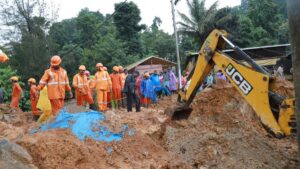
Kerala has witnessed yet another devastating landslide. This time, five precious lives have been lost. As is tragically common in such disasters, the victims belong to the most vulnerable sections of society.
The landslide occurred near the tunnel road currently under construction, tragically vindicating the long-standing warnings of environmentalists who have long demanded a moratorium on large infrastructure projects in the ecologically fragile Western Ghats. By pushing ahead with the project despite clear warnings and in defiance of its own earlier assessments of similar disasters the government bears significant responsibility for this tragedy.
Disasters are typically classified as natural or man-made. However, this distinction has become increasingly blurred. There is growing recognition that many so-called “natural” disasters are exacerbated or even triggered by human interventions in local ecosystems and habitats. While debates continue over precise definitions, the role of anthropogenic factors is now impossible to ignore.
A common thread in the disasters that have repeatedly struck Kerala in recent years is that they fit squarely into the category of “Grey Rhino Events” in disaster management terminology. A Grey Rhino Event is a highly probable crisis or threat with severe potential impact, marked by clear and repeated warning signs. Despite being foreseeable, it is often ignored until it inflicts widespread damage.
The recent landslide in Kalladi, Wayanad, along with the devastating 2024 landslide in Meppadi, are textbook examples of Grey Rhino events. In both cases, clear indicators ecological fragility, unstable slopes, and extreme rainfall patterns signalled an impending disaster. Yet, these warnings were consistently overlooked by the authorities.
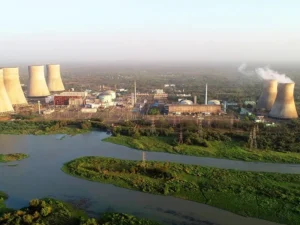
This points to a deeper systemic failure: an administrative system that too often appears indifferent to human lives and livelihoods. Such neglect persists because those who ignore warnings rarely face meaningful accountability or stringent legal consequences. India’s disaster management systems frequently operate on a “Bhagwan Bharosa” approach relying more on divine providence than on robust, proactive preparedness. Even critical infrastructure, such as nuclear power plants that require the highest safety standards, has suffered serious lapses that only come under scrutiny after near-misses or actual disasters. For instance, in 1994, heavy rains in South Gujarat caused flooding at the Kakrapar Nuclear Power Plant’s turbine building, forcing a site emergency. Yet, despite such incidents, there has been little sustained effort to reform negligent practices or hold those responsible accountable through strict laws.
Grey Rhino events exacerbate social inequality, erode public trust, weaken social cohesion, and hinder progress. They are becoming an increasingly normalised part of life in vulnerable regions. The only effective response lies in raising widespread public awareness about the nature of these disasters, the human actions that amplify them, and the urgent need for prevention. This must be backed by a strong, sustained social movement that demands accountability, better governance, and genuine resilience-building efforts.








A powerful and necessary article. The most devastating disasters are often the ones we see coming but fail to act upon. This piece is a compelling reminder that scientific warnings, environmental responsibility, and accountable governance are essential if we truly value human lives. An important read by AIDEM.