

India’s Highway Dream Is Costing Us a Fortune

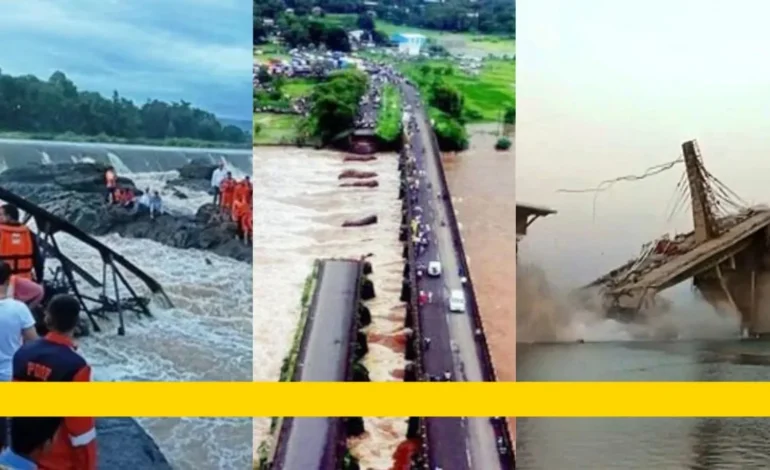
For years, India’s infrastructure narrative has been defined by the breathless pace of its highway expansion—a record-breaking drive toward a supposedly modern, interconnected future.
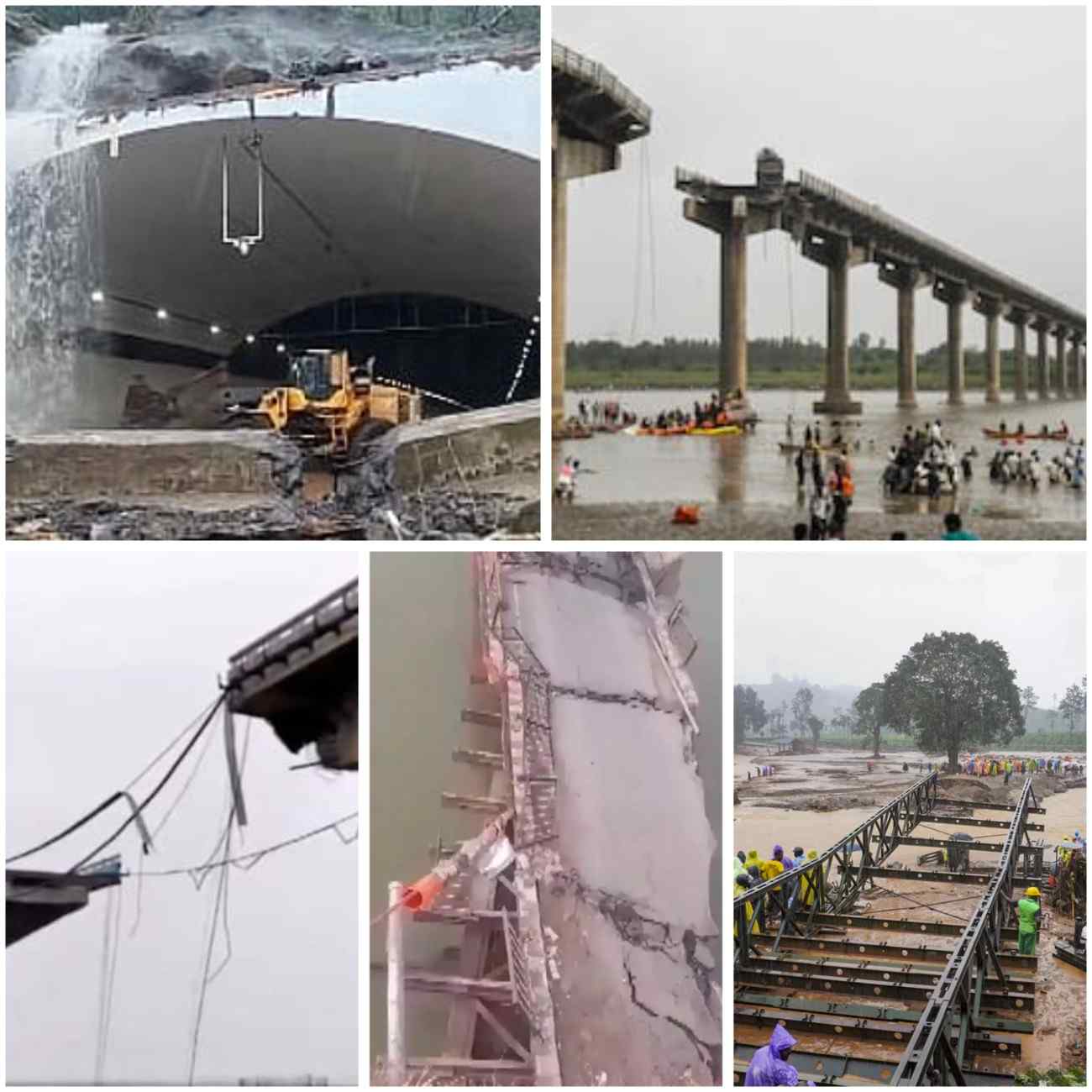
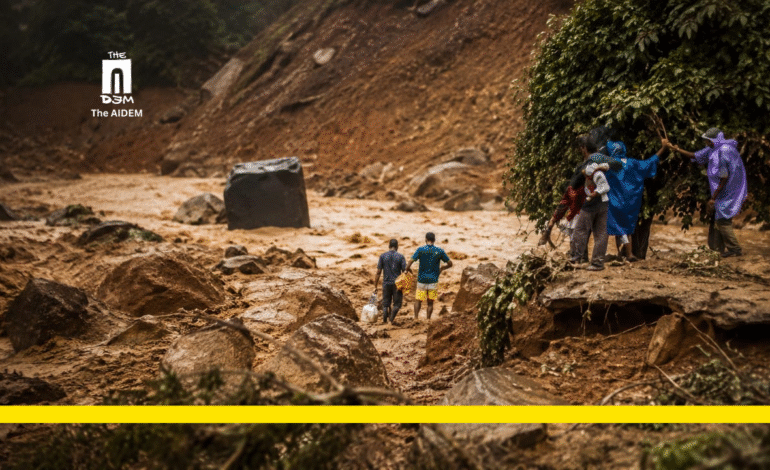
However, recent events, including collapse of the newly constructed Rs 7,000-crore Missing Link tunnel on the Mumbai-Pune Expressway as well as the landslide in Kerala’s Wayanad and other regions, have exposed a dangerous disconnect between this headline-grabbing projects of publicity and the actual quality of our public works.
This grim pattern includes the 2025 collapse of the Gambhira Bridge in Gujarat, which claimed nearly two dozen lives, the sudden failure of the Vikramshila Setu in Bihar in May 2026, and the tragedy in Uttar Pradesh the same year, where an under-construction bridge over the Betwa River gave way, resulting in the loss of six lives.
Here , Ashok Bharti points out that these tragedies are not mere accidents; they are the conspicuous symptoms of an infrastructure model that values the aesthetic of rapid progress over the rigour of sound engineering and fiscal accountability.
As the fiscal burden of these projects balloons into the trillions and the safety of citizens is increasingly compromised, Bharti says , we must move beyond the polished promotional imagery. It is time to critically examine whether our national “highway dream” is truly building a sustainable future, or if we are trading long-term structural safety for short-term political gains.
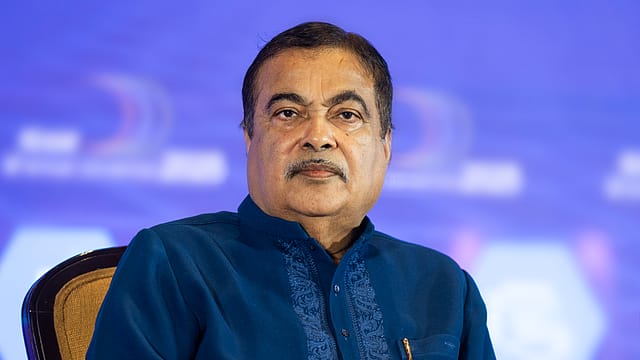
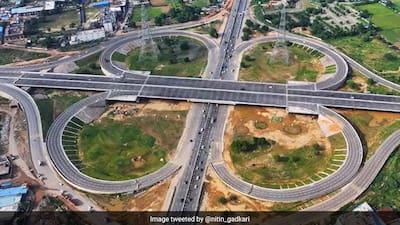
There is a photograph that the Ministry of Road Transport and Highways loves to circulate. A freshly laid six-lane expressway stretching into a golden horizon. Smooth asphalt. Clean white markings. The kind of road that makes you believe, for a brief and generous moment, that India has arrived. Minister Nitin Gadkari has built an entire political identity around such photographs — and to be fair, he has earned some of it. When I began my career as a cost engineer on national highway projects in 2010, we were constructing barely 12 kilometres of highway a day. By 2021, that number had touched 37 kilometres per day — a record that made headlines around the world.
But here is what does not make the headlines: that same kilometre of road, which cost India approximately ₹9 crore to build in 2010, now costs anywhere between ₹30 crore and ₹45 crore. On greenfield expressways — the ones that appear in all those golden-horizon photographs — the cost routinely breaches ₹60 crore per kilometre. In the most extreme documented case, the Dwarka Expressway in Delhi was built at a staggering ₹250 crore per kilometre. The approved cost was ₹18 crore.
That is not an overrun. That is an implosion.
The Numbers We Are Not Talking About
I have spent fifteen years reading project cost statements, reconciling tender figures, and arguing with contractors over steel rates and bitumen indices. Numbers do not lie — but they can be buried, and in India’s highway sector, they often are.
Between 2010 and 2025, the per-kilometre cost of a standard four-lane national highway has risen by roughly 350 percent. Some of this is legitimate. Inflation is real. Land prices in a rapidly urbanising country are real. Better specifications — wider lanes, stronger pavements, more bridges and underpasses — are also real improvements. A highway built today is genuinely safer and more durable than one built in 2010.
But inflation alone cannot explain a 350 percent cost increase over fifteen years. The wholesale price index for construction materials has not tripled. Wages, though rising, have not tripled. Something else is happening — and a 2023 report by the Comptroller and Auditor General of India finally said so in plain language.
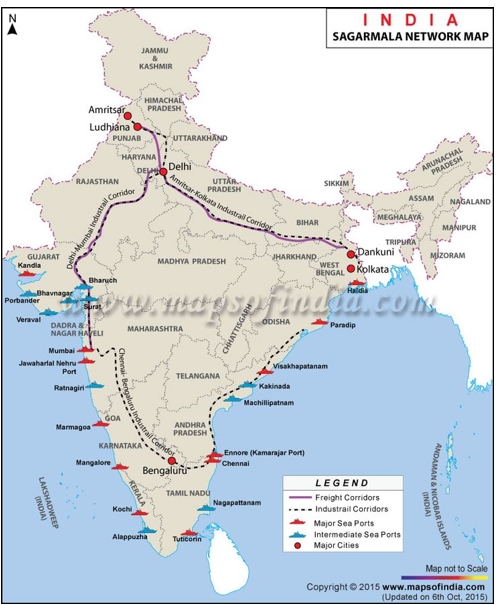
The CAG found that under the Bharatmala Pariyojana — India’s flagship ₹5.35 lakh crore highway programme — sanctioned costs had ballooned to 58 percent above the Cabinet Committee on Economic Affairs-approved estimates. The CCEA had approved construction at approximately ₹15.37 crore per kilometre. By the time projects reached the sanctioning stage, that figure had quietly climbed to ₹32.17 crore per kilometre. The CAG also found projects being awarded without approved Detailed Project Reports, without secured land, and without environmental clearances. Contractors were selected on the basis of falsified documents. Price adjustment formulas were incorrectly computed, resulting in excess payments. Nearly ₹3,600 crore was diverted from escrow accounts.
None of this stopped the press releases.
The Land Acquisition Time Bomb
Of all the cost drivers that have transformed highway economics in India since 2010, land acquisition is the most consequential and the least honestly discussed.
The Right to Fair Compensation and Transparency in Land Acquisition, Rehabilitation and Resettlement Act of 2013 was a necessary and overdue correction to decades of state-sanctioned dispossession of farmers and Adivasi communities. It mandated social impact assessments, consent clauses for private projects, and compensation at two to four times the market rate. In principle, this was justice. In practice, for a sector addicted to the old model of acquiring land at throwaway prices from those least able to resist, it was a reckoning.
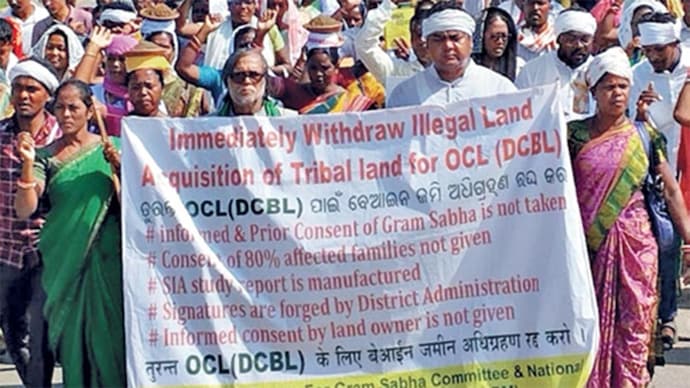
Today, land acquisition alone accounts for fifteen to twenty percent of total project cost on a typical four-lane highway — and far more in peri-urban stretches where real estate has appreciated dramatically. On some urban expressway projects, land costs have exceeded the civil construction cost itself. The system has responded not by reforming procurement and planning, but by passing the cost upstream — to the government balance sheet, to NHAI’s ballooning debt, and ultimately to the taxpayer.
NHAI’s debt, which stood at modest levels in the early 2010s, has crossed ₹3.5 lakh crore. The organisation services this debt partly through toll revenues — but toll revenue, however impressive it sounds at ₹41,000 crore in FY2022, is structurally insufficient to retire the kind of debt being accumulated at current construction rates. The business model, stripped of its nationalist mythology, is one of perpetual borrowing against future tolls — a motorway mortgage that future generations will spend decades paying down.
Speed as a Substitute for Accountability
There is a particular genius to the way India’s highway programme has been politically managed. By making speed the primary metric of success — kilometres per day constructed, total length awarded, records broken — the conversation has been permanently steered away from cost, quality, and outcome.
Consider: in FY2024, India constructed highways at 34 kilometres per day. This is genuinely impressive. But what does a kilometre per day tell us about value for money? Nothing. A kilometre of poorly designed road in flat terrain with no structures is not the same as a kilometre of technically complex corridor with viaducts, tunnels, and wildlife crossings. Aggregating them into a single daily rate and presenting it as achievement is a category error dressed up as governance.
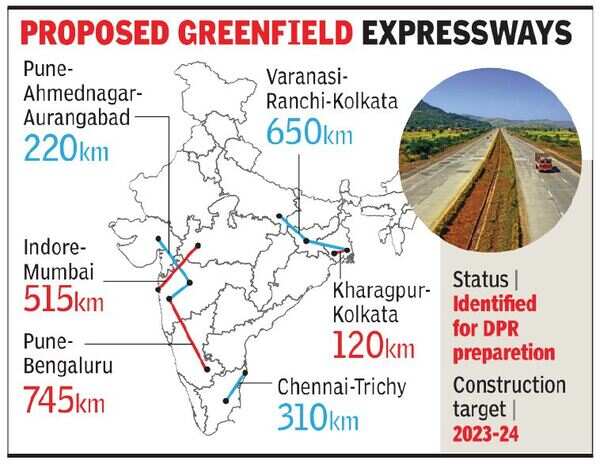
Meanwhile, as of March 2023, only 13,499 kilometres of the 34,800 kilometres targeted under Bharatmala Phase-I had been completed — just 38.79 percent — despite the original deadline of 2022 having passed. The money has been spent. The kilometres have not materialised. The debt has accumulated. The press releases continue.
What About the Roads That Do Not Photograph Well?
Here is an uncomfortable arithmetic exercise. India has spent, and is spending, enormous sums on expressways and greenfield corridors that serve predominantly commercial freight and private vehicle traffic. The Delhi–Mumbai Expressway, magnificent as it is, will primarily benefit the trucking industry and the upper-income motorist who can afford both a car and the toll.
Meanwhile, India’s rural road network — the Pradhan Mantri roads that connect villages to markets, children to schools, and patients to hospitals — continues to deteriorate faster than it is maintained. A two-lane national highway in a tribal district costs ₹6–10 crore per kilometre to build. It receives a fraction of the planning attention, engineering talent, and political visibility that a greenfield expressway attracts.
The cost engineering question that nobody in the ministry wants to answer is this: what is the social return per rupee invested across different road typologies? Is ₹60 crore spent on one kilometre of expressway generating more welfare than ₹60 crore spent on ten kilometres of upgraded rural highway in an agrarian district? The data required to answer that question exists. The political will to commission the analysis does not.
The Reform Agenda We Need
None of this is an argument against building highways. India’s infrastructure deficit is real, and roads are the circulatory system of an economy that aspires to become the world’s third largest. The case for investment is sound.
The case for the current model of investment is not.
What India needs is not fewer roads but smarter ones — and an institutional culture that treats cost engineering as a profession rather than a formality. Here is what that looks like in practice:
First, the DPR must be sacrosanct. No project should be awarded without a completed, independently verified Detailed Project Report, with land secured and environmental clearance in hand. The CAG has documented what happens when this discipline breaks down: it produces Bharatmala — a programme of spectacular ambition and systemic dysfunction.
Second, cost benchmarks must be disaggregated and publicly published annually by terrain type, highway configuration, and procurement model. Citizens, parliamentarians, and engineers deserve to know whether India is paying international rates for roads of international quality — or international rates for roads of a lesser standard.
Third, land acquisition must be planned ten years ahead of construction, not ten months. The single greatest source of cost overrun and project delay in the sector is late land availability. This is a planning failure, not an act of God, and it must be treated as one.
Fourth, NHAI’s debt must be subjected to a transparent, independent sustainability audit. An organisation carrying ₹3.5 lakh crore of debt while continuing to borrow for new projects requires parliamentary oversight of a kind that has so far been absent.
Fifth, the political culture of announcing projects before they are ready must end. Every premature announcement creates a clock that project teams must then race against — a race that invariably produces the corner-cutting, scope-changing, and cost-inflating that the CAG has now meticulously documented.
A Road Worth Building
I have stood at the edge of freshly laid highways at dawn, watching the first trucks roll across the asphalt, and felt something close to pride. Infrastructure, at its best, is a civilisational statement — a society’s declaration that it intends to move, connect, and grow.
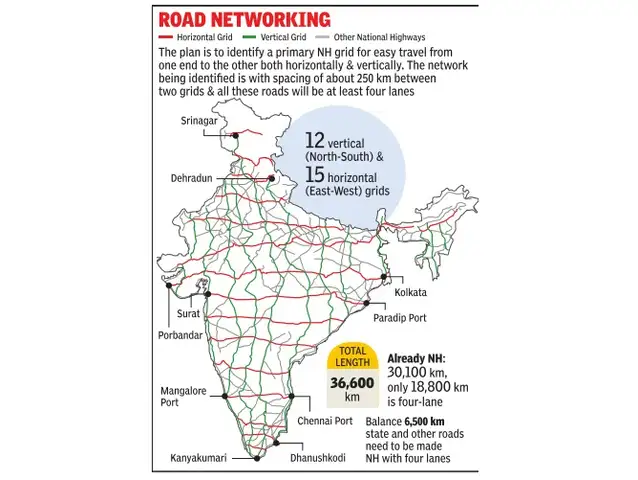
But infrastructure at its worst is a transfer of public wealth to private contractors, a monument to political vanity, and a debt burden that forecloses future choices. The difference between the two is not intention — it is accountability.
Government of India is building roads at historic speed. It is time we need to ask with equal urgency, whether we are building them at the right cost, in the right places, for the right people.









A timely and deeply insightful piece. The greatest tragedies often begin long before disaster strikes—when warnings are ignored and accountability is delayed. This article powerfully reminds us that respecting science, protecting people, and learning from past mistakes are essential to preventing future loss. Outstanding work.