

When Founders Leave, But Don’t: The Kotak Paradox and the Limits of Corporate Governance

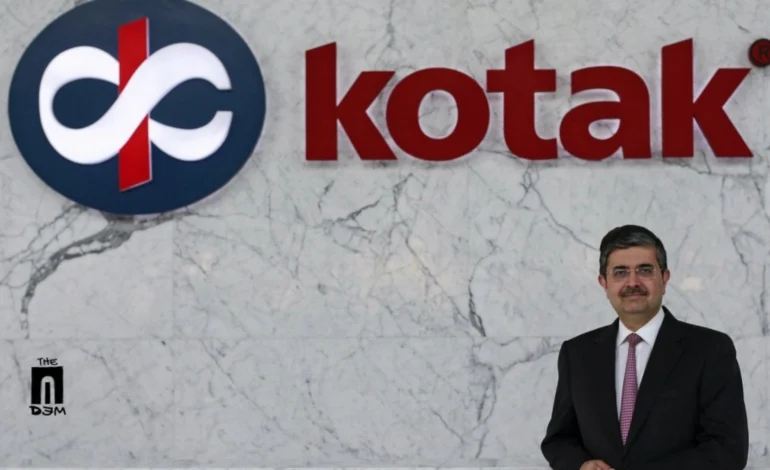
The true test of a founder is not merely the institution they create but the architecture that remain after they step aside. If a founder’s wisdom continues to guide an institution, it stands as a tribute to their legacy. But if the institution cannot function without that wisdom, it raises an entirely different question. One that points away from the founder and directly toward corporate governance.
Few episodes in Indian banking history illustrate the chasm between the letter and the spirit of corporate governance as vividly as the story of Uday Kotak. Here is a leader who chaired a government-appointed board to rescue IL&FS from systemic collapse, led a landmark SEBI committee that reshaped governance norms for listed companies, built one of the nation’s admired private-sector banks, and was honoured with the Padma Shri. He has generated monumental, enduring value for every shareholder who placed their faith in Kotak Mahindra Bank. None of this is up for debate.
Yet, his trajectory uncovers a fundamental question that India’s governance architecture has failed to answer: when a founder steps back from executive office, dilutes his shareholding under regulatory mandate, and formally relinquishes control, does his underlying influence actually diminish? Or has it merely changed its corporate address?
Compliance Achieved. Independence?
Uday Kotak built Kotak Mahindra Bank from a scrappy bill-discounting outfit into a full-service banking behemoth with a market capitalisation ranking among India’s largest. From the outset, he maintained a dominant promoter stake.

When the Reserve Bank of India (RBI) introduced guidelines requiring private bank promoters to progressively dilute their holdings to 15 per cent, Kotak Mahindra Bank became the ultimate regulatory battleground. Uday Kotak famously contested the RBI’s timeline on moral and structural grounds, taking the apex regulator to the Bombay High Court. It was an unprecedented spectacle: the founder of one of India’s most respected financial institutions in open legal warfare with its regulator over the velocity and depth of his ownership divestment.
The standoff ended in a negotiated settlement. The RBI subsequently revised its framework, permitting promoters to retain up to 26 per cent over the long term, and Kotak’s stake was recalibrated accordingly. Under regulatory tenure limits, he eventually stepped down as Managing Director and CEO, transitioning to a non-executive, non-independent director.
On paper, every box has been checked. The promoter was diluted. The executive abdicated. The board is professionally populated; management is independent. Formal compliance is flawless.
Trusted Abroad. Restrained at Home.
What makes this case a profound study in institutional psychology is the simultaneous, paradoxical posture of India’s regulatory apparatus toward a single individual. Consider what three separate arms of the state were doing concurrently:
- The RBI demanded that Kotak reduce his ownership, operating on the doctrine that concentrated promoter shareholding in private banks poses a systemic hazard.
- The Government of India appointed Kotak to chair the emergency board of IL&FS, operating on the counter-doctrine that resolving a systemically vital financial crisis required the exact brand of exceptional individual power the RBI sought to constrain.
- SEBI tasked Kotak with chairing its Committee on Corporate Governance, entrusting him to draft the very rules meant to govern the delicate friction between founders, boards, and public shareholders.
This is not institutional hypocrisy; it is an institutional revelation. It demonstrates that our regulatory ecosystem distrusts concentrated power in the abstract yet remains deeply dependent upon exceptional individuals in the particular. India’s institutions displayed extraordinary confidence in Uday Kotak, the individual, even as they legislated caution against Uday Kotak, the promoter.
The market’s perception—rightly or wrongly—is that a founder’s shadow outlasts his formal designation. And because market confidence is itself a primary governance asset, perception cannot be dismissed as noise.
The Kotak Committee’s Uncomfortable Mirror
The committee SEBI appointed Kotak to lead in 2017 delivered recommendations that genuinely elevated the Indian corporate landscape. It mandated a more muscular role for independent directors, strict criteria for board selection, the explicit separation of the Chairman and CEO roles, enhanced disclosure obligations, and more robust risk frameworks.
Yet, the Kotak Committee’s legacy invites a deeply ironic question: is it possible that the individual best equipped to map the fault lines between formal compliance and actual influence was himself the epicentre of India’s most watched regulatory tug-of-war? Should governance reforms be judged merely by the purity of their checklists or by whether they successfully dismantle an institution’s structural dependence on a singular personality?
De Jure vs. De Facto: The Intangible Balance Sheet
Corporate governance scholarship hinges on the divide between de jure governance—the legal layout of boards, equity split sheets, and audit committees—and de facto governance, which maps where actual decision-making authority truly resides.
India’s regulatory framework has grown aggressively legalistic. We measure promoter percentages to the decimal point, log independent director tenures, and audit voting rights. These metrics are vital; they deter egregious malpractice and construct guardrails.
What they cannot measure, however, is the gravity of institutional memory. A founder’s authority is forged over decades through deep counterparty relationships, boardroom dynamics, employee loyalty, and the intangible premium of strategic judgement that markets price into an individual rather than a title. This is capital that cannot be sold down in a secondary market offering; it does not appear on a shareholding register.
The Equity That Cannot Be Sold
Global financial history confirms that “founder capital”—the accumulated moral authority and relationship networks of an institution’s creator—is highly illiquid:
- Jamie Dimon has dominated JP Morgan Chase intellectually for two decades, not through equity ownership, but as the definitive strategic voice of Wall Street.
- Warren Buffett has shaped Berkshire Hathaway via a reputational gravity that no corporate governance reform could ever dilute.
- N.R. Narayana Murthy famously intervened in succession and strategy disputes at Infosys long after vacating executive office, proving that founder authority reasserts itself the moment an institution encounters headwinds.
- Howard Schultz’s multi-decade trajectory at Starbucks acts as a case study in succession amnesia. Twice after relinquishing executive command, Schultz was recalled by a board that found itself structurally incapable of navigating crisis and maintaining its corporate identity without its architect’s proximity.

None of these instances imply wrongdoing. They point to an organic reality: founders carry a level of institutional conviction that organisations cannot easily clone. The true governance challenge is not the corporate eradication of the founder but ensuring that boards retain the genuine capacity to exercise independent judgement—including the courage to say “no” to their creator. The critical distinction lies between influence exercised through persuasion in open deliberation and influence that operates through unspoken deference. The former enriches an institution; the latter hollows it out.
A Convergence of Shadows: Vaswani, Rajan, and the IL&FS Thread
The immediate horizon at Kotak Mahindra Bank perfectly encapsulates this reality through two highly interconnected developments.

First, Ashok Vaswani, who assumed the mantle of MD & CEO to steer the bank into its post-founder era, has announced he will not seek an extension of his tenure when his term concludes in December 2026. After a turbulent period navigating technology clampdowns and executive departures, the bank is thrust back into a critical succession phase. The leadership question remains wide open.
Second, the bank’s part-time Non-Executive Chairman is C.S. Rajan—the former IAS officer who took the reins at IL&FS during its high-stakes restructuring. IL&FS was, of course, the exact burning building Uday Kotak was deployed by the government to save.

These details do not imply impropriety. Rather, they demonstrate how a highly concentrated, elite cadre of trusted arbiters routinely circulates among India’s financial regulators, corporate rescue missions, and elite boardrooms. It underscores the reality that de facto power in Indian finance is governed as much by an elite network of reputation as it is by the formal separation of roles.
The Enduring Lesson
The ultimate takeaway of the Kotak paradox is not whether a 15 per cent or 26 per cent promoter cap is the mathematically correct threshold. The lesson is the stark limitation of a purely legalistic approach to regulatory reform.
Regulatory compliance, no matter how meticulously executed, is not synonymous with institutional independence. A board that operates in perpetual deference to a former executive—even while maintaining a perfectly independent composition on paper—has failed the true objective of governance reform.
The law can easily prescribe board composition and equity ceilings. It can never prescribe the psychological texture of a boardroom debate, the weight assigned to a specific voice, or the subconscious self-censorship an institution practices in the presence of its architect. True corporate maturity demands more than compliant structures; it requires an independent culture. And building that remains a task far harder than any regulator can mandate.










**An insightful analysis of a critical governance dilemma. The article goes beyond one individual or one company to ask whether institutions can truly become independent of their founders. A timely reminder that good corporate governance is built on accountability, transparency, and strong institutions—not personalities.**
A well written article. Insightful. Bare facts.