


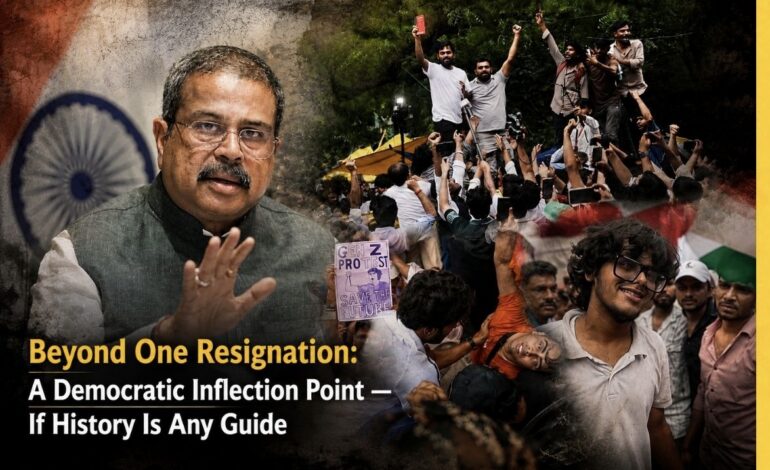
Ministers have resigned before. Governments have yielded to public pressure before. Yet the resignation of Union Education Minister Dharmendra Pradhan has a larger significance and it lies in the democratic process that compelled it—and in the political possibilities that process has now set in motion.
Having reported from Delhi over four decades, one cannot help but view the present movement against the backdrop of earlier mass mobilisations that reshaped India’s politics. Each emerged from a legitimate public grievance. Each altered the national political discourse. But not all of them strengthened democratic politics in the long run. Some ended up reinforcing forces very different from those that had originally animated them.
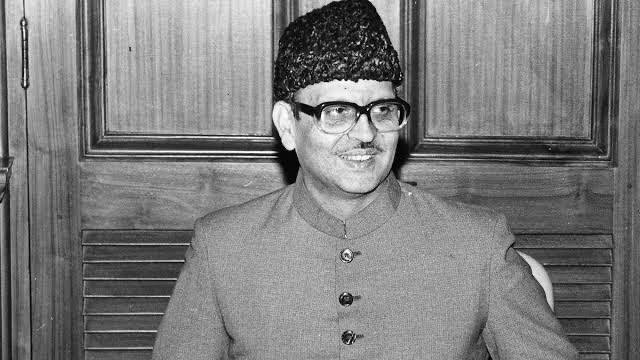
The first major example was the anti-corruption movement led by V.P. Singh in the late 1980s. The Bofors scandal became a rallying point against the Rajiv Gandhi government and culminated in the political upheaval of 1989. It was a movement that drew strength from widespread public anger against corruption and abuse of power. Yet, even as that democratic churn unfolded, another political current was gathering force.
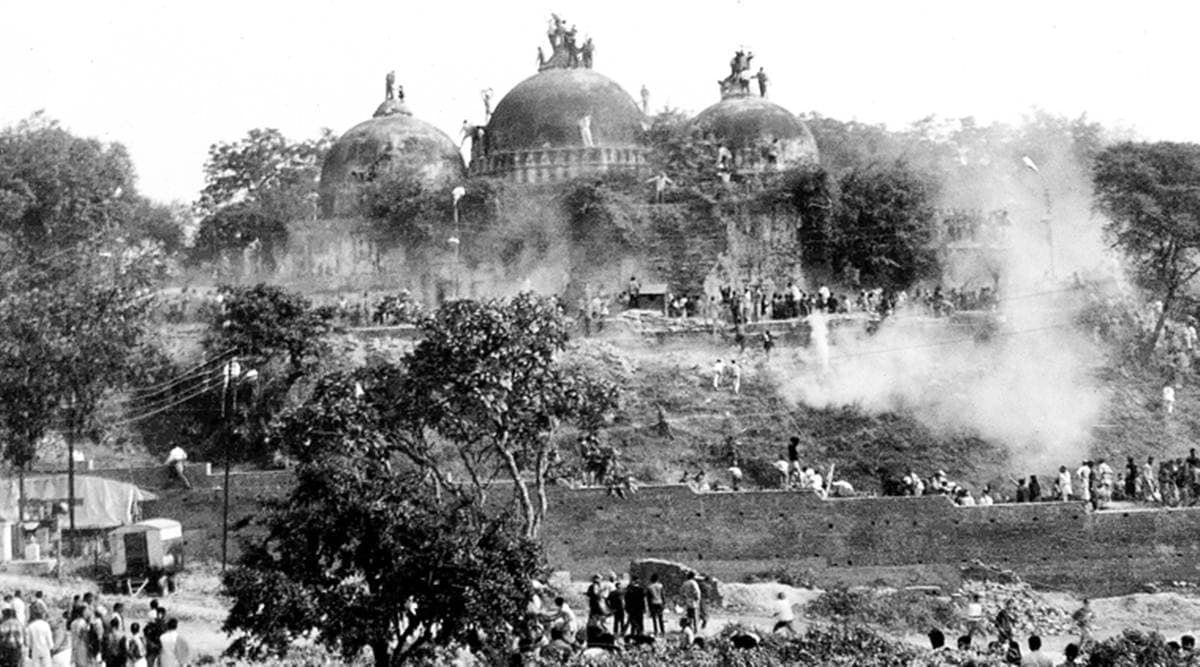
The Sangh Parivar successfully embedded the Ayodhya movement within the anti-Congress political space, steadily shifting the centre of gravity from questions of accountability to questions of religious identity. The demolition of the Babri Masjid in 1992 demonstrated how a democratic opening created by one movement could be appropriated by another with a very different ideological objective.
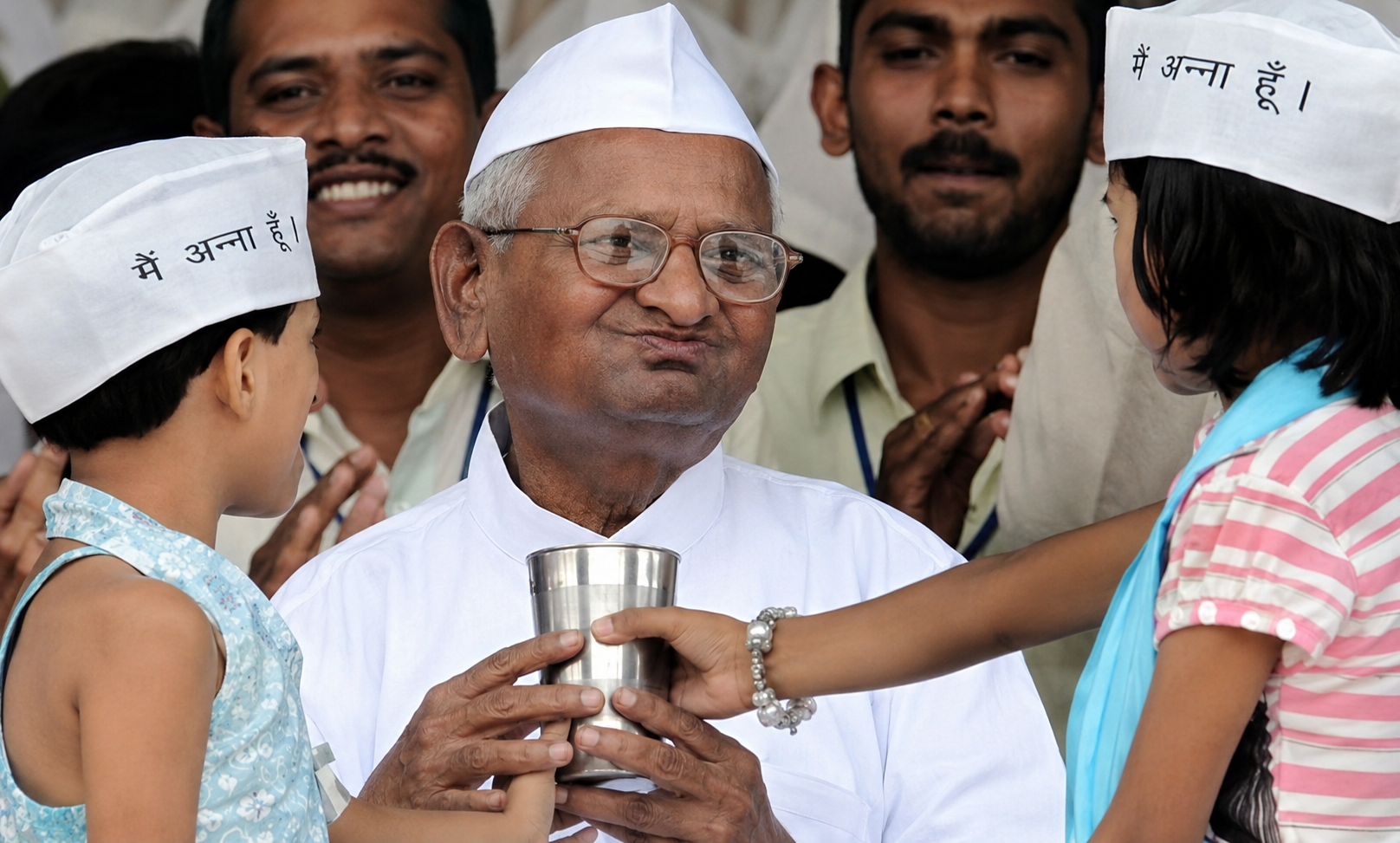
The second turning point came in the first decade of the 2000s with the Anna Hazare movement against corruption. Once again, hundreds of thousands of ordinary citizens—particularly urban youth—entered public life believing they were participating in a struggle to cleanse governance. The movement undoubtedly generated new political energy and eventually gave rise to the Aam Aadmi Party. Yet it also became fertile ground for the Sangh Parivar’s broader anti-UPA campaign. The discourse against corruption was gradually woven into a larger narrative that helped prepare the ground for the Bharatiya Janata Party’s sweeping victory in 2014. Many of the democratic aspirations that animated the original mobilisation were eventually overshadowed by the consolidation of majoritarian politics.
These historical experiences matter because they underline a recurring lesson. Mass democratic movements are rarely shaped only by those who initiate them. Once they acquire national momentum, competing political forces attempt to redirect their energy towards their own ideological and electoral objectives. The Sangh Parivar has repeatedly demonstrated an exceptional organisational capacity to intervene in such moments, absorb popular discontent and reframe it within its own political project.
It is against this historical backdrop that the present youth movement assumes significance.
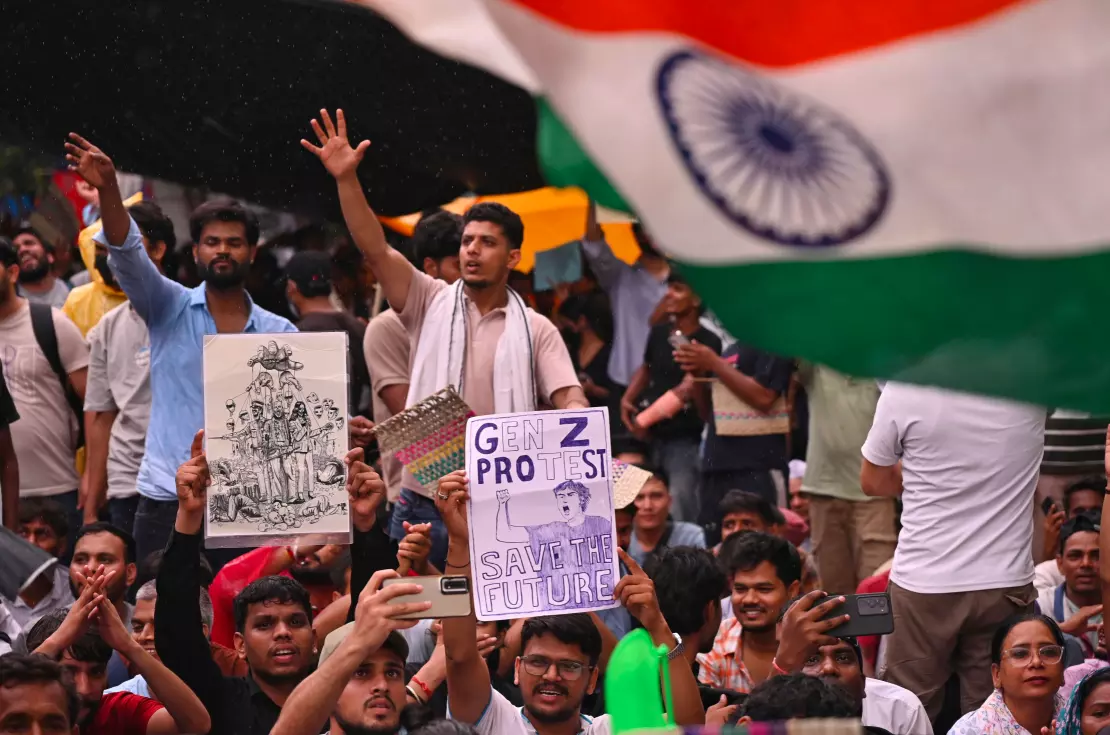
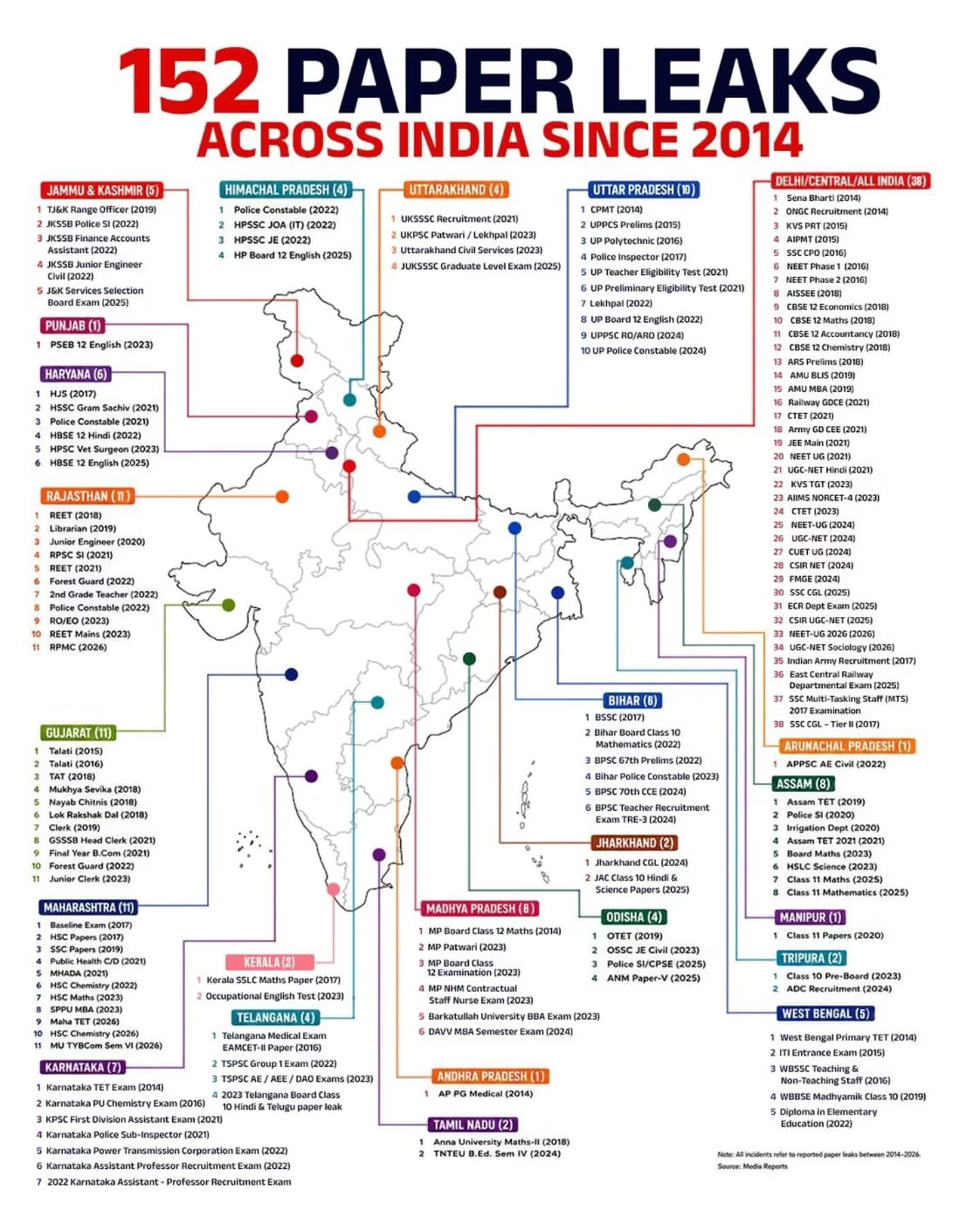
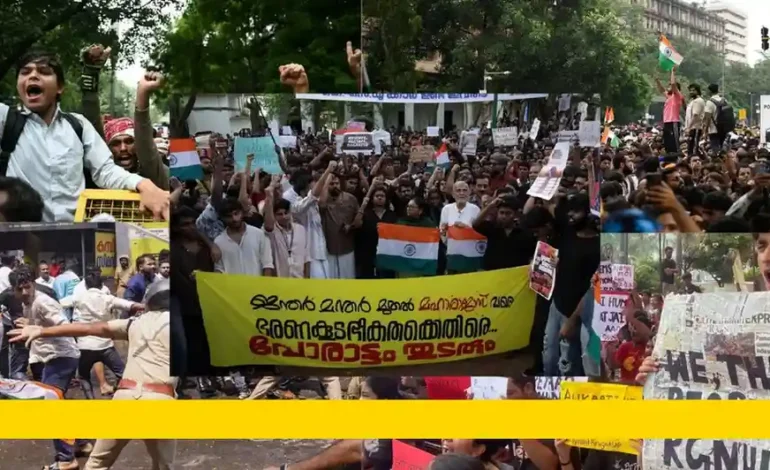
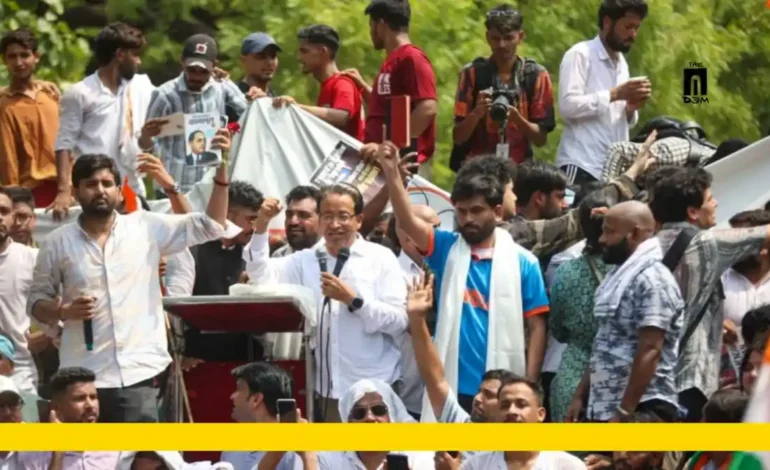
Unlike earlier mobilisations, this movement did not begin under the leadership of established political parties or nationally recognised personalities. It emerged from the lived experience of young people confronting repeated examination failures, paper leaks, shrinking employment opportunities and growing institutional unaccountability. The protests grew through horizontal networks, digital communication and sustained grassroots mobilisation rather than conventional party structures.
The resignation of Dharmendra Pradhan therefore represents more than ministerial accountability. It establishes, however tentatively, the principle that sustained democratic mobilisation can compel governments to respond to public pressure. In recent years, accountability has increasingly appeared subordinate to political majorities. The movement has challenged that assumption.
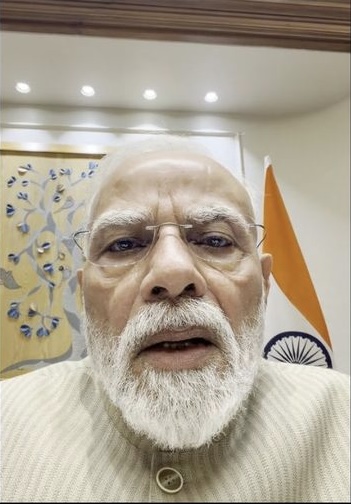
Equally striking has been a psychological shift that is difficult to quantify but impossible to ignore. For nearly a decade, the Modi government cultivated an image of political invincibility reinforced by an atmosphere of fear. That aura now appears to have weakened. A Prime Minister who once seemed beyond public ridicule has increasingly become the subject of satire and irreverent social media humour. Even his carefully choreographed midnight selfie videos have attracted widespread trolling rather than unquestioning admiration. Democracies often change not only when governments lose elections but when citizens lose their fear of those in power. The present movement appears to have contributed to precisely such a shift in public mood.
Equally significant has been the political education of an entire generation. For millions of young Indians, this has been their first sustained engagement with democratic politics. They have experienced police repression, arrests, intimidation and institutional hostility. At the same time, they have also discovered that collective democratic action can produce tangible political outcomes. That lesson may prove far more enduring than any immediate policy concession.
The examination crisis itself is only the visible expression of deeper structural anxieties. Behind the protests lies a generation confronted with persistent unemployment, precarious work, declining public investment in education, widening inequality and an economy that has failed to generate adequate opportunities despite impressive macroeconomic claims. The frustrations of educated youth have accumulated over years, making the paper leak controversy the spark rather than the cause of the mobilisation.
The movement has also expanded beyond educational concerns. Questions of democratic rights, constitutional governance and equal citizenship have increasingly entered its discourse. Opposition to arbitrary state action, concerns over electoral processes and resistance to attempts at communal polarisation have all found expression alongside demands for educational reform. In doing so, the protests have reaffirmed an essential democratic truth: governance failures cannot be separated from the health of democratic institutions.
This broadening of the agenda also explains why the movement has unsettled the political establishment. It is no longer merely about examinations. It is about accountability.
History, however, also offers a warning. Every major democratic mobilisation in contemporary India has eventually confronted organised attempts to divert its energy. Sometimes the diversion has come through communal polarisation. Sometimes through hyper-nationalist mobilisation. At other times through the reduction of complex democratic demands into narrow electoral calculations.
The Sangh Parivar has repeatedly shown its ability to intervene in such transitional moments, redirecting public anger towards ideological consolidation rather than democratic deepening.
The present movement will inevitably face similar pressures. Attempts to shift the public conversation towards communal issues, reservations, Pakistan, terrorism or other familiar fault lines should therefore be understood not as isolated political responses but as historically familiar strategies of fragmentation. Preserving the movement’s democratic character will depend on its ability to resist these diversions and remain anchored in constitutional values.
Another defining feature of the protests has been their relationship with the media. Large sections of the mainstream media either ignored the movement or reduced it to episodic confrontation. Yet digital platforms enabled protesters to build nationwide solidarity, document state action and communicate directly with millions of citizens.
The episode has once again demonstrated that independent journalism and decentralised communication have become indispensable to democratic mobilisation in contemporary India.
The questions that now arise are necessarily political. Should the movement evolve into an organised political platform? Should it remain an issue-based democratic coalition? Can it reshape existing opposition politics without being subsumed by it? These are questions that cannot be answered in the heat of mobilisation. They require careful democratic deliberation.
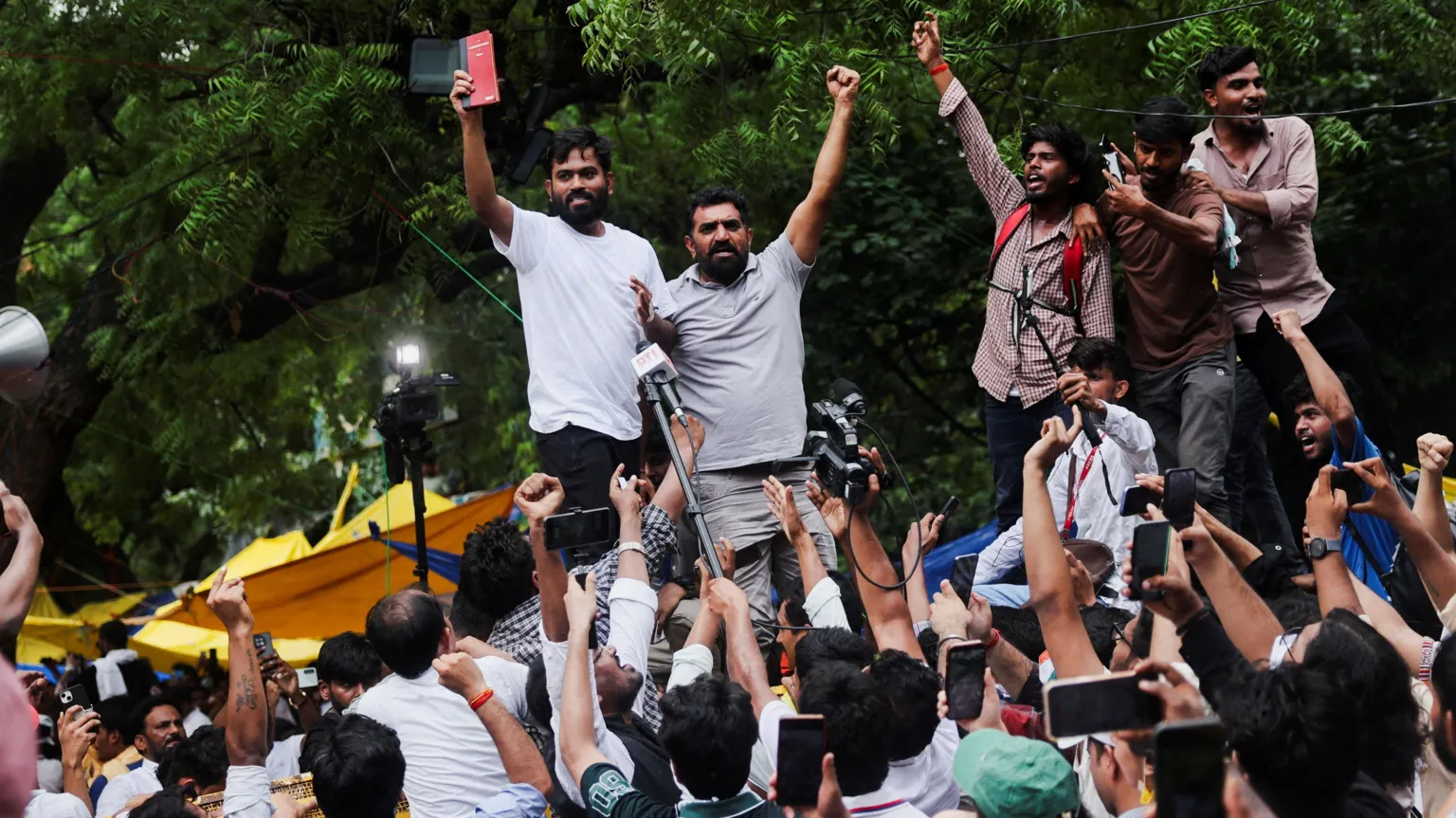
At the same time, one caution emerging from within the movement itself deserves equal attention. Student leader Dipke warned against elevating any individual into the face of the struggle, remarking, “We are suffering because we made one person hero.” It is a simple observation with profound democratic significance. Independent India has repeatedly seen public movements become invested in charismatic personalities rather than enduring institutions. If this mobilisation is to leave behind a lasting democratic legacy, it must resist that temptation. Its strength lies in its collective leadership, decentralised organisation and shared commitment to constitutional values.
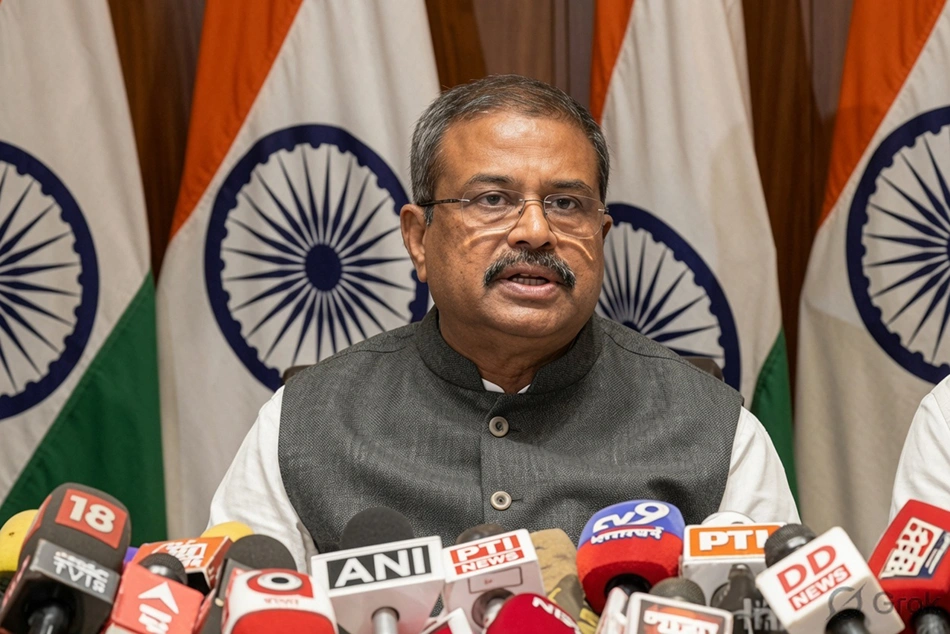
One conclusion, however, already appears inescapable. Dharmendra Pradhan’s resignation is not the culmination of a protest. It is the opening of a new democratic phase. Whether that phase ultimately strengthens India’s constitutional democracy—or becomes yet another moment appropriated by forces seeking majoritarian consolidation—will depend on whether this generation succeeds where previous democratic mobilisations faltered: sustaining the struggle for accountability without allowing it to be diverted into the politics of polarisation, and without replacing one cult of personality with another.
That is the real test history has placed before India’s
young citizens.
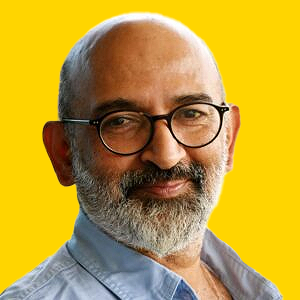





*A resignation may close one chapter, but the real test of democracy is whether it leads to deeper accountability, stronger institutions, and lasting reform. A thoughtful and timely analysis.*
The ways of the Gen Z are perhaps the need of the hour. Well written analysis 👌
An accurate anatomical analysis of the mobilisation, indeed. The role of the student’s outfits of the main stream left Parties should be taken for granted.